#dusk $DUSK @Dusk Privacy vs Compliance: Can Blockchain Really Have Both?
One thing I found interesting while looking at Dusk is that it doesn’t treat privacy as simply an on/off switch.
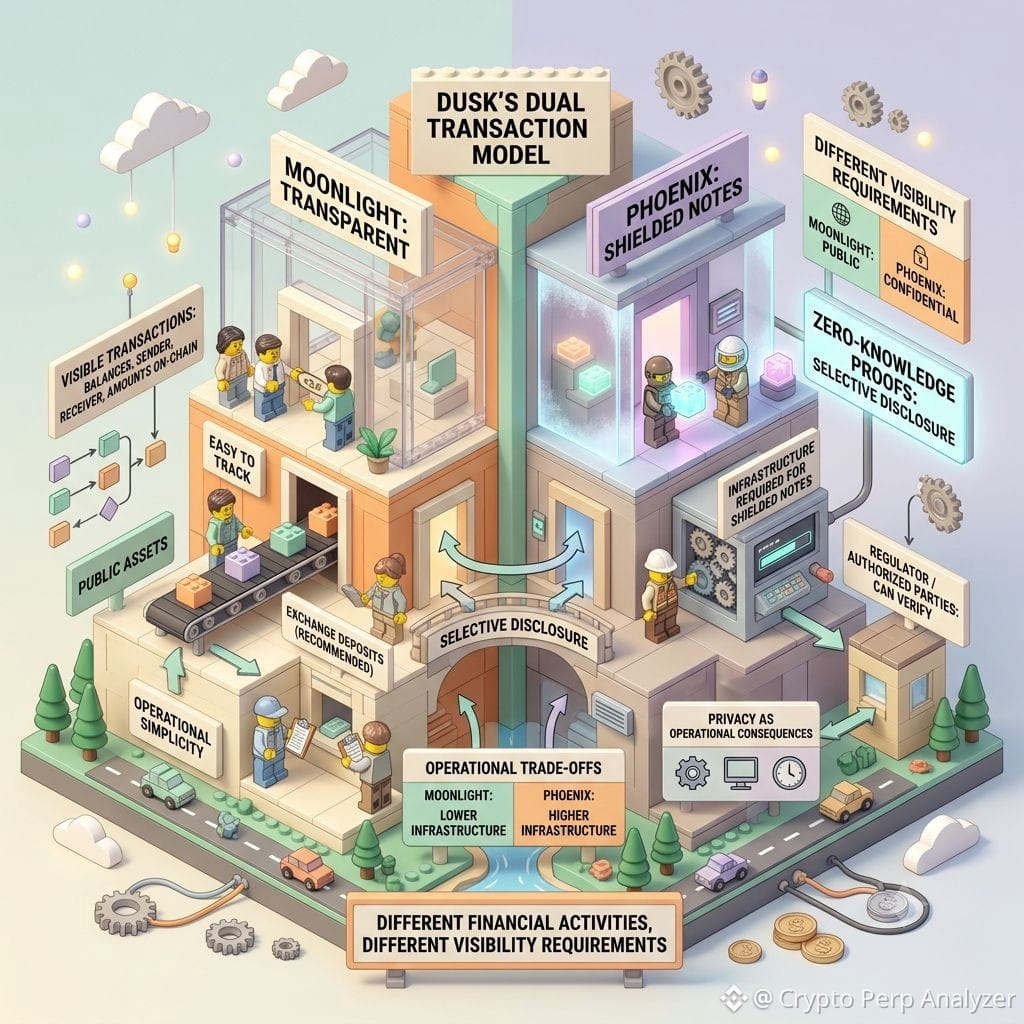
DuskDS has two transaction models. Moonlight is transparent with balances, sender, receiver and amounts visible on-chain. Phoenix takes a different route, using shielded notes and zero-knowledge proofs so transaction details aren’t exposed to everyone watching the network.
For financial markets, that difference is important. Institutions may need confidentiality around positions, counterparties and transfers, while regulators or authorized parties still need a way to verify what happened. Dusk’s design tries to handle this through selective disclosure rather than making everything public by default.
But there’s a trade off that’s easy to overlook.
Phoenix isn’t just Moonlight with more privacy added. It changes how assets are handled and tracked. Dusk’s exchange integration guidance even recommends Moonlight for exchange deposits because shielded notes require additional infrastructure.
That tells me privacy comes with operational consequences.
So I wouldn’t describe Dusk’s approach as “privacy fixes compliance. It’s more nuanced: different financial activities can have different visibility requirements. The difficult part is making that work smoothly without turning compliance, custody and disclosure into new sources of friction.
One thing I found interesting while looking at Dusk is that it doesn’t treat privacy as simply an on/off switch.
DuskDS has two transaction models. Moonlight is transparent with balances, sender, receiver and amounts visible on-chain. Phoenix takes a different route, using shielded notes and zero-knowledge proofs so transaction details aren’t exposed to everyone watching the network.
For financial markets, that difference is important. Institutions may need confidentiality around positions, counterparties and transfers, while regulators or authorized parties still need a way to verify what happened. Dusk’s design tries to handle this through selective disclosure rather than making everything public by default.
But there’s a trade off that’s easy to overlook.
Phoenix isn’t just Moonlight with more privacy added. It changes how assets are handled and tracked. Dusk’s exchange integration guidance even recommends Moonlight for exchange deposits because shielded notes require additional infrastructure.
That tells me privacy comes with operational consequences.
So I wouldn’t describe Dusk’s approach as “privacy fixes compliance. It’s more nuanced: different financial activities can have different visibility requirements. The difficult part is making that work smoothly without turning compliance, custody and disclosure into new sources of friction.