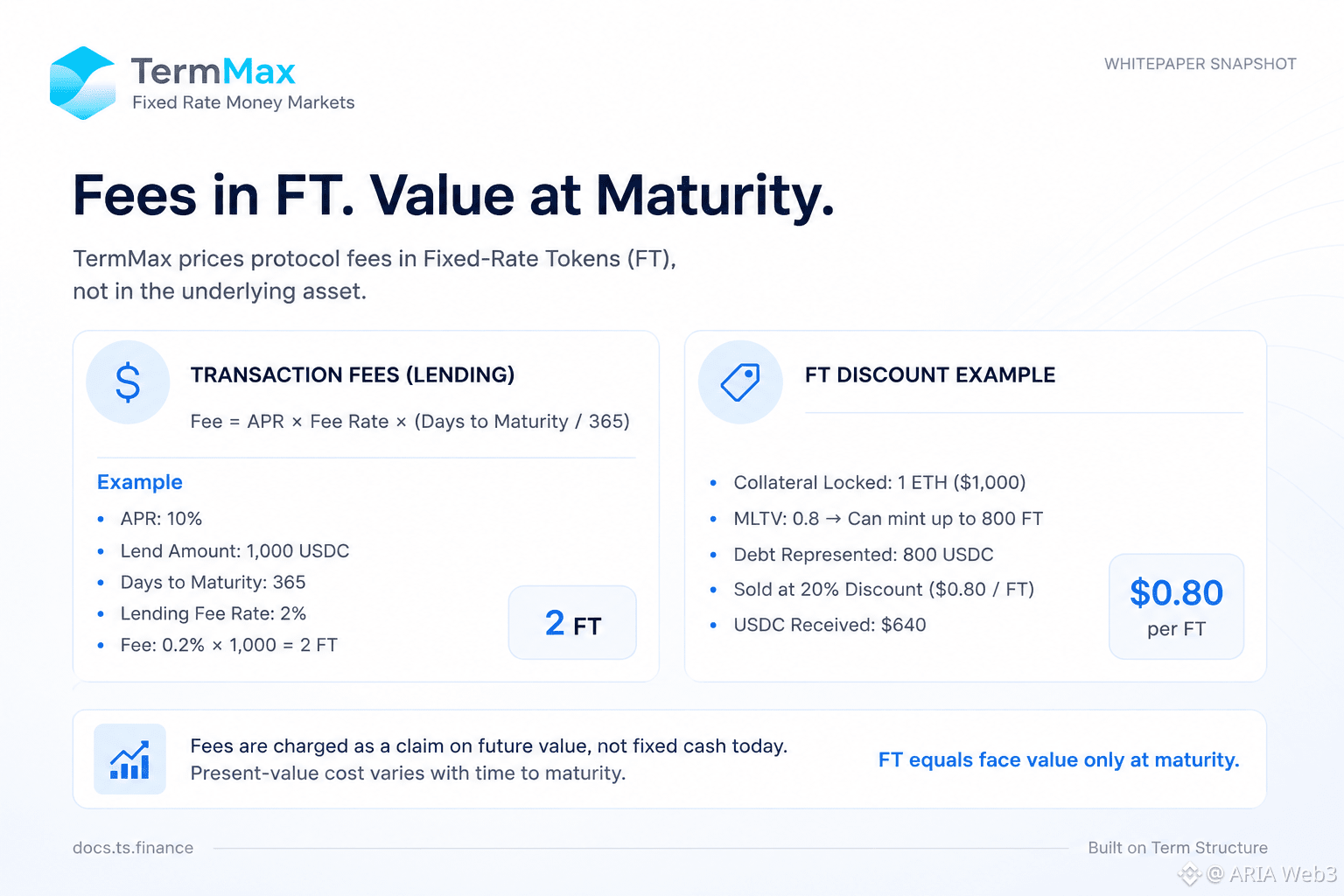
I was reading TermMax's transaction fees page on docs.ts.finance. The formulas are simple — APR × fee rate × (days to maturity/365) — but one detail caught my attention: fees resolve "in unit of FT," not USDC. Their own example: lending 1,000 USDC at 10% APR for 365 days, at a 2% fee rate, costs just 2 FT.
I assumed that was just a display convention. After checking the Fixed-Rate Tokenization docs, it turned out more deliberate. FT is a discount instrument, only worth face value at maturity. In their example, 800 FT sells at a 20% discount ($0.80 each) — $640, not $800.
That's when it clicked: pricing fees in FT means charging a claim on future value, not fixed cash today. Two lenders paying "the same" 2% fee at different points before maturity pay different present-value costs.
Feels less like a flaw, more a trade-off of tying fees to the unit lenders already hold, instead of converting through USDC each time. Still unclear how this reconciles when the protocol reports aggregate fee revenue in one denomination.
Anyone know where that's documented?#termmax @TermMax