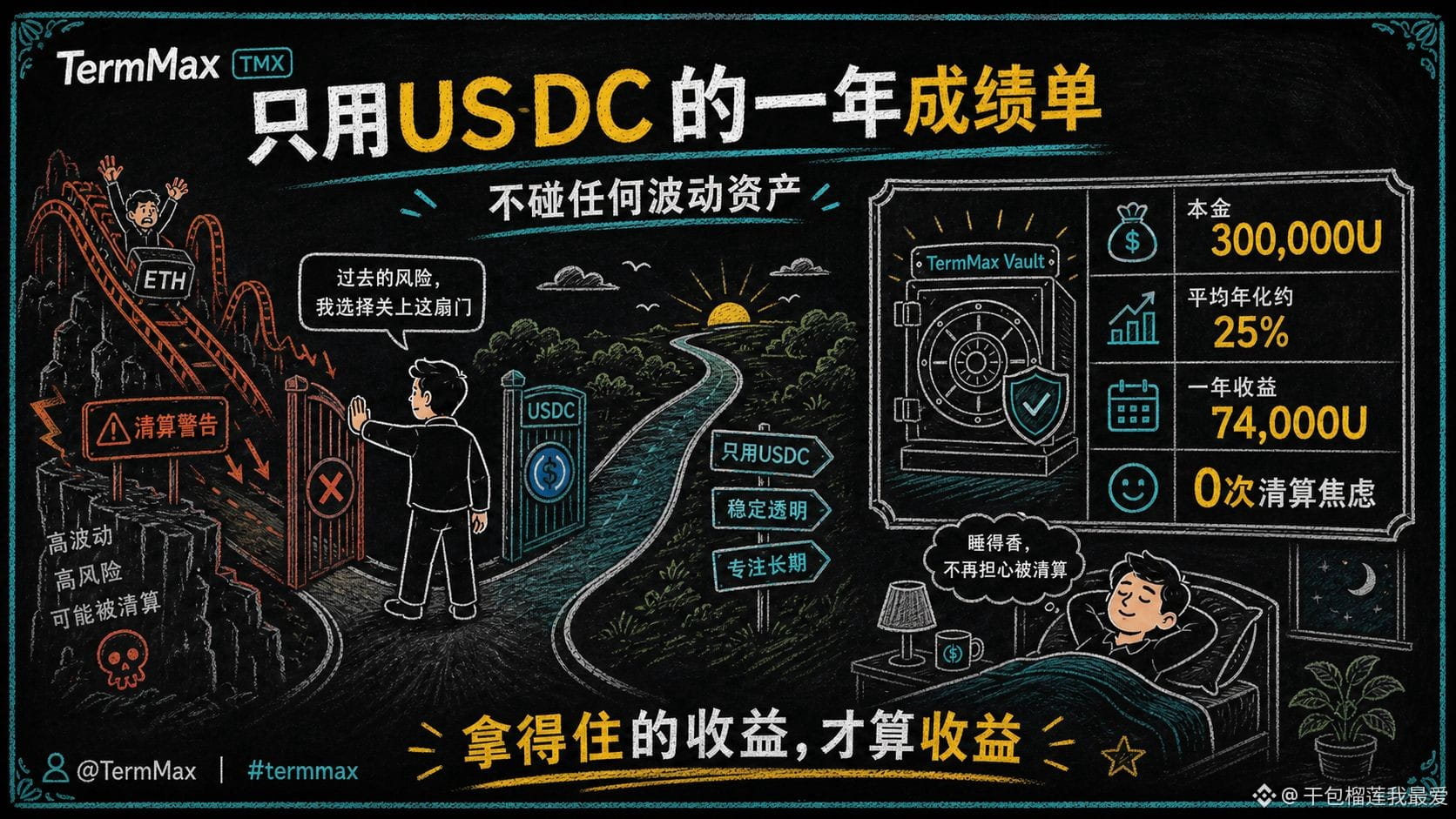
#termmax @TermMax A year ago, I made a decision: on TermMax, I use only USDC and don’t touch any volatile assets. This is the performance report from that decision.
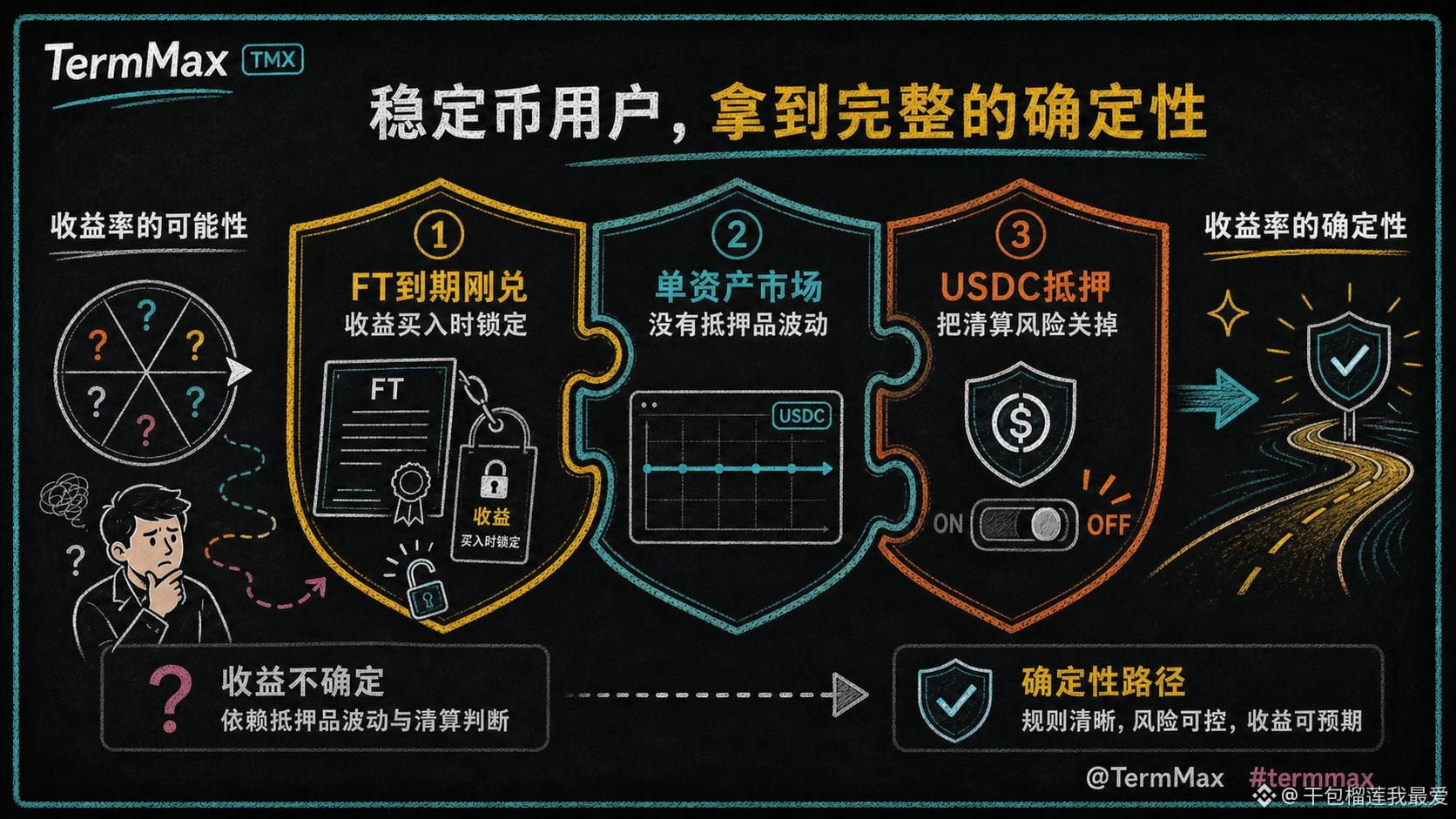
This decision wasn’t made on a whim. Before coming to TermMax, I got liquidated once on another protocol—borrowing against ETH as collateral, and when it dropped 20%, I landed in the liquidation zone. I’ve remembered that lesson ever since. So before entering, I read through TermMax’s mechanics: when the FT matures, it’s redeemed at par; the yield is locked in when you buy; in a single-asset market there’s almost no collateral-price volatility, so the liquidation line is barely reachable; and even if you do lending, using USDC as collateral is effectively turning off liquidation risk altogether. With these three mechanisms stacked together, the conclusion is very clear: in this protocol, the certainty stablecoin users get is the full package.
Later, I became more and more certain that this is the dividing line between it and traditional lending protocols. Other protocols sell you the possibility of yield; it sells you the certainty of yield—and certainty is the one thing stablecoin capital will stay for long-term.
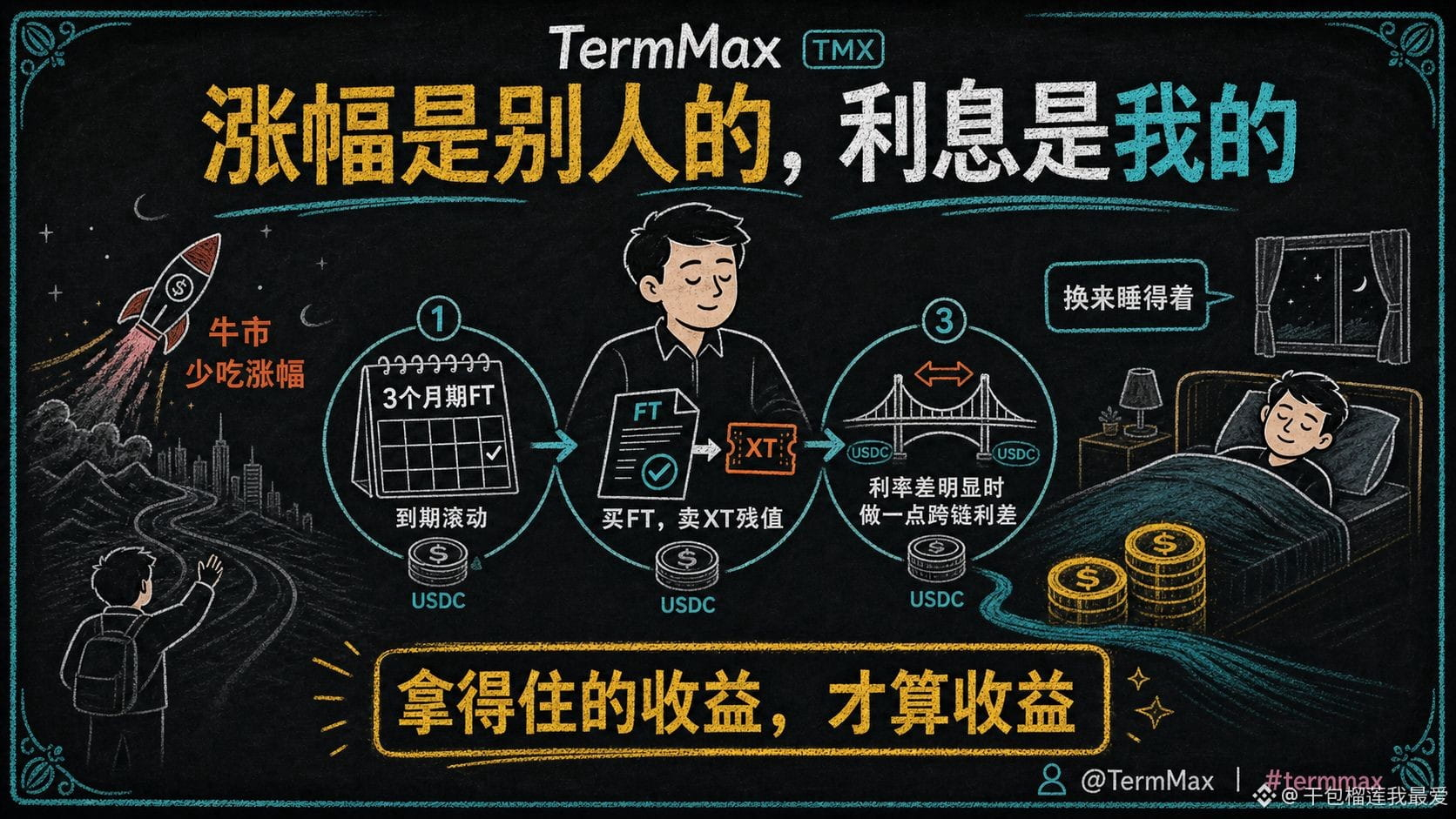
Principal: 300000u, all in and out via USDC. The core positions are 3-month FTs, rolled upon maturity. Each time I buy an FT, I also sell the remaining XT value. When the interest rate spread is clearly favorable, I do some cross-chain spread trades. All three operations are in stablecoins. Over the year, the average annualized return is about 25%, totaling 74000u.
Throughout the entire process, I never had to worry about liquidation, and I never once couldn’t sleep because of price swings. There is a trade-off: in a bull market, when others capture the upside, I can only take the interest. But my answer is simple: the upside belongs to others; the interest belongs to me. Returns you can hold through—that’s what counts as returns.
This decision wasn’t made on a whim. Before coming to TermMax, I got liquidated once on another protocol—borrowing against ETH as collateral, and when it dropped 20%, I landed in the liquidation zone. I’ve remembered that lesson ever since. So before entering, I read through TermMax’s mechanics: when the FT matures, it’s redeemed at par; the yield is locked in when you buy; in a single-asset market there’s almost no collateral-price volatility, so the liquidation line is barely reachable; and even if you do lending, using USDC as collateral is effectively turning off liquidation risk altogether. With these three mechanisms stacked together, the conclusion is very clear: in this protocol, the certainty stablecoin users get is the full package.
Later, I became more and more certain that this is the dividing line between it and traditional lending protocols. Other protocols sell you the possibility of yield; it sells you the certainty of yield—and certainty is the one thing stablecoin capital will stay for long-term.
Principal: 300000u, all in and out via USDC. The core positions are 3-month FTs, rolled upon maturity. Each time I buy an FT, I also sell the remaining XT value. When the interest rate spread is clearly favorable, I do some cross-chain spread trades. All three operations are in stablecoins. Over the year, the average annualized return is about 25%, totaling 74000u.
Throughout the entire process, I never had to worry about liquidation, and I never once couldn’t sleep because of price swings. There is a trade-off: in a bull market, when others capture the upside, I can only take the interest. But my answer is simple: the upside belongs to others; the interest belongs to me. Returns you can hold through—that’s what counts as returns.