When I re-examined the Vault structure of @TermMax , the first thing I noticed wasn’t the returns, but what part the depositor actually delegated to the Curator. If this question isn’t broken down clearly, it’s easy to misinterpret “depositing into the vault” as a passive deposit. #TermMax
The Vault uses ERC-4626: after users deposit assets, they receive a receipt representing shares. The Curator is responsible for the real work—what markets the funds go into, what Range Orders to use, and how the curve is set. As long as the debt asset is the same, one Vault can connect to multiple markets. This disperses deployment of capital, but it also centralizes market selection, tenor matching, and quoting cadence into the management strategy.
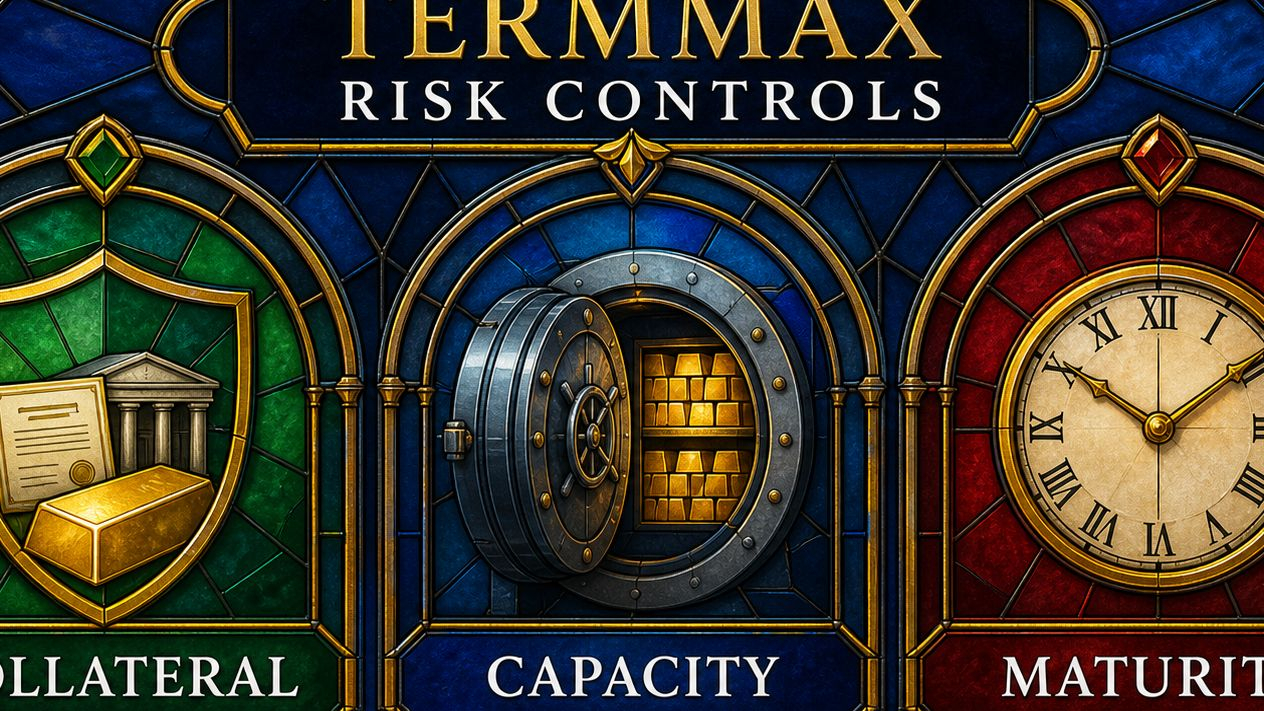
The documentation adds several boundaries to this delegated power: markets require a whitelist; sensitive parameter changes must go through a timelock; the Guardian can block pending changes during the waiting period; and the Vault also has capacity limits and deposit/withdrawal queues. It’s not simply handing money unconditionally to one address. Instead, it splits governance into roles, and gives certain actions a window of time for reaction.
Profit distribution doesn’t just appear out of thin air either. The spread generated when orders fill, and the results of the strategy, flow back into the Vault. Shareholders then take on the outcome proportionally, and the Curator can collect a performance fee under pre-set rules. What users effectively buy is the net result of this entire management process—not the gross yield displayed on a page from a single market.
But after cross-checking the risk page, I actually feel the biggest thing to watch here isn’t “whether there is a Curator,” but what happens when the Curator gets it wrong. An incorrect curve could leave funds idle or expose them to adverse selection. After maturity, physical settlement could also mean the Vault receives collateral; if liquidity is insufficient, withdrawals must queue—and even the types of assets returned may differ from what was initially deposited.
So what the Vault removes is the user’s operational burden of managing orders, not strategy judgment itself. Going forward, I’ll look at the Curator’s historical executions, parameter change logs, capital concentration, and withdrawal queues. These tell more about what the vault is truly doing on the user’s behalf than any pretty annualized number.
The Vault uses ERC-4626: after users deposit assets, they receive a receipt representing shares. The Curator is responsible for the real work—what markets the funds go into, what Range Orders to use, and how the curve is set. As long as the debt asset is the same, one Vault can connect to multiple markets. This disperses deployment of capital, but it also centralizes market selection, tenor matching, and quoting cadence into the management strategy.
The documentation adds several boundaries to this delegated power: markets require a whitelist; sensitive parameter changes must go through a timelock; the Guardian can block pending changes during the waiting period; and the Vault also has capacity limits and deposit/withdrawal queues. It’s not simply handing money unconditionally to one address. Instead, it splits governance into roles, and gives certain actions a window of time for reaction.
Profit distribution doesn’t just appear out of thin air either. The spread generated when orders fill, and the results of the strategy, flow back into the Vault. Shareholders then take on the outcome proportionally, and the Curator can collect a performance fee under pre-set rules. What users effectively buy is the net result of this entire management process—not the gross yield displayed on a page from a single market.
But after cross-checking the risk page, I actually feel the biggest thing to watch here isn’t “whether there is a Curator,” but what happens when the Curator gets it wrong. An incorrect curve could leave funds idle or expose them to adverse selection. After maturity, physical settlement could also mean the Vault receives collateral; if liquidity is insufficient, withdrawals must queue—and even the types of assets returned may differ from what was initially deposited.
So what the Vault removes is the user’s operational burden of managing orders, not strategy judgment itself. Going forward, I’ll look at the Curator’s historical executions, parameter change logs, capital concentration, and withdrawal queues. These tell more about what the vault is truly doing on the user’s behalf than any pretty annualized number.