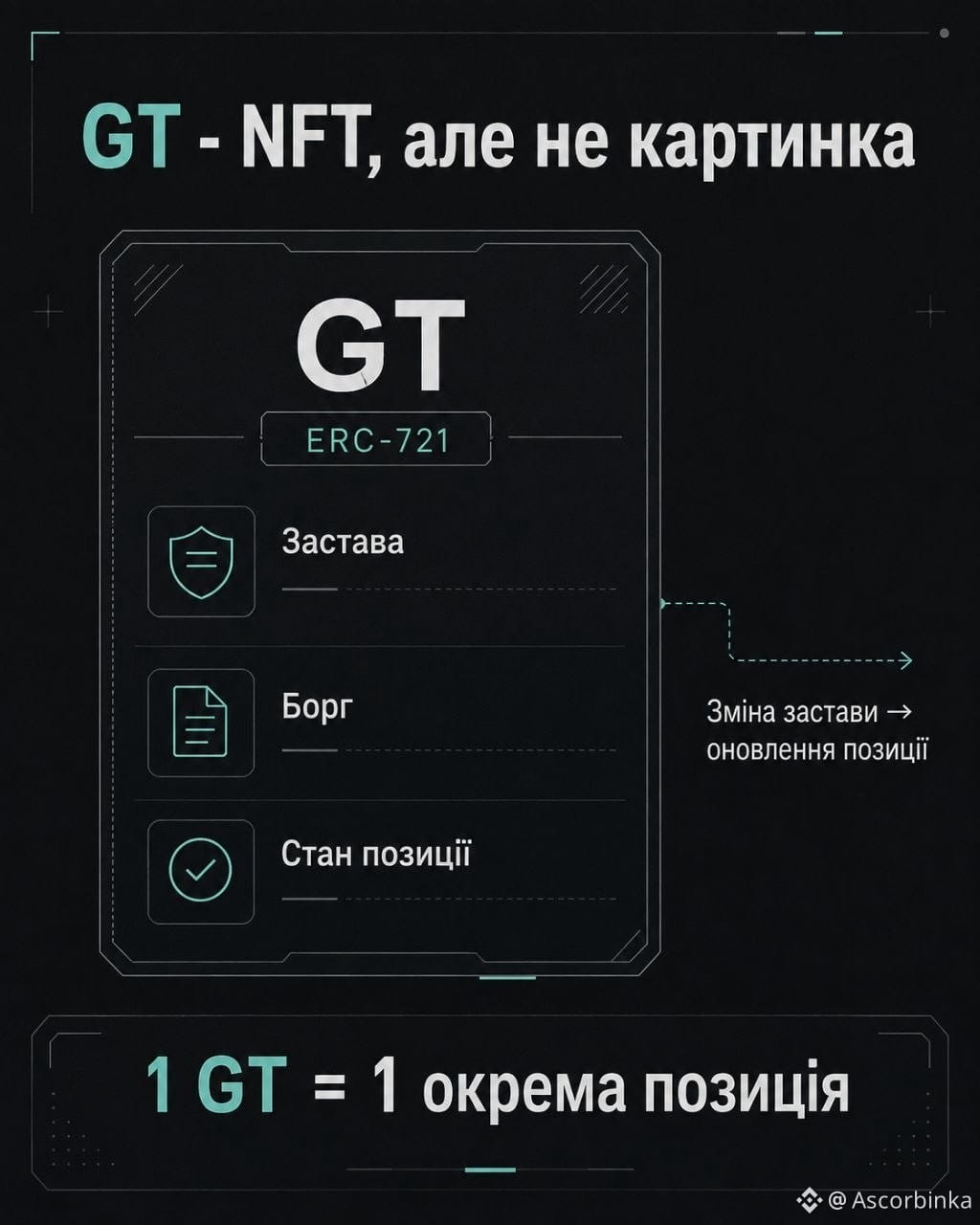
NFT in TermMax is not an image and not a collectible asset.
GT uses the ERC-721 standard, but its purpose is completely different: it represents a specific credit position and holds its collateral and debt.
And that’s where it becomes clear why such a position doesn’t look like a typical balance of identical tokens.
Each GT is tied to its own position state.
If collateral is added to or removed from it, the GT’s data and the associated health metric of the position are updated.
So owning two GTs is not the same as simply having two identical units of an asset.
Each can have its own collateral and debt parameters.
From this, my most useful takeaway is:
evaluating GTs by token count alone is almost pointless.
You need to look inside the position—what collateral it has, what debt, and what condition it’s in.
In TermMax, the NFT here is not decoration.
It’s a container for the state of a credit position.
@TermMax #TermMax
GT uses the ERC-721 standard, but its purpose is completely different: it represents a specific credit position and holds its collateral and debt.
And that’s where it becomes clear why such a position doesn’t look like a typical balance of identical tokens.
Each GT is tied to its own position state.
If collateral is added to or removed from it, the GT’s data and the associated health metric of the position are updated.
So owning two GTs is not the same as simply having two identical units of an asset.
Each can have its own collateral and debt parameters.
From this, my most useful takeaway is:
evaluating GTs by token count alone is almost pointless.
You need to look inside the position—what collateral it has, what debt, and what condition it’s in.
In TermMax, the NFT here is not decoration.
It’s a container for the state of a credit position.
@TermMax #TermMax