Been putting off writing about this part because I don't have a clean answer for it.
Someone in a group chat asked me last week why a "privacy chain" would ever bother building compliance tools at all — isn't that the whole point of privacy, to keep regulators out? I didn't have a quick reply. Sat with it for a couple days actually.
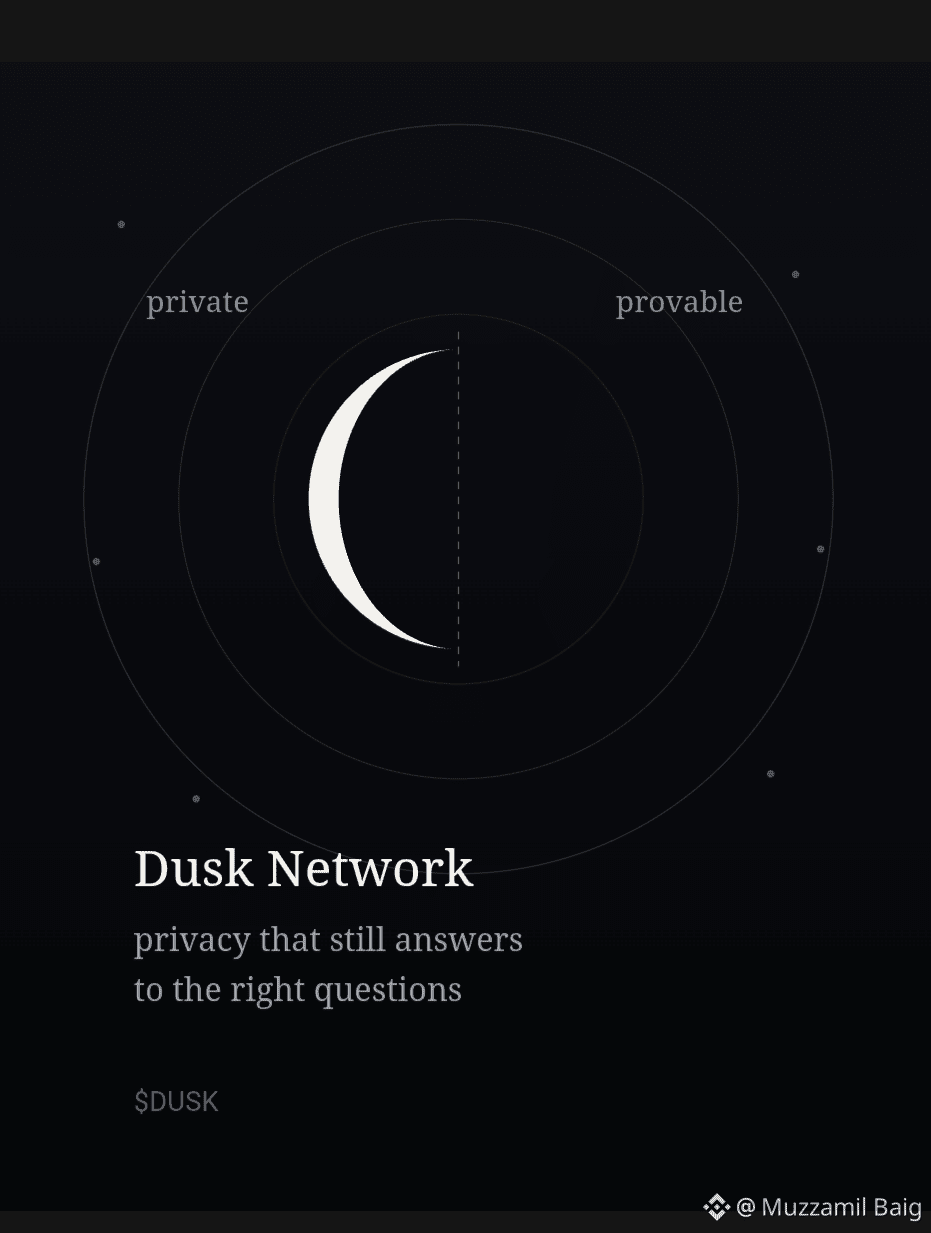
That's basically the core tension in Dusk Network's whole design. DUSK isn't trying to hide everything from everyone — it's trying to let you prove something is legitimate without exposing the raw data behind it. Selective disclosure instead of total secrecy. Which sounds reasonable in theory, but in practice it means the project has to keep satisfying two audiences that usually don't trust each other: privacy-minded users and regulators.
I don't think that's a flaw, honestly. I think it's the harder, more honest path compared to projects that just pick a side and ignore the friction. But I also can't pretend it's fully solved. Off-chain compliance frameworks, auditor access, jurisdiction differences — a lot of that still depends on institutions actually adopting the tooling, not just the tech existing.
So my open question is less "does the tech work" and more "will the slow, bureaucratic side of finance move fast enough to use it." That part isn't up to the protocol.
Still turning it over, no real conclusion yet — just where my head's at today.
$DUSK #dusk @Dusk
Someone in a group chat asked me last week why a "privacy chain" would ever bother building compliance tools at all — isn't that the whole point of privacy, to keep regulators out? I didn't have a quick reply. Sat with it for a couple days actually.
That's basically the core tension in Dusk Network's whole design. DUSK isn't trying to hide everything from everyone — it's trying to let you prove something is legitimate without exposing the raw data behind it. Selective disclosure instead of total secrecy. Which sounds reasonable in theory, but in practice it means the project has to keep satisfying two audiences that usually don't trust each other: privacy-minded users and regulators.
I don't think that's a flaw, honestly. I think it's the harder, more honest path compared to projects that just pick a side and ignore the friction. But I also can't pretend it's fully solved. Off-chain compliance frameworks, auditor access, jurisdiction differences — a lot of that still depends on institutions actually adopting the tooling, not just the tech existing.
So my open question is less "does the tech work" and more "will the slow, bureaucratic side of finance move fast enough to use it." That part isn't up to the protocol.
Still turning it over, no real conclusion yet — just where my head's at today.
$DUSK #dusk @Dusk