
#termmax @TermMax
The interesting part of TermMax isn’t that it moved from an orderbook to an AMM.
It’s why that trade-off makes sense for fixed-rate markets.
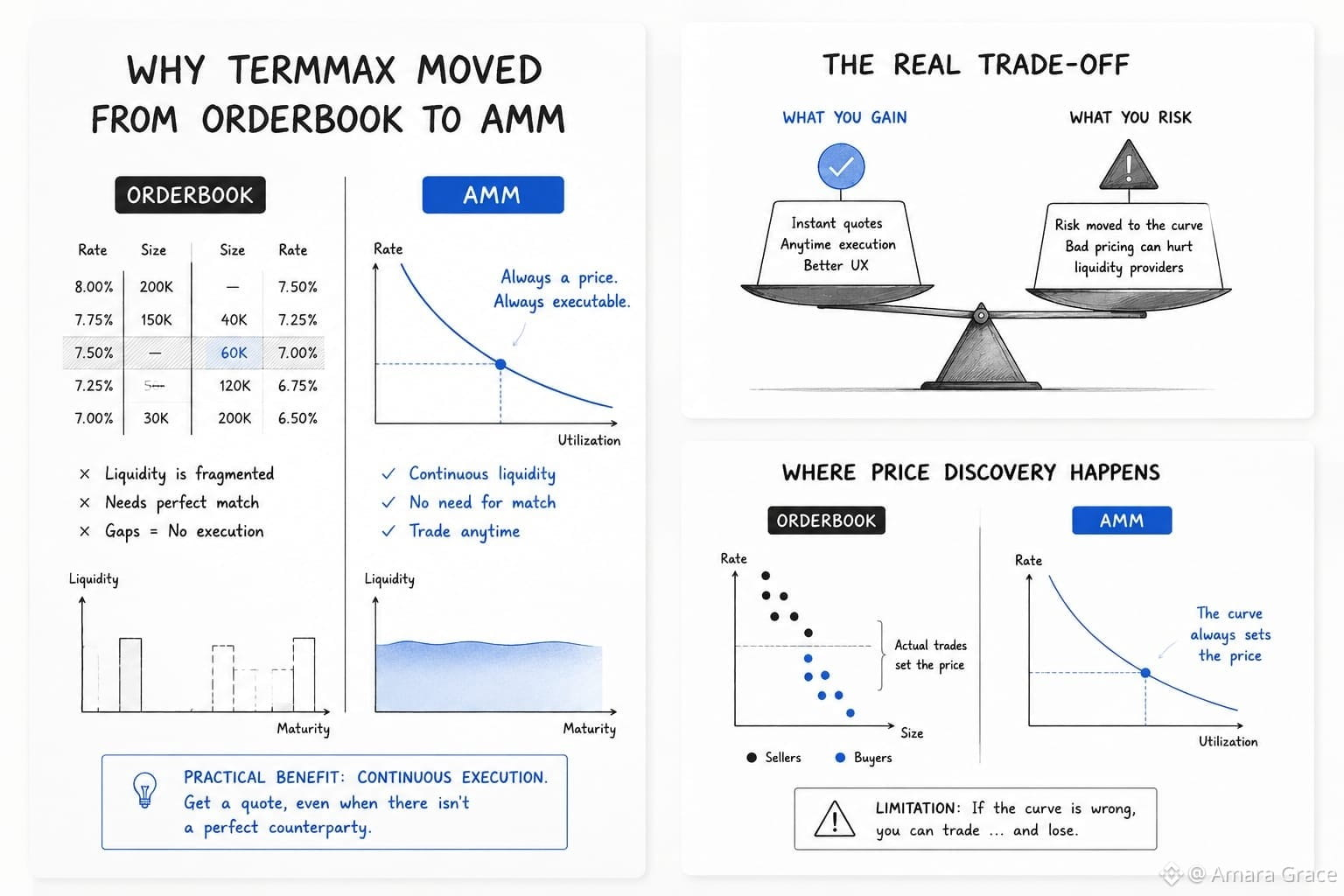
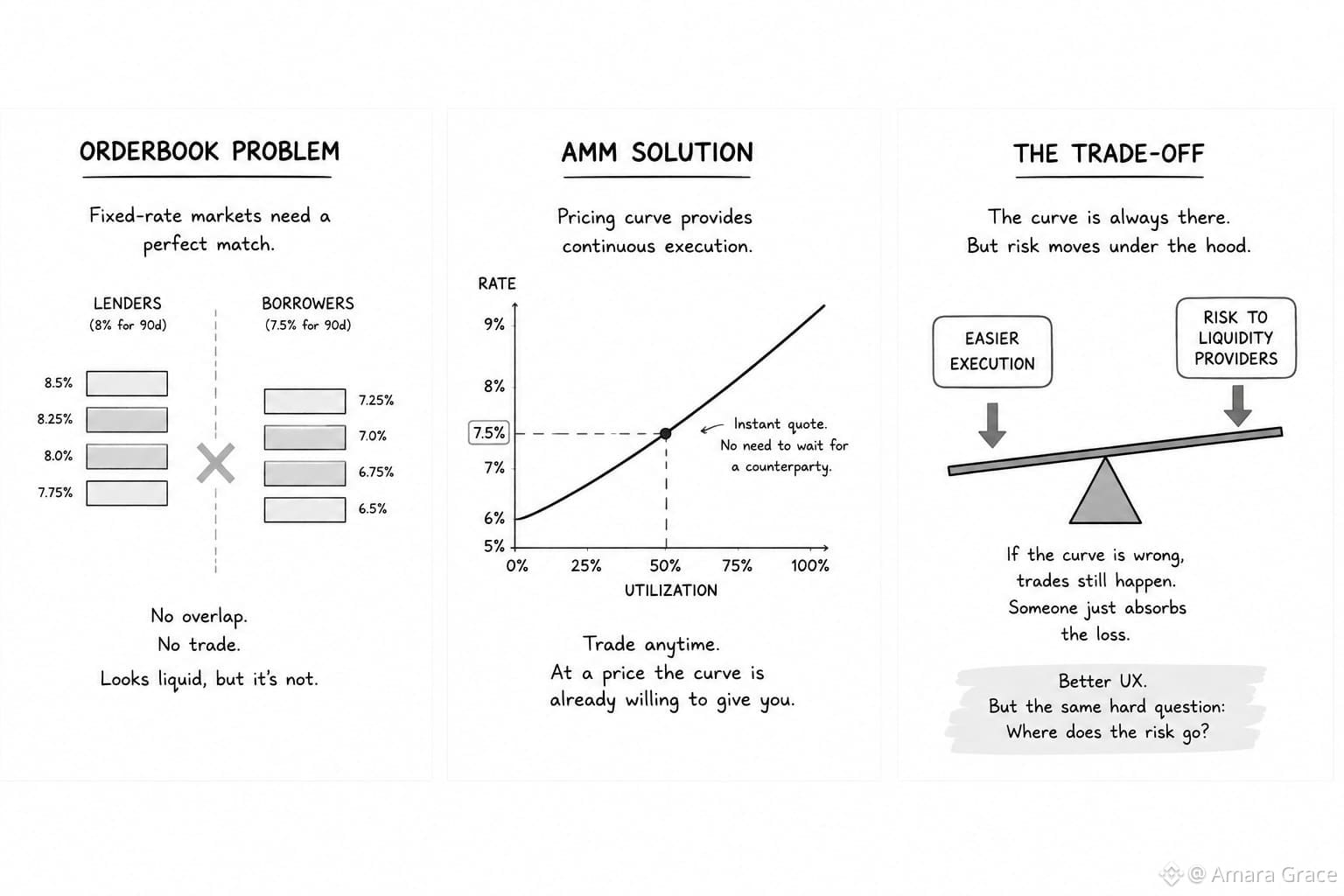
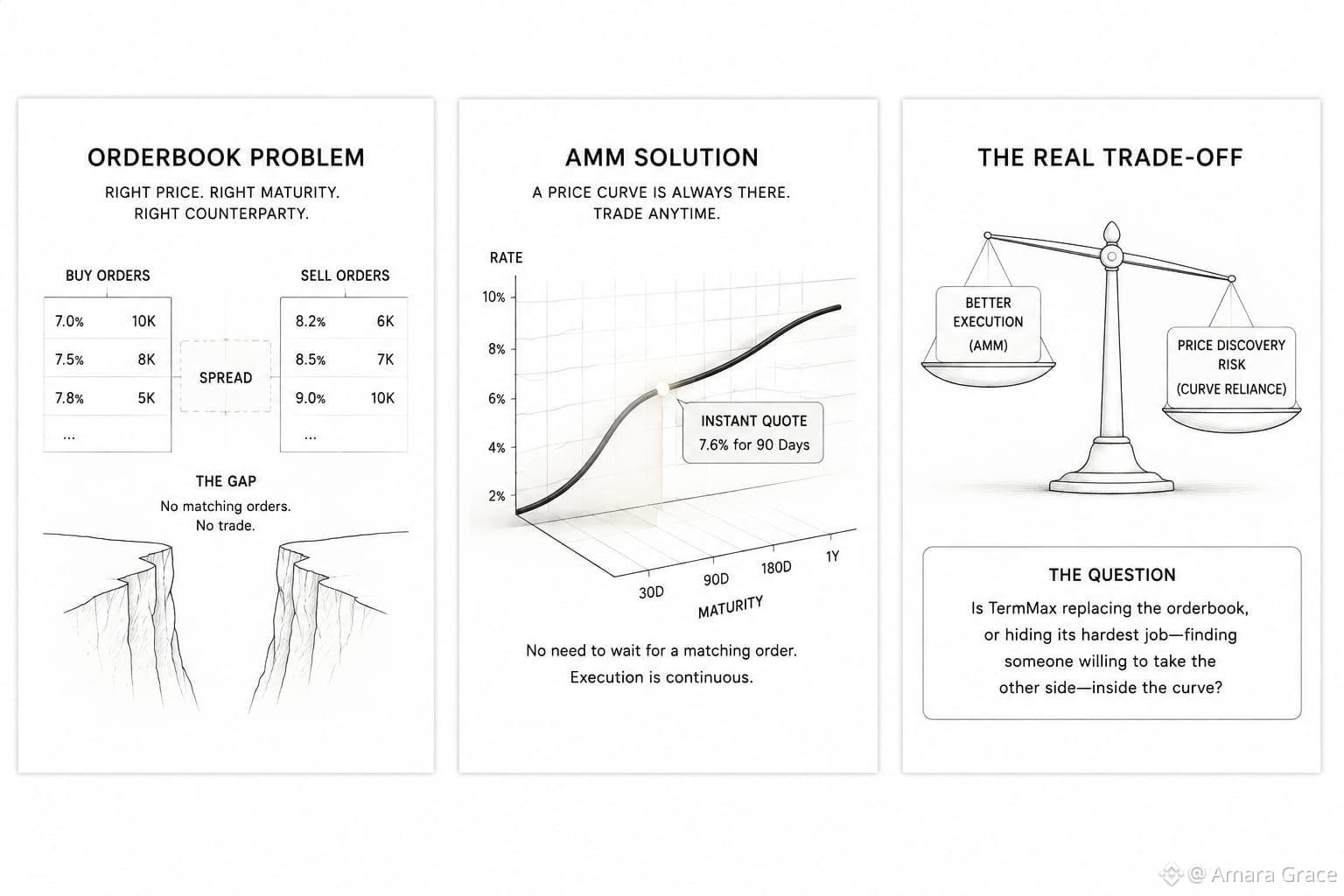
I’ve always found order books awkward here. A lender might want 8% for 90 days while a borrower wants 7.5%... and suddenly the market needs another participant to care about that exact slice of time and price. If nobody shows up, the market looks liquid right up until you actually try to trade.
An AMM attacks that problem differently. The practical benefit is continuous execution: you don’t need a matching order sitting there before you can enter or exit. TermMax’s design uses pricing curves rather than relying entirely on individual orders.
But I wouldn’t call that a free improvement.
The uncomfortable bit is price discovery. In an order book, bad pricing can simply sit there untouched. In an AMM, the curve is always offering you a price. If the curve is wrong, you can trade against a bad price without realizing how much of the risk has been pushed onto liquidity providers.
So the real test for TermMax isn’t AMM or orderbook?
It’s whether the curve can stay sane when the market gets stressed. What happens to those fixed-rate quotes when volatility suddenly makes yesterday’s assumptions worthless?
The interesting part of TermMax isn’t that it moved from an orderbook to an AMM.
It’s why that trade-off makes sense for fixed-rate markets.
I’ve always found order books awkward here. A lender might want 8% for 90 days while a borrower wants 7.5%... and suddenly the market needs another participant to care about that exact slice of time and price. If nobody shows up, the market looks liquid right up until you actually try to trade.
An AMM attacks that problem differently. The practical benefit is continuous execution: you don’t need a matching order sitting there before you can enter or exit. TermMax’s design uses pricing curves rather than relying entirely on individual orders.
But I wouldn’t call that a free improvement.
The uncomfortable bit is price discovery. In an order book, bad pricing can simply sit there untouched. In an AMM, the curve is always offering you a price. If the curve is wrong, you can trade against a bad price without realizing how much of the risk has been pushed onto liquidity providers.
So the real test for TermMax isn’t AMM or orderbook?
It’s whether the curve can stay sane when the market gets stressed. What happens to those fixed-rate quotes when volatility suddenly makes yesterday’s assumptions worthless?