


In the past few years, competition in the AI industry has largely centered on chips, models, compute power, and data. But as the scale of data centers continues to expand, a more fundamental question has begun to surface: how much electricity will we need in the future? Servers can be purchased, GPUs can be iterated, but data centers cannot operate normally in the absence of sufficient power. As a result, energy has gradually moved from behind the scenes in the AI industry chain to the forefront.
It is precisely in this context that nuclear energy—and nuclear fusion, which offers even longer-term potential—has returned to the market’s attention. Together, they point to a core need: a more stable, sustained energy source to support ever-growing computing power.
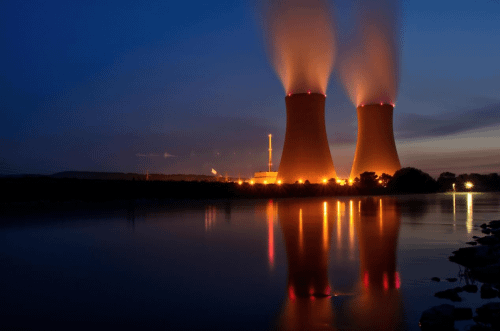
Why two entrepreneurs see the same direction
Sun Yuchen and Son Hyeong-yoo are in different industries and business landscapes, yet both have turned their attention to nuclear fusion. Sun Yuchen previously mentioned that if you miss Nvidia, you can keep an eye on areas such as power and nuclear fusion, and further link AI with energy demand. When Son Hyeong-yoo discussed AI development, he also viewed nuclear fusion as an important potential solution for future data center energy needs.
The two people’s focus does not necessarily mean there is a direct connection. More worth observing is the common logic behind it: as AI continuously expands its demand for computing power, energy is no longer just the infrastructure supporting industrial operations—it may become a key variable determining the speed of the next round of growth.
Why nuclear fusion is gaining attention again
Nuclear fusion still has a long way to go before true large-scale commercialization. Issues such as technical validation, engineering construction, and cost control all need to be solved. However, when the market talked about nuclear fusion in the past, it was mostly in the context of clean energy and a long-term energy revolution. Now, AI data centers provide a more concrete demand scenario.
From this perspective, the capital market’s interest in nuclear fusion does not mean it has already become a mature energy technology. Instead, it signals the beginning of searching for answers to future energy shortages. At the same time, advanced nuclear power, SMRs, and the nuclear fuel industry chain are also gradually attracting more attention.
For AI, chips determine the upper limit of computing power, while energy determines how far that computing power can go. Sun Yuchen and Son Hyeong-yoo observe nuclear fusion from different positions, which may reflect the same shift: the energy problem in the AI era is gradually turning from a long-term topic into a real challenge that must be planned for in advance.