#termmax @TermMax
Look closely at how money markets actually manage risk, and you keep running into the same weak point: liquidation design.
Most lending platforms handle distressed positions by dumping collateral straight into a DEX. That's fine for liquid blue-chips. It falls apart fast for long-tail tokens or RWAs. When volatility spikes, thin order books can't absorb the selling pressure, so slippage snowballs into cascading liquidations and bad debt for the whole protocol.
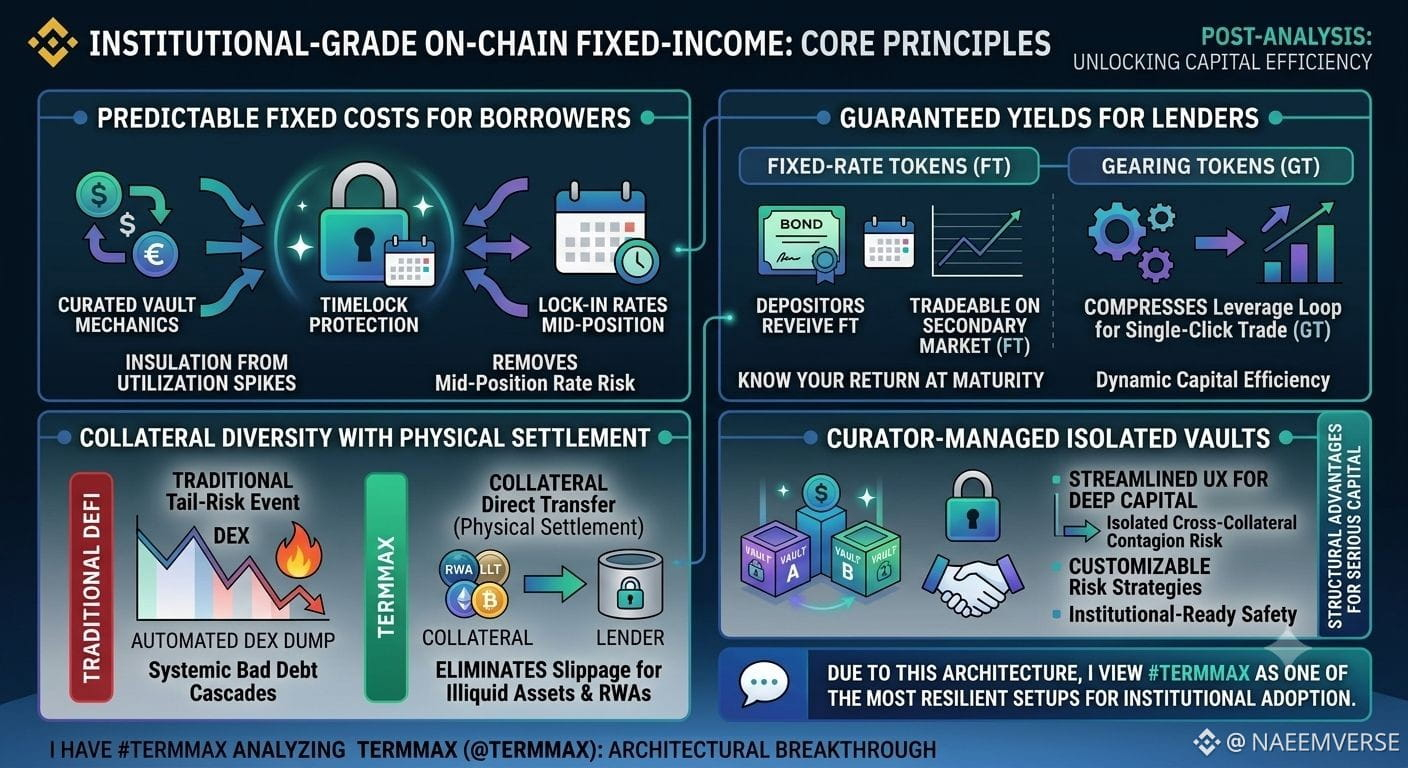
TermMax gets around this with physical delivery liquidation. Rather than forcing a fire sale into a shallow DEX pool, the underlying collateral goes straight to the lender's vault as settlement. Lenders end up with the actual value of the asset, not whatever price a panicked order book happened to offer. And because liquidation no longer depends on there being deep market liquidity in the moment, TermMax can safely support a much wider range of collateral, RWAs and structured credit included.
Curator-managed vaults back this up. Curators set their own risk parameters per strategy, so riskier assets stay walled off from the main liquidity pool. If a vault takes a hit, that settlement stays inside the vault. It doesn't spread.
Physical settlement plus vault isolation adds up to a framework built for institutions that actually plan to stay on-chain long term, not just farm a cycle and leave.
Worth asking directly: if physical delivery kills slippage risk on illiquid assets, what's the argument for institutions still using standard automated liquidations?
Look closely at how money markets actually manage risk, and you keep running into the same weak point: liquidation design.
Most lending platforms handle distressed positions by dumping collateral straight into a DEX. That's fine for liquid blue-chips. It falls apart fast for long-tail tokens or RWAs. When volatility spikes, thin order books can't absorb the selling pressure, so slippage snowballs into cascading liquidations and bad debt for the whole protocol.
TermMax gets around this with physical delivery liquidation. Rather than forcing a fire sale into a shallow DEX pool, the underlying collateral goes straight to the lender's vault as settlement. Lenders end up with the actual value of the asset, not whatever price a panicked order book happened to offer. And because liquidation no longer depends on there being deep market liquidity in the moment, TermMax can safely support a much wider range of collateral, RWAs and structured credit included.
Curator-managed vaults back this up. Curators set their own risk parameters per strategy, so riskier assets stay walled off from the main liquidity pool. If a vault takes a hit, that settlement stays inside the vault. It doesn't spread.
Physical settlement plus vault isolation adds up to a framework built for institutions that actually plan to stay on-chain long term, not just farm a cycle and leave.
Worth asking directly: if physical delivery kills slippage risk on illiquid assets, what's the argument for institutions still using standard automated liquidations?