


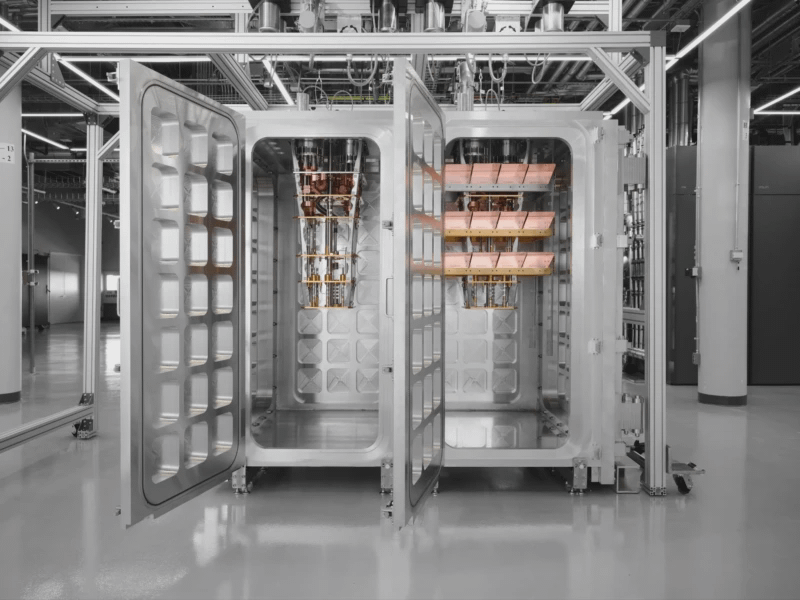
IBM connected and jointly cooled two modular cryogenic complexes, creating a single ultra-cold environment to scale fault-tolerant quantum systems.
Two modules are designed to link hundreds of quantum chips as part of a more powerful infrastructure. According to IBM, cooling to 4 K took less than five days, after which the system reached a temperature below 15 mK.
The company claims that each vacuum enclosure provides up to 12 times more space for wiring than the most common quantum systems used by the company. This should increase the number of connections between chips inside modules and between modules.
The architecture calls for the use of “L-shaped couplers” (L-couplers) for direct interconnection of individual quantum chips. Later, in 2026, IBM plans to install IBM Quantum Nighthawk processors in the modules for extended testing.
By 2027, the company plans to use L-couplers to connect several processors into a system with at least 1,000 programmable qubits. By the time IBM Quantum Starling is launched in 2029, IBM expects to place thousands of qubits in each module.
IBM unveiled plans for IBM Quantum Starling in 2025 along with new error-correction code. The connection of two cryogenic modules is what the company calls the next step in this roadmap.
Recall that in July, IBM CEO Arvind Krishna said that investments in quantum computing will begin to noticeably reflect in the company’s revenue and profits in 2028 or 2029.