


Wen|Whale Research Brand Laboratory, Five Kids
The Thai restaurant that the stubborn guy loves most—and she was “eaten by it,” basically. From the shop’s construction barriers, it looks like a Yunnan-Guizhou wild bistro will open here soon.
Maybe it’s close enough—almost every mall in Chongqing is surrounded by Yunnan-Guizhou cuisine. From braised tofu with a patina, sour hot pot, dan-dan noodles, to spicy chili pepper beef, wild mushrooms, and small-pot rice noodles… it’s like a gust of wind blowing through, and branch after branch suddenly pops up across malls. Then, as if another gust, they all change their signs at once and keep lining up for the next thing.
In the past couple of years, the signs on dining floors have been changing faster and faster.
Nestlé Professional estimates that in 2025 there were about 8.25 million dining outlets nationwide, with a closure rate of 48.9% and a new-opening rate reaching 50%, in the 2026 China Chinese Dining White Paper.
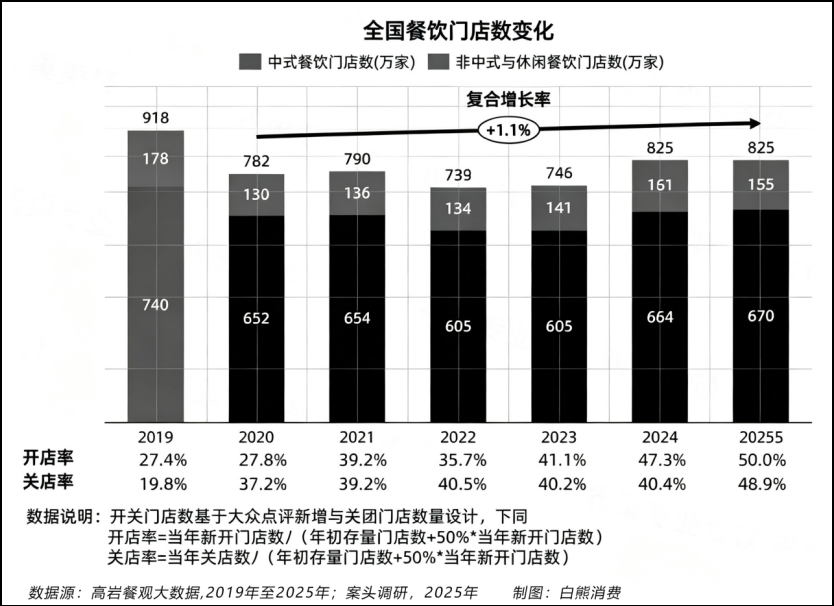
Open half and close half—keeping watch on the restaurant business is exhausting.
The industry iterates at such high frequency and with such intensity that people often sympathize with franchisees who end up losing everything. But from another perspective: young people always want novelty and get bored of the old—so restaurants with better food are naturally replaced.
Besides, the one who might replace you could be—yourself.
A man who shares about eating instant noodles with pure confidence once told a real story. She and her foodie friend often visited a Japanese yakiniku shop, which had also “burned them out” in the process of eating.
But not long after, a beef restaurant opened nearby. She was astonished to find that the waitress who used to grill meat for them was still working there.
Same store location, different categories and different main storefronts—turns out it was the same owner.
If you dig deeper, you find that the same dining group is behind the store. As early as 2017, media in the dining industry reported that they were a big boss behind southwest dining, holding over 40 brands and more than 500 stores.
As an epitome, we’re already approaching a truth in the dining industry: much of today’s dining trends and turnover doesn’t happen naturally.
Especially now, when local specialties like cloud-Guizhou dishes, Guangxi cuisine, and Taizhou cuisine are fast-red and fast-faded, behind the scenes there may be a clearly divided, tightly linked industrialized “wave-making” chain.
Queuing can be produced
When a restaurant opens and there’s already a queue, it’s usually attributed to the food being good and the location being convenient.
But within the dining industry, queuing is more like a result that can be precisely designed. Its starting point isn’t in the kitchen that diners pay attention to—it’s in the information feeds on Douyin and Xiaohongshu, and in the mall’s leasing offices.
Standardized wave-making on social platforms
In charge of domestic traffic now, they’ve already formed a mature gang-style identity. For example, on Xiaohongshu, the “Zhengzhou-bang” is skilled at underwater seeding and dominates Douyin’s “Xiamen-bang,” which is proficient in running ads on Douyin.
And in the dining field, there’s also a “Wuhan-bang” that’s very good at high traffic. On one hand, they incubate restaurant brand identities; on the other, they support a complete influencer seeding system, achieving an integrated operation of “brand + traffic.”
A standard new-store wave-making process usually advances in three stages:
First layer: about a week before opening, 3–5 top food influencers with millions of followers visit first. They publish notes with content phrases like “#City’s newest queue king” and “A treasure shop worth revisiting N times,” establishing initial credibility.
Second layer: before and after opening, mid-tier influencers with 100k–500k followers. They select 20–30 people, batch-produce notes, and focus on keywords like “XX food recommendations” and “XX date restaurants,” capturing consumer search traffic.
Third layer: at the same time, more than 500 low-follower individuals—through swapping slots or low-price shop visits—help fill the volume and create a real sense that “ordinary people are also going to check in.”
Three layers of content stacking, plus the platform’s continuous algorithmic push, manufacture a collective impression that “everyone in the whole city is eating it.”
Pick Chill, an innovative western dining brand, has its Shanghai first store as a typical example of this playbook.
According to public reports, the shop started sustained seeding on Xiaohongshu long before opening, amplifying the sense of scarcity. On the opening day, the queue on a weekday exceeded 700 tables. As a result, many consumers feel like the shop suddenly became popular.
Within the months after opening, Pick Chill continued to top the Dianping Popularity Ranking for Western food in Shanghai.
Of course, not all breakout popularity is driven by people running operations. Zibo barbecue, which became wildly popular nationwide years ago, was a rare example of “wild popularity.” A university student sparked a city—there was no brand owner and no MCN leading.
But because it lacks a mature brand system and standardized supply chain to support it, the hype arrives quickly—and fades quickly too. After the peak, in Zibo, many temporary barbecue stalls were hard to keep going.
The shopping mall is a filter for what becomes popular.
While online heat is maxed out, offline deployment is especially important. Deciding which categories appear in malls near your home is not the store owner’s spontaneous choice—it’s the mall’s leasing strategy.
Shopping malls have already entered the era of stock-based competition. The era of “retail is king” is long over—dining has become the mall’s most core traffic gateway.
Winning Business Network (2026 Annual Development Report on Shopping Centers) shows that the overall open-and-close rate of traditional retail stores in domestic shopping centers is only 0.99, hovering right near the contraction threshold.
Meanwhile, the ratio of overall dining “open-and-close” stores reaching over 1.15 is the most stable expansion category among all business formats. Within that, the open-and-close ratios for cloud-Guizhou dishes and Gan cuisine reach as high as 3.03 and 7.20 respectively, showing a phenomenon-level growth trend.
In terms of share by store count, in 2025 the average share of dining formats in shopping centers in key cities nationwide reached 31.8%, and some regional projects even exceeded 45%.
You could say shopping malls are gradually turning into food cities, all relying on dining to keep the lights on.
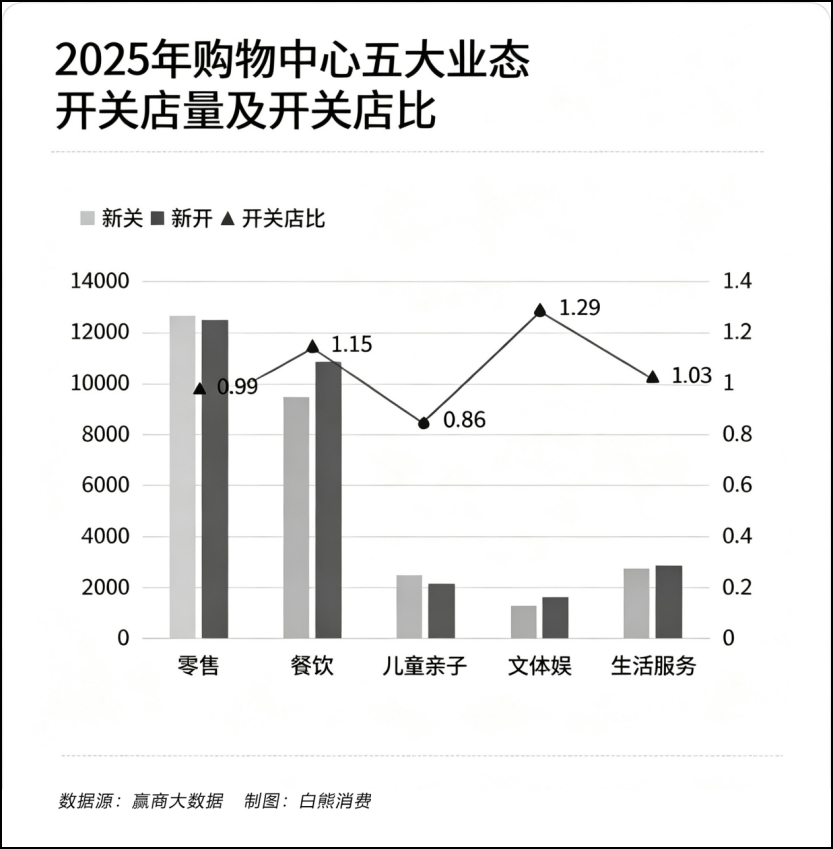
As a result, the leasing department of shopping malls no longer just passively accepts brand tenant applications.
They keep a close watch on category heat on Xiaohongshu and Douyin, and introduce popular-track brands in a targeted way. For “first stores in the city” and internet-famous热门 brands, malls will actively provide a certain period of rent-free time and give priority to prime storefronts on the first floor or near subway exits.
They may even offer some renovation subsidies.
A direct result is category clustering. Between 2024 and 2025, Shanghai iAPM did a major reconfiguration of its dining floors, clearing out some traditional full-service dining brands that had been operating for years, and concentrated on bringing in first stores in internet-famous tracks like cloud-Guizhou fusion cuisine, Thai bistro snack bars, and creative bistros.
According to industry insiders’ comments, after the adjustments, customer flow in the dining floors increased significantly.
In addition, from Beijing’s Changying Tiandi and Chaoyang Joy City to Shangsheng Hui, they are also launching a large number of Japanese food stores in quick succession.
According to statistics from Professional Catering Network, Japanese specialty restaurants—sushi, tonkatsu, tempura, sukiyaki, yakitori, teppanyaki, and more—are gathered in large numbers. In a single mall, there can be more than 20 Japanese food stores.
So you feel like “there are Japanese food places everywhere lately”—to a large extent, that’s the result of the mall leasing department’s proactive planning.
In this process, some kind of binding may form between the mall and the dining creation group.
For the leasing department, partnering with a dining creation group that simultaneously operates five or six brands is far more efficient than coordinating with dozens of independent small brands.
When a brand’s hype declines, the group can directly switch the storefront to another new brand under its umbrella, saving the cost of renegotiating the location. The mall also avoids the risk of empty storefronts.
Jiemian News reported that the creative Guangxi cuisine brand Mánran and Monon, which focuses on Guangxi cassia-fish, come from the same planning team. In Shanghai’s CP Jing’an, next to Mánran is Monon.
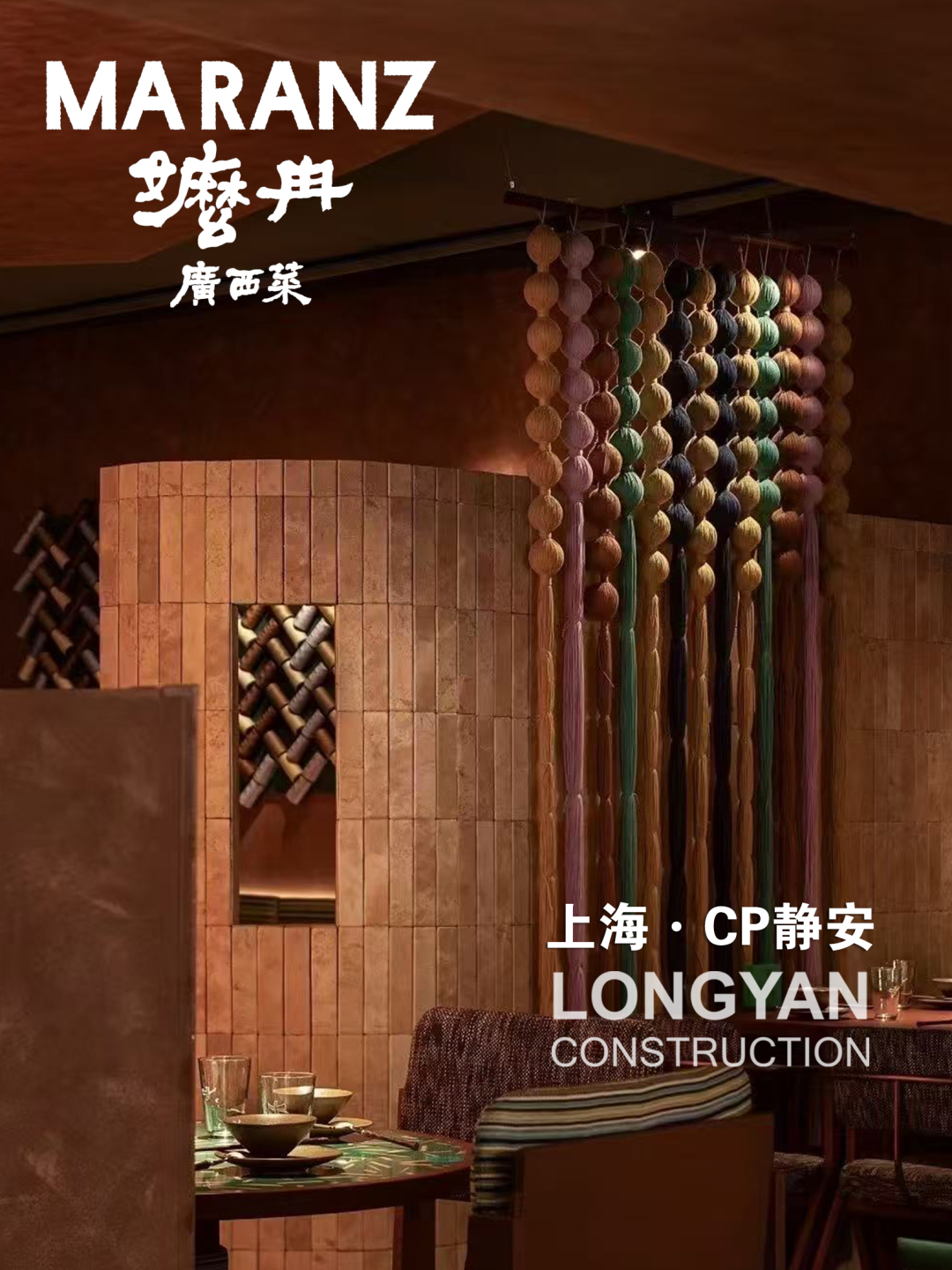
It’s said that Shanghai CP Jing’an is operated on behalf of China Resources Vientiane Life (China Resources Land’s commercial operations). After Mánran’s first store landed there, it was quickly replicated across multiple China Resources projects nationwide, such as Vientiane City and Vientiane Utopia.
And a person close to China Resources Land claims that local cuisines can attract traffic, but malls need customer flow to drive the business. A mature dining group can provide stable brands for leasing, and it can even be replicated across different commercial projects within the mall ecosystem. The two support each other with a mutual safety net, pushing each other forward.
Online creates desire; offline makes it visible. When you scroll through Xiaohongshu and see 10 posts about the same shop, then you see its storefront and the queueing crowd in the mall—your belief that “this place is really popular” completes the loop.
And all of this isn’t that strongly related to whether the dishes themselves are good. Not as much as you might think.
Internet-famous restaurants are batch-incubated.
Playing traffic online and taking up storefronts offline, to a certain extent, aligns with the public’s understanding of how dining operations work.
Exactly—behind this layer of normalcy, there are more stories that you and I can see. For example, in traditional dining, the basic communication logic is often family inheritance: passed down from generation to generation, with sometimes only a deep dive into historical stories and intangible cultural heritage.
But what many people don’t know is that the product forms and brand stories of internet-famous food are almost all designed.
The “Wuhan-bang” brand-making factory
In China’s domestic internet-famous dining category track, there is an undeniable force: the “Wuhan-bang” mentioned above. The standout representatives include five dining creation groups headquartered in Wuhan: WanShijie, DeChuan, GanQu Restaurant Creation, ZhuoZhi FangJian, and FanJia.
They batch-produce queue “kings” across national shopping centers, and they’re also called the “Five Little Dragons of Wuhan Dining.”
Under WanShijie’s umbrella, they simultaneously operate multiple brands, including NEED Korean creative cuisine, Yeego cloud-Guizhou fusion cuisine, Pick Chill, One More Thai Thai bistro snack bar, and 麻布食堂, among others.
DeChuan incubated O'eat and Guizhou cuisine (Guui Guizhou dishes); ZhuoZhi FangJian did NIBOO mud boots; and GanQu Restaurant Creation launched the Three Mountains Firepot.
They usually first polish sample stores in local smaller commercial districts in Wuhan to validate the profitability model and the queuing effect; then, as “the first store in the city,” they enter benchmark malls in Beijing, Shanghai, Guangzhou, and Shenzhen, using the momentum of first-tier markets as reverse-backed proof; finally, they replicate the strategy across top commercial systems nationwide, such as Wanda City and Longfor Tianjie.
According to a report by First Financial YiMagazine, this path of “originating in new-tier cities, exploding in first-tier cities, and replicating nationwide” has already become the standard expansion template for internet-famous dining.
So when we eat different styles of internet-famous shops in different cities and different malls, after tracing the equity back, it often points to the same parent company headquartered in Wuhan.
It’s said that from a brand’s proposal stage, category transformation, and sample-store renovation to opening, the fastest timeline only takes 45 days. Once the sample store’s queuing model is proven, it can start franchising within 6 months, and within one year it can complete the layout of 10+ core cities.
When a brand’s heat declines, the group doesn’t put effort into redesigning it. Instead, it incubates the next new brand directly, even switching the “skin” on the same storefront to continue operating.
If you judge this through the lens of product lifecycle management, the move is close to heresy. Because the “Wuhan-bang” doesn’t bet on the lifecycle of a single brand—it hedges risk using a matrix of brands.
Taking Pretty Rice as an example: according to a report by the Catering Business Boss Reference, this category has already been iterated by the “Wuhan-bang” to version 3.0.
The first generation went viral thanks to single-store aesthetics and high average check; the representative is a creative western restaurant model. The second generation entered MCN-style mass incubation—one group operating 5+ brands at the same time, using a matrix to diversify risk.
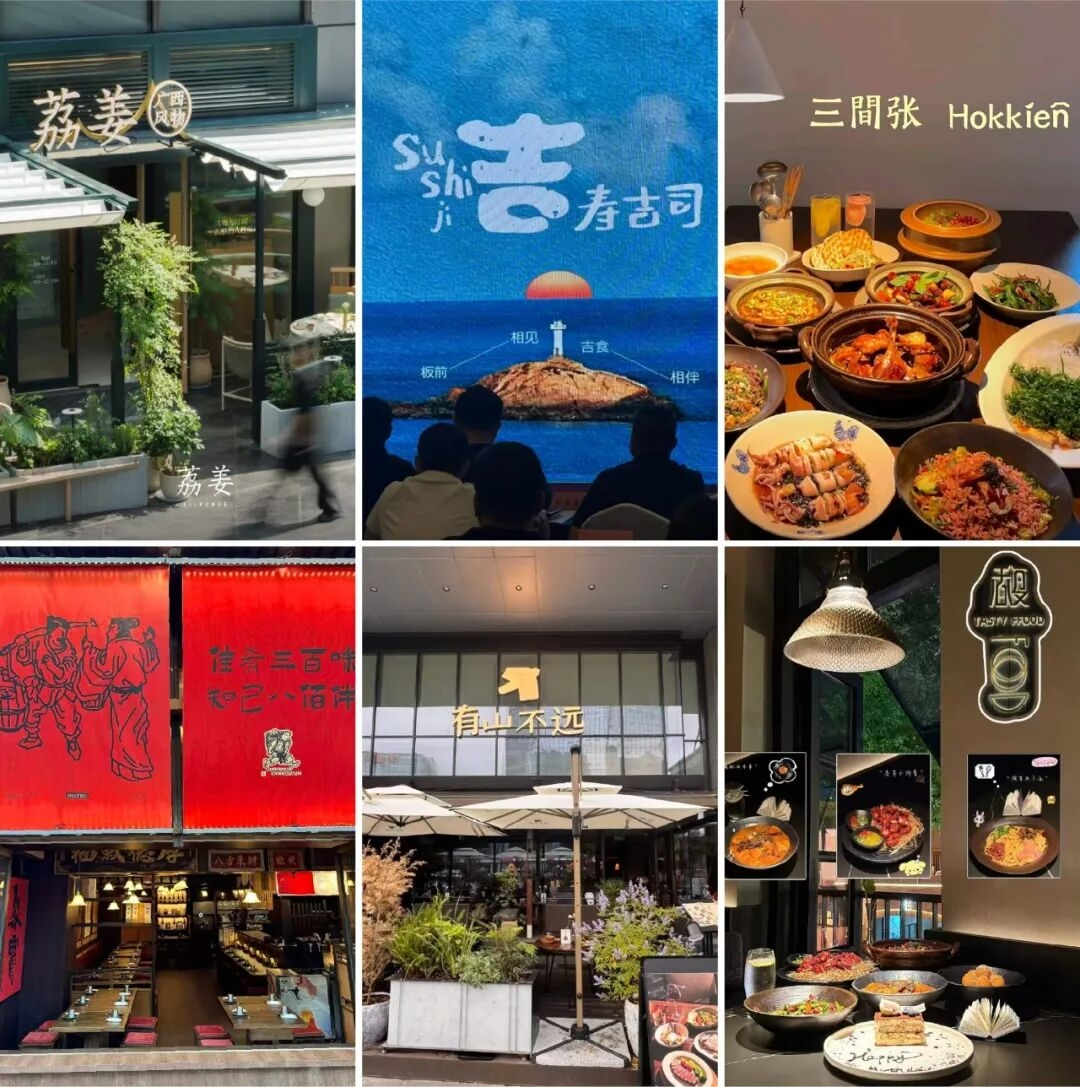
Now, the “third generation” is even more niche—Guangxi suan yi, Minnan snacks, Taizhou seafood, and more that are currently sweeping the country. Of course, behind these, those dining creation groups are also gradually layering cultural narratives, trying to extend the hotspot’s lifecycle.
But no matter which generation it iterates to, the core step of product R&D never changes: camera testing.
Industry insiders told the media that in the dish R&D process for the Pretty Rice brand, the priority of “camera-ready indicators”—plating, color, the sauce pull effect, and the height of ingredient stacking—often outweighs adjustments to taste.
When a dish is served, first take a photo with your phone’s camera to check whether the color is saturated enough and whether the visuals have enough impact—then decide whether to adjust.
This isn’t a joke—it’s standard industry practice. McLuhan (Understanding Media) already said that media form itself shapes people’s perception and behavior patterns. In the Xiaohongshu era, the spread efficiency of a dish directly determines whether it can become a traffic driver.
Super franchisees: arbitrageurs who “time the hotspots”
After the brand is built and the heat is ignited, it’s the franchisees who truly pull out capital to fill the streets and alleys with stores.
Within the franchising system, there are two completely different groups: ordinary small franchisees and super franchisees.
Super franchisees are completely different from the old-school “couple who open a store to make ends meet” franchisees.
ZhenGu Research Institute mentioned in an article that they usually hold dozens to hundreds of stores, control high-quality storefront resources in core urban business districts, and have an entire team covering site selection, renovation, and inspections.
For super franchisees, franchising isn’t entrepreneurship—it’s investment, and a kind of arbitrage game where you can precisely “time the points.” They will, before the brand really blows up, judge its upward potential early by conducting on-site undercover visits and measuring real revenue by蹲点ing across weekdays and weekends. Then in the early stage of the hotspot, they lock down stores in batches and open intensively, capturing all the benefits of the brand’s rise.
Eat only the fish body, not the fish tail.
By the time ordinary small franchisees see the heat on short videos and rush to follow the trend, the track has already started competing intensely and profits are thinner. At this point, super franchisees may exit in an orderly way and move to the next promising track.
The classic example is Bawang Cha Ji. According to the report above, in a super franchisee community, nearly 100 franchisees had already laid out plans for Bawang Cha Ji in advance. In the brand’s early development stage, per-store franchise investment was about 600k–700k yuan. Those who entered early could break even in as fast as 8 months, and annual profit per store exceeded one million yuan.
By 2025, however, the franchise cost for stores in the same city, same location has already risen to more than 1.5 million yuan. The payback period has stretched to more than 24 months, and profit space has been significantly compressed.
The super franchisees who enter early and the small followers who franchise later aren’t making money from the same pot.
That’s also why super franchisees are widely reported by the media—Laohhei. Using a methodology based on continuous 3-day undercover visits to stores, recording customer flow and table-turning rates at different time slots, he managed to grow the store scale to over 300 stores within 5 years.
His judgment criteria are very practical: whether a brand is worth getting into—not based on Xiaohongshu hype, but whether there’s a queue at 2 p.m. on weekdays and whether the average check can cover rent and labor costs.
The rise of super franchisees is also changing the power relationship between the brand owner and the franchisee.
In the past, brand owners set the rules and franchisees executed them. Now, super franchisees who hold core storefronts and local operating capabilities have increasingly more bargaining chips in site selection, pricing, and marketing activities.
To expand nationwide, chain brands increasingly rely on these “local armies.”
According to ZhenGu Research Institute, super franchisees manufacture popularity—and also decide when popularity ends. What you eat in a mall, they decided it months earlier.
In contrast, ordinary small franchisees face much tougher conditions.
Data shows that the average lifecycle of internet-famous dining stores is only 8–12 months, and survival beyond three years is less than 10%. Many small franchisees enter when the hype is at its highest, taking on high rent, high renovation costs, and ongoing marketing investment. Before they even recoup costs, the momentum has already passed.
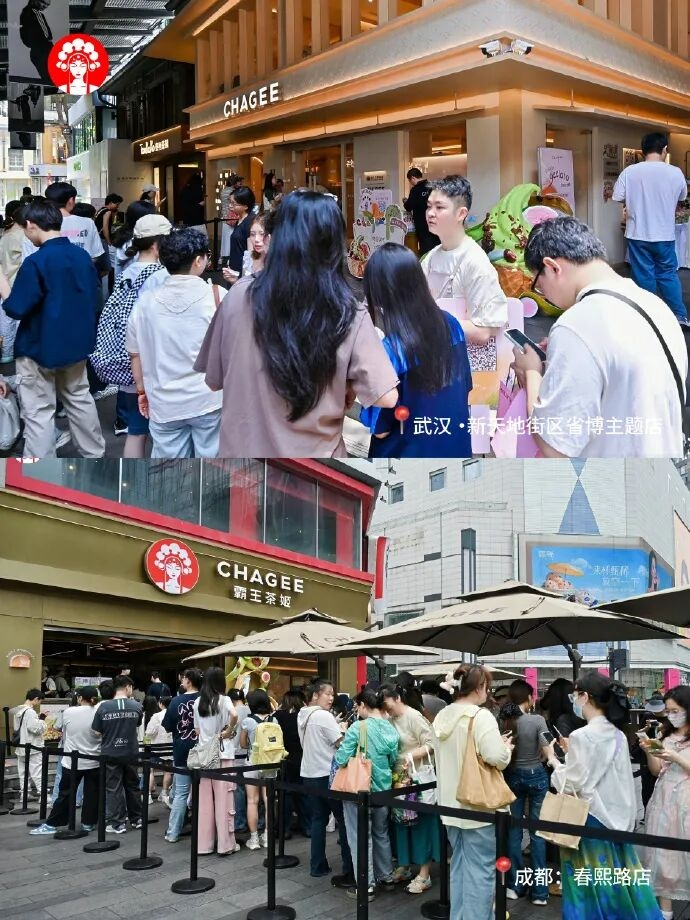
The most well-known is Ameigo’s franchisee, Fan Hui.
Ameigo Meiguo is a cloud-Guangxi–Sichuan Bistro chain brand expanding quickly in recent years. But franchisee Fan Hui invested 4 million yuan to open a store, and after just 4 months, revenue fell off a cliff.
On top of the fact that the stores couldn’t keep issuing proper invoices to customers, and that the business license showed abnormal declarations, Fan Hui finally smashed the store and pursued rights.
But in reality, on the internet-famous dining track, there are quite a few “Fan Huis” lying around—just with the category name changed each time.
Without standardization, there is no national popularity.
After peeling away the surface layers of traffic, brands, and capital, you eventually reach the most basic—and hardest-core—layer of dining popularity: the supply chain.
Many people think flavor determines whether a food can go viral. But in the era of chain dining, the real threshold is standardization.
Whether a dish can be industrially replicated, and whether it can be stably reproduced in any store nationwide, determines whether it has the qualification to become a national-level hotspot.
The supply chain is no longer just the back end.
In the past, the upstream supply chain’s role was very clear: the brand owner提出需求, and factories produce per order.
But now, this relationship is reversing. More and more ingredient factories are proactively developing new flavors and new products. They deliver solutions to brand owners in the opposite direction. They even test with consumers first, and then push the commercial rollout of the brand.
Coconut latte is the classic case. Years ago, Brightly (Mingliang) Company interviewed the founder of Hainan YeChui (YeeTree), Wu Qixing. Only then did the public realize that the creator of this phenomenon-level flagship product was not Luckin—it was the upstream ingredient manufacturer, YeChui.
Since 2017, YeChui has been developing frozen coconut milk made via cold compression plus pasteurization and low-temperature preservation. By blending coconut meat and coconut water, it solves the traditional problem of high-temperature sterilization causing significant loss of coconut juice aroma and a bland mouthfeel.
To verify that fresh coconut milk and coffee work well together, YeChui even invested nearly 1 million yuan in Sanya to open a test store. After running the market feedback, they closed it directly.
At the 2019 Shanghai Hotel Supplies Expo, YeChui proactively promoted fresh coconut milk to the outside world. Wu Qixing’s judgment was that the coconut milk flavor is gentle and not as aggressive as oats or almonds—it makes an ideal companion for coffee.
After the expo, YeChui proactively contacted Luckin and offered product and application ideas. The two sides continued jointly refining the formula until April 2021, when Luckin officially launched the coconut latte.
Two months after launch, Luckin only had 5,200 stores, while sales of the coconut-series drinks surpassed 10 million cups in a single month—setting a new record for Luckin’s new products.
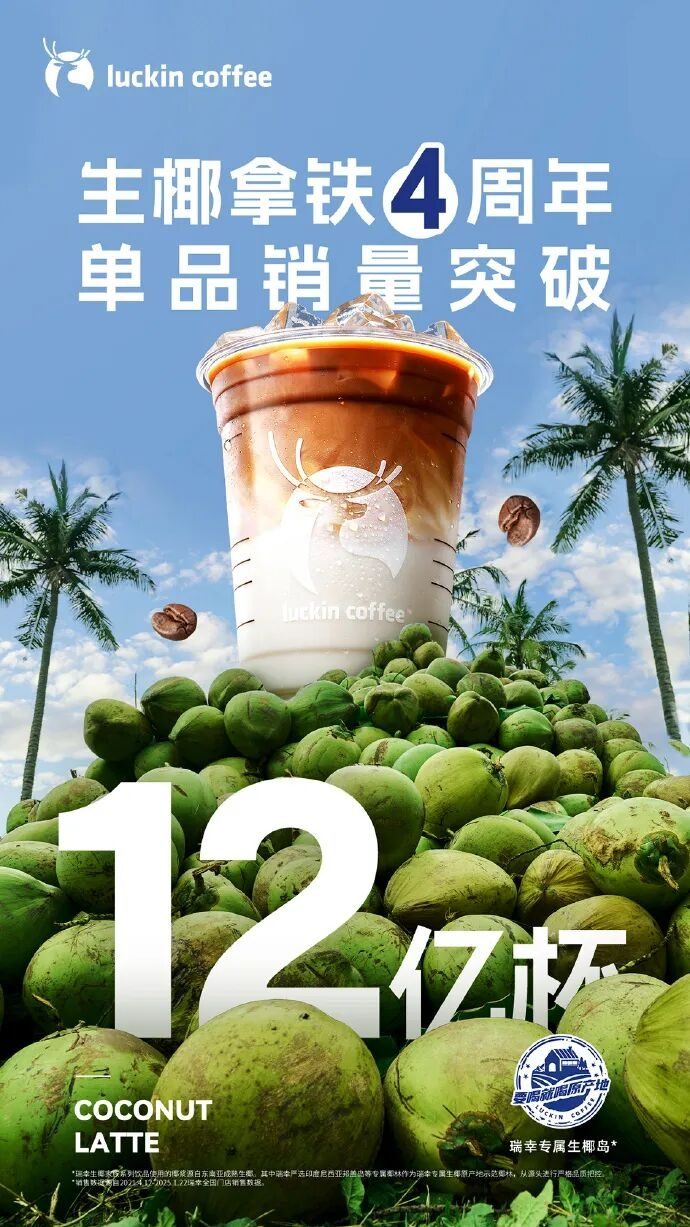
After that, nearly all top tea beverage and coffee brands—including Heytea, Mixue, Lelecha, Tims, and others—collectively followed suit with the coconut series. The coconut ingredient market exploded, and online sales for brands like FiNo and Coconut Tree surged dramatically.
A single upstream ingredient directly gives birth to an entire beverage category sweeping across the country.
Standardization lowers the threshold to open a store
The roast duck that spread nationwide in the past two years also can’t be separated from the bottom-layer support of the supply chain. After a small shop in Chengdu sparked attention, seasoning factories like Chuanwazi and Tiamin Foods quickly launched specialized bases for “stir-fried roast-dish” and braised-flavor ingredient packs within just one month.
On the 1688 platform, the number of roast duck semi-finished suppliers surged from dozens to several hundred, and the cost of base sauce per portion was driven extremely low. Pre-made roast duck semi-finished products are also mass-produced. Nationwide, over 90% of following small shops don’t need to braise the duck or simmer the soup base themselves—they simply pick up ingredients and heat them to serve.
This means that an entrepreneur with zero dining experience can open a roast duck shop just by renting a storefront, buying a batch of ingredient packs and semi-finished products.
And the sharp drop in the threshold for opening stores directly leads to the category’s rapid expansion—and rapid disappearance.
The spread logic of Thai milk tea is similar.
When Luckin Coffee promoted Thai milk tea, it said the inspiration came from its legal team going to Thailand and winning a trademark infringement case.
But in fact, behind the scenes, tea beverage supply-chain companies had already directly released Thai black tea concentrate and pre-mixed salted cheese milk foam powder. Stores don’t need to boil black tea on-site, and they don’t need to mix the milk foam. The time to launch new items is cut from 7 days to 1 day, and material costs drop by about 80%.
So Thai milk tea spread from specialty tea shops to snack stores, convenience stores, and even street stalls.
And when you look at the prospectus of HuiJin Food that’s in the process of IPO, as China’s largest third-party provider of tailored Chinese compound seasoning products, they had already invested in R&D and formula optimization years before—after the Guizhou sour soup flavor won mainstream market recognition.
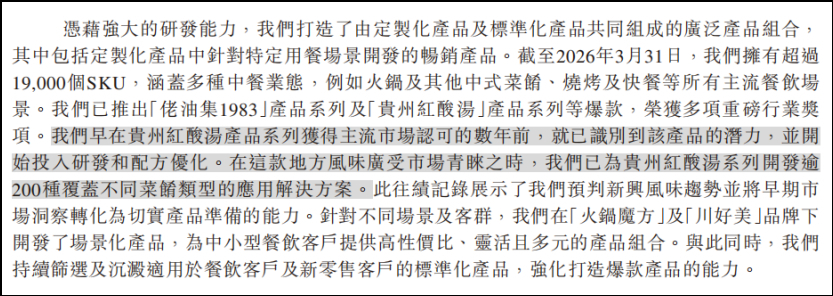
And when this local flavor becomes widely favored by the market, HuiJin Food has already developed more than 200 application solution plans covering different dish types for the Guizhou red sour soup series. Even their Guizhou red sour soup seasoning products have been included in “the 2024 gold products for dining supply chains.”
A standardized mass production of a vertical ingredient directly catalyzes an entirely new category.
Food that can’t leave its origin
But if you think the other way: China has countless local snacks with excellent flavors, yet they remain limited to local streets and alleys and can’t become a nationwide trend. The core reason is often not that they aren’t tasty enough, but that they can’t be standardized and can’t be industrially pre-prepared.
Some categories rely heavily on on-site manual production, have very high requirements for ingredient freshness, or have flavors that are too regional. It’s hard to compress them into a bag of ingredient packs or a single set of semi-finished products. Without standardization, it means each store’s output depends on an individual chef’s skill level. That limits expansion speed, makes quality unstable, and keeps costs high.
Such a category can become a local calling card, but it’s hard for it to become a national hotspot.
That’s also why, among dining categories that have become popular nationwide, almost all have gone through flavor transformation. To adapt to standardized production and a broader customer base, the stimulating aromas of local snacks are toned down, flavors become milder, and the cooking process is simplified.
After Guangxi suan yi entered malls, the level of sourness and spiciness was adjusted; the sour soup concentration of Guizhou sour fish was diluted; and the spiciness level of Jiangxi stir-fried small dishes was graded.
Of course, these transformations also expand the market for the category, and make some longtime diners feel it’s no longer authentic.
This is the cost of popularity—and the inevitable outcome of standardization.
Reference materials:
[1] Jiemian News, making dining trends popular
[2] First Financial YiMagazine, behind the cloud-Guangxi–Sichuan bistro: the popular cuisine styles do have pushers
[3] Operation Research Society: wilder than the Zhengzhou-bang’s playbook—on Xiaohongshu, the Wuhan-bang batches out “queue kings”
[4] Catering Business Boss Reference: The Wuhan-bang, rolling Pretty Rice into the third generation
[5] ZhenGu Research Institute, super franchisees—those who take the seat in the era of ten-thousand stores
[6] Professional Catering Network: They’ve gone wild! 23 Japanese food stores squeezed into the same mall—another new “arena of hell”?