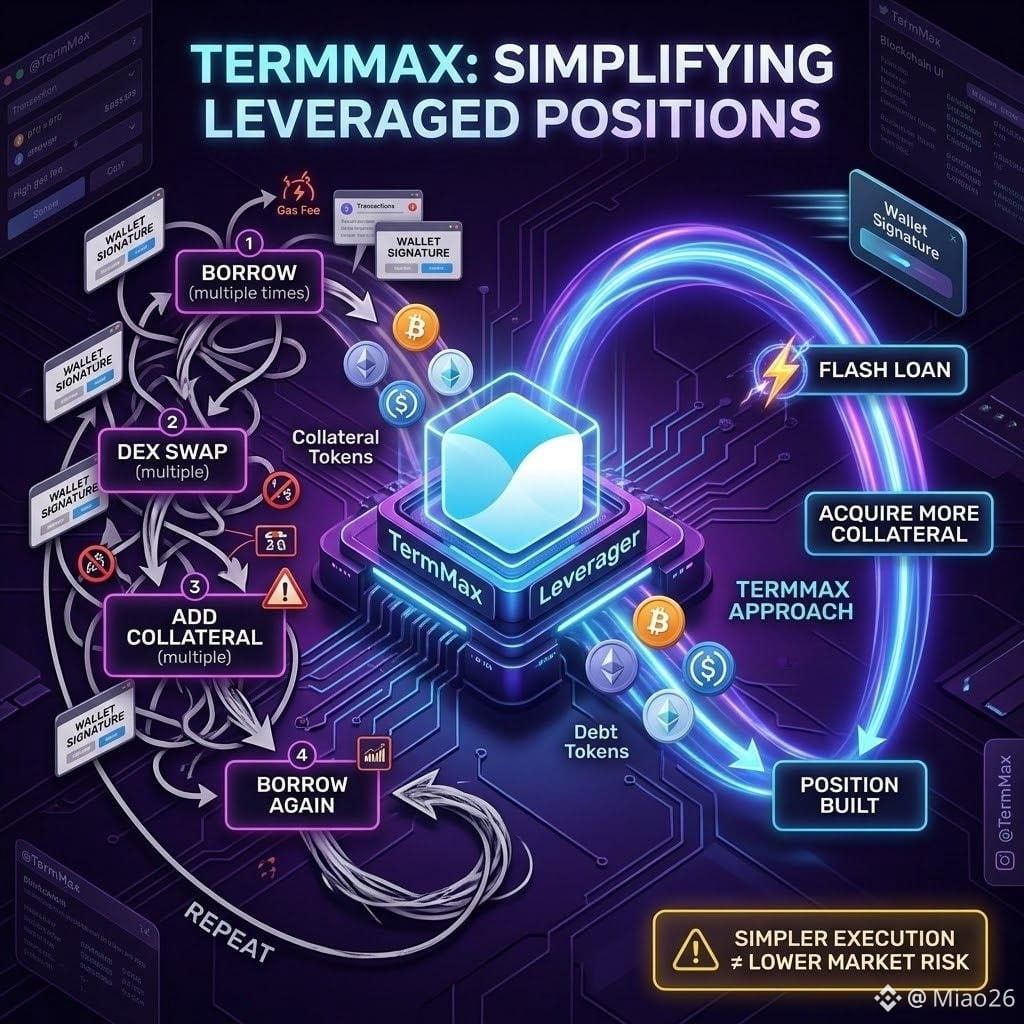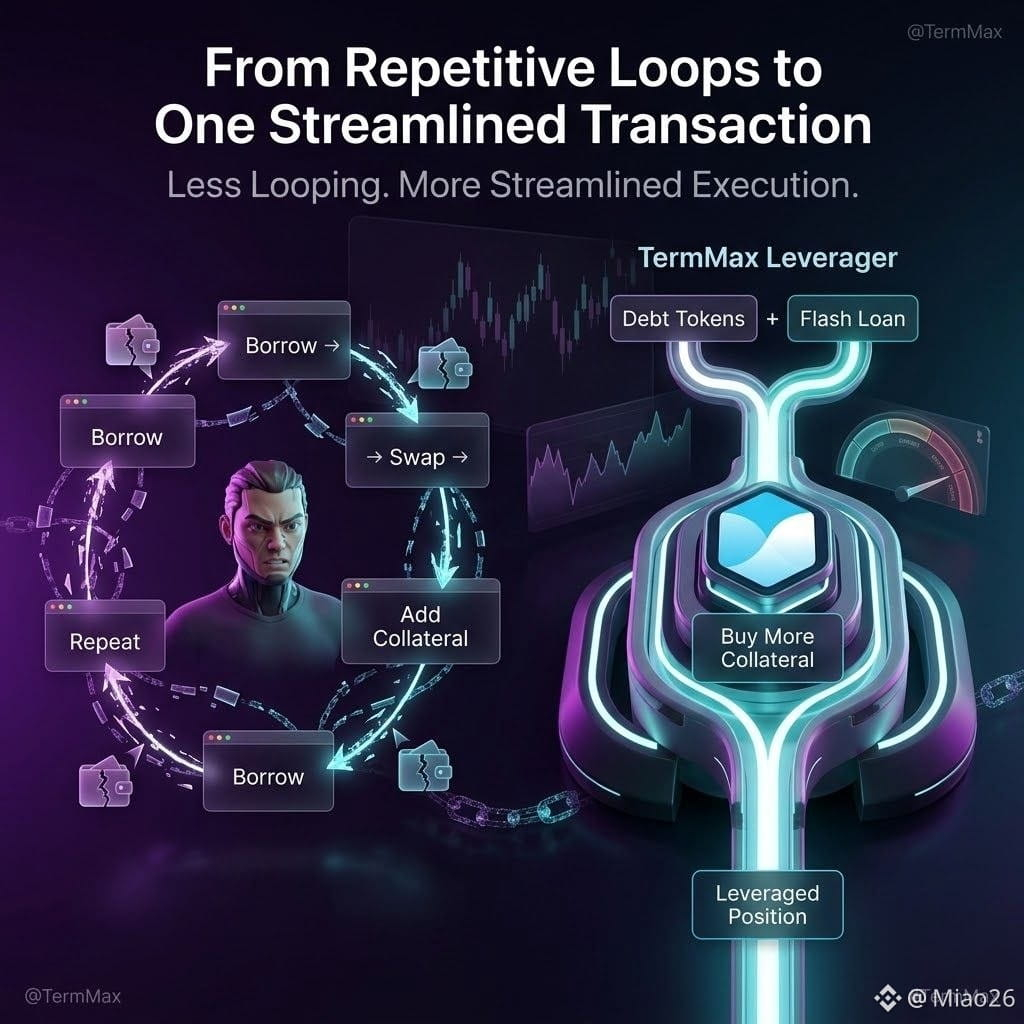
I’ve always found the idea of leveraged looping interesting, but the execution can be a little frustrating. In a traditional setup, you may need to borrow, swap, add collateral, borrow again, and repeat the process across multiple transactions. Keeping track of every step can make a simple strategy feel unnecessarily complicated.
That’s where @TermMax takes a different approach. Its leverager can use borrowed debt tokens to increase exposure to the underlying collateral asset, with the process handled through a single transaction using flash loans.
What I find useful here isn’t simply the word “leverage.” It’s the reduction in steps. Fewer manual transactions can mean less operational hassle when setting up a position.
There’s still risk involved, of course, especially because leverage increases exposure to price movements. So I wouldn’t see the design as making leverage safe.
For me, #TermMax is interesting because it tries to make the mechanics behind leveraged positions more straightforward. Instead of repeatedly looping through the same actions, the goal is to package that process into a much simpler transaction #TermMax
That’s where @TermMax takes a different approach. Its leverager can use borrowed debt tokens to increase exposure to the underlying collateral asset, with the process handled through a single transaction using flash loans.
What I find useful here isn’t simply the word “leverage.” It’s the reduction in steps. Fewer manual transactions can mean less operational hassle when setting up a position.
There’s still risk involved, of course, especially because leverage increases exposure to price movements. So I wouldn’t see the design as making leverage safe.
For me, #TermMax is interesting because it tries to make the mechanics behind leveraged positions more straightforward. Instead of repeatedly looping through the same actions, the goal is to package that process into a much simpler transaction #TermMax