#dusk $DUSK @Dusk
White water in the morning, Dusk docs from a tent at night.
I was checking one thing before sending a transaction: the gas limit.
I used to read that number almost like:
“this is what I’m about to pay.”
On Dusk, that’s not actually how it works.
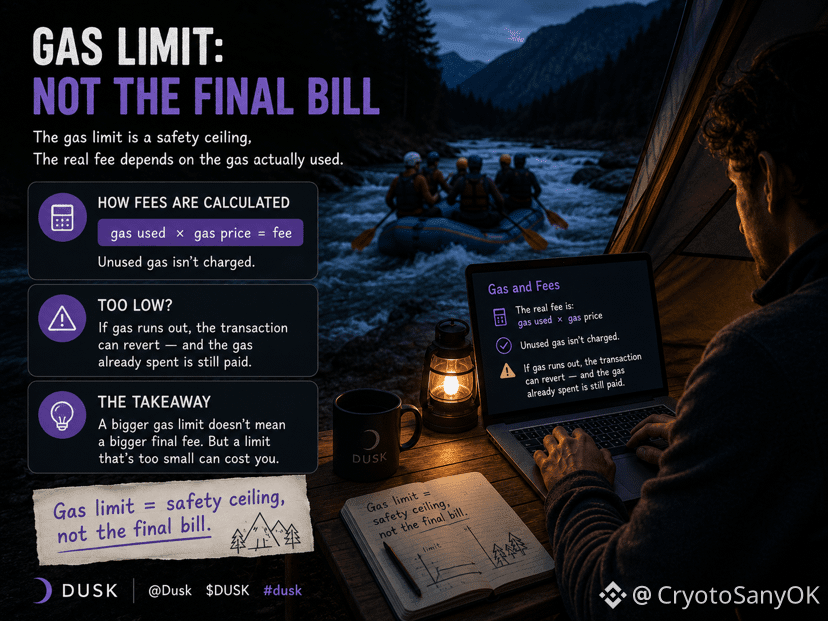
The gas limit is a ceiling on how much work the transaction is allowed to consume. The real fee depends on the gas actually used:
gas used × gas price
And unused gas isn’t charged.
The part I’d rather understand before sending anything from a tent with shaky signal is the opposite case.
Set the limit too low, let the transaction run out of gas, and the transaction can revert — while the gas already spent is still paid.
So a bigger gas limit doesn’t automatically mean a bigger final fee.
But a limit that’s too small can mean paying for computation that never finishes the job.
That changed how I read the confirmation screen.
Gas limit is a safety ceiling, not the final bill.
Small distinction. Pretty useful one.
White water in the morning, Dusk docs from a tent at night.
I was checking one thing before sending a transaction: the gas limit.
I used to read that number almost like:
“this is what I’m about to pay.”
On Dusk, that’s not actually how it works.
The gas limit is a ceiling on how much work the transaction is allowed to consume. The real fee depends on the gas actually used:
gas used × gas price
And unused gas isn’t charged.
The part I’d rather understand before sending anything from a tent with shaky signal is the opposite case.
Set the limit too low, let the transaction run out of gas, and the transaction can revert — while the gas already spent is still paid.
So a bigger gas limit doesn’t automatically mean a bigger final fee.
But a limit that’s too small can mean paying for computation that never finishes the job.
That changed how I read the confirmation screen.
Gas limit is a safety ceiling, not the final bill.
Small distinction. Pretty useful one.