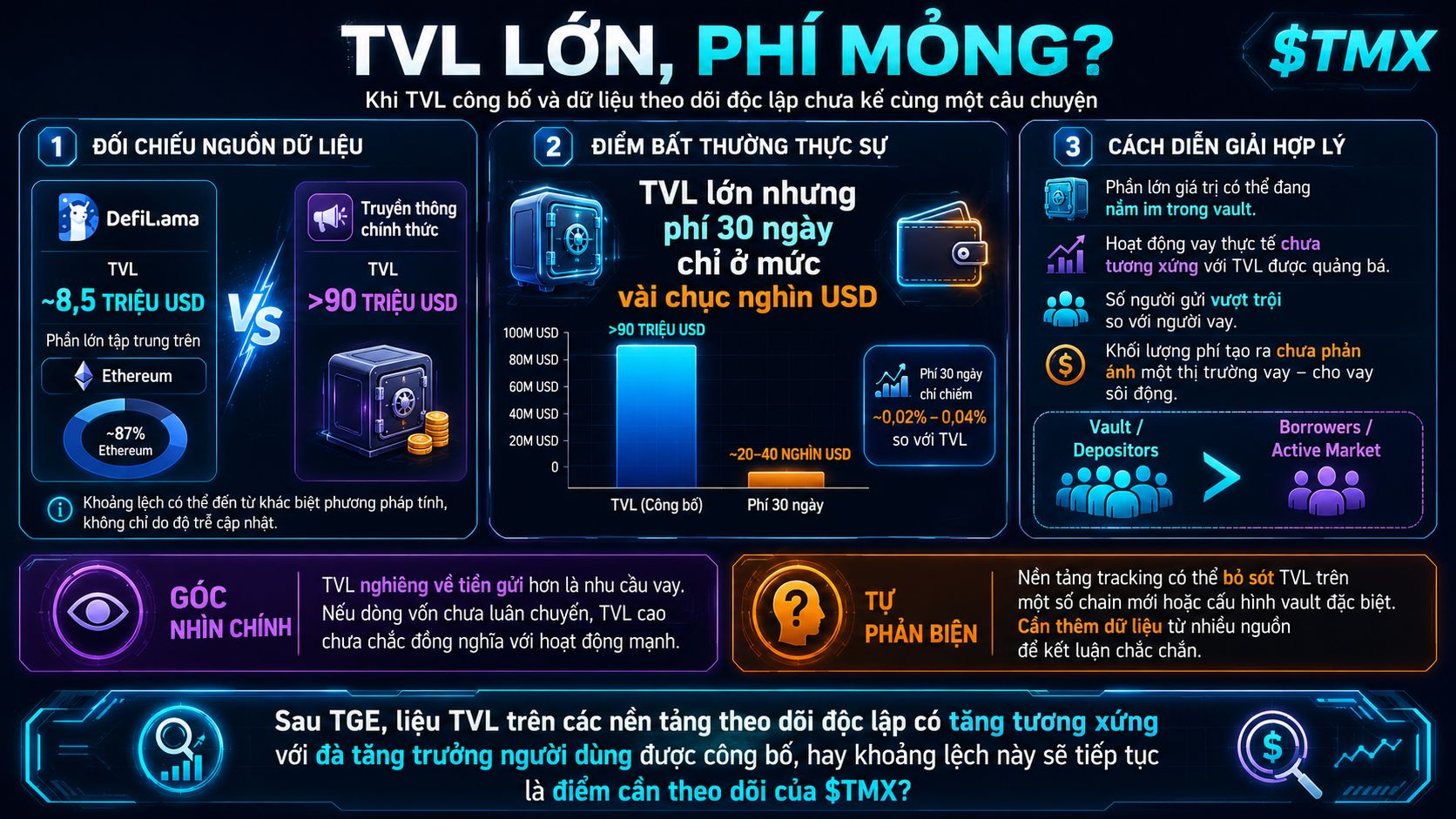
I notice something noteworthy when comparing the TVL numbers on DefiLlama with what @TermMax has published via official communication channels: the discrepancy between the two sources is not only a matter of update latency, but may also reflect differences in how TVL is calculated across measurement methods.
DefiLlama currently records TermMax’s TVL at a much more modest level than the widely publicized figure of more than 90 million USD, with most of it concentrated on Ethereum. Notably, the revenue collected over the most recent 30 days is only in the range of a few tens of thousands of USD.
This is the truly unusual point: a protocol with a large TVL but unusually thin fees generated often suggests that most of the “value locked” does not come from actively lending and borrowing, but may instead come from funds sitting idle in vaults.
This aligns with what I had seen earlier regarding the TVL structure being heavily skewed toward vault depositors rather than borrowers — but looking through the lens of fees earned makes the picture even clearer: not only are there relatively fewer borrowers compared to depositors, but even among the small number of ongoing lending transactions, the amount of fees generated is still disproportionate to the advertised TVL scale.
Counterpoint: tracking platforms like DefiLlama sometimes miss TVL on certain new chains or with specially configured vaults, so this gap may not fully and accurately reflect the entire picture.
I’m waiting to see, after the TGE, whether the actual TVL on independently tracked platforms will rise in step with the user growth that has been reported, or whether this discrepancy will continue to be the focus to watch for @TermMax .
#termmax #BTC $BTC
DefiLlama currently records TermMax’s TVL at a much more modest level than the widely publicized figure of more than 90 million USD, with most of it concentrated on Ethereum. Notably, the revenue collected over the most recent 30 days is only in the range of a few tens of thousands of USD.
This is the truly unusual point: a protocol with a large TVL but unusually thin fees generated often suggests that most of the “value locked” does not come from actively lending and borrowing, but may instead come from funds sitting idle in vaults.
This aligns with what I had seen earlier regarding the TVL structure being heavily skewed toward vault depositors rather than borrowers — but looking through the lens of fees earned makes the picture even clearer: not only are there relatively fewer borrowers compared to depositors, but even among the small number of ongoing lending transactions, the amount of fees generated is still disproportionate to the advertised TVL scale.
Counterpoint: tracking platforms like DefiLlama sometimes miss TVL on certain new chains or with specially configured vaults, so this gap may not fully and accurately reflect the entire picture.
I’m waiting to see, after the TGE, whether the actual TVL on independently tracked platforms will rise in step with the user growth that has been reported, or whether this discrepancy will continue to be the focus to watch for @TermMax .
#termmax #BTC $BTC