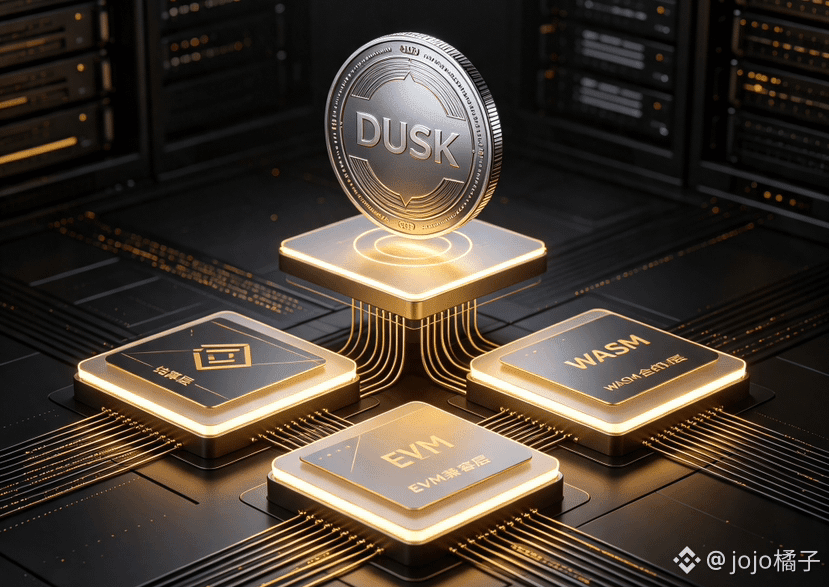
Dusk has been making a lot of moves recently: the mainnet has gone live, NPEX has signed on, and the Boreas protocol has been upgraded. But as I keep tracking everything, there are a few issues that I feel I can’t get around.
First is the definition of TVL. Data varies widely across different channels—some say it’s a few tens of millions, others claim it’s over a hundred million. If even the most basic locked-amount figure can’t be clearly stated, where does the credibility of an “ecosystem flourishing” narrative come from?
Second is the real value capture of the @Dusk coins. At the moment, DUSK is mainly used for Gas and staking, but the protocol’s actual income comes from the settlement fees of RWA assets’ trading fees on DuskTrade. The key question is whether that income can effectively flow back to the tokens. The design of Protocol Owned Liquidity is to buy back and inject liquidity into the pool—in essence, it’s equivalent to burning. The logic is sound, but the prerequisite is that there must be enough real on-chain trading volume. Given the current daily trading volume, it’s still a long way from having the conditions to kick off the deflationary engine.
Third is compliance—the double-edged sword. Dusk is deeply bound to MiCA and the EU regulatory framework. The upside is that institutions have clear rules to rely on. The downside is this: if regulatory details change, the underlying architecture may need to be modified accordingly. The deeper the compliance, the slower the turnaround.
I’m not denying Dusk’s direction. Privacy plus compliance really is a necessary condition for institutions to enter, and the direction is correct. But getting from “the direction is right” to “it can actually succeed” depends on countless execution details. Next, I’ll focus on three things: NPEX asset—whether the on-chain progress matches reality, changes in real on-chain trading volume, and network stability after the Boreas upgrade. Everything else is noise.#dusk $DUSK
First is the definition of TVL. Data varies widely across different channels—some say it’s a few tens of millions, others claim it’s over a hundred million. If even the most basic locked-amount figure can’t be clearly stated, where does the credibility of an “ecosystem flourishing” narrative come from?
Second is the real value capture of the @Dusk coins. At the moment, DUSK is mainly used for Gas and staking, but the protocol’s actual income comes from the settlement fees of RWA assets’ trading fees on DuskTrade. The key question is whether that income can effectively flow back to the tokens. The design of Protocol Owned Liquidity is to buy back and inject liquidity into the pool—in essence, it’s equivalent to burning. The logic is sound, but the prerequisite is that there must be enough real on-chain trading volume. Given the current daily trading volume, it’s still a long way from having the conditions to kick off the deflationary engine.
Third is compliance—the double-edged sword. Dusk is deeply bound to MiCA and the EU regulatory framework. The upside is that institutions have clear rules to rely on. The downside is this: if regulatory details change, the underlying architecture may need to be modified accordingly. The deeper the compliance, the slower the turnaround.
I’m not denying Dusk’s direction. Privacy plus compliance really is a necessary condition for institutions to enter, and the direction is correct. But getting from “the direction is right” to “it can actually succeed” depends on countless execution details. Next, I’ll focus on three things: NPEX asset—whether the on-chain progress matches reality, changes in real on-chain trading volume, and network stability after the Boreas upgrade. Everything else is noise.#dusk $DUSK