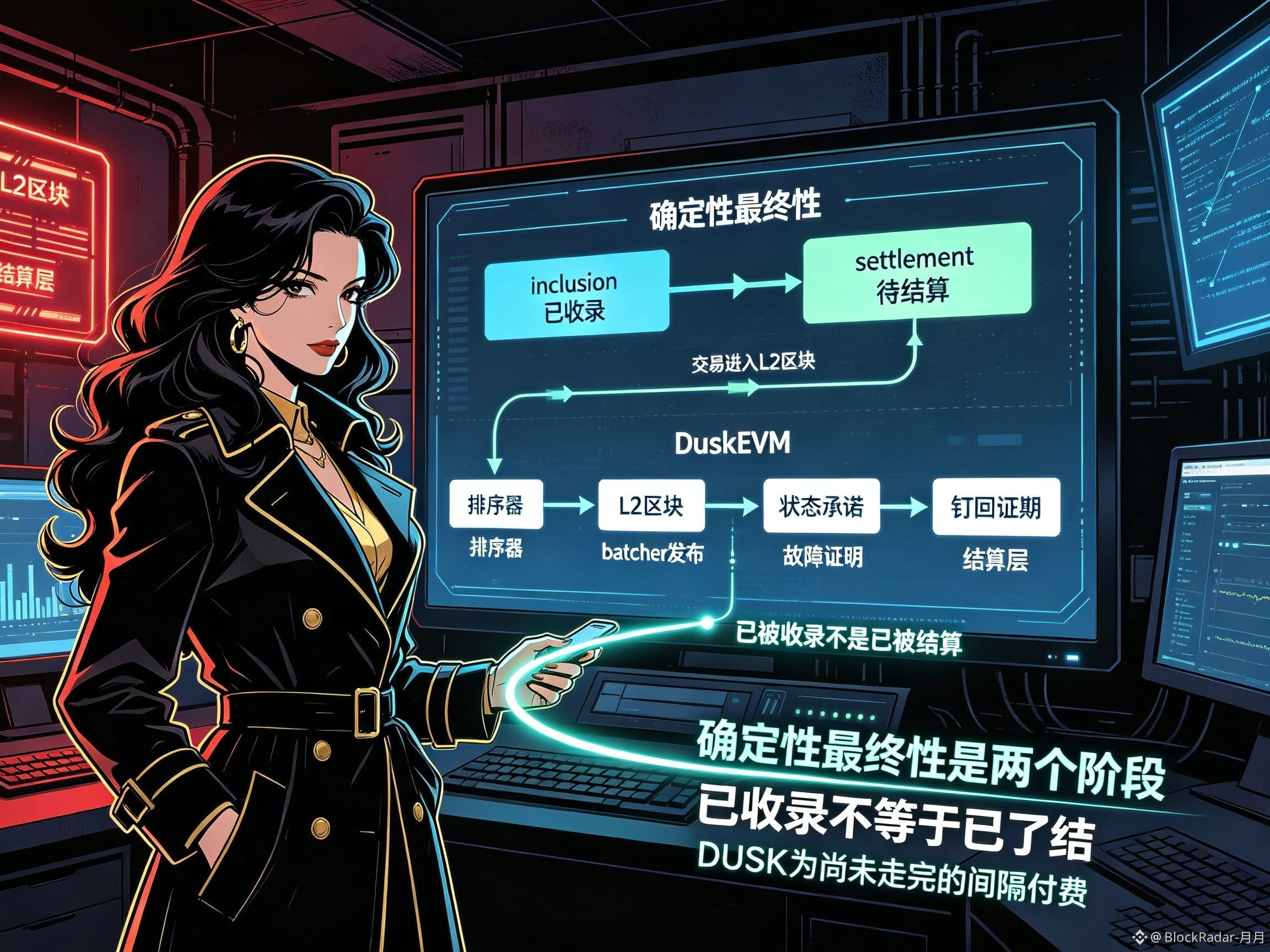
“Deterministic finality” stitches two things that aren’t yet unified. I’d rather split it apart: the first half promises a destination, while the second half admits that you still have to walk a bit after funds arrive. @Dusk The material is written very clearly—transactions land in the L2 chain quickly, but inclusion and settlement are two separate phases. Cross-layer participants shouldn’t infer finality from time alone. This is my risk warning.
DuskEVM flow: the sequencer, L2 blocks, batcher publishing, state commitments, and fault proofs are pinned down. Translated, it’s like a forward delivery: the user’s first step pays gas using $DUSK , and what they obtain is a “temporarily recorded” state—not an asset that has “been settled.” Neither the sequencer nor the batcher is responsible for making good on settlement. DUSK isn’t a settlement certificate; it’s the price paid for the interval that hasn’t finished yet, consumed before the outcome is proven.
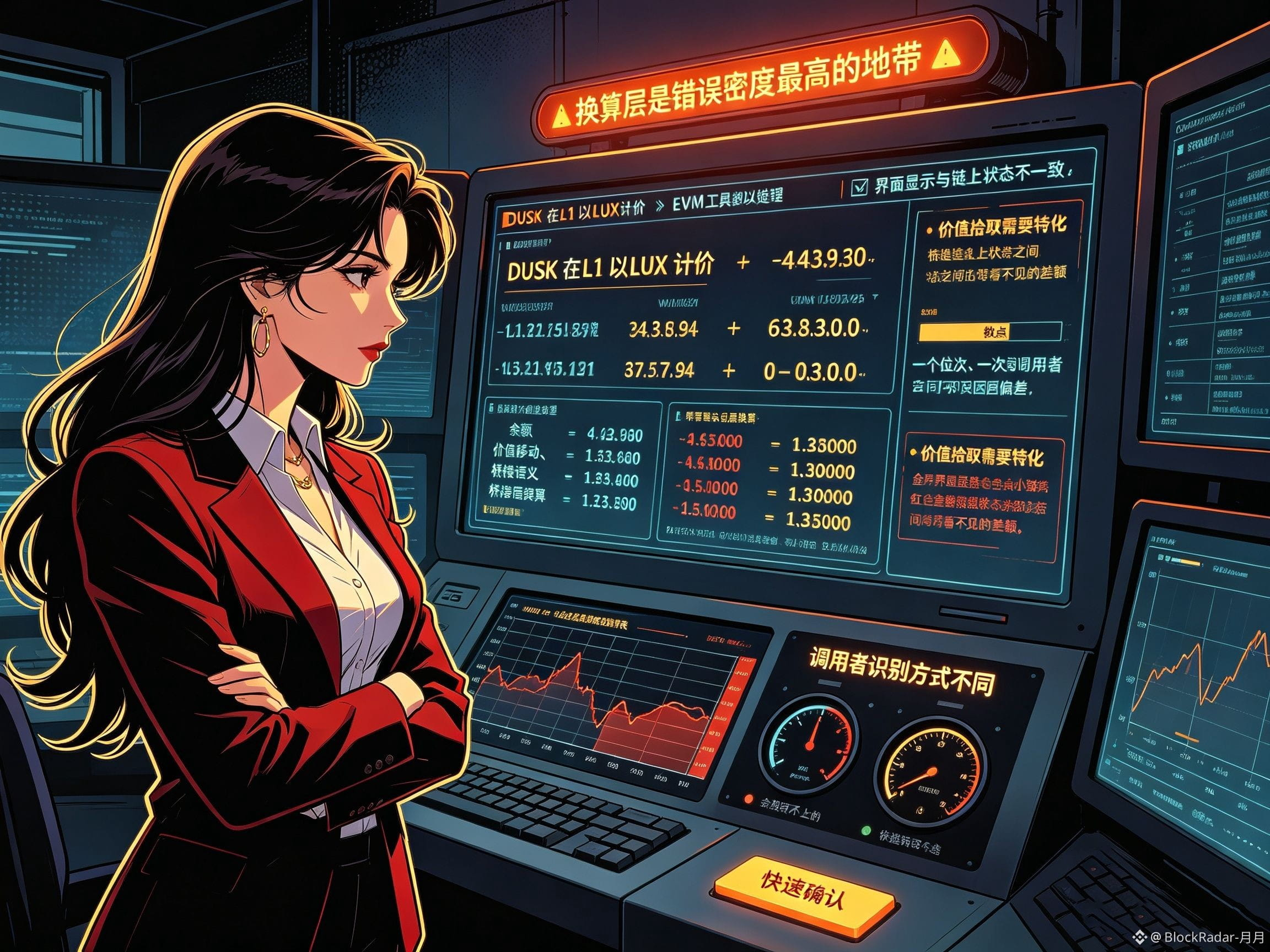
The conversion layer is also隐蔽. L1 is denominated in LUX, while the EVM toolchain expects WEI values. Balance and value movements must be converted layer by layer, and the contract’s way of identifying the caller also differs. An off-by-one position or a small decimal mismatch can create a discrepancy users can’t see. Speed makes that discrepancy more hidden—the faster you enter, the easier it is to treat “recorded” as “settled.”
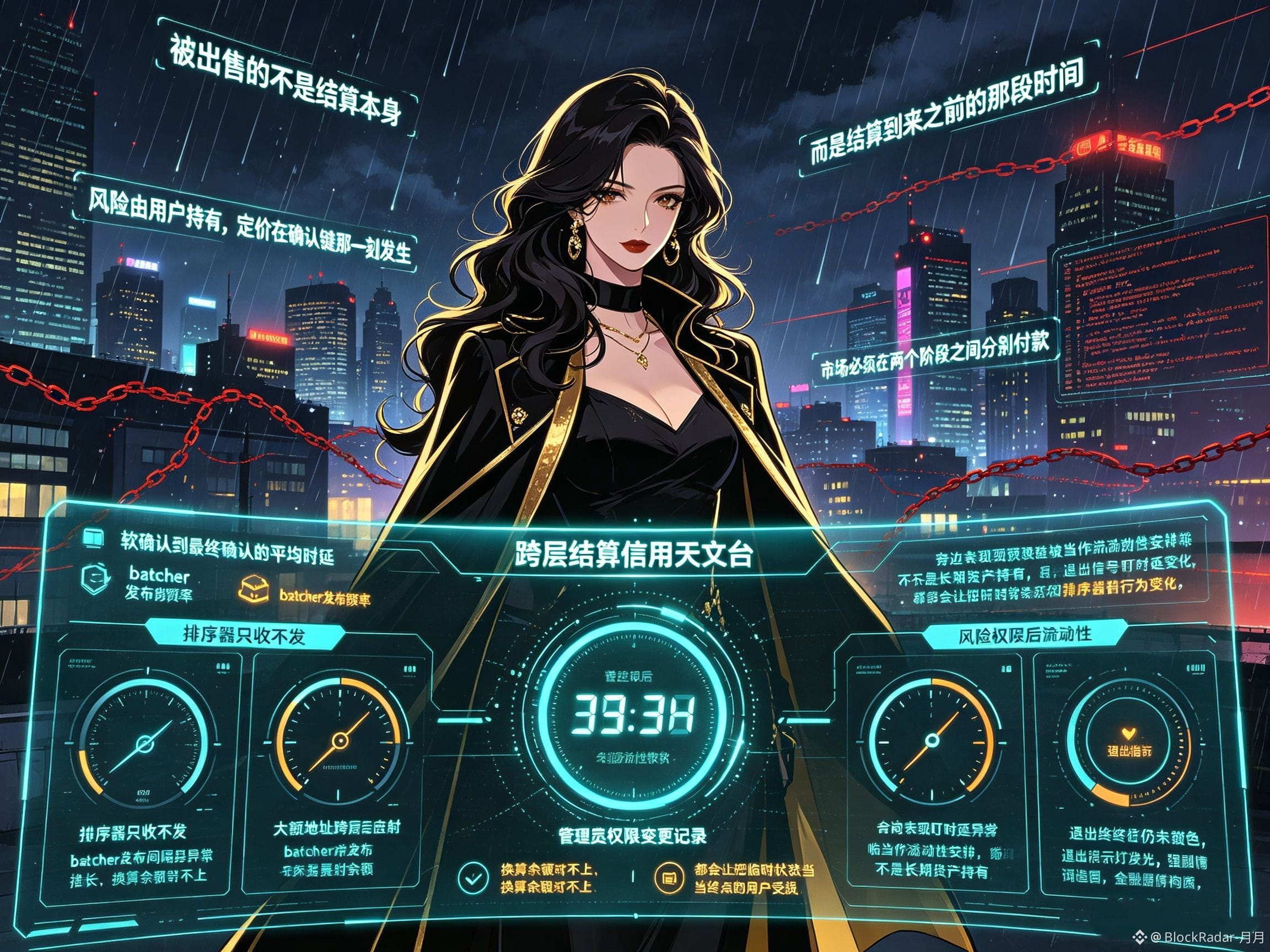
The triggering conditions aren’t complicated: the sequencer only takes and doesn’t send; the batcher’s interval is stretched; cross-layer balance conversion doesn’t line up; and permissions are changed without disclosure. The hardest hit are those who treat a temporary state as the endpoint. What’s being sold here isn’t settlement, but that slice of time before settlement. Risk is borne by the user, and pricing is set at the moment the confirm key is pressed. #dusk
I don’t advocate exiting—I just advocate pricing according to risk. Budget it like a liquidity arrangement. When you exit, watch for abnormal delays between recording and settlement, changes in sequencer behavior, monitor average latency, batcher frequency, cross-layer mapped balances, and administrator permission changes. Naming merges the two phases into one word, but the market must pay for them separately—this is the only judgment.
DuskEVM flow: the sequencer, L2 blocks, batcher publishing, state commitments, and fault proofs are pinned down. Translated, it’s like a forward delivery: the user’s first step pays gas using $DUSK , and what they obtain is a “temporarily recorded” state—not an asset that has “been settled.” Neither the sequencer nor the batcher is responsible for making good on settlement. DUSK isn’t a settlement certificate; it’s the price paid for the interval that hasn’t finished yet, consumed before the outcome is proven.
The conversion layer is also隐蔽. L1 is denominated in LUX, while the EVM toolchain expects WEI values. Balance and value movements must be converted layer by layer, and the contract’s way of identifying the caller also differs. An off-by-one position or a small decimal mismatch can create a discrepancy users can’t see. Speed makes that discrepancy more hidden—the faster you enter, the easier it is to treat “recorded” as “settled.”
The triggering conditions aren’t complicated: the sequencer only takes and doesn’t send; the batcher’s interval is stretched; cross-layer balance conversion doesn’t line up; and permissions are changed without disclosure. The hardest hit are those who treat a temporary state as the endpoint. What’s being sold here isn’t settlement, but that slice of time before settlement. Risk is borne by the user, and pricing is set at the moment the confirm key is pressed. #dusk
I don’t advocate exiting—I just advocate pricing according to risk. Budget it like a liquidity arrangement. When you exit, watch for abnormal delays between recording and settlement, changes in sequencer behavior, monitor average latency, batcher frequency, cross-layer mapped balances, and administrator permission changes. Naming merges the two phases into one word, but the market must pay for them separately—this is the only judgment.