The more I study TermMax, the more I realize that its interesting part is not simply “fixed-rate DeFi.”
The bigger idea is bringing borrowing, lending, leverage and trading into one market structure.
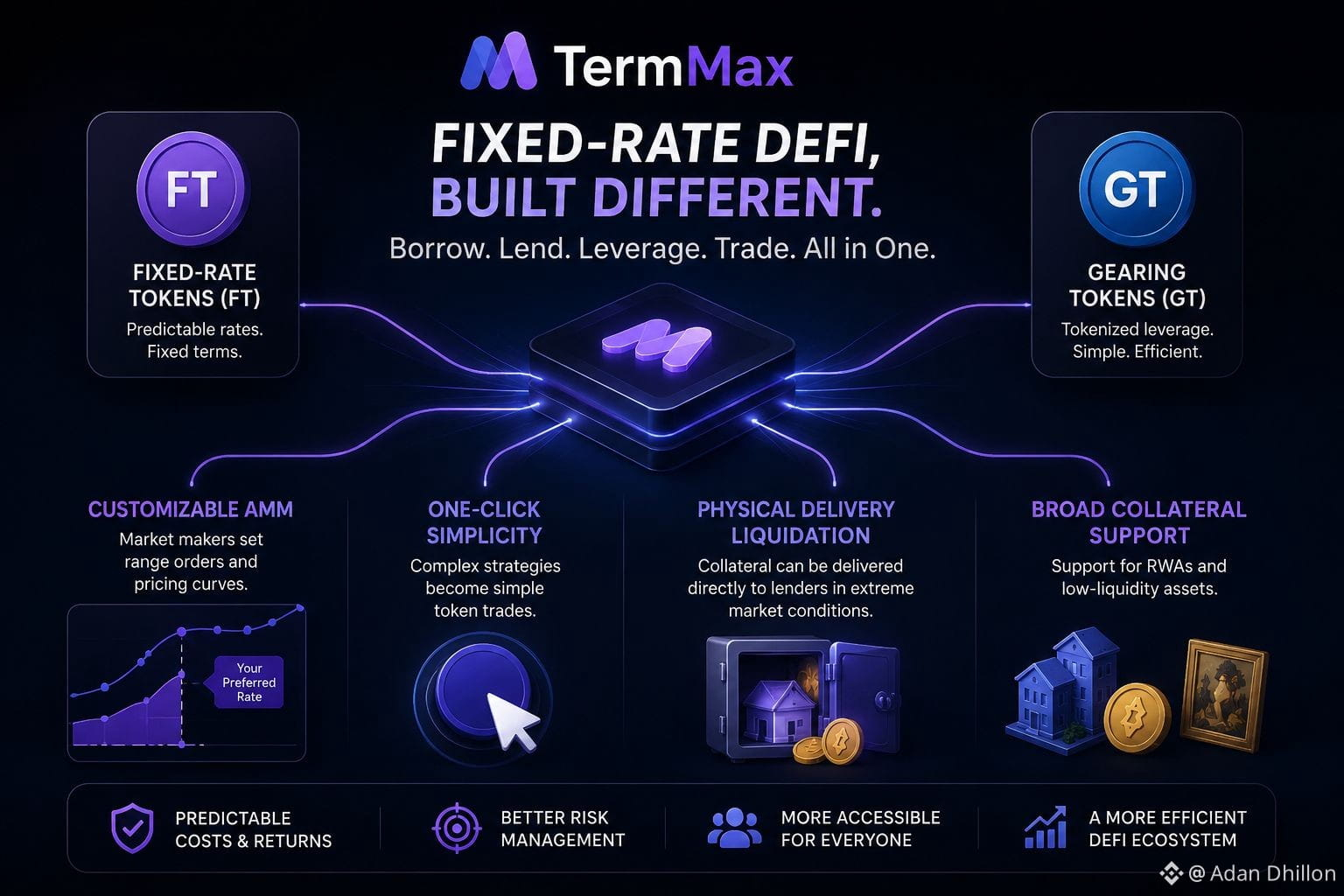
@TermMax introduces Fixed-Rate Tokens (FT) and Gearing Tokens (GT) to represent fixed-term financing and leveraged positions. That can turn strategies that normally require multiple transactions across different protocols into something users can interact with more directly.
What makes the design even more interesting is the AMM. Instead of relying on one rigid pricing curve, TermMax allows market makers to configure range orders, creating more flexibility around the rates at which liquidity is offered.
I also find the physical-delivery liquidation mechanism worth watching. When volatility or liquidity conditions make conventional liquidation difficult, collateral can potentially be delivered directly to lenders.
So the real innovation, in my view, is not one isolated feature. It is how these pieces fit together: predictable financing, tokenized positions, customizable liquidity and a different approach to liquidation.
Now the real test is execution: can this architecture attract sustainable liquidity and users beyond short-term incentives?
$GPS
#termmax @TermMax
The bigger idea is bringing borrowing, lending, leverage and trading into one market structure.
@TermMax introduces Fixed-Rate Tokens (FT) and Gearing Tokens (GT) to represent fixed-term financing and leveraged positions. That can turn strategies that normally require multiple transactions across different protocols into something users can interact with more directly.
What makes the design even more interesting is the AMM. Instead of relying on one rigid pricing curve, TermMax allows market makers to configure range orders, creating more flexibility around the rates at which liquidity is offered.
I also find the physical-delivery liquidation mechanism worth watching. When volatility or liquidity conditions make conventional liquidation difficult, collateral can potentially be delivered directly to lenders.
So the real innovation, in my view, is not one isolated feature. It is how these pieces fit together: predictable financing, tokenized positions, customizable liquidity and a different approach to liquidation.
Now the real test is execution: can this architecture attract sustainable liquidity and users beyond short-term incentives?
$GPS
#termmax @TermMax