Big issue
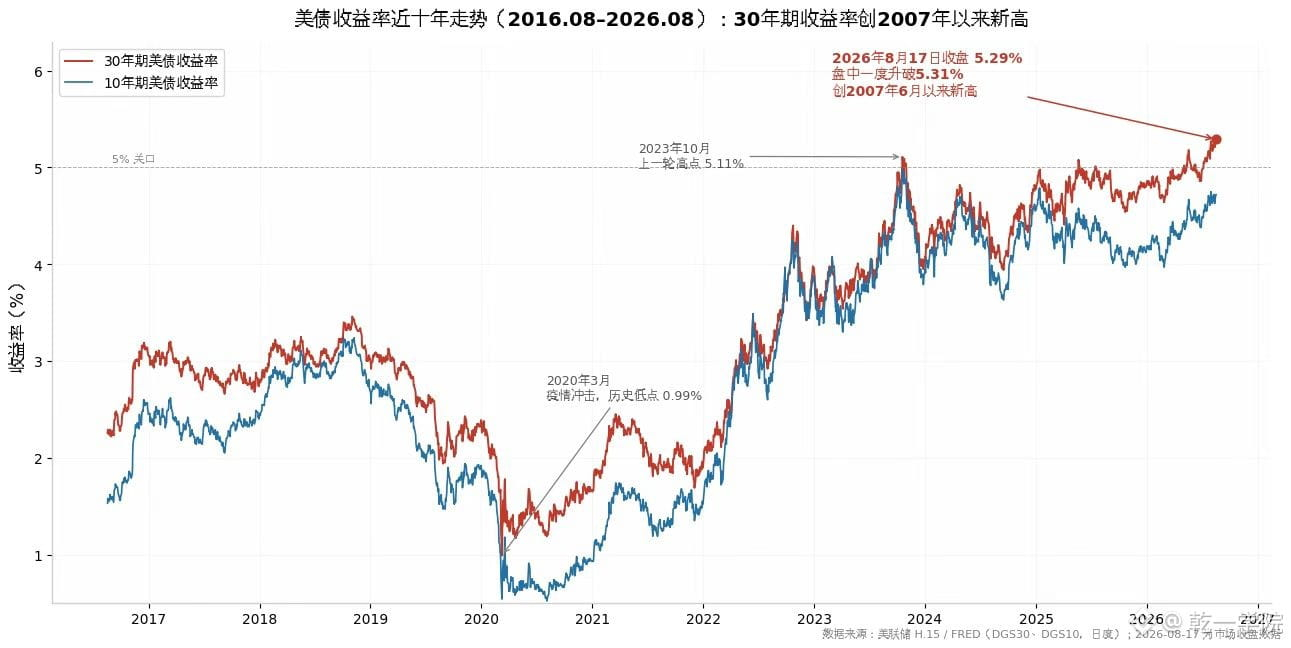
Over the past few days, in developed countries around the world—US, Japan, France, Germany, and the UK—the long-end yields on government bonds have surged dramatically. For example, today, the yield on the 30-year US Treasury climbed to the highest level in nearly two decades during the overnight session, reaching 5.304%.
Some friends have asked what this means.
Interest rates—more precisely, real interest rates—are the most important guiding macroeconomic indicators. The rise in global long-end rates can indicate two things:
1. The market is voting with its feet: In early August, the size of US Treasury holdings first exceeded $40 trillion, as investors have become alert to concerns about the sustainability of US debt and the pressure from interest payments;
2. Investors are starting to bet that future inflation will be hard to bring down. The market needs to use high interest rates to suppress high inflation.
Over the past few days, in developed countries around the world—US, Japan, France, Germany, and the UK—the long-end yields on government bonds have surged dramatically. For example, today, the yield on the 30-year US Treasury climbed to the highest level in nearly two decades during the overnight session, reaching 5.304%.
Some friends have asked what this means.
Interest rates—more precisely, real interest rates—are the most important guiding macroeconomic indicators. The rise in global long-end rates can indicate two things:
1. The market is voting with its feet: In early August, the size of US Treasury holdings first exceeded $40 trillion, as investors have become alert to concerns about the sustainability of US debt and the pressure from interest payments;
2. Investors are starting to bet that future inflation will be hard to bring down. The market needs to use high interest rates to suppress high inflation.