#dusk $DUSK @Dusk
It seems I only really paid attention to this after many rounds of observing crypto discussions about Dusk. Not because it’s a new trick. On the contrary, it’s so old it’s easy to overlook.
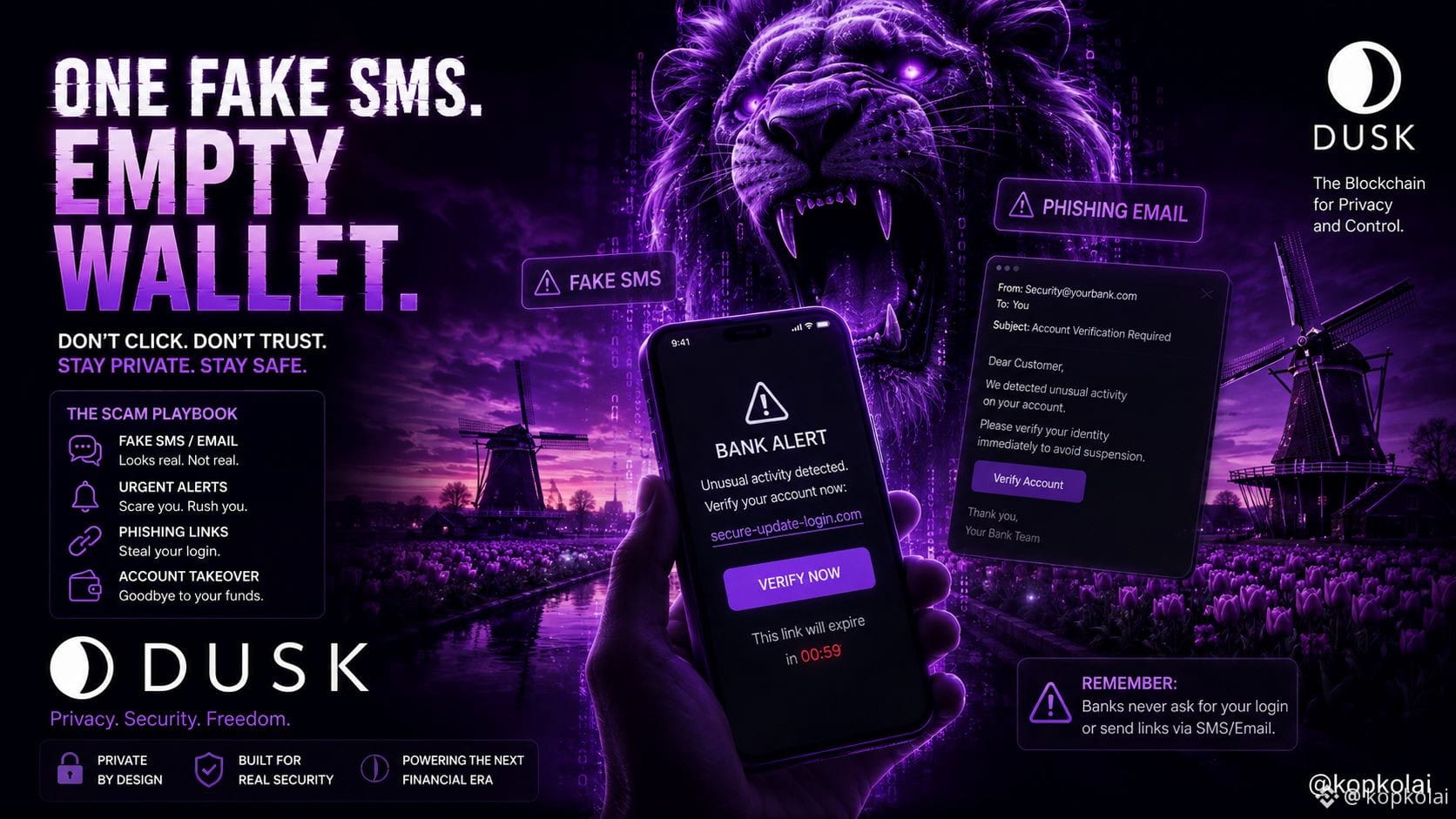
SMS messages, payment emails, successful transaction notifications. They create something very dangerous: the feeling that the checking is already done. But in reality, the recipient is often checking not the source of funds, but a story that has been constructed.
The current systems still seem to place too much trust in notifications. They make the interface look very real. They copy the bank’s name. They add pressure with time. And when a transaction involves P2P, even a minute of lowered vigilance is enough to cause a dispute.
Dusk, at least as I see it, seems to be trying to approach the problem differently: not by making notifications more believable, but by reducing the need to trust external signals.
But that’s only a hypothesis. Real-world usage is what will verify it. I’m still monitoring this aspect. Because between an idea that sounds reasonable and a system that can withstand real user behavior, there’s always a fairly long gap.
It seems I only really paid attention to this after many rounds of observing crypto discussions about Dusk. Not because it’s a new trick. On the contrary, it’s so old it’s easy to overlook.
SMS messages, payment emails, successful transaction notifications. They create something very dangerous: the feeling that the checking is already done. But in reality, the recipient is often checking not the source of funds, but a story that has been constructed.
The current systems still seem to place too much trust in notifications. They make the interface look very real. They copy the bank’s name. They add pressure with time. And when a transaction involves P2P, even a minute of lowered vigilance is enough to cause a dispute.
Dusk, at least as I see it, seems to be trying to approach the problem differently: not by making notifications more believable, but by reducing the need to trust external signals.
But that’s only a hypothesis. Real-world usage is what will verify it. I’m still monitoring this aspect. Because between an idea that sounds reasonable and a system that can withstand real user behavior, there’s always a fairly long gap.