



Author: Chen Zhiyuan; Editor: Jia Xin
On the evening of August 12, WeRide released a financial report with a positive outlook signal.
The financial report shows that in the second quarter, the company’s revenue was 232 million yuan, up 82% year over year and 103% quarter over quarter, exceeding the market’s earlier expectation of about 170–180 million yuan. Of this, overseas revenue grew 164% year over year and 169% quarter over quarter. Meanwhile, the company’s gross margin rose to 37.5%, up 9.4 percentage points from the same period last year, reaching a historical high. The net loss was 401 million yuan, which is also slightly improved year over year.
Judging from its operating data, WeRide is making an all-around improvement: its revenue scale has grown significantly, its business structure has been optimized, and its profitability model is also gradually improving.
However, the capital market’s response has not been optimistic. After the financial results were released, the company’s share price fell 9.64% in the U.S., and fell more than 8% in Hong Kong.
For the autonomous driving industry, market attention is focused on “the pace of commercialization realization” and “when the profitability model can be run through.” Why didn’t this “outperforming expectations” earnings report from Waymo Zhixing lead to a rise in the stock price?
First, a 9-point increase in gross margin: the revenue structure is changing
A 9-percentage-point increase in gross margin is one of the most closely watched changes in Waymo Zhixing’s Q2 earnings report.
Gross margin improvements usually come from two paths: one is improved operating efficiency—for example, higher per-vehicle operating efficiency and lower unit costs, so that each unit of revenue generates more profit. The other is business-structure optimization, meaning an increased share of higher-gross-margin businesses, driving improvement in overall profit margins.
The former means the company’s profitability capability is strengthening, while the latter more reflects changes in revenue structure and shifts in how company resources are allocated.
Looking at the Q2 data, Waymo Zhixing’s (文远知行) gross margin improvement this time mainly came from the latter (segment).
Waymo Zhixing’s business mainly consists of two parts: L4 autonomous driving, and L2++/L3 high-level assisted driving.
L4 business covers scenarios such as Robotaxi and Robobus. Business models include self-operated fleets and asset-light technology output. These businesses still have a strong asset-heavy attribute and require costs such as vehicle procurement, operations and maintenance, insurance, cloud services, and remote safety officers.
In Q2, Waymo Zhixing’s L4 business revenue reached RMB 125 million, up 47% year over year, and up 131% quarter over quarter.
At the earnings call, the CFO pointed out that some L4 businesses are seasonal. Commercial negotiations are typically completed in the first half; revenue is recognized when deployments are carried out in the second half. The CFO expects that in the second half, L4 businesses will perform better.
The L2++/L3 business mainly provides automakers with autonomous driving solutions. Through mass-production “pre-installation” (front-end factory fitment), high-level driver-assistance capabilities are integrated into mass-produced vehicles. Because this business adopts a technology licensing and large-scale delivery model, its marginal costs are lower, and its gross margin is typically higher than that of L4 operations business.
In Q2, Waymo Zhixing’s L2++/L3 business revenue grew nearly 26 times year over year and rose 219% quarter over quarter. With the rapid growth of the L2++/L3 business, its revenue share increased to 48%, becoming an important factor driving the overall gross margin improvement.
Meanwhile, growth in overseas L4 business also provides support for profit margins.
In Q2, the company’s overseas revenue grew 164% year over year, accounting for nearly 40% of total revenue. Because overseas projects more often adopt an asset-light model, the company undertakes relatively less investment in vehicle operations and infrastructure. Therefore, its profitability is typically better than that of some in-house operation models.
In its financial report, Waymo Zhixing also mentioned that the gross margin improvement is mainly due to increased revenue contribution from “high-gross-margin L2++/L3-tier businesses and overseas L4-tier businesses.”
Of course, there are also signs of efficiency improvement.
For example, in China, the average daily order volume per Robotaxi per vehicle increased to 21 orders, up about 24% quarter over quarter, and the peak reached 28 orders. This shows that Robotaxi is moving from technology demonstrations toward normalized operations.
Second, after gross margin improves, how far is it from profitability?
After the gross margin improves, the next question comes: how far is it from profitability?
From the Q2 financial report, Waymo Zhixing’s profitability improvement is still limited.
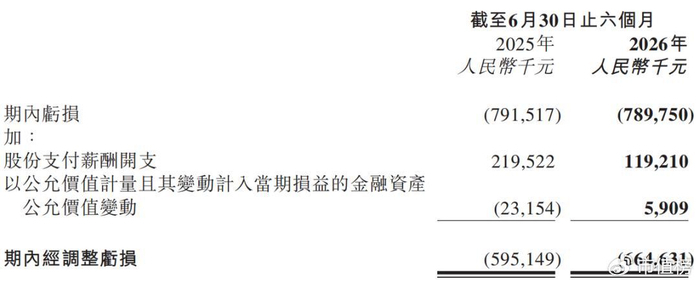
In the first half, the company’s net loss attributable to shareholders was RMB 790 million, basically in line with the same period last year. On an adjusted basis, the loss widened from RMB 595 million in the same period last year to RMB 665 million.
This means that the improvement in gross profit is not yet enough to cover the company’s overall investments.
Among them, R&D investment remains the biggest source of pressure. In Q2, the company’s R&D expenses reached RMB 434 million, up 36% year over year. Although the growth rate of R&D expenses is lower than the growth rate of revenue, the autonomous driving industry is still in a stage of sustained investment in technology and commercialization. R&D spending is unlikely to drop quickly in the near term.
A decline in administrative expenses is mainly influenced by professional service fees related to the listing in the same period last year and changes in share-based payments. This is more of a phase-specific factor and cannot simply be attributed to efficiency improvements.
Management believes that cost pressure is gradually easing. CFO Li Xuan stated that the company’s R&D investment growth rate has already fallen below the revenue growth rate. As the construction stage of AI infrastructure approaches completion and deployment efficiency in city scenarios improves, the intensity of future investment is expected to decline.
Waymo Zhixing expects to achieve positive free cash flow on a single-quarter basis in 2028, and break even on a full-year basis in 2029.
As of June 30, the company’s cash and time deposits totaled approximately RMB 5.375 billion, down about RMB 1.6 billion from the end of last year. Cash reserves can support continued investment, but the timing of the profitability turnaround still depends on progress on several key variables.
First, reuse of the technical foundation.
At an earnings call, CEO Han Xu stated that in the past, different business lines required significant R&D resources separately. With the development of in-house large models, different businesses are now sharing the same technical foundation.
The company has launched two large models, GENESIS and WITT. It hopes to support L4 autonomous driving, L2++/L3 assisted driving, and related R&D systems at the same time with a unified AI infrastructure. Among them, WITT can decompose road video into atomic factual units and, together with GENESIS, generate training data to improve model training efficiency.
If this reuse path works out, the growth rate of R&D expenses may slow down further, creating room for profitability improvement.
Second, the pace of improvement in Robotaxi unit economics.
Compared with the previous average daily orders per vehicle of about 17, in Q2 the average daily order density for domestic Robotaxis per vehicle increased significantly.
Robotaxis need a relatively high utilization rate per vehicle in order to spread fixed costs such as vehicles, operation and maintenance, and technical support. Going forward, it will be necessary to observe whether the average daily orders per vehicle can continue to rise and approach the 25 to 30 orders level that the industry generally focuses on.
Third, whether the overseas asset-light model can form a long-term moat.
The CFO disclosed that the annualized recurring revenue per vehicle in overseas business often reaches between USD 40,000 and USD 50,000. If this model can be continuously replicated, it will become an important support for profit improvement.
However, the asset-light model also has its own issues: Waymo needs to rely on local operating partners and mobility platforms to obtain user traffic, and these platforms will not be tied to a single autonomous-driving supplier. As more Robotaxi companies enter overseas markets, whether Waymo can maintain its competitive position through technical maturity, operating experience, and first-mover advantages still needs continuous validation.
Third, L2++/L3: validation from technological advantages to commercial scale
In addition to the three directions above, the release ramp of the L2++/L3 business is another variable that needs to be tracked separately. It is both the main source of the gross margin improvement in this quarter and directly related to whether technological advantages turn into commercial scale progress.
The main focus of Waymo Ever (or Wan) Zhixing’s (文远知行) accumulated work over the past years has been the L4 autonomous driving domain. As the technology gradually matures, the company will extend some of its L4 capabilities to the mass-produced ADAS (Advanced Driver Assistance Systems) domain. By providing autonomous driving solutions to automakers, it aims to expand into new paths for commercialization.
In Q2, the WRD 3.0 solution achieved large-scale deliveries, with shipments of about 30,000 sets. The solution adopts an end-to-end AI architecture that integrates perception, prediction, decision-making, and control. It has already been adapted to multiple in-vehicle computing platforms including NVIDIA, Qualcomm, and Hygon (芯擎).
A question the market is widely concerned about is: in the ADAS space, when facing competitors such as Huawei, Horizon Robotics, and Momenta that already have mass-production experience and industry resources, what competitive advantage does Waymo have? At the same time, could these future ADAS players also potentially enter the Robotaxi field by leveraging their data accumulation?
At the earnings call, the company’s responses mainly covered three directions.
First, reliability validation in complex scenarios. Han Xu revealed that he had driven a vehicle equipped with WRD 3.0 and conducted a two-hour live broadcast during the evening rush hour in Guangzhou’s Zhujiang New Town. Throughout the entire process, there was no manual takeover.
Second, efficiency. At the earnings call, it was mentioned that the resources deployed by Waymo are lower, but the output is not worse. The implication is that Waymo relies on technological efficiency and engineering capability rather than simply stacking resources.
Third, the feedback effect from L4 experience to the L2++ business.
There are clear differences in system reliability requirements between L4 and ADAS.
Han Xu provided a standard for measuring L4 capability: at least 100 fully driverless Robotaxis, continuous operation for half a year, and no major accidents. Under this standard, many companies announce they have entered the Robotaxi field, but there is still some distance from truly forming scalable operational capability.
Over the past nearly 10 years, Waymo Zhixing has continued to invest in L4 autonomous driving. Its global L4 fleet already exceeds 3,000 vehicles, covering multiple countries and cities, and accumulating a large amount of real road operation data.
The value of data scale comes second. What truly matters is that this data comes from the real decision-making, feedback, and abnormal scenarios encountered during the operation of autonomous driving systems.
Compared with traditional road testing, L4 operations can continuously generate a large number of complex, low-frequency but high-value long-tail scenarios, supporting model training, safety validation, and algorithm iteration.
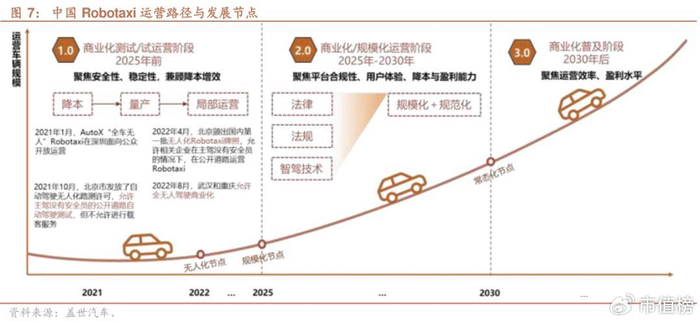
However, as competition in the autonomous driving industry shifts from algorithmic capability comparisons to data closed-loop systems and competition on commercial scale, L4 data no longer constitutes a core barrier.
Different companies’ data closed-loop paths are not the same. Players such as Tesla and Huawei obtain massive driving data through the scale of mass-produced vehicles, and continuously iterate their models through large-scale deployments. Waymo and Waymo Zhixing rely on L4 operations, accumulating high-value scenario data from the autonomous system’s real-world operation process, and improving system reliability through real, driverless experience.
Both routes have their own advantages. Ultimately, what determines the outcome is who can convert data advantages into faster product iteration, lower costs, and larger commercial scale.
This is also the core issue Waymo faces: whether L4 accumulation can truly translate into competitiveness in the L2++ business.
Judging from the order backlog, Waymo Zhixing has already secured mass-production model designation for nearly 30 models from OEMs such as GAC and Chery, covering multiple brands including GAC Aion, HaoPing (昊铂), GAC Trumpchi (传祺), and Chery’s Starway (星途) brands.
It should be noted that a designated (fixed) model is not the same as revenue being realized. From vehicle-model designation to final mass production, it still requires engineering development, testing and validation, and supply-chain onboarding. WRD 3.0 has already achieved mass-production installation on models such as GAC Aion N60, Chery’s iCAR/Star-Road Star Shingyuan (奇瑞星途星纪元 ES/ET), Star-Road EX7 (星途EX7), and others.
Customer concentration is also a factor to pay attention to. Currently, L2++ mass-produced models mainly concentrate among two automakers: GAC and Chery. If the sales volume of core partner models falls short of expectations, or if future supply relationships change, it could affect the growth of Waymo Zhixing’s L2++ business.
At present, this more reflects the purpose of technical cooperation and capability validation. It still needs further progress to form scalable mass-production revenue.
The company proposed the goal of achieving deployment of 100,000 vehicles by the end of 2026, and cumulative deployment exceeding 500,000 vehicles in 2027. Over the next year or so, achieving large-scale volume will test both the speed at which already-designated models are pushed into mass production and the company’s ability to continuously secure new projects.