


Author: Cathy

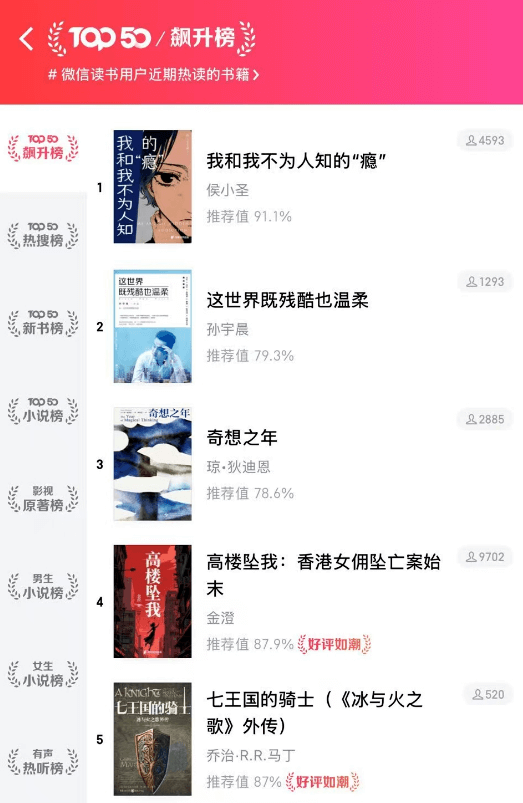
In early 2026, an old book from nearly a decade ago suddenly surged into the WeChat Reading hot list.
The book is called (This World is Both Cruel and Tender), and the author is Sun Yuchen, published in 2017.
Sun Yuchen, who became famous due to the Buffett lunch and sparked heated discussions over the 'last-minute cancellation of the appointment.'
Surprisingly, this book is not treated as a negative example, but is revered by young people as a 'wealth prophecy book.' On social media, the term 'Sun Studies' has emerged. Bloggers, like archaeologists, sift through every sentence in the book, trying to excavate the code to wealth.
Once a controversial and tumultuous cryptocurrency entrepreneur, he has now become a research subject for young people.
This reversal is more dramatic than any business story.
01
The 'cruel' verification of ten-year prophecies
'Sunism' can be popular for one core reason: the justice of results.
In 2016, the mainstream narrative of wealth in domestic society still revolved around real estate. For young people at that time, buying a house was the only belief in asset appreciation.
However, Sun Yuchen rebelliously proposed in his book that young people should not be bound by houses, but should invest all resources into the wave of mobile internet and emerging technologies.
More notably, he explicitly named three asset targets in his book: Nvidia, Tesla, and Bitcoin.
Looking back at this 'shopping list' ten years later:
Tesla's stock price has experienced nearly a twentyfold increase; Nvidia has become one of the highest-valued companies in the world; Bitcoin surged from hundreds of dollars to over one hundred twenty thousand dollars; and what about real estate? In first-tier cities, housing prices have dropped back to where they were a decade ago, and liquidity in second- and third-tier cities is almost locked, leading to significant wealth shrinkage for the middle class.
When readers open this old book from ten years ago and see the names 'Nvidia', 'Tesla', and 'Bitcoin' written prominently, this foresight is impressive.
Although some may interpret the above results as 'survivorship bias', more people will interpret it as 'prophetic vision' in the face of the huge wealth effect.
Sun Yuchen's rejection of real estate is not based on simple predictions of housing prices, but on the understanding of 'opportunity cost'. In his view, for young people who lack resources and a 'first bucket of gold', liquidity is far more important than stability. Buying a house means locking liquidity and bearing 30 years of debt, which directly kills the possibility of trying high-risk, high-return paths.
In the context of 'Sunism', houses are the shackles of the old era, while the internet and blockchain are the arks of the new era.
02
Building a billion-dollar empire
Many prophecies are just empty talk, but Sun Yuchen has proven himself with real money.
According to Bloomberg's Billionaires Index data for 2026, Sun Yuchen's personal net worth is about 10.8 billion dollars. This wealth mainly comes from the TRON ecosystem, including TRX Token holdings and a series of cryptocurrency investment portfolios.
TRON is the cornerstone of this empire.
Despite some original controversies in the early stages, TRON has been extremely precise in its strategic positioning—avoiding competition with Ethereum in the DeFi innovation space, focusing instead on transfer efficiency and low fees. Today, the TRON network is one of the largest USDT settlement layers in the world. Due to its fast transfer speed and low transaction fees, a large number of users from developing countries and cross-border traders rely on the TRON protocol for capital flow.
This makes TRON not just a public chain, but also one of the 'global important shadow banking clearing systems'.
In addition, Sun Yuchen integrated many well-known institutions from various industries and issued several stablecoins, attempting to create credit and liquidity within the ecosystem.
But what the followers of 'Sunism' enjoy discussing the most is Sun Yuchen's 'evergreen tree' physique.
In the high-risk cryptocurrency industry, surviving long is more difficult than moving fast. During the same period, industry giants like SBF of FTX went to prison for misappropriating funds, while Do Kwon of Terra was arrested due to the collapse of algorithmic stablecoins. Meanwhile, Sun Yuchen has experienced the 2017 ICO frenzy, the 2018 bear market, the DeFi summer of 2020, the bull market of 2021, the FTX collapse of 2022, and even remained active at the poker table during the recovery period in 2024.
'Surviving is winning.' This has become the most powerful footnote of 'Sunism.'

03
The ultimate player of the attention economy
'Sunism' is not only about which assets to buy but also about how to leverage the attention economy to amplify asset value.
Sun Yuchen's marketing logic can be summarized in one sentence: attention is currency, conflict is traffic, and even being black and red is still red.
He recognized the value of the internet celebrity economy early on. In 2016, when he served as a member of the Guangzhou Panyu District CPPCC, he suggested that local authorities should vigorously support the internet celebrity economy, which would not only expand the employment scope for local university students but also inject new 'Internet +' genes into the local economy. Reflecting on today's reality where everyone wants to become an internet celebrity and various places are eager for positive traffic, Sun Yuchen once again provided forward-looking advice a decade ago.
In 2019, he spent 4.568 million dollars to win a charity lunch with Warren Buffett. Buffett is a 'mortal enemy' of Bitcoin, having called it 'rat poison'; Sun Yuchen is a believer in Bitcoin. This inherent dramatic conflict attracted global media attention.
In the view of 'Sunism', the 4.56 million dollars bought not a meal, but the front page headline of the world's top financial media. Calculated by advertising fees, this investment has a very high return on investment.
In 2024, he again spent 6.2 million dollars to acquire an artwork by artist Cattelan (a comedian)—a banana taped to the wall, which he publicly ate.
A banana worth 6.2 million dollars reflects a logic similar to Bitcoin's 'creation of value out of thin air'. Eating the banana means not only possessing it but also ending it, internalizing it as part of one's personal brand.

A higher level of operation is to boldly place bets when no one is paying attention. By the end of 2024, he announced an investment of 30 million dollars in the crypto project World Liberty Financial supported by the Trump family, becoming the largest investor in the project. The story circulating in the industry is that at that time, this project had almost visited all the big names in the industry, but only Sun Yuchen resolutely took action.
In the business world, the boundaries of cooperation are often more flexible than imagined. Whether it's a dialogue with traditional finance or participating in the construction of political and business networks, as long as there is a chance to win, Sun Yuchen will boldly go all in.
04
Why have young people started to believe in 'Sunism'?
'Sunism's' popularity is not only a victory for Sun Yuchen himself but also a mirror of the change in the spirit of the times.
Over the past 30 years, the successful path of Chinese society has been linear: study hard, get into a good university, work for a big company or take civil service exams, buy a house and get married, and rise in social class. However, this path has faced systemic challenges in recent years.
The expansion of graduate admissions has led to educational inflation; graduating from prestigious schools is no longer a guarantee of high salaries; internet giants are laying off employees, and the '35-year crisis' has become a Damocles' sword hanging over everyone; young people who bought houses find that not only do they not have financial freedom, but they also face huge debts while dealing with the pressure of property devaluation.
The step-by-step 'long-termism' appears pale and powerless. Young people yearn for 'comebacks', longing for nonlinear, explosive success.
'Sunism' precisely provides a nonlinear template: relying not on family connections or seniority, but on cognition, on trends, and on the courage to gamble.
A deeper change is the divergence between values and reality. Traditional business ethics emphasize 'gentlemen love wealth, and achieve it through proper means'. But in reality, young people see honest people suffering while speculators prosper.
When Wang Xiaochuan talked with Sun Yuchen back then, the differences in their value systems were clearly visible. Ten years later, Wang Xiaochuan is still on a path of steady development—after Sogou was acquired by Tencent, he turned to establish Baichuan Intelligent to enter the AI field. But it cannot be denied that the speed and scale of wealth accumulation present distinctly different results for the two paths.
This comparison has caused many young people to start reevaluating: in the current era, which path is more suitable for them—the traditional stable path or the aggressive all-in new economy path?
'Result-oriented' thinking is gradually becoming popular among the younger generation. In their view, the speed and scale of wealth accumulation have become one of the important criteria for measuring success. This shift in values reflects the diversification of society's definition of 'success'—which respects traditional paths while yearning for emerging opportunities.
05
Summary
'Sunism' is not a rigorous academic theory, but a set of extreme survival pragmatism.
Its core teachings include: extreme skepticism of old assets, fully embracing highly liquid digital assets; using all means to gain attention and converting that attention into financial premium; judging heroes by success or failure, with wealth being the ultimate cleansing agent for all controversies.
(The world is both cruel and gentle) has become a reflection of the younger generation seeking hope amid change.
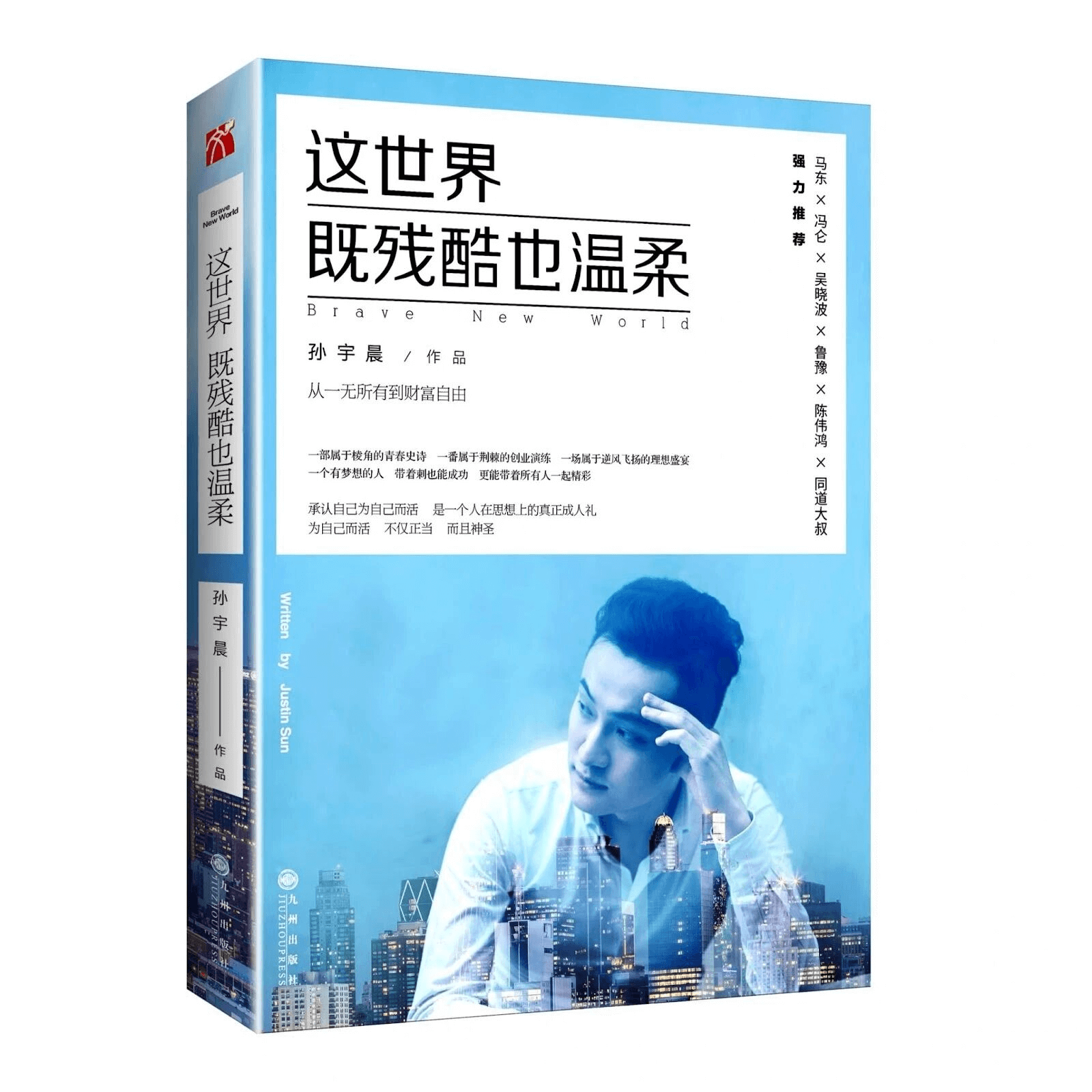
The insight is real: Sun Yuchen's advice on 'All in on the Internet/blockchain' and 'giving up on buying a house' is objectively valuable. At the juncture of productivity iteration, following the trend is indeed the only opportunity for ordinary people to overtake.
The warning is equally real: 'Sunism' overlooks survivorship bias and ignores the huge risks Sun Yuchen faced in his successful journey. For most ordinary people, the risks of mimicking his aggressive strategies also need to be considered.
As the book title says, the world is cruel because it mercilessly eliminates the outdated; the world is also gentle because it generously rewards those who dare to face cruelty and dance with the rules.
Understanding 'Sunism' may not mean becoming the next Sun Yuchen, but rather seeing the underlying logic of how this world operates—starting with no longer believing in the stability of the past.