📅8.18
🧨They keep sending again today
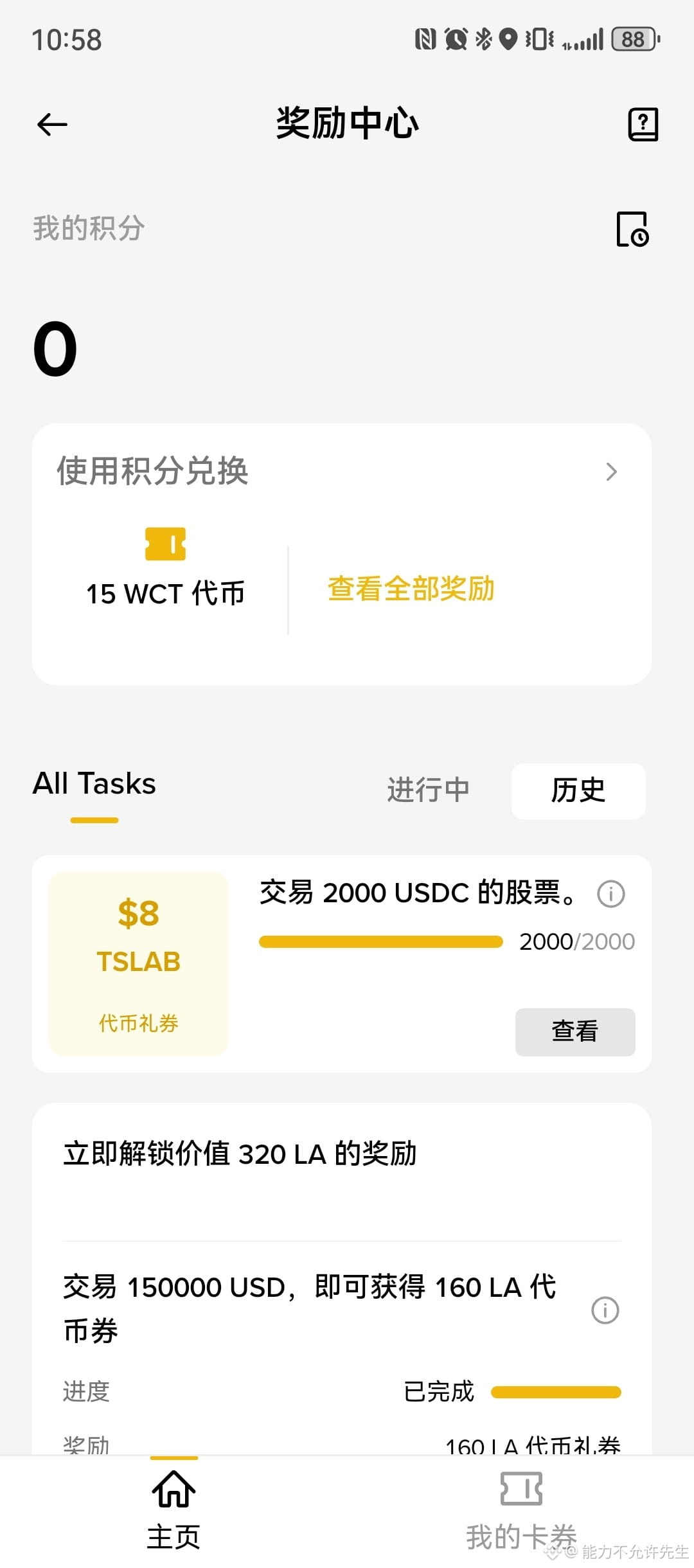
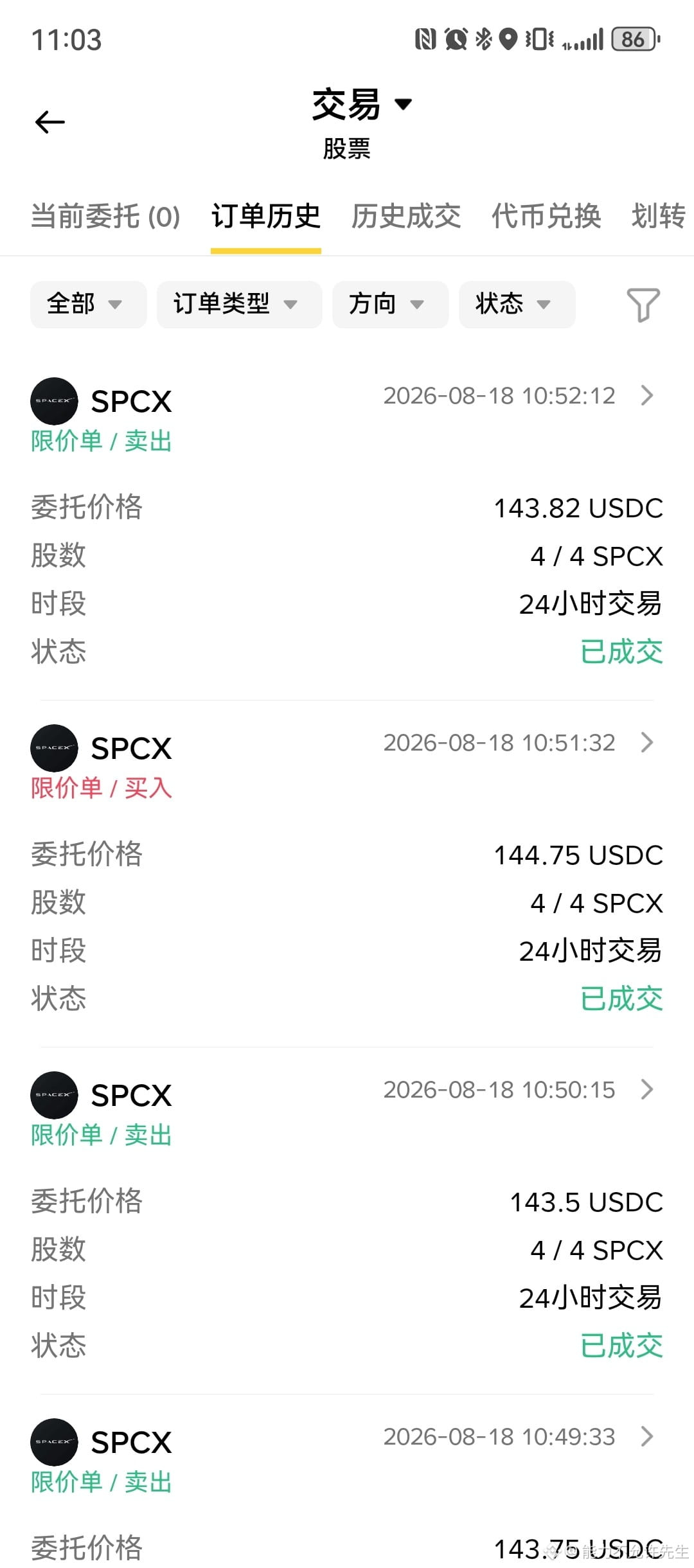
Everyone, check your Rewards Center—there’s a promotion where you trade 2000 USDC to get 8U and Tesla stock. It’s basically free money. It takes half a minute to finish.
Last night Zhang Xiaoyu asked me: “Have you looked at Dusk’s ZK-KYC? They say native zero-knowledge proofs are directly written into the blockchain’s underlying layer—no DApp plug-in needed.” So I went and flipped through Dusk’s whitepaper again. When I reached the page about PLONK and Bulletproofs, I just stared for a while.
Honestly, this project really has some substance. At the protocol’s base layer, Dusk natively integrates two zero-knowledge proving systems: PLONK zk-SNARK and Bulletproofs. Privacy isn’t an add-on feature from an upper-layer DApp—it’s a native property of the chain. Paired with the Citadel ZK-KYC protocol, when users complete identity verification, they don’t need to upload raw data like passport photos—only submit a zero-knowledge proof stating that they’ve completed compliance verification. This design directly targets institutional RWA and security token issuance scenarios. Morgan Chase wouldn’t want its trading strategies and position details exposed on a public ledger. Dusk is trying to use cryptography to solve the contradiction of “needing compliance but also privacy.”
But after breaking down the practical record of this native cryptography stack, the problems surfaced.
In April 2026, the OtterSec team found a serious vulnerability in dusk-plonk: in the final verification equation, the verifier directly uses the four evaluation results of the selector polynomials provided by the prover, but never verifies those evaluations via KZG opening. A malicious prover can forge a valid proof—bypassing every constraint in the transaction circuit—and mint any number of DUSK tokens on the already-deployed Rusk network. This vulnerability directly affects around $60 million worth of the DUSK privacy layer. Even earlier, the original PLONK implementation was also missing blinding factors in the prover polynomials.
Native cryptographic integration really provides “no blind spots” for privacy capabilities, but the cryptography implementation itself has had vulnerabilities serious enough to effectively zero out the entire network. PLONK has already been shown to be forgeable—so who can guarantee the next vulnerability won’t be hiding inside Bulletproofs or Citadel’s ZK circuits?
The above is only my personal view and does not constitute investment advice. Do you believe Dusk’s native ZK stack can withstand the next round of cryptographic attacks? Feel free to chat in the comments.
#dusk $DUSK @Dusk
🧨They keep sending again today
Everyone, check your Rewards Center—there’s a promotion where you trade 2000 USDC to get 8U and Tesla stock. It’s basically free money. It takes half a minute to finish.
Last night Zhang Xiaoyu asked me: “Have you looked at Dusk’s ZK-KYC? They say native zero-knowledge proofs are directly written into the blockchain’s underlying layer—no DApp plug-in needed.” So I went and flipped through Dusk’s whitepaper again. When I reached the page about PLONK and Bulletproofs, I just stared for a while.
Honestly, this project really has some substance. At the protocol’s base layer, Dusk natively integrates two zero-knowledge proving systems: PLONK zk-SNARK and Bulletproofs. Privacy isn’t an add-on feature from an upper-layer DApp—it’s a native property of the chain. Paired with the Citadel ZK-KYC protocol, when users complete identity verification, they don’t need to upload raw data like passport photos—only submit a zero-knowledge proof stating that they’ve completed compliance verification. This design directly targets institutional RWA and security token issuance scenarios. Morgan Chase wouldn’t want its trading strategies and position details exposed on a public ledger. Dusk is trying to use cryptography to solve the contradiction of “needing compliance but also privacy.”
But after breaking down the practical record of this native cryptography stack, the problems surfaced.
In April 2026, the OtterSec team found a serious vulnerability in dusk-plonk: in the final verification equation, the verifier directly uses the four evaluation results of the selector polynomials provided by the prover, but never verifies those evaluations via KZG opening. A malicious prover can forge a valid proof—bypassing every constraint in the transaction circuit—and mint any number of DUSK tokens on the already-deployed Rusk network. This vulnerability directly affects around $60 million worth of the DUSK privacy layer. Even earlier, the original PLONK implementation was also missing blinding factors in the prover polynomials.
Native cryptographic integration really provides “no blind spots” for privacy capabilities, but the cryptography implementation itself has had vulnerabilities serious enough to effectively zero out the entire network. PLONK has already been shown to be forgeable—so who can guarantee the next vulnerability won’t be hiding inside Bulletproofs or Citadel’s ZK circuits?
The above is only my personal view and does not constitute investment advice. Do you believe Dusk’s native ZK stack can withstand the next round of cryptographic attacks? Feel free to chat in the comments.
#dusk $DUSK @Dusk