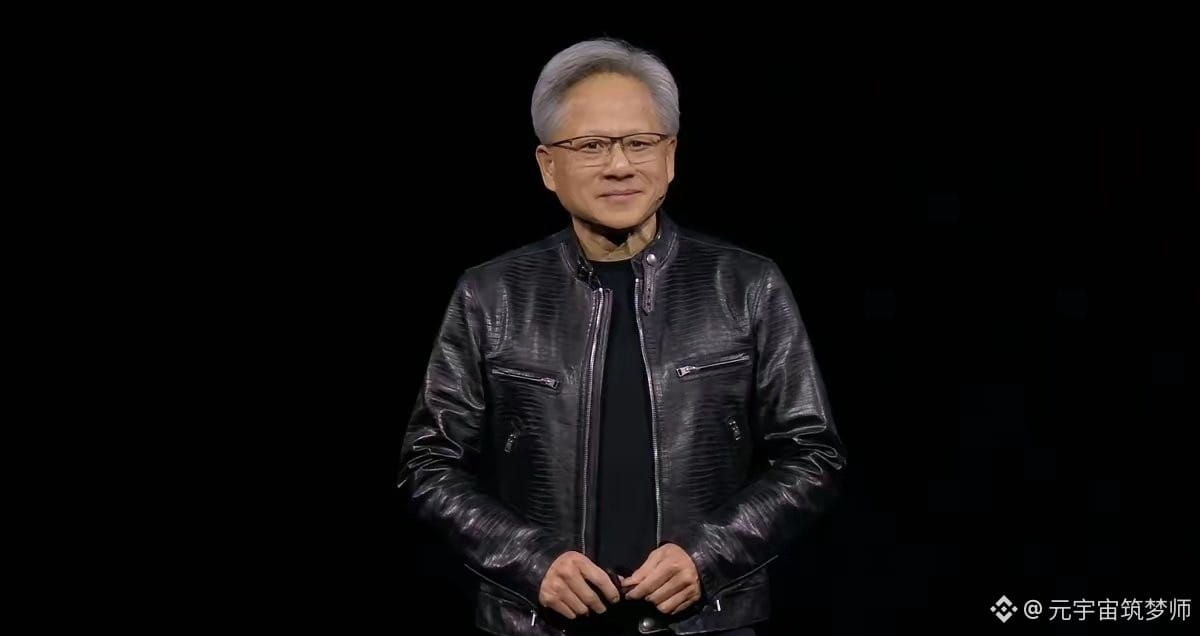
Why does Jensen Huang only have 3.5% of Nvidia shares?
Don't think that 3.5% of the shares is insignificant; for a giant like Nvidia, this is not a small amount.
Look at Apple's Steve Jobs, who was kicked out of the company he founded and later brought back only as an employee, ultimately exhausted to the point of burnout.
The McDonald brothers fared worse, having been pushed out of the fast food empire they built, with even the original small restaurant needing to be renamed; this story was made into a movie.
In 1993, Jensen Huang, along with two other partners, founded Nvidia. In the beginning, the three shared the shares equally, and Huang's shares accounted for more than one-third. At that time, Nvidia was just a small workshop, lacking fame and funds, and the chip industry was fiercely competitive, with giants like Intel and AMD already established, making survival increasingly difficult. In the first two years after the company was founded, the two chips developed failed; the first had poor compatibility and was not used by game companies at all; the second was expensive and had no performance advantage, with products piling up in warehouses unsold, and the company's cash flow quickly ran out, on the brink of bankruptcy.
At this critical moment, the Japanese gaming giant Sega extended a helping hand, recognizing the technical potential of the Nvidia team and decided to invest $7 million. In the 1990s Silicon Valley, $7 million was not a small amount; for Nvidia, which was on the verge of bankruptcy, this was a lifeline. But there's no such thing as a free lunch; Sega's investment condition was to take shares, and Huang and the founding team had no choice but to give up a portion of their shares to ensure the company could survive. This was the first significant dilution of Huang's shares; although the proportion decreased, it brought the opportunity for the company to continue operating, which was completely different from the McDonald brothers being forcibly ousted.
With Sega's funding, Nvidia regrouped and launched its first successful chip in 1997, gradually establishing a foothold in the market. However, to expand and increase R&D investment, relying solely on Sega's investment was not enough, so Huang sought financing from well-known venture capital firms like Sequoia Capital. With each round of financing, new stocks had to be issued to investors, which diluted the shareholding proportions of existing shareholders. This is a necessary path for all startups. You see, when others give you money to support your development, they certainly expect corresponding shares in return; Huang had to accept the dilution of shares repeatedly for Nvidia to grow.
In 1999, Nvidia went public on NASDAQ, marking an important milestone in the company's development and a key step in share dilution. Going public involved issuing stocks to the public to raise funds, allowing more investors to buy Nvidia shares; the money was mainly used to expand R&D and market layouts. According to the prospectus at that time, Huang's shares fell from about one-third to 27.7% on the first day of trading. Although the proportion decreased significantly, this share still allowed him to firmly hold the decision-making power of the company, which was completely different from Jobs being kicked out of his own company and later returning only to work for it. Huang has always been the core decision-maker at Nvidia.
After going public, Nvidia's share dilution did not stop. To retain core talent, the company launched an equity incentive plan, granting stocks to employees as rewards, which required issuing new stocks, naturally diluting the shares of existing shareholders. Moreover, as the company continued to grow, it occasionally needed to raise funds through capital increases, investing in new technology R&D and business expansion; with each issuance of new stocks, Huang's share proportion would slightly decrease. These actions were all aimed at the long-term development of the company; it was not that Huang passively lost shares, but rather he actively made choices to retain talent and expand the business.
In addition, Huang himself also reduced a small amount of stock through compliance plans. In recent years, he has reduced a portion of his stocks annually through the 10b5-1 plan, which is allowed by U.S. regulators and can set buy and sell times and quantities in advance to avoid insider trading suspicion. He reduced his stock mainly for personal wealth diversification, risk dispersion, and to meet tax requirements, not because he was pessimistic about the company's development. Moreover, the proportion of shares he reduced was quite small; although the cumulative reduction in amount exceeded $1 billion, relative to his total shareholding, the impact was minimal and would not shake his control over the company.
Currently, Nvidia's major shareholders are asset management giants like Vanguard and BlackRock, holding nearly 16% of the shares combined, but these are all institutional investors who only make financial investments and do not participate in the company's daily management and decision-making. Although Huang only has 3.5% of the shares, as the founder and CEO, his influence and authority are not determined by the shareholding ratio; the company's development strategy and core decisions are still led by him. This is completely different from the McDonald brothers losing control of their company and even having to rename the original small store, and it is not the same as Jobs' experience of losing control of Apple; Huang has always firmly controlled the company he founded.
In the end, Huang's shares dropping from the initial one-third to 3.5% is an inevitable result of Nvidia growing from small to large, from the brink of bankruptcy to a global chip giant. Startups need external financing and equity incentives to survive and develop, and these operations will lead to the dilution of the founder's shares.
But Huang's cleverness lies in the fact that although he gave up part of his shares, he has always maintained control of the company, allowing Nvidia to develop in the direction he set. Moreover, 3.5% of the shares in a company of Nvidia's caliber are worth far beyond the imagination of ordinary people, ensuring his wealth while allowing him to focus on company management without being constrained by the shareholding ratio. Compared to Jobs' and the McDonald brothers' experiences, Huang has truly safeguarded his career and reaped the wealth he deserves.
Don't think that 3.5% of the shares is insignificant; for a giant like Nvidia, this is not a small amount.
Look at Apple's Steve Jobs, who was kicked out of the company he founded and later brought back only as an employee, ultimately exhausted to the point of burnout.
The McDonald brothers fared worse, having been pushed out of the fast food empire they built, with even the original small restaurant needing to be renamed; this story was made into a movie.
In 1993, Jensen Huang, along with two other partners, founded Nvidia. In the beginning, the three shared the shares equally, and Huang's shares accounted for more than one-third. At that time, Nvidia was just a small workshop, lacking fame and funds, and the chip industry was fiercely competitive, with giants like Intel and AMD already established, making survival increasingly difficult. In the first two years after the company was founded, the two chips developed failed; the first had poor compatibility and was not used by game companies at all; the second was expensive and had no performance advantage, with products piling up in warehouses unsold, and the company's cash flow quickly ran out, on the brink of bankruptcy.
At this critical moment, the Japanese gaming giant Sega extended a helping hand, recognizing the technical potential of the Nvidia team and decided to invest $7 million. In the 1990s Silicon Valley, $7 million was not a small amount; for Nvidia, which was on the verge of bankruptcy, this was a lifeline. But there's no such thing as a free lunch; Sega's investment condition was to take shares, and Huang and the founding team had no choice but to give up a portion of their shares to ensure the company could survive. This was the first significant dilution of Huang's shares; although the proportion decreased, it brought the opportunity for the company to continue operating, which was completely different from the McDonald brothers being forcibly ousted.
With Sega's funding, Nvidia regrouped and launched its first successful chip in 1997, gradually establishing a foothold in the market. However, to expand and increase R&D investment, relying solely on Sega's investment was not enough, so Huang sought financing from well-known venture capital firms like Sequoia Capital. With each round of financing, new stocks had to be issued to investors, which diluted the shareholding proportions of existing shareholders. This is a necessary path for all startups. You see, when others give you money to support your development, they certainly expect corresponding shares in return; Huang had to accept the dilution of shares repeatedly for Nvidia to grow.
In 1999, Nvidia went public on NASDAQ, marking an important milestone in the company's development and a key step in share dilution. Going public involved issuing stocks to the public to raise funds, allowing more investors to buy Nvidia shares; the money was mainly used to expand R&D and market layouts. According to the prospectus at that time, Huang's shares fell from about one-third to 27.7% on the first day of trading. Although the proportion decreased significantly, this share still allowed him to firmly hold the decision-making power of the company, which was completely different from Jobs being kicked out of his own company and later returning only to work for it. Huang has always been the core decision-maker at Nvidia.
After going public, Nvidia's share dilution did not stop. To retain core talent, the company launched an equity incentive plan, granting stocks to employees as rewards, which required issuing new stocks, naturally diluting the shares of existing shareholders. Moreover, as the company continued to grow, it occasionally needed to raise funds through capital increases, investing in new technology R&D and business expansion; with each issuance of new stocks, Huang's share proportion would slightly decrease. These actions were all aimed at the long-term development of the company; it was not that Huang passively lost shares, but rather he actively made choices to retain talent and expand the business.
In addition, Huang himself also reduced a small amount of stock through compliance plans. In recent years, he has reduced a portion of his stocks annually through the 10b5-1 plan, which is allowed by U.S. regulators and can set buy and sell times and quantities in advance to avoid insider trading suspicion. He reduced his stock mainly for personal wealth diversification, risk dispersion, and to meet tax requirements, not because he was pessimistic about the company's development. Moreover, the proportion of shares he reduced was quite small; although the cumulative reduction in amount exceeded $1 billion, relative to his total shareholding, the impact was minimal and would not shake his control over the company.
Currently, Nvidia's major shareholders are asset management giants like Vanguard and BlackRock, holding nearly 16% of the shares combined, but these are all institutional investors who only make financial investments and do not participate in the company's daily management and decision-making. Although Huang only has 3.5% of the shares, as the founder and CEO, his influence and authority are not determined by the shareholding ratio; the company's development strategy and core decisions are still led by him. This is completely different from the McDonald brothers losing control of their company and even having to rename the original small store, and it is not the same as Jobs' experience of losing control of Apple; Huang has always firmly controlled the company he founded.
In the end, Huang's shares dropping from the initial one-third to 3.5% is an inevitable result of Nvidia growing from small to large, from the brink of bankruptcy to a global chip giant. Startups need external financing and equity incentives to survive and develop, and these operations will lead to the dilution of the founder's shares.
But Huang's cleverness lies in the fact that although he gave up part of his shares, he has always maintained control of the company, allowing Nvidia to develop in the direction he set. Moreover, 3.5% of the shares in a company of Nvidia's caliber are worth far beyond the imagination of ordinary people, ensuring his wealth while allowing him to focus on company management without being constrained by the shareholding ratio. Compared to Jobs' and the McDonald brothers' experiences, Huang has truly safeguarded his career and reaped the wealth he deserves.