


In the second quarter of 2026, WeRide delivered a set of results that significantly exceeded market expectations. Data shows that in Q2 the company achieved total revenue of RMB 232 million, approximately 30% higher than the RMB 178 million previously expected by institutions; year over year it grew 82%, and quarter over quarter it rose 103%. For the first half of the year, total revenue reached RMB 346 million, up 73% year over year. At the same time, the company’s gross margin in Q2 climbed to 37.5%, up about 9.4 percentage points from the same period last year, and up about 3 percentage points from Q1.
If earnings reports show “results” of growth, then the growth logic and quality behind this performance that exceeded expectations are even more worthy of deeper scrutiny. From revenue growth rates rising quarter by quarter to gross margin levels improving in tandem; from continued breakthroughs in Robotaxi (autonomous ride-hailing taxi) operating efficiency to explosive growth in overseas business, Waymo?—actually, Wenray?—no, the company is WeRide: Ver? In fact, WeRide is charting a high-quality growth path where the expansion of revenue scale, improvement in profitability quality, and optimization of operating efficiency advance in concert. Its growth momentum comes not only from tapping deeper potential in domestic commercialization, but also from broadening the global footprint; even more so, it stems from the structural tailwinds unleashed by its dual product lines—L4 and L2++.
Commercialization enters the realization phase
Operational efficiency and product matrix synergy
The core support behind revenue exceeding expectations lies in the fact that Wenyuan Zhixing’s core business has accelerated its commercialization pace across the board. The growth is not driven by a single business line; instead, it shows a multi-line “flowers blooming in parallel” resonance pattern.
Looking at business lines, the L4 business remains the “anchor” for revenue. In Q2, it achieved revenue of RMB 125 million, up 47% year over year and 131% quarter over quarter, accounting for more than half of total revenue. Even more noteworthy is the explosive growth of the high-level driver-assistance solution business: in Q2, revenue surged 2,594% year over year and 219% quarter over quarter. Behind this change is the fact that the company’s one-piece end-to-end ADAS solution WRD 3.0 has entered the stage of scaled mass production.
So far, WRD 3.0 has received production location commitments for more than 30 vehicle models, and Q2’s single-quarter shipment volume reached 30,000 sets. The rapid ramp-up of the L2++ business indicates that Wenyuan Zhixing’s strategy of enabling mass-produced vehicles using L4 technology in a dimensionality-reduction manner has begun to deliver financial returns, forming a dual-engine structure: “L4 builds the technological barrier, while L2++ releases the scale dividend.”
A reporter from China Securities Journal observed that beyond the product matrix itself, Wenyuan Zhixing’s Robotaxi operations have shown a sustained upward trend in operational efficiency, validating the high reusability and sustainability of its commercialization. In Q2, Wenyuan Zhixing’s Robotaxi ride-hailing revenue increased quarter over quarter by about 140%. The average daily orders per vehicle in China exceeded 21 trips, up about 24% quarter over quarter. The peak daily orders per vehicle reached 28 trips. For end users, the number of registered users grew year over year by 35%. As order density, vehicle utilization, and user base all rose together, it suggests that its Robotaxi business has moved past the “cold start” phase and entered a virtuous cycle. With the expansion of the user base further driving up order density, higher order density then boosts vehicle utilization and per-vehicle revenue; improvements in operational efficiency, in turn, optimize the unit economics model and thereby support upgrades to service experience.
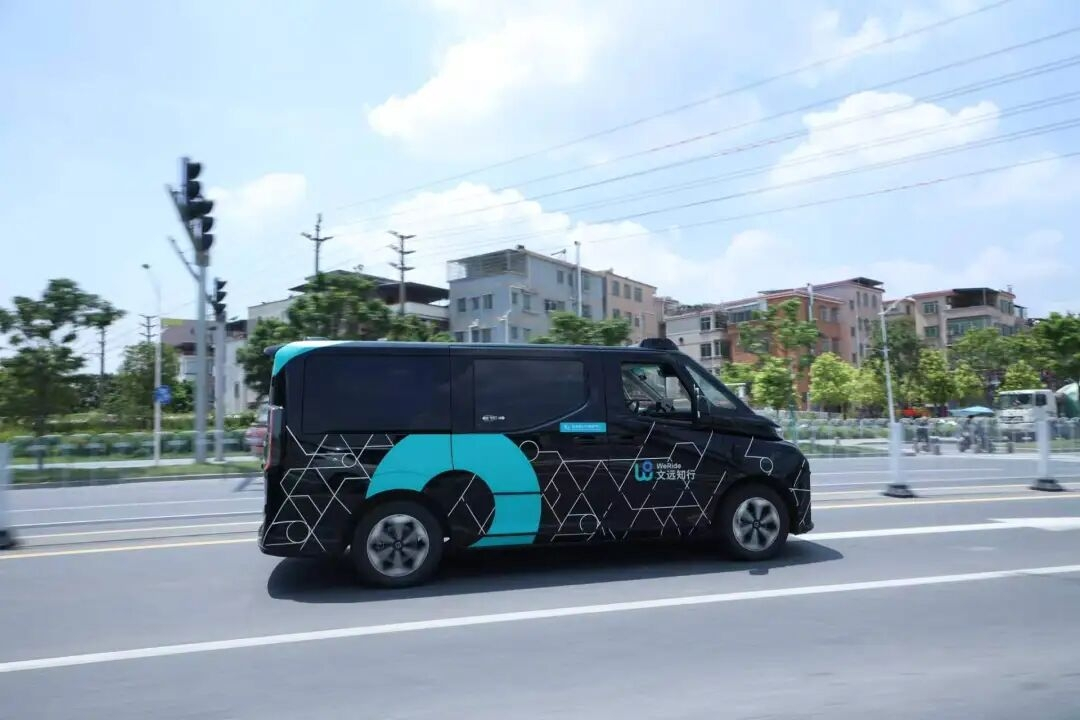
Wenyuan Zhixing’s Robotaxi is conducting pure-unmanned commercial operations in Guangzhou ?Image source: provided by the company
As of the end of July 2026, Wenyuan Zhixing’s global Robotaxi fleet size has exceeded 1,800 vehicles, and the total number of its L4 fleet worldwide is about 3,400 vehicles. The combination of a scaled fleet and rising operational efficiency per vehicle forms the foundation for continuously amplifying Robotaxi’s revenue contribution. More importantly, revenue growth and gross margin improvement occur simultaneously. In Q2, the gross margin level of 37.5% confirms that economies of scale are being realized: as the fleet expands and order density increases, fixed costs per vehicle are continuously spread out, and refined operational management is gradually translating into profitability at the financial level.
From an industry perspective, the autonomous driving sector has long been tagged as “burning money to gain scale,” with market concerns that revenue growth and gross margin improvement cannot be achieved at the same time. The combination that Wenyuan Zhixing delivered this time—“doubling revenue plus rising gross margin”—is essentially a response to this industry skepticism. When technology maturity reaches a critical threshold, operational density crosses the break-even point, and the product mix covers both high- and low-value segments, autonomous driving companies can synchronize scale expansion with quality improvements. This shift from “technology-driven” to a “dual engine of technology and operations” marks that domestic autonomous driving commercialization is moving from pilot and demonstration into a stage of delivering real, monetizable value.
Asset-light overseas expansion accelerates
Global right-hand-drive markets open up long-term space
If improving domestic operational efficiency is the “depth” of growth, then the accelerated push for global expansion can be seen as the “breadth” of growth—also another important engine behind this report’s results exceeding expectations.
Data show that in Q2, Wenyuan Zhixing’s overseas revenue grew 164% year over year and 169% quarter over quarter. In the first half of the year, overseas revenue grew 154% year over year, with growth rates significantly higher than the company’s overall revenue level. Overseas business is not only an important source of revenue incremental growth, but also—due to its high gross margin profile—has become a core factor driving the company’s overall gross margin improvement. Currently, Wenyuan Zhixing’s business has covered 13 countries and more than 60 cities globally. It has achieved pure-unmanned Robotaxi commercial operations in “two countries and four cities” in Guangzhou, Beijing, Abu Dhabi and Dubai. European commercialization projects have been rolled out one after another, while pure-unmanned operations in the Middle East continue to expand.
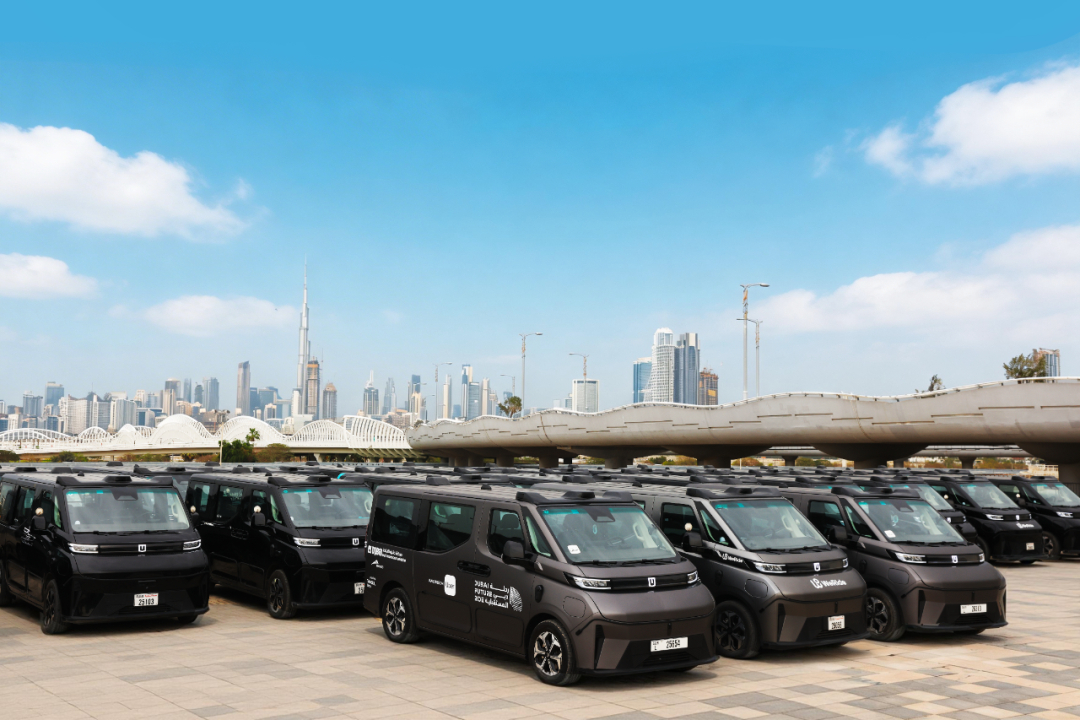
Fueling the rapid expansion of overseas business is its “technology output + local partners” asset-light model. The company supplies autonomous driving technology, products, and operational systems, while Uber, Grab, and local transportation operators and mobility platforms provide local traffic entry points, fleet resources, and market channels. In a context where autonomous driving companies worldwide face the challenge of localized operations, the asset-light overseas expansion model not only ensures expansion speed but also balances capital efficiency and profitability quality. It not only avoids the risks of heavy-asset investment, but also significantly improves cross-regional replication efficiency, enabling the company to quickly enter multiple overseas markets with relatively low capital expenditures.
The reporter noted that the progress in deploying right-hand-drive markets became another highlight of the quarter’s financial report. Currently, around 70 countries and regions worldwide adopt right-hand-drive traffic rules, covering more than 2 billion people and accounting for roughly one-third of the global mobility market—making it a strategic high ground that autonomous driving globalization cannot bypass. In June this year, Wenyuan Zhixing signed a strategic cooperation agreement with Geely Remote and Guanzhong Bus, planning to jointly develop native mass-production models for right-hand-drive markets based on the front-installed mass-produced Robotaxi GXR platform, and to roll out commercial passenger services starting from Hong Kong. So far, the company has already received cooperation intentions from multiple right-hand-drive markets, including Singapore, Japan and the UK.
Unlike some companies in the industry that focus on adapting and retrofitting left-hand-drive models, Wenyuan Zhixing is focusing on native development of right-hand-drive Robotaxi models. “Around right-hand-drive market traffic regulations, road environments, user habits, and operational needs, we conduct end-to-end systematic development—from product definition and vehicle platform, to the autonomous driving system and human-machine interaction.” A relevant executive of Wenyuan Zhixing said in an interview with reporters. This adaptation approach ensures that key areas such as perception, decision-making, control, and riding experience are better aligned with right-hand-drive driving scenarios, laying a solid product foundation for subsequent large-scale replication.
From the perspective of the global competitive landscape, right-hand-drive markets such as London and Singapore have become battlegrounds for autonomous driving companies worldwide, and overseas players like Waymo and Wayve have also accelerated their deployments. With its accumulated technical capabilities and operational experience in complex domestic road conditions, China’s Robotaxi companies are forming differentiated competitiveness in the global market.
The executive said that the company’s forward-looking positioning in right-hand-drive markets essentially represents seizing first-mover advantages in the next round of the global autonomous driving competition. Once the product paradigm and operating model in right-hand-drive markets are proven, the speed and scope for global replication will be further opened up, providing sustained overseas tailwinds for the company’s long-term growth.
Overall, Wenyuan Zhixing’s Q2 performance exceeding expectations is not an accidental fluctuation in a single quarter, but rather an inevitable result driven jointly by technology accumulation, operational refinement, and global expansion. On the revenue side, the dual engines of L4 and L2++ have worked together, leveraging both domestic and overseas markets; on the profitability side, the release of economies of scale combined with an increased share of high-gross-margin businesses has driven continuous gross margin improvement; on the operations side, per-vehicle Robotaxi efficiency has kept breaking through, and a positive feedback loop for commercialization is gradually taking shape.
For the autonomous driving industry, Wenyuan Zhixing’s growth case is of landmark significance. It proves that autonomous driving companies can achieve high-quality revenue growth and gross margin improvement while continuing to invest in technology. It also shows that Chinese autonomous driving companies can not only run the business model in the domestic market, but also secure a place in the global market through technology and model innovation—their long-term value will continue to be reassessed throughout deeper commercialization.