After recently reviewing TermMax’s whitepaper logic, I found that the biggest misunderstanding in the market is to simply treat it as a “fixed-rate wealth management product.”
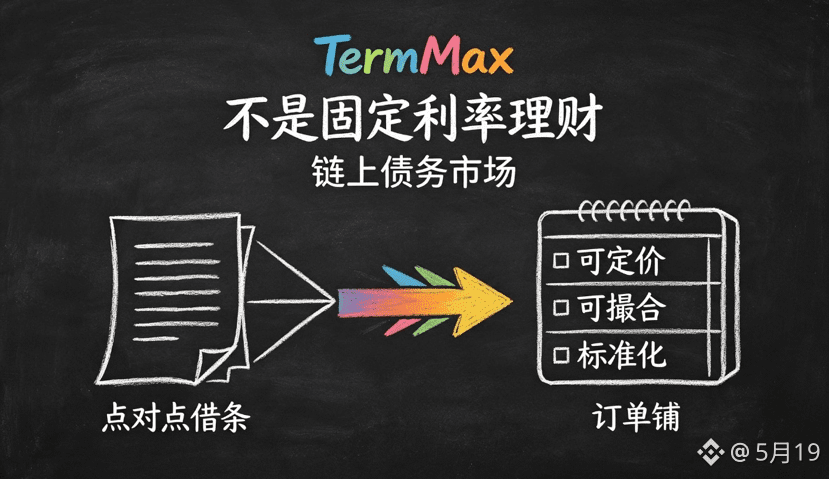
In reality, what it’s doing is moving on-chain debt from “point-to-point IOUs” to a standardized market that can be priced and matched.
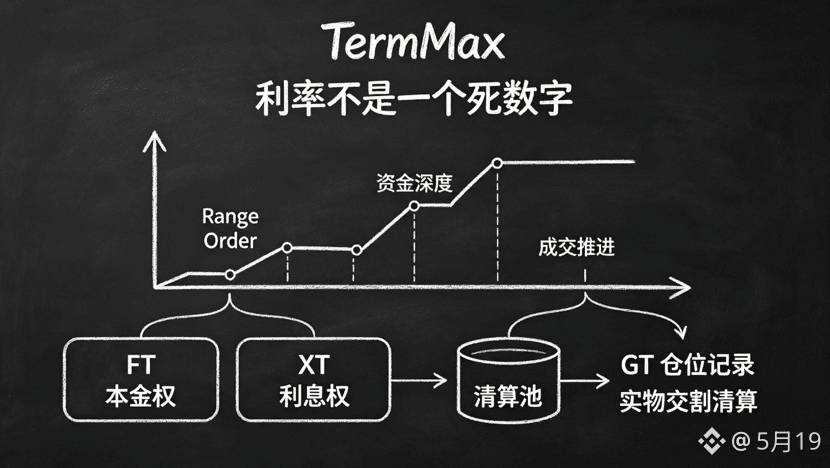
The core mechanism is Range Orders. TermMax does not quote with a fixed interest rate. Instead, it splits funds and interest rates into multiple intervals, forming a pricing curve that dynamically changes according to the progress of execution.
In simple terms, it doesn’t set a price and wait for borrowers—it lets the market’s execution decide where the interest rate lands.
Delving deeper, it completely separates principal and interest using two types of tokens: FT and XT. FT represents the principal-at-maturity claim, while XT represents the interest-revenue right.
This design isn’t just for separation; it embeds interest-rate depth into the token circulation and the matching process, so that the interest rate truly has tradable characteristics.
The GT position records and dedicated settlement rules are another design detail that’s easy to overlook. When the debt goes into default, the system does not rely on traditional liquidation via overcollateralization. Instead, it settles assets proportionally through physical delivery, turning an abstract interest rate into an executable risk-control workflow.
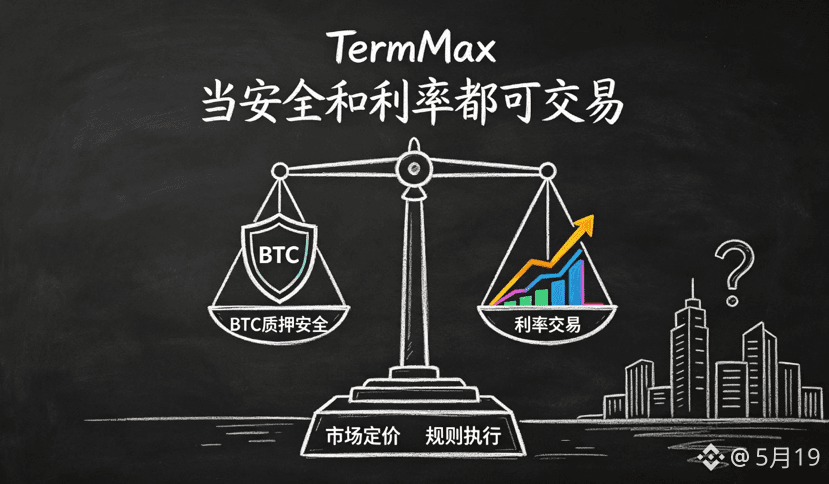
In summary, the project’s real value is not to provide users with a fixed-yield entry point, but to build a trading infrastructure for on-chain interest rates—priced by the market and executed by rules.
If you look at BTC-pledged security alongside TermMax’s debt market, an interesting question emerges:
When both “safety” and “interest rates” become tradable assets, how will the foundational logic of on-chain finance be rewritten?
Feel free to share your thoughts in the comments.
#termmax @TermMax
In reality, what it’s doing is moving on-chain debt from “point-to-point IOUs” to a standardized market that can be priced and matched.
The core mechanism is Range Orders. TermMax does not quote with a fixed interest rate. Instead, it splits funds and interest rates into multiple intervals, forming a pricing curve that dynamically changes according to the progress of execution.
In simple terms, it doesn’t set a price and wait for borrowers—it lets the market’s execution decide where the interest rate lands.
Delving deeper, it completely separates principal and interest using two types of tokens: FT and XT. FT represents the principal-at-maturity claim, while XT represents the interest-revenue right.
This design isn’t just for separation; it embeds interest-rate depth into the token circulation and the matching process, so that the interest rate truly has tradable characteristics.
The GT position records and dedicated settlement rules are another design detail that’s easy to overlook. When the debt goes into default, the system does not rely on traditional liquidation via overcollateralization. Instead, it settles assets proportionally through physical delivery, turning an abstract interest rate into an executable risk-control workflow.
In summary, the project’s real value is not to provide users with a fixed-yield entry point, but to build a trading infrastructure for on-chain interest rates—priced by the market and executed by rules.
If you look at BTC-pledged security alongside TermMax’s debt market, an interesting question emerges:
When both “safety” and “interest rates” become tradable assets, how will the foundational logic of on-chain finance be rewritten?
Feel free to share your thoughts in the comments.
#termmax @TermMax