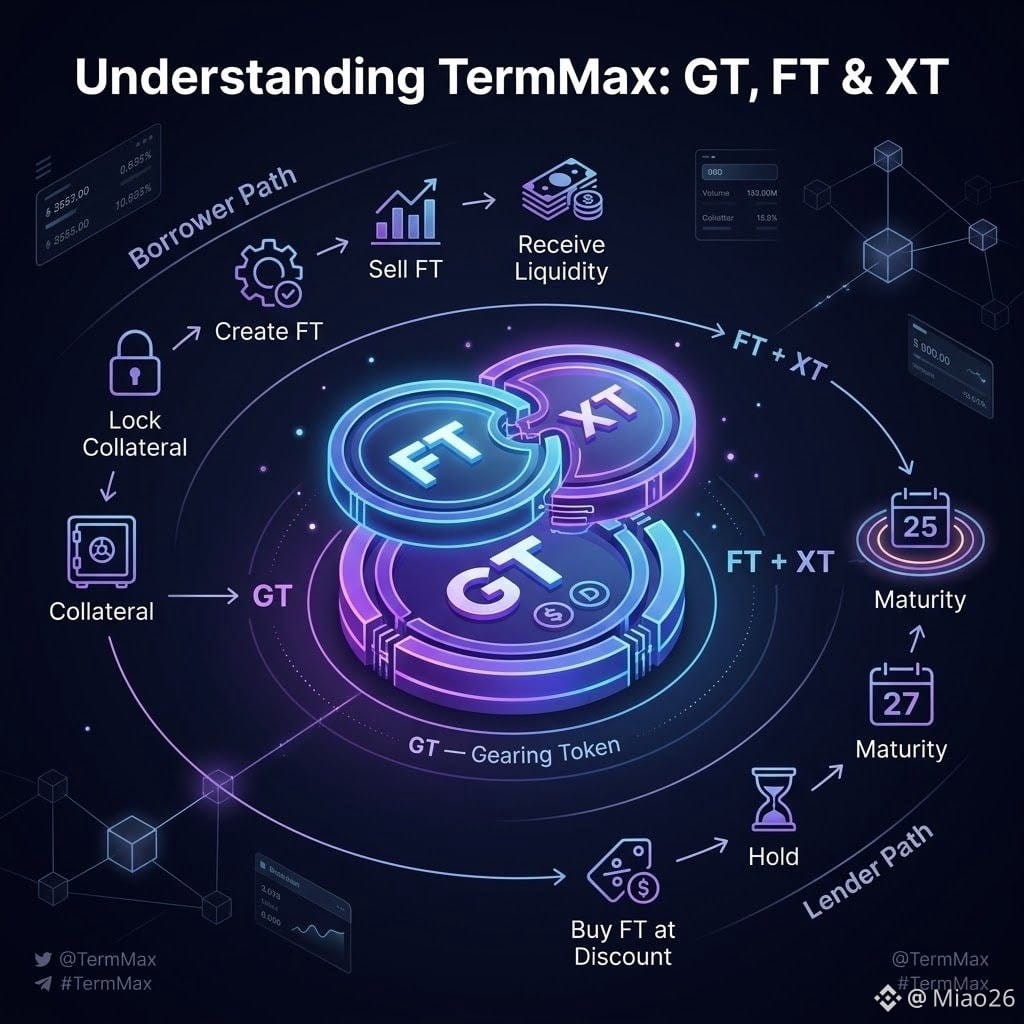
The first time I looked at @TermMax , the token structure was probably the part that made me stop and think. Instead of using one token to represent everything, TermMax separates different parts of the lending position through GT, FT, and XT.
The Gearing Token represents the individual loan position, including the collateral and debt attached to it. Then the Fixed-Rate Token represents the future claim on the debt token at maturity, while the X Token complements the FT before maturity.
What I find practical here is that each token has a specific job. The borrower can lock collateral, create FTs and sell them for liquidity, while lenders can acquire those FTs at a discount and hold them toward maturity.
For me, this makes the whole system easier to understand once I look at the tokens as different pieces of one financial position rather than three unrelated assets.
That design is what makes #TermMax interesting to me the tokenization isn't just for complexity; it gives borrowing, lending and maturity their own clear structure. #TermMax
The Gearing Token represents the individual loan position, including the collateral and debt attached to it. Then the Fixed-Rate Token represents the future claim on the debt token at maturity, while the X Token complements the FT before maturity.
What I find practical here is that each token has a specific job. The borrower can lock collateral, create FTs and sell them for liquidity, while lenders can acquire those FTs at a discount and hold them toward maturity.
For me, this makes the whole system easier to understand once I look at the tokens as different pieces of one financial position rather than three unrelated assets.
That design is what makes #TermMax interesting to me the tokenization isn't just for complexity; it gives borrowing, lending and maturity their own clear structure. #TermMax