
橙子Joyce
336 Posts

橙子Joyce
 Square Verified+
价值投资者:以十年为单位投资美股及BTC.ETH.BNB.SOL.推特X:@Joyce88ai

SOL Holder
Frequent Trader
8.7 Years
795 Following
34.5K+ Followers
42.7K+ Liked
Posts
All
Quotes
Videos
Live
PINNED


燕寶Melissa
·
--
Bearish🔥 Arthur Hayes: I basically don’t look at Bitcoin technical indicators!
Many people trading BTC watch every day: 📈 MA200 📉 RSI 🔴 MACD 📊 candlestick patterns.
But the approach of Arthur Hayes, co-founder of BitMEX, is completely different.
He has said outright that he basically doesn’t do technical analysis of Bitcoin.
What he really focuses on are three things👇
1️⃣ US stocks He believes BTC largely follows the logic of US stocks. If that logic breaks down and the market calls for additional margin, investors will prioritize selling assets with better liquidity—BTC could be hit first.
2️⃣ Macros + market sentiment He doesn’t like waiting until market sentiment has gone completely crazy before entering. Instead, he tends to: place a bet early when sentiment is just beginning to form.
3️⃣ Finding assets that are “unloved by the market” This is also one of the reasons he’s bullish on ETH.
As for the BTC price? In his view, the key levels are $60,000, $100,000, and the prior historical high around $125,000–$126,000.
But between those key ranges, he won’t rely on technical indicators to trade frequent swings.
💡 Behind this are two entirely different trading mindsets:
Typical investors: price → indicators → buy/sell
Arthur Hayes: macro → liquidity → US stocks → sentiment → asset allocation
The real big money may never be trying to guess the next candlestick.
Instead, they’re deciding: “Where will the next round of capital go?”
#SEC收到灰度莱特币信托转ETF申请
$BTC
$ETH
$BNB
Many people trading BTC watch every day: 📈 MA200 📉 RSI 🔴 MACD 📊 candlestick patterns.
But the approach of Arthur Hayes, co-founder of BitMEX, is completely different.
He has said outright that he basically doesn’t do technical analysis of Bitcoin.
What he really focuses on are three things👇
1️⃣ US stocks He believes BTC largely follows the logic of US stocks. If that logic breaks down and the market calls for additional margin, investors will prioritize selling assets with better liquidity—BTC could be hit first.
2️⃣ Macros + market sentiment He doesn’t like waiting until market sentiment has gone completely crazy before entering. Instead, he tends to: place a bet early when sentiment is just beginning to form.
3️⃣ Finding assets that are “unloved by the market” This is also one of the reasons he’s bullish on ETH.
As for the BTC price? In his view, the key levels are $60,000, $100,000, and the prior historical high around $125,000–$126,000.
But between those key ranges, he won’t rely on technical indicators to trade frequent swings.
💡 Behind this are two entirely different trading mindsets:
Typical investors: price → indicators → buy/sell
Arthur Hayes: macro → liquidity → US stocks → sentiment → asset allocation
The real big money may never be trying to guess the next candlestick.
Instead, they’re deciding: “Where will the next round of capital go?”
#SEC收到灰度莱特币信托转ETF申请
$BTC
$ETH
$BNB


易琳Ten
·
--
True growth in trading comes from slowly growing small capital
Practicing with small capital, step by step to grow it—
in essence, this is a process of honing your mindset and truly understanding compounding.
Many people always want to get rich overnight,
thinking that they can earn A8, A9 by just one deal.
But from the underlying logic of trading, this directly goes against trading principles.
Why do many people who suddenly get rich end up back where they started?
Because they received a huge unexpected windfall,
but they never built the mindset, discipline, and understanding that match their wealth.
The power of compounding never comes from extreme returns,
but from having a long enough period of “not bad” performance.
What really matters isn’t how much you make in a single year,
but whether you can survive through repeated market swings and always stay at the table.
A strategy that makes you anxious every night and constantly changes your plan,
no matter how excellent it may be in theory,
is difficult to execute consistently over the long term.
Trading isn’t about who can earn the most in one night,
but about who can last long enough—
so that time turns “not bad” gains into astonishing results.
It’s okay to go slowly.
Stability is the real starting point of compounding.
Practicing with small capital, step by step to grow it—
in essence, this is a process of honing your mindset and truly understanding compounding.
Many people always want to get rich overnight,
thinking that they can earn A8, A9 by just one deal.
But from the underlying logic of trading, this directly goes against trading principles.
Why do many people who suddenly get rich end up back where they started?
Because they received a huge unexpected windfall,
but they never built the mindset, discipline, and understanding that match their wealth.
The power of compounding never comes from extreme returns,
but from having a long enough period of “not bad” performance.
What really matters isn’t how much you make in a single year,
but whether you can survive through repeated market swings and always stay at the table.
A strategy that makes you anxious every night and constantly changes your plan,
no matter how excellent it may be in theory,
is difficult to execute consistently over the long term.
Trading isn’t about who can earn the most in one night,
but about who can last long enough—
so that time turns “not bad” gains into astonishing results.
It’s okay to go slowly.
Stability is the real starting point of compounding.


静姐6888
·
--
Borrow peace from the mountains, and meet the gentleness of the world.
English translation: Borrow peace from the mountains, and meet the gentleness of the world.
English translation: Borrow peace from the mountains, and meet the gentleness of the world.


阿婧1688
·
--
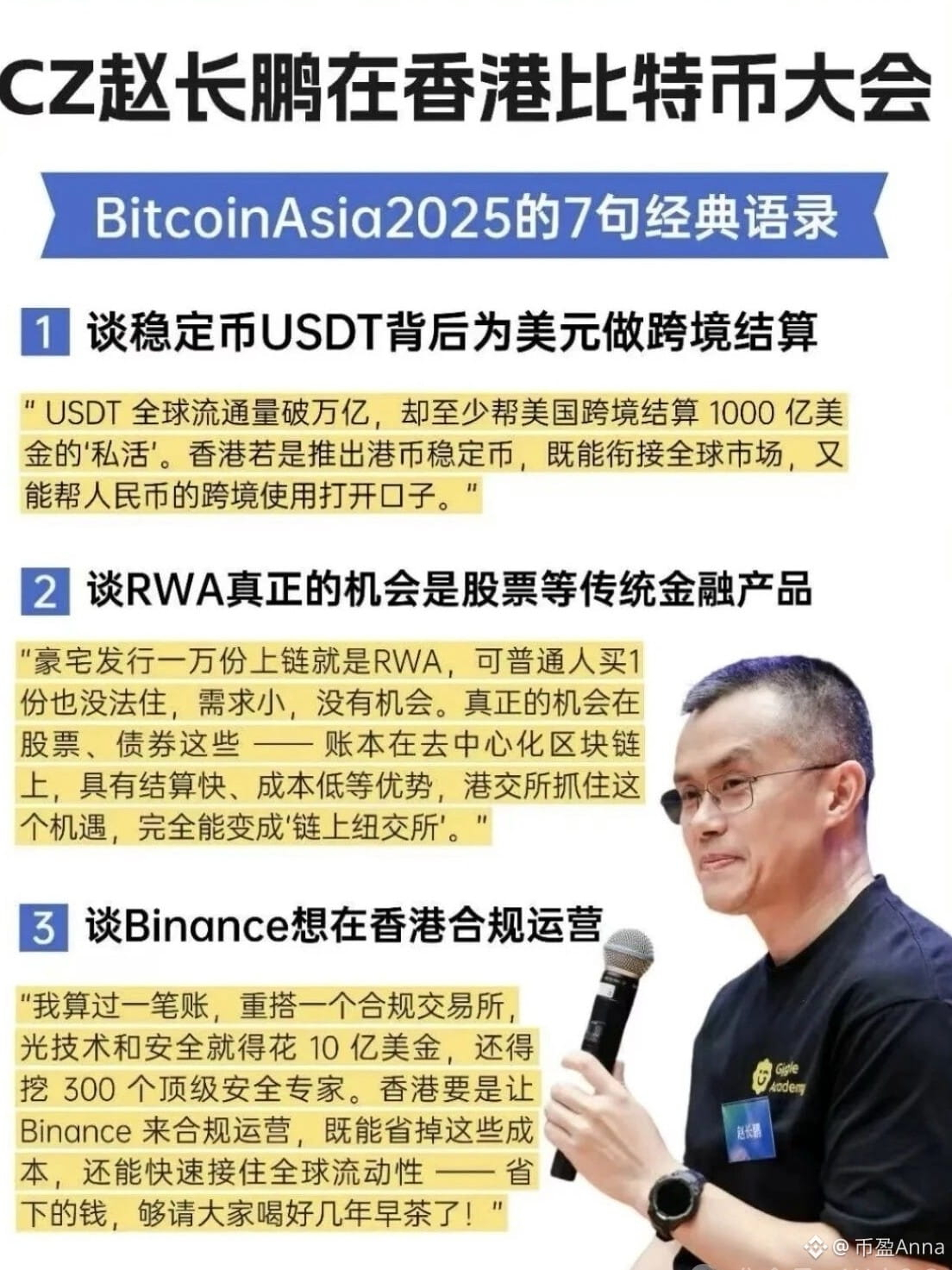
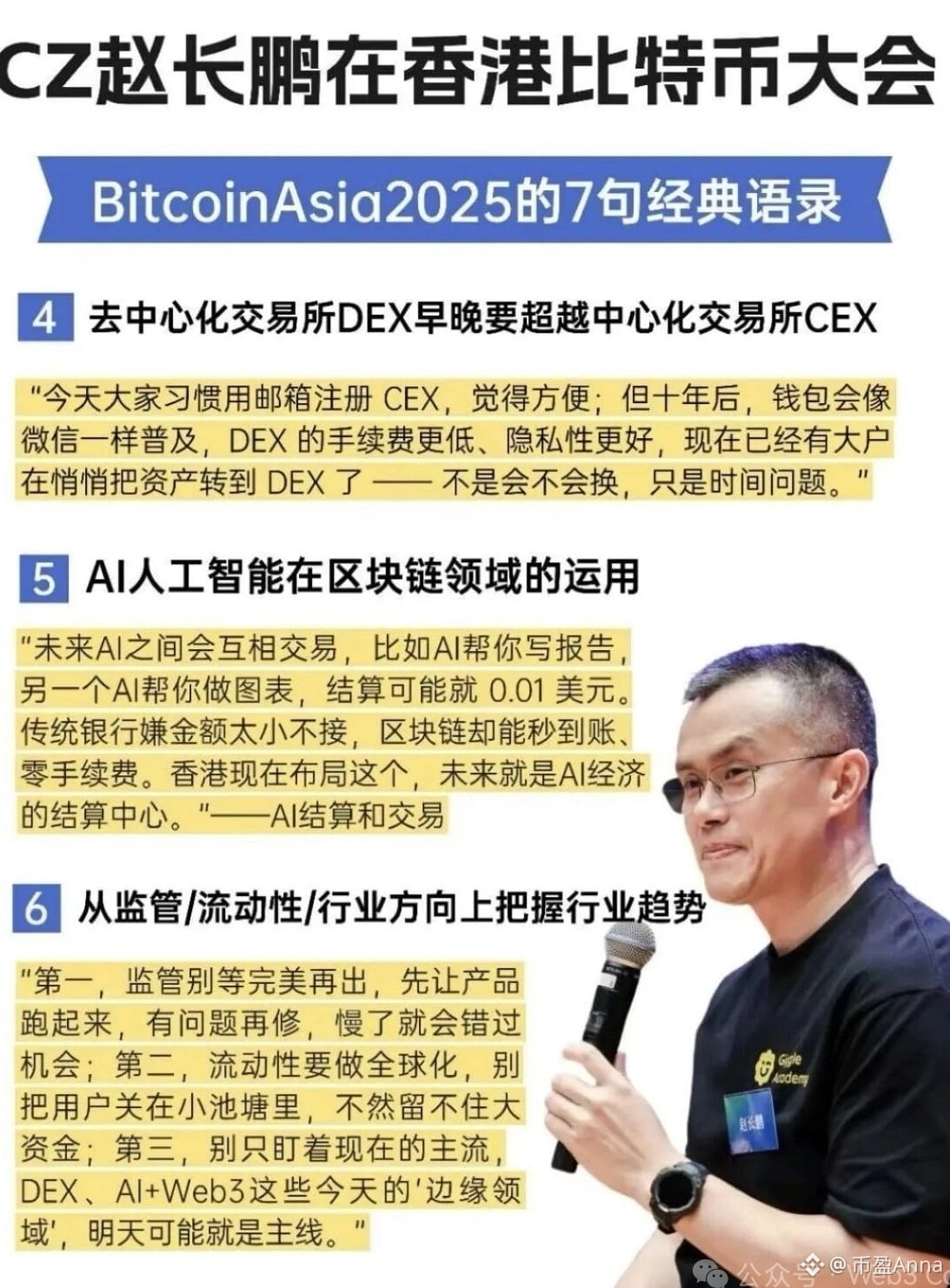
📢CZ Zhao Changpeng: 7 key quotes from the Hong Kong Bitcoin Conference
✅ Stablecoin cross-border settlement
✅ RWA on-chain with traditional finance
✅ DEX will surpass CEX in the future
✅ AI + blockchain economics sector
✅ Hong Kong compliance and a global liquidity layout
Industry insiders point the way—edge-track opportunities may become the main theme going forward. Let’s unpack the major industry trends!
Big shots are laying it out clearly—raise your understanding and seize the trend!
✅ Stablecoin cross-border settlement
✅ RWA on-chain with traditional finance
✅ DEX will surpass CEX in the future
✅ AI + blockchain economics sector
✅ Hong Kong compliance and a global liquidity layout
Industry insiders point the way—edge-track opportunities may become the main theme going forward. Let’s unpack the major industry trends!
Big shots are laying it out clearly—raise your understanding and seize the trend!


光明社区-阿波罗
·
--
Rushing to mountains and seas, collecting every inch of light, letting beauty happen naturally in the scenery.
Chase mountains and shores, capture every ray, let beauty unfold naturally.
Chase mountains and shores, capture every ray, let beauty unfold naturally.

灼见
·
--
🚨 Grayscale makes another move—this time, it’s Litecoin.
Grayscale has just filed an updated document with the SEC, with plans to further convert:
Grayscale Litecoin Trust (LTCN)
into:
Grayscale Litecoin Trust ETF
and to list it on NYSE Arca.
Let’s start with the most important point:
⚠️ This does not mean the SEC has already approved it.
What’s really worth watching is another question:
Why are traditional institutions continually packing Crypto assets into the ETF “box”?
BTC has already gone down this road.
ETH has too.
Now, including LTC, more and more Crypto assets are trying to enter the ETF system of traditional finance.
And Litecoin is actually a particularly interesting choice.
It doesn’t have the recent hot narratives—AI, Meme, RWA.
Even many new Crypto users might think:
“Isn’t LTC the coin from the last cycle?”
But from an institutional perspective, it has several distinctive features:
⚪ Long enough history
⚪ A mature PoW mechanism
⚪ Long market operating track record
⚪ Relatively simple regulatory controversies
⚪ It already has a well-established trust product: LTCN
So I think what’s truly worth discussing today isn’t:
“How much can LTC go up today?”
but rather:
Is the Crypto ETF expanding from BTC and ETH to more assets?
If the answer is YES,
then the market may gradually form a new set of categories over time:
Stage one: BTC ETF
⬇️
Stage two: ETH ETF
⬇️
Stage three: More Crypto ETFs such as LTC / SOL / XRP
The long-term significance of this isn’t
whether any single coin jumps 10% in a day.
It’s that traditional finance is building more and more compliant entry points into the Crypto market.
In the past, investors needed:
Exchange → Wallet → Private key → On-chain operations.
In the future, more and more traditional capital may only need:
Open a brokerage account → Buy an ETF.
Every time the barrier drops,
the potential pool of capital expands.
So when I see documents related to an LTC ETF today,
I actually don’t think about Litecoin itself.
Instead, I think about:
After BTC and ETH, which Crypto asset will become the next batch to truly land on Wall Street shelves?
👇 If you could only pick one, which ETF narrative do you think deserves the most attention next?
LTC / SOL / XRP?
#BTC #ETH #BNB
Grayscale has just filed an updated document with the SEC, with plans to further convert:
Grayscale Litecoin Trust (LTCN)
into:
Grayscale Litecoin Trust ETF
and to list it on NYSE Arca.
Let’s start with the most important point:
⚠️ This does not mean the SEC has already approved it.
What’s really worth watching is another question:
Why are traditional institutions continually packing Crypto assets into the ETF “box”?
BTC has already gone down this road.
ETH has too.
Now, including LTC, more and more Crypto assets are trying to enter the ETF system of traditional finance.
And Litecoin is actually a particularly interesting choice.
It doesn’t have the recent hot narratives—AI, Meme, RWA.
Even many new Crypto users might think:
“Isn’t LTC the coin from the last cycle?”
But from an institutional perspective, it has several distinctive features:
⚪ Long enough history
⚪ A mature PoW mechanism
⚪ Long market operating track record
⚪ Relatively simple regulatory controversies
⚪ It already has a well-established trust product: LTCN
So I think what’s truly worth discussing today isn’t:
“How much can LTC go up today?”
but rather:
Is the Crypto ETF expanding from BTC and ETH to more assets?
If the answer is YES,
then the market may gradually form a new set of categories over time:
Stage one: BTC ETF
⬇️
Stage two: ETH ETF
⬇️
Stage three: More Crypto ETFs such as LTC / SOL / XRP
The long-term significance of this isn’t
whether any single coin jumps 10% in a day.
It’s that traditional finance is building more and more compliant entry points into the Crypto market.
In the past, investors needed:
Exchange → Wallet → Private key → On-chain operations.
In the future, more and more traditional capital may only need:
Open a brokerage account → Buy an ETF.
Every time the barrier drops,
the potential pool of capital expands.
So when I see documents related to an LTC ETF today,
I actually don’t think about Litecoin itself.
Instead, I think about:
After BTC and ETH, which Crypto asset will become the next batch to truly land on Wall Street shelves?
👇 If you could only pick one, which ETF narrative do you think deserves the most attention next?
LTC / SOL / XRP?
#BTC #ETH #BNB


奋斗Hustle1688
·
--
[Replay] 🎙️ Build BNB together
03 h 04 m 32 s · 8.5k listens

Mhd_Fzlul
·
--
Bullish🧧🧧🧧🧧🧧CLAIM $USTC REWARDS🧧🧧🧧🧧🧧
💲Comment 📩
💲Like 👍🏻
💲Repost 🔁
💲Share ➡️
Don't miss out on your big #USTC reward💲💲💲
1️⃣ Follow "Mhd_Fzlul" for more alerts and Red Packets.📈🧧💲
2️⃣ Comment on "Ok"... ❕️
3️⃣ Claim your Red Packet in the Binance Pay section now💰💱
Click here to Trade👇🏻
$BTC
#Write2Earn #BTC #USTC/USDT
💲Comment 📩
💲Like 👍🏻
💲Repost 🔁
💲Share ➡️
Don't miss out on your big #USTC reward💲💲💲
1️⃣ Follow "Mhd_Fzlul" for more alerts and Red Packets.📈🧧💲
2️⃣ Comment on "Ok"... ❕️
3️⃣ Claim your Red Packet in the Binance Pay section now💰💱
Click here to Trade👇🏻
$BTC
#Write2Earn #BTC #USTC/USDT

Quoted content has been removed


超人不会飞2020
·
--
[Replay] 🎙️ Superman 100U DCA Bitcoin Day 31
03 h 01 m 02 s · 9.3k listens

Lily雪莉呀
·
--
Everything turns back in its own way; when we feel the aftertaste is bitter, please believe that everything will eventually become sweet.



圣克斯Lucky1688
·
--
🧧🔥🧧🔥🧧🔥
Institutional view on core inflation (Core CPI): Driven by recent oil price increases, total CPI is more susceptible to energy-price shocks. Institutional capital is more focused on Core CPI, excluding food and energy. If headline CPI is elevated but Core CPI continues to cool, the market is prone to a “break down first, then quickly rebound in a V-shape” pattern.
Be alert to two-way needle pokes in derivatives: At the moment of data release (8:30 AM ET), it can easily trigger on-chain activity and settlement/clearing for exchange contracts. It’s recommended to avoid opening high leverage before and after the data release.
Watch how ETF flows provide follow-on support: Once the CPI data lands, it removes near-term macro uncertainty. After the release, the daily net inflow/outflow of US spot Bitcoin ETFs will determine whether the market can start a sustained, trend-like rebound.
Follow me—answer 1 will take away a $SOL double-hongbao!
🧧🔥🧧🔥🧧🔥
$BTC $BNB $ETH
Institutional view on core inflation (Core CPI): Driven by recent oil price increases, total CPI is more susceptible to energy-price shocks. Institutional capital is more focused on Core CPI, excluding food and energy. If headline CPI is elevated but Core CPI continues to cool, the market is prone to a “break down first, then quickly rebound in a V-shape” pattern.
Be alert to two-way needle pokes in derivatives: At the moment of data release (8:30 AM ET), it can easily trigger on-chain activity and settlement/clearing for exchange contracts. It’s recommended to avoid opening high leverage before and after the data release.
Watch how ETF flows provide follow-on support: Once the CPI data lands, it removes near-term macro uncertainty. After the release, the daily net inflow/outflow of US spot Bitcoin ETFs will determine whether the market can start a sustained, trend-like rebound.
Follow me—answer 1 will take away a $SOL double-hongbao!
🧧🔥🧧🔥🧧🔥
$BTC $BNB $ETH



路人1688luren
·
--
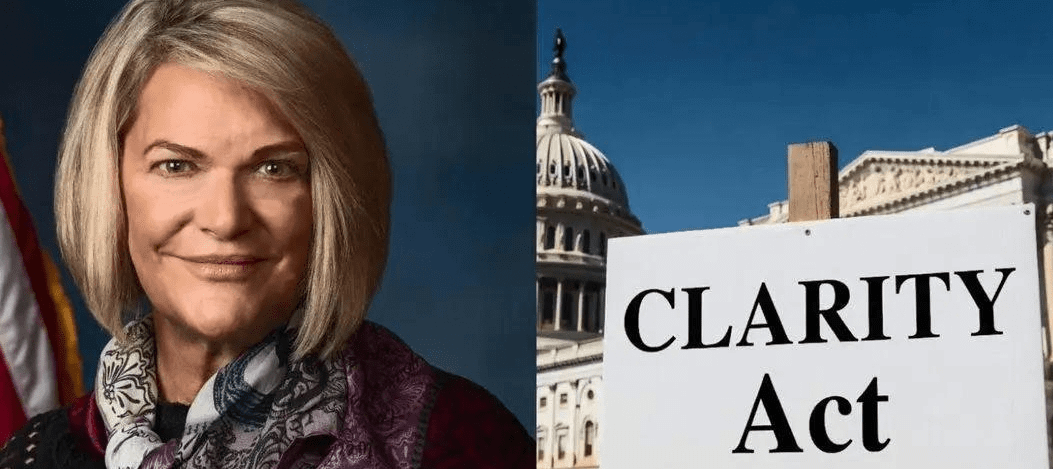
#Clarity法案9月15日程序性投票 Now is a critical time. The CLARITY Act is set to face a procedural vote in the Senate on September 15.
This damn bill has been messed around with for more than a year.
Now it’s finally time to see how it really plays out.
A procedural vote
is not the final vote on the bill.
It’s about deciding whether to continue discussing the issue.
The goal is to get 60 votes.
Only then will the Senate allow debate on amendments to the bill.
If they can’t reach 60 votes, then it’s basically over.
This Congress won’t push it forward again.
And who knows how many years it’ll be before there’s another chance to bring it up.
So tell me—how important is this?
The problem right now is that the Republicans only have 53 votes.
Even if every Republican supports it, they still need at least 7 Democratic members to break ranks and back it.
So the threshold is really high. I think the odds of this bill passing are very slim.
And if the vote fails, and it’s a no-go—then the big boss and all his little followers are definitely going to get hit.
Because market expectations were already priced in earlier, so it’ll definitely drop.
But if the vote succeeds,
it would directly ignite the crypto market.
That’s an absolutely huge positive.
I’d expect it to basically take off on the spot.
Brothers, hey!
Don’t get itchy and do stupid stuff.
Hold steady these next couple of days.
Besides this hurdle,
the Federal Reserve is also about to start doing things.$BNB #Clarity法案9月15日程序性投票
This damn bill has been messed around with for more than a year.
Now it’s finally time to see how it really plays out.
A procedural vote
is not the final vote on the bill.
It’s about deciding whether to continue discussing the issue.
The goal is to get 60 votes.
Only then will the Senate allow debate on amendments to the bill.
If they can’t reach 60 votes, then it’s basically over.
This Congress won’t push it forward again.
And who knows how many years it’ll be before there’s another chance to bring it up.
So tell me—how important is this?
The problem right now is that the Republicans only have 53 votes.
Even if every Republican supports it, they still need at least 7 Democratic members to break ranks and back it.
So the threshold is really high. I think the odds of this bill passing are very slim.
And if the vote fails, and it’s a no-go—then the big boss and all his little followers are definitely going to get hit.
Because market expectations were already priced in earlier, so it’ll definitely drop.
But if the vote succeeds,
it would directly ignite the crypto market.
That’s an absolutely huge positive.
I’d expect it to basically take off on the spot.
Brothers, hey!
Don’t get itchy and do stupid stuff.
Hold steady these next couple of days.
Besides this hurdle,
the Federal Reserve is also about to start doing things.$BNB #Clarity法案9月15日程序性投票



奋斗Hustle1688
·
--
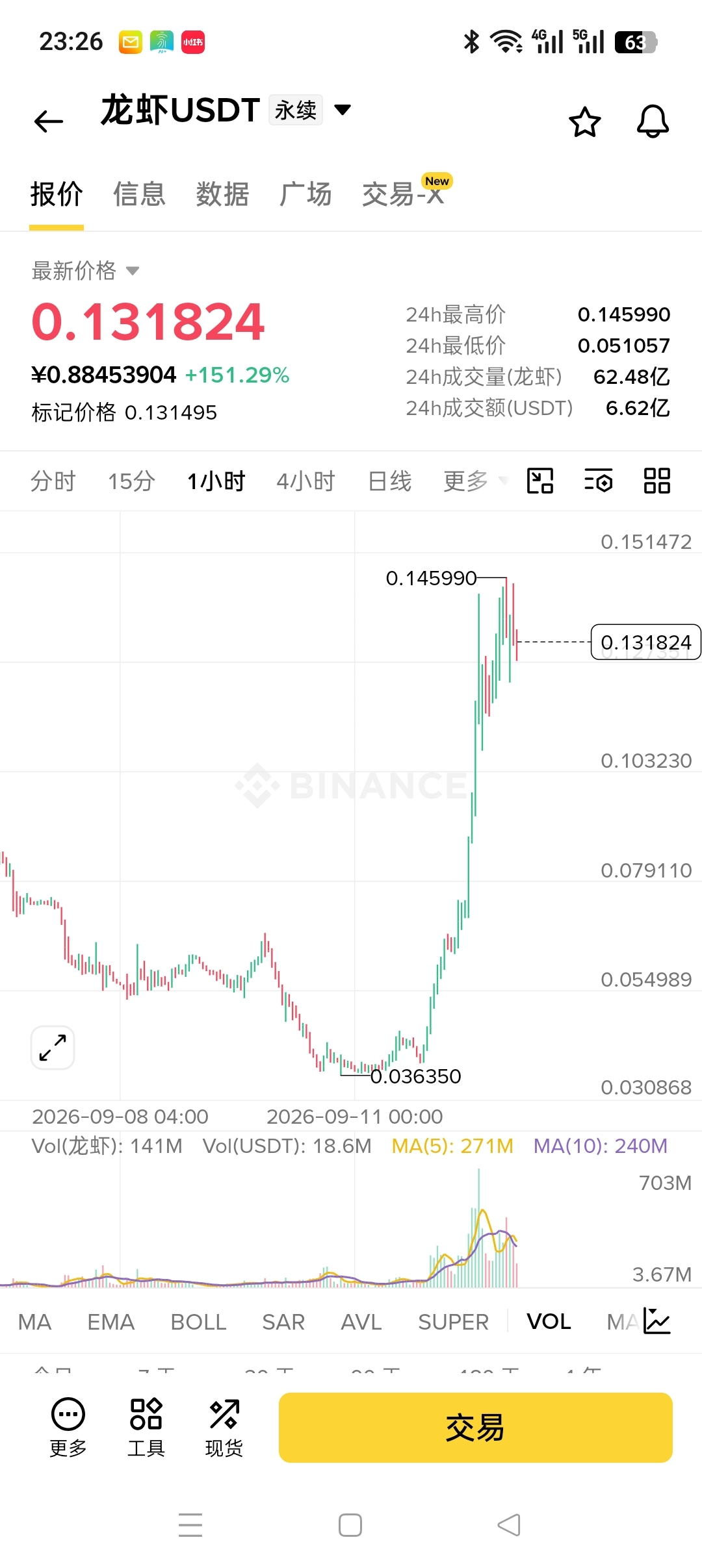
$龙虾 is insanely amazing, up by almost 20x, and it just broke the previous high again. Will it hit 1 USDT this time?

八方来财势不可挡
·
--
$LSK Coin can’t go up! Whether we can hold onto 1 is a big question! Red envelopes 🧧🧧🧧🧧🧧🧧🧧🧧🧧🧧🧧🧧$龙虾 🦞🦞🦞🦞


心月势不可挡
·
--
BullishBeaches, sea waves, and seafood—
turn everyday life into a vacation.
turn everyday life into a vacation.


Log in to explore more content