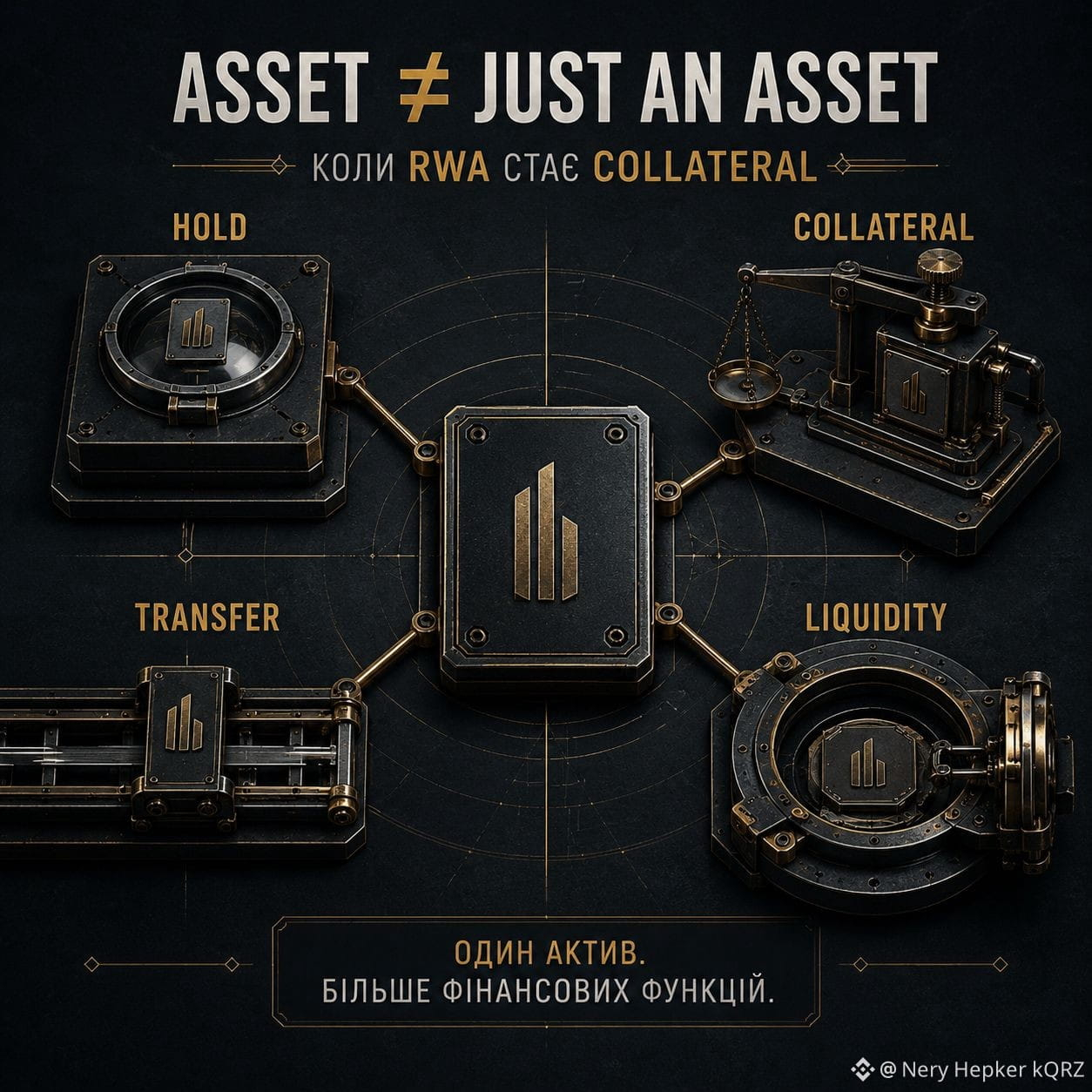
RWA becomes much more interesting the moment an asset stops being just something you hold.
It can be used as the foundation for another financial position.
That’s why collateral is one of the most important parts of the new financial infrastructure.
Imagine one and the same asset.
In one case, it’s simply sitting in your portfolio.
In the other, it becomes collateral that you can use to build a position.
The asset is the same.
But its economic function is different now.
And this is where tokenization starts to look less like “just another way to represent an asset.”
It becomes a way to make a traditional asset part of a programmable financial structure.
For me, this is the core idea of RWA:
to not create a new asset,
but to give the existing asset more ways to work.
Collateral is no longer just storage.
It’s infrastructure.
#termmax @TermMax
It can be used as the foundation for another financial position.
That’s why collateral is one of the most important parts of the new financial infrastructure.
Imagine one and the same asset.
In one case, it’s simply sitting in your portfolio.
In the other, it becomes collateral that you can use to build a position.
The asset is the same.
But its economic function is different now.
And this is where tokenization starts to look less like “just another way to represent an asset.”
It becomes a way to make a traditional asset part of a programmable financial structure.
For me, this is the core idea of RWA:
to not create a new asset,
but to give the existing asset more ways to work.
Collateral is no longer just storage.
It’s infrastructure.
#termmax @TermMax