
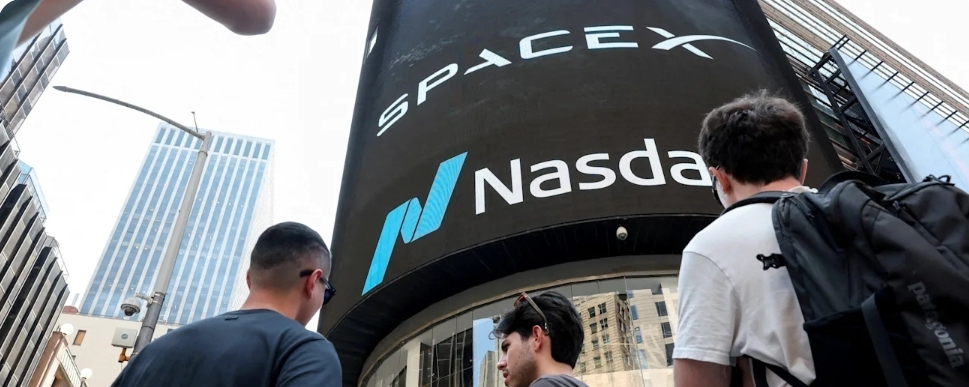

SpaceX’s post-IPO ownership is becoming much easier to see from regulatory filings, while another large batch of previously restricted shares is about to become tradable.
Who the biggest investors are
Based on recent filings, the major disclosed holders include:
Elon Musk: about 6.4 billion shares, roughly 48.4% of SpaceX. His dual-class shares give him more than 80% of the voting power.
Alphabet (Google): about 551 million shares, making it the largest institutional shareholder. Its original $900 million investment in 2015 had grown to roughly $94 billion by the end of June, although the stake's market value subsequently fell with SpaceX's stock.
Fidelity: roughly 303 million shares.
Peter Thiel/Founders Fund: more than 427 million shares, according to recent disclosures.
Antonio Gracias: more than 503 million shares; he's a SpaceX director and longtime Musk associate.
Nvidia: nearly 123 million shares, worth about $21 billion at the end of Q2.
Other substantial institutional holders include Gigafund, Saudi Arabia's Public Investment Fund, Baillie Gifford and BlackRock.
Why the share unlock matters
SpaceX deliberately structured its IPO lockups in multiple stages, rather than releasing virtually all insider and early-investor shares after the standard 180 days.
The first big release occurred August 6, when roughly 911.5 million shares became eligible for trading—more than doubling the public float. Importantly, "unlocked" doesn't mean those shares were automatically sold; their owners simply gained the ability to sell.
The next significant event is August 20, when roughly 319 million additional shares are scheduled to become tradable.
And there are additional unlocks later in the year. Reuters estimates that the staggered process will eventually make billions more shares eligible for trading.
The interesting part
The first huge unlock didn't produce the expected selloff. SpaceX actually rallied sharply afterward, with the stock gaining roughly 16% over two days around the first expiration.
So the market is now watching who actually sells, rather than simply how many shares technically become eligible. If major early investors cash out, that could create substantial supply. If they hold, the unlocks may have much less effect than feared.
In short: the mystery around SpaceX's ownership is fading just as the supply of tradable shares is expanding dramatically. That makes the next few unlock dates particularly important for SPCX's price.$SPCX $TSLA $DOGE