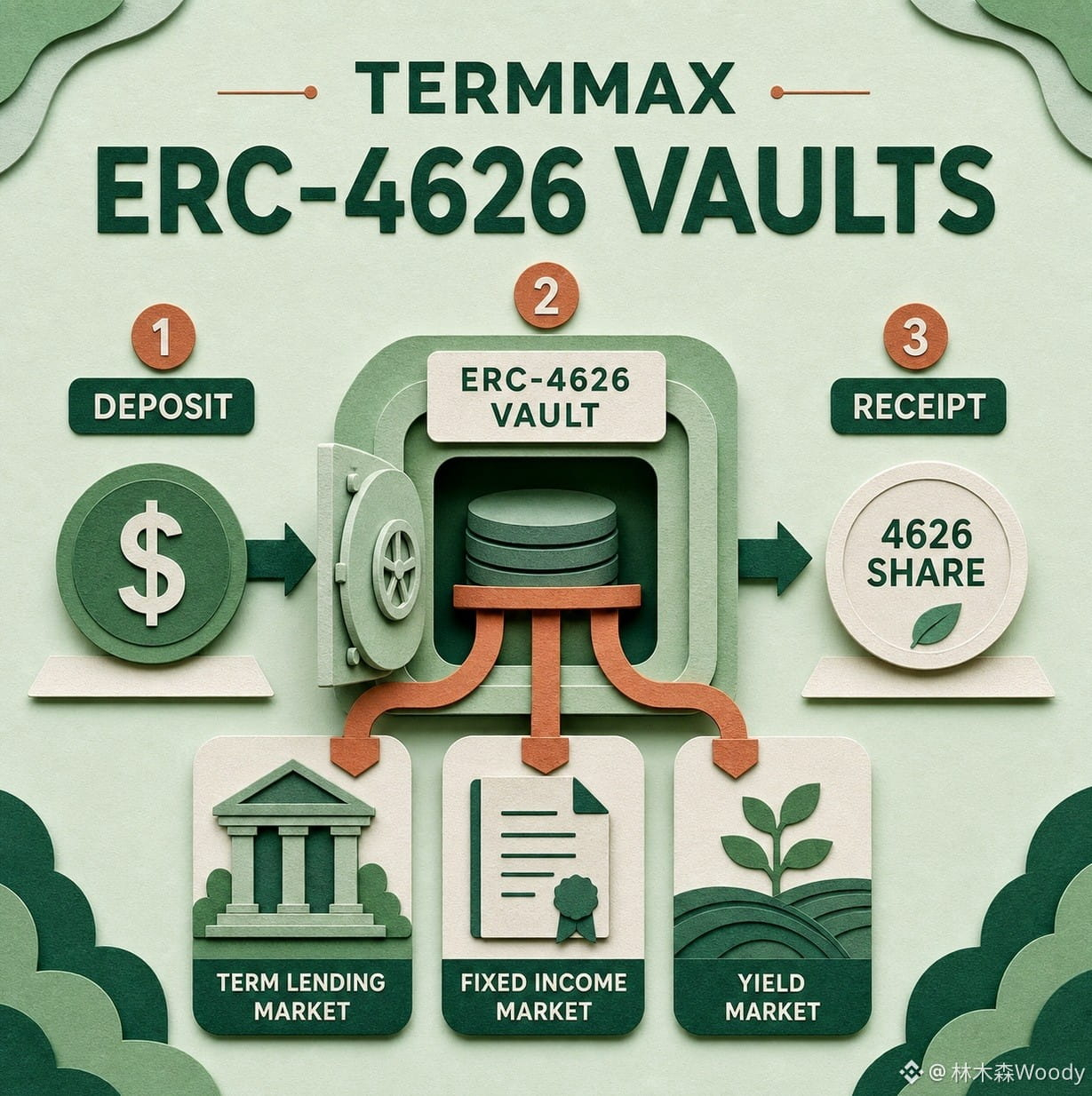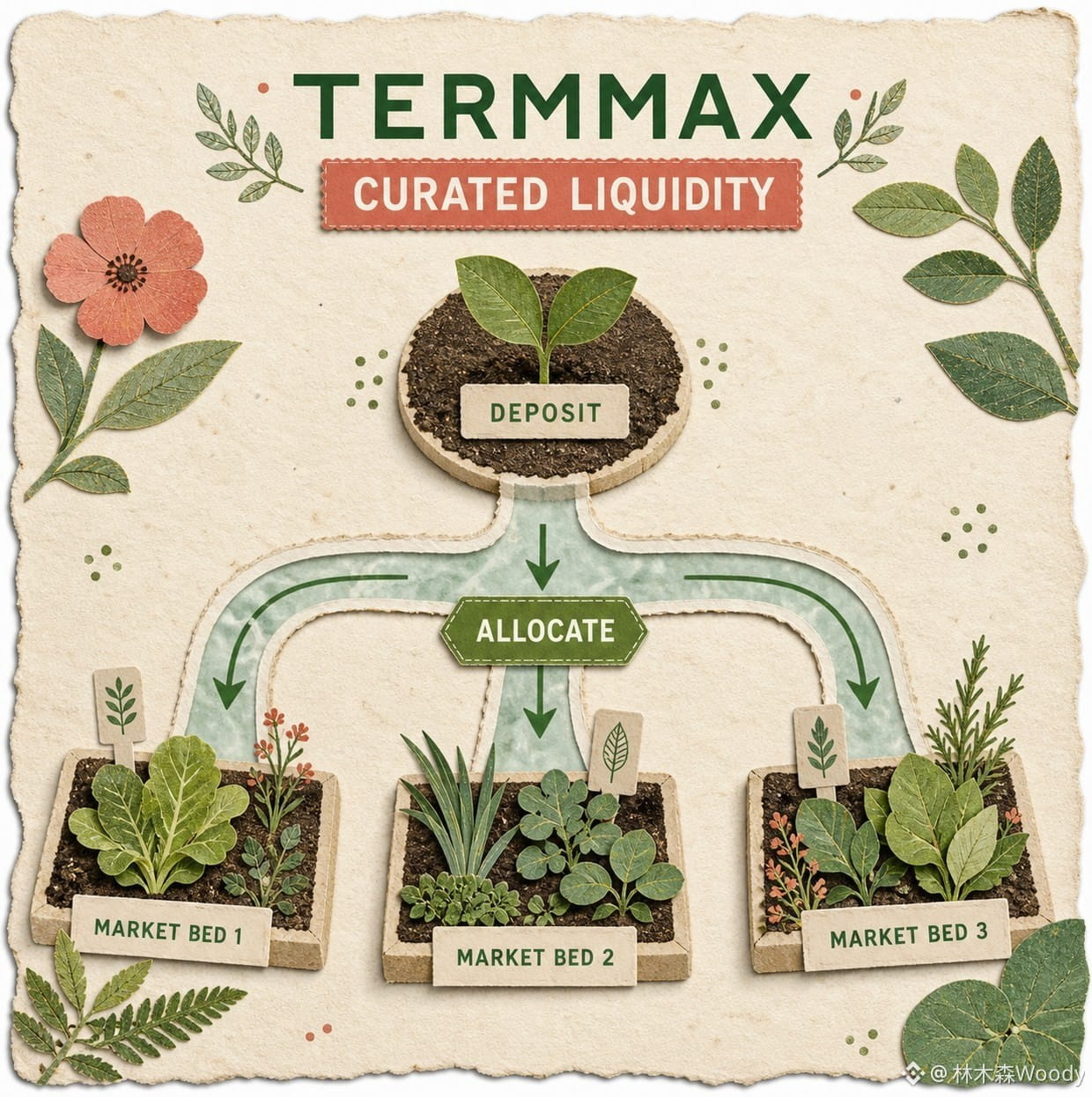
I went over the fixed-rate mechanism behind @TermMax again and again, and the more I looked, the more I felt that the words “fixed” can easily make people let their guard down. Yes, the interest rate can be locked at the time of the trade—but has my final outcome really been locked in as well?
First, let’s talk about borrowing. For each market, TermMax first sets the debt asset, collateral, and maturity date. The borrower locks the collateral into GT and then mints an FT that represents the debt due at maturity. I agree that the cost doesn’t wildly jump around with utilization—at least you don’t have to watch floating borrowing rates through the night. But as soon as the LTV hits the LLTV, the position will still go into the liquidation process. What’s “fixed” is the funding price, not the collateral price—nor the safety of the principal. When these three things are marketed together as if they’re the same, I think it’s easy to mislead.
Next is the maturity date. The documentation is very clear: if the debt isn’t repaid by the deadline, liquidation will be triggered, along with a two-hour liquidation window. If the debt hasn’t been handled cleanly yet, it moves into physical delivery, and the redemption pool that FT holders receive may contain both the underlying assets and the collateral. I originally thought that buying FTs meant I’d just wait until maturity and get back the same kind of debt asset. But in extreme cases, I could end up holding a whole basket of collateral that I then have to deal with myself. Is that really what ordinary people understand as “fixed income”?
You also can’t get around the oracle part. TermMax itself lists Chainlink and RedStone price feeds as risk points. Abnormal price feeds could cause incorrect liquidations or insufficient collateral. Fixed interest rates can’t shield me from the oracle failing—so this risk just moved from the interest-rate curve to the valuation and liquidation execution path.
Liquidation costs also can’t be dismissed with just “excess collateral.” In the public rules, there’s a 10% penalty calculated based on the value of the debt being liquidated: half goes to the liquidators and half goes into the protocol reserve. When the debt exceeds $10,000, typically each liquidation can process at most 50%. This can prevent a large position from being chopped down all at once. But if the market really keeps crashing consecutively, whether batch processing is enough still depends on on-chain execution and liquidity.
So when I look at #TermMax , you shouldn’t just ask whether the APY on the page is locked—you should ask: What exactly is the collateral? Where is the LLTV? Who is responsible for repayment at maturity? And after physical delivery, what will I actually receive? The interest rate is pinned down, but the risks aren’t pinned in place, are they?
$GPS $ETH
First, let’s talk about borrowing. For each market, TermMax first sets the debt asset, collateral, and maturity date. The borrower locks the collateral into GT and then mints an FT that represents the debt due at maturity. I agree that the cost doesn’t wildly jump around with utilization—at least you don’t have to watch floating borrowing rates through the night. But as soon as the LTV hits the LLTV, the position will still go into the liquidation process. What’s “fixed” is the funding price, not the collateral price—nor the safety of the principal. When these three things are marketed together as if they’re the same, I think it’s easy to mislead.
Next is the maturity date. The documentation is very clear: if the debt isn’t repaid by the deadline, liquidation will be triggered, along with a two-hour liquidation window. If the debt hasn’t been handled cleanly yet, it moves into physical delivery, and the redemption pool that FT holders receive may contain both the underlying assets and the collateral. I originally thought that buying FTs meant I’d just wait until maturity and get back the same kind of debt asset. But in extreme cases, I could end up holding a whole basket of collateral that I then have to deal with myself. Is that really what ordinary people understand as “fixed income”?
You also can’t get around the oracle part. TermMax itself lists Chainlink and RedStone price feeds as risk points. Abnormal price feeds could cause incorrect liquidations or insufficient collateral. Fixed interest rates can’t shield me from the oracle failing—so this risk just moved from the interest-rate curve to the valuation and liquidation execution path.
Liquidation costs also can’t be dismissed with just “excess collateral.” In the public rules, there’s a 10% penalty calculated based on the value of the debt being liquidated: half goes to the liquidators and half goes into the protocol reserve. When the debt exceeds $10,000, typically each liquidation can process at most 50%. This can prevent a large position from being chopped down all at once. But if the market really keeps crashing consecutively, whether batch processing is enough still depends on on-chain execution and liquidity.
So when I look at #TermMax , you shouldn’t just ask whether the APY on the page is locked—you should ask: What exactly is the collateral? Where is the LLTV? Who is responsible for repayment at maturity? And after physical delivery, what will I actually receive? The interest rate is pinned down, but the risks aren’t pinned in place, are they?
$GPS $ETH