
灼见
801 Posts
灼见
灼见|K线只是表象,人心才是博弈的终点。
13年实战沉淀,拒绝废话,只做最硬核的技术拆解与宏观透视。帮你看清下一步。如果你厌倦了噪音,这里是你的最后一站。
Open Trade

BTC Holder
Occasional Trader
8.5 Years
290 Following
21.8K+ Followers
5.7K+ Liked
Posts
Portfolio
All
Quotes
Videos
PINNED
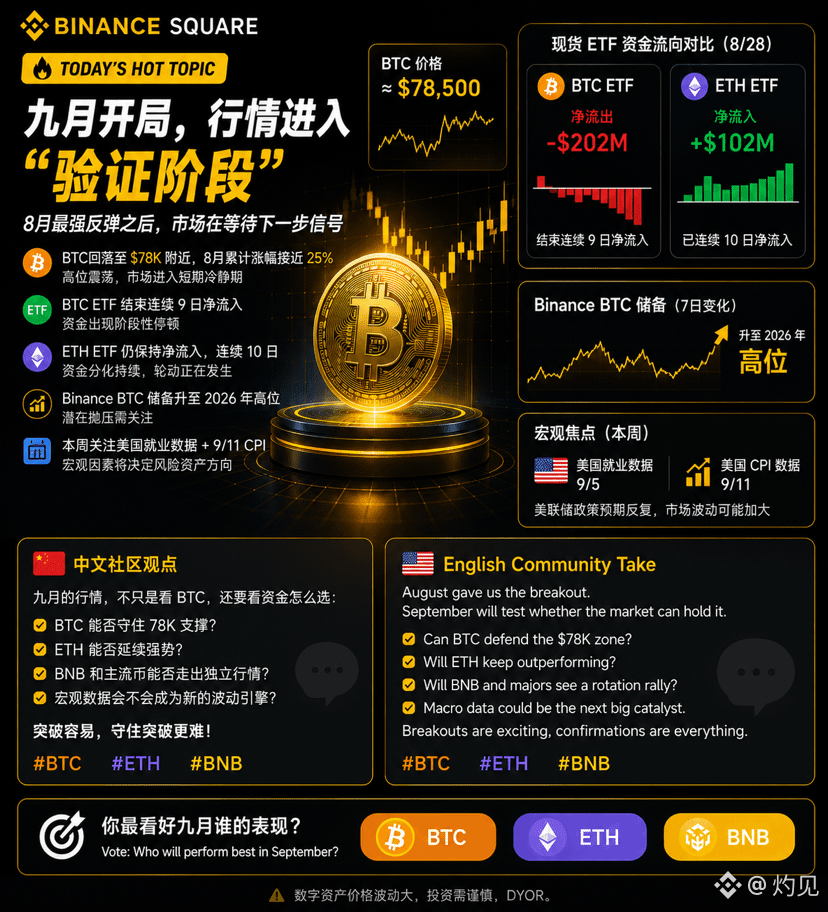
🔥 The BTC ETF saw outflows for just one day, and the funds came back.
This could be the most important signal to watch today.
On the previous trading day, BTC ETF recorded roughly $202M in net outflows, ending a streak of nine straight days of net inflows.
Many people have started to worry:
Are institutions getting ready to pull out?
But the latest data immediately shows a reversal:
🟢 BTC ETF: about +$216.7M
🟣 ETH ETF: about +$87.7M
🔥 ETH ETF: net inflows for the 11th consecutive trading day
What’s even more worth noting is—
BTC is still only around $78K.
Meaning:
The money is back, but the price hasn’t clearly kicked off yet.
This is completely different from the simple pattern of “price rises → capital chases.”
Meanwhile, BTC futures open interest hasn’t expanded crazily in sync either. The market currently looks more like it’s being driven by spot inflows, rather than high-leverage momentum.
So what I’m focusing on now isn’t:
“Will BTC break back above 80K today?”
It’s:
With these ongoing funds flowing into Crypto, who will they ultimately push up?
BTC is responsible for stabilizing the market.
ETH is steadily absorbing institutional capital.
And if liquidity continues to spread, BNB and other major assets may also become key things to watch in the next phase.
The most interesting state of this market right now is:
PRICE is hesitating.
But MONEY is still entering.
When price and fund flows show this kind of divergence—
it’s often worth taking a second look.
👇 If you can only choose one, who do you think will break through first in the next phase?
BTC / ETH / BNB?
#BTC #ETH #BNB
This could be the most important signal to watch today.
On the previous trading day, BTC ETF recorded roughly $202M in net outflows, ending a streak of nine straight days of net inflows.
Many people have started to worry:
Are institutions getting ready to pull out?
But the latest data immediately shows a reversal:
🟢 BTC ETF: about +$216.7M
🟣 ETH ETF: about +$87.7M
🔥 ETH ETF: net inflows for the 11th consecutive trading day
What’s even more worth noting is—
BTC is still only around $78K.
Meaning:
The money is back, but the price hasn’t clearly kicked off yet.
This is completely different from the simple pattern of “price rises → capital chases.”
Meanwhile, BTC futures open interest hasn’t expanded crazily in sync either. The market currently looks more like it’s being driven by spot inflows, rather than high-leverage momentum.
So what I’m focusing on now isn’t:
“Will BTC break back above 80K today?”
It’s:
With these ongoing funds flowing into Crypto, who will they ultimately push up?
BTC is responsible for stabilizing the market.
ETH is steadily absorbing institutional capital.
And if liquidity continues to spread, BNB and other major assets may also become key things to watch in the next phase.
The most interesting state of this market right now is:
PRICE is hesitating.
But MONEY is still entering.
When price and fund flows show this kind of divergence—
it’s often worth taking a second look.
👇 If you can only choose one, who do you think will break through first in the next phase?
BTC / ETH / BNB?
#BTC #ETH #BNB



加倉妹
·
--
Summer ends and autumn arrives! 🍂
Say goodbye to the past and welcome new beginnings! Carrying passion, courage, and goals, move forward all the way—turn every effort into rewards. Let this autumn be the season when we break through and succeed! 😊
Say goodbye to the past and welcome new beginnings! Carrying passion, courage, and goals, move forward all the way—turn every effort into rewards. Let this autumn be the season when we break through and succeed! 😊


光明社区-亮总
·
--
Even if wind and rain shroud the road ahead,
don’t lament the many twists and turns of time.
Let your heart settle and gather strength to forge your spirit,
and there will be brilliance breaking through the mist to emerge.
don’t lament the many twists and turns of time.
Let your heart settle and gather strength to forge your spirit,
and there will be brilliance breaking through the mist to emerge.


阿婧1688
·
--
The best spiritual practice in the world is learning to be of benefit to others.
With a little more understanding and consideration, and a little less to take personally.
In fulfilling others, you also enrich your own heart.
Altruism isn’t sacrifice—it’s mutual illumination!
With a little more understanding and consideration, and a little less to take personally.
In fulfilling others, you also enrich your own heart.
Altruism isn’t sacrifice—it’s mutual illumination!




帝王168
·
--
✨ Most people only see $LUCIC as another Meme coin, yet they overlook the real underlying logic behind its token architecture: a deep cryptographic experiment that embeds ideology into code. What truly moves core players about Lucidum Coin (LUCIC) is not merely the hard cap of 210 million tokens or its automated deflationary burn mechanism, but how it deeply empowers its “Bright Community” through structural design. By creating a perfectly closed loop—transparent accounting marketing wallets, clearly defined milestone goals, and an NFT ecosystem with dividend effects launched by founder Michel Saja—this team successfully blends DeFi’s hardcore game-theory mechanisms with the cohesive force of a truly decentralized community. Its signature “starlight” totem isn’t an empty marketing gimmick, but an industry practice of “on-chain traceability and decentralized proof-of-record” in a market crowded with information noise. When a project places financial transparency and long-term social consensus above short-term hype, it has already transformed from a mere speculative asset into a long-term consensus movement for believers.
🌟 #LUCiC #BNBChain #代币经济学 #BinanceSquareFamily
@Yi He @CZ @静姐6888 @一休哥168 @光明社区-亮总 @光明社区-云汐涟漪 @光明社区-裴佩 @未来已来-光明社区 @瑞霖-光明社区 @光明社区-明道 @金算盘-光明社区 @阿波罗1111
@Binance BiBi
🌟 #LUCiC #BNBChain #代币经济学 #BinanceSquareFamily
@Yi He @CZ @静姐6888 @一休哥168 @光明社区-亮总 @光明社区-云汐涟漪 @光明社区-裴佩 @未来已来-光明社区 @瑞霖-光明社区 @光明社区-明道 @金算盘-光明社区 @阿波罗1111
@Binance BiBi


周周1688
·
--
September, begin a new journey
$BNB 🧧🧧
Allow everything to happen; when your heart is open and at ease, good fortune will come
Let things unfold naturally—taking good care of the present is already wonderful
#1688家族family
$BNB 🧧🧧
Allow everything to happen; when your heart is open and at ease, good fortune will come
Let things unfold naturally—taking good care of the present is already wonderful
#1688家族family


马大富来了
·
--
Hello Every day a pack of benefits, 10,000份, for the fans’ benefits!
🎁repost my pin post
Claim your gifts🎁#比特币8月上涨23%跑赢黄金股市
🎁repost my pin post
Claim your gifts🎁#比特币8月上涨23%跑赢黄金股市

Verified
#termmax @TermMax
📌 Why DeFi not only needs “fixed interest rates,” but also “fixed maturities”?
After continuing to research @TermMax , I think what’s worth paying attention to isn’t just fixing the lending/borrowing rate—it’s the introduction of a clear expiration time (Maturity) as well.
Traditional floating-rate DeFi focuses more on “what the current APY is,” but for anyone truly managing capital, there are two equally important questions:
How long can this interest rate hold? When will my funding cost be determined?
TermMax combines a fixed interest rate with a fixed maturity, so that when borrowers and lenders open positions, they can more clearly understand the term, the rate, and the expected cost of capital or return.
In practice, this is what starts to make on-chain lending look more like the “term structure” seen in traditional fixed-income markets.
For DeFi, I believe this step is important.
Because a more mature financial market can’t only offer constantly changing APYs—it also needs to allow users to allocate capital, manage risk, and plan strategies according to different time horizons.
From this perspective, @TermMax isn’t only exploring a new lending/borrowing product—it’s trying to fill a missing piece of infrastructure that DeFi has long lacked for the long term:
Predictable interest rates + clear time.
$TMX
#TermMax
📌 Why DeFi not only needs “fixed interest rates,” but also “fixed maturities”?
After continuing to research @TermMax , I think what’s worth paying attention to isn’t just fixing the lending/borrowing rate—it’s the introduction of a clear expiration time (Maturity) as well.
Traditional floating-rate DeFi focuses more on “what the current APY is,” but for anyone truly managing capital, there are two equally important questions:
How long can this interest rate hold? When will my funding cost be determined?
TermMax combines a fixed interest rate with a fixed maturity, so that when borrowers and lenders open positions, they can more clearly understand the term, the rate, and the expected cost of capital or return.
In practice, this is what starts to make on-chain lending look more like the “term structure” seen in traditional fixed-income markets.
For DeFi, I believe this step is important.
Because a more mature financial market can’t only offer constantly changing APYs—it also needs to allow users to allocate capital, manage risk, and plan strategies according to different time horizons.
From this perspective, @TermMax isn’t only exploring a new lending/borrowing product—it’s trying to fill a missing piece of infrastructure that DeFi has long lacked for the long term:
Predictable interest rates + clear time.
$TMX
#TermMax
#termmax @TermMax
📌 DeFi isn’t only about chasing higher APY—“certainty” is also a value.
I recently got interested in @TermMax. One particularly interesting point is that it brings the commonly seen mechanism of “fixed interest rate + fixed term” from traditional finance into the on-chain lending market.
In traditional DeFi lending, interest rates typically change as market supply and demand for capital shift. For users who want to plan their borrowing costs or returns in advance, interest rate volatility itself is a variable that must be considered.
TermMax’s approach is more straightforward: by creating a lending market with fixed interest rates and fixed terms, both borrowers and lenders can understand the cost of capital and expected returns more clearly over the duration.
Currently, TermMax has already built out across multiple ecosystems including Ethereum, Arbitrum, BNB Chain, and Base. It is also expanding into different types of on-chain financial products such as Alpha, Long/Short, and Dual Investment.
From a longer-term perspective, if DeFi wants to serve more complex capital management needs, beyond liquidity and yields, the structure of interest rate terms, risk management, and the predictability of funding costs are equally important.
The fixed-rate market TermMax is exploring is one direction for DeFi to evolve—from simply chasing floating returns toward more mature on-chain financial infrastructure.
@TermMax #TermMax
📌 DeFi isn’t only about chasing higher APY—“certainty” is also a value.
I recently got interested in @TermMax. One particularly interesting point is that it brings the commonly seen mechanism of “fixed interest rate + fixed term” from traditional finance into the on-chain lending market.
In traditional DeFi lending, interest rates typically change as market supply and demand for capital shift. For users who want to plan their borrowing costs or returns in advance, interest rate volatility itself is a variable that must be considered.
TermMax’s approach is more straightforward: by creating a lending market with fixed interest rates and fixed terms, both borrowers and lenders can understand the cost of capital and expected returns more clearly over the duration.
Currently, TermMax has already built out across multiple ecosystems including Ethereum, Arbitrum, BNB Chain, and Base. It is also expanding into different types of on-chain financial products such as Alpha, Long/Short, and Dual Investment.
From a longer-term perspective, if DeFi wants to serve more complex capital management needs, beyond liquidity and yields, the structure of interest rate terms, risk management, and the predictability of funding costs are equally important.
The fixed-rate market TermMax is exploring is one direction for DeFi to evolve—from simply chasing floating returns toward more mature on-chain financial infrastructure.
@TermMax #TermMax
🐂 $niulai “Niulai (牛来)” is rapidly gaining momentum lately.
From on-chain trades to community discussions, $NIULAI has started attracting increasing attention, and the spread of related topics has also noticeably accelerated.
The Meme market has a very interesting characteristic:
A name, an image, or even a simple cultural symbol can all form community consensus in a very short time.
And “Niulai” also naturally carries a narrative that’s familiar to the crypto market—**everyone is waiting for a bull market; when will the bull come?**
That’s also why #niulai can easily take hold and spark discussion in Chinese Crypto communities.
But remember: hype is one thing, the market is another.
Meme prices often swing wildly—hype, liquidity, and community sentiment can all change quickly. There are also already tokens with the same name “NIULAI” on the market, so when participating in related discussions, especially pay attention to the contract address and on-chain information—don’t judge based on the name alone.
No price predictions, and no discussion of target levels.
Just documenting a Meme phenomenon that’s starting to heat up:
“How far can ‘Niulai’ really go?”—in the end, the market and the community will have to answer.🐂
#niulai #牛来
From on-chain trades to community discussions, $NIULAI has started attracting increasing attention, and the spread of related topics has also noticeably accelerated.
The Meme market has a very interesting characteristic:
A name, an image, or even a simple cultural symbol can all form community consensus in a very short time.
And “Niulai” also naturally carries a narrative that’s familiar to the crypto market—**everyone is waiting for a bull market; when will the bull come?**
That’s also why #niulai can easily take hold and spark discussion in Chinese Crypto communities.
But remember: hype is one thing, the market is another.
Meme prices often swing wildly—hype, liquidity, and community sentiment can all change quickly. There are also already tokens with the same name “NIULAI” on the market, so when participating in related discussions, especially pay attention to the contract address and on-chain information—don’t judge based on the name alone.
No price predictions, and no discussion of target levels.
Just documenting a Meme phenomenon that’s starting to heat up:
“How far can ‘Niulai’ really go?”—in the end, the market and the community will have to answer.🐂
#niulai #牛来
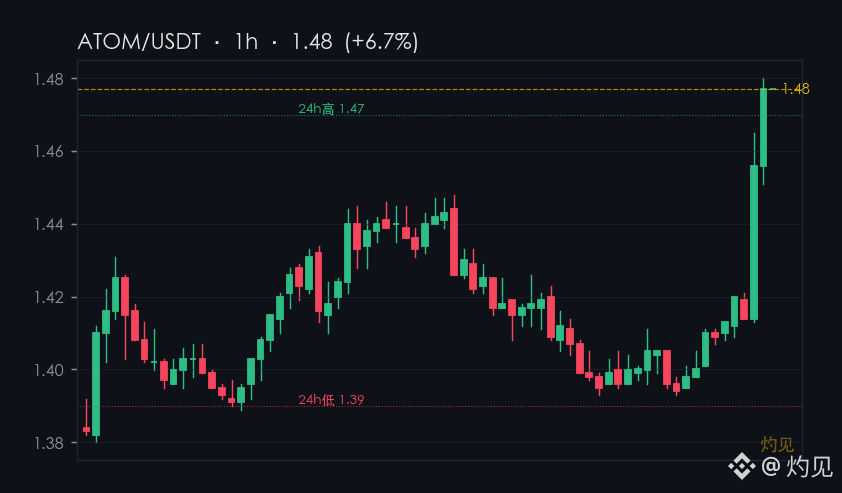
$ATOM 7 Daily increase is 5.4%, but in the past 30 days it is still down 1.5%
Market short-term sentiment toward ATOM seems to have been ignited
The 7-day increase reached 5.4%. But if we extend the timeline
the decline over the past 30 days is still as high as 1.5%. The coexistence of this short-term rebound and a long-term pullback
reflects the market’s complex attitude toward ATOM’s valuation.
ATOM’s current gain is about 3%, but the average 7-day gain versus the current deviation
has already reached 2.3σ. This figure suggests that
the current level of gains falls within a relatively rare range in history.
Behind it may be either short-term catalyst-driven momentum
or a concentrated release of market sentiment in the short term. But if there is no supportive fundamental data,
this kind of deviation may be difficult to sustain.
$BTC , an asset representing 56.3% of market capitalization in the crypto market,
has a very strong guiding effect on market sentiment. However, currently the BTC price
has barely moved due to the IPO hype,
down only 0.8%. The phenomenon of “news hits the market but it shrugs it off”
may mean that the market’s reaction to short-term hotspots is becoming dull,
or it may mean that the market has already priced in IPO-related events.
ATOM’s current rally is certainly notable, but if there is a lack of data support such as on-chain TVL and funding rates,
relying on price movement alone to judge valuation can easily fall into the trap of model distortion.
The market’s valuation of ATOM still needs validation through more dimensions of data,
not just short-term price performance.
Was this move pushed by spot buying, or propped up by leveraged capital? Which one do you think?
—
Not investment advice. Please make your own judgment and bear your own risks.
📌 Hot Topic Tracking · Issue 275 · #加密热点 #灼见观察 $ATOM
Market short-term sentiment toward ATOM seems to have been ignited
The 7-day increase reached 5.4%. But if we extend the timeline
the decline over the past 30 days is still as high as 1.5%. The coexistence of this short-term rebound and a long-term pullback
reflects the market’s complex attitude toward ATOM’s valuation.
ATOM’s current gain is about 3%, but the average 7-day gain versus the current deviation
has already reached 2.3σ. This figure suggests that
the current level of gains falls within a relatively rare range in history.
Behind it may be either short-term catalyst-driven momentum
or a concentrated release of market sentiment in the short term. But if there is no supportive fundamental data,
this kind of deviation may be difficult to sustain.
$BTC , an asset representing 56.3% of market capitalization in the crypto market,
has a very strong guiding effect on market sentiment. However, currently the BTC price
has barely moved due to the IPO hype,
down only 0.8%. The phenomenon of “news hits the market but it shrugs it off”
may mean that the market’s reaction to short-term hotspots is becoming dull,
or it may mean that the market has already priced in IPO-related events.
ATOM’s current rally is certainly notable, but if there is a lack of data support such as on-chain TVL and funding rates,
relying on price movement alone to judge valuation can easily fall into the trap of model distortion.
The market’s valuation of ATOM still needs validation through more dimensions of data,
not just short-term price performance.
Was this move pushed by spot buying, or propped up by leveraged capital? Which one do you think?
—
Not investment advice. Please make your own judgment and bear your own risks.
📌 Hot Topic Tracking · Issue 275 · #加密热点 #灼见观察 $ATOM
Verified
Intense. That’s the hallmark of Binance’s recent announcements.
1 bStocks tokenized securities as collateral
listed with Binance. At first glance, this looks like further exploration of the tokenized securities niche.
But on a deeper level, it signals Binance’s determination to accelerate its expansion into TradFi.
Binance has added 1 bStocks trading pair
further enriching spot trading options. This connects with multiple TradFi-related product lines that already exist—including perpetual contracts—suggesting that Binance is building an ecosystem tightly linked to traditional financial markets.
Binance Futures will launch the USDⓈ-Margined DOSUSDT perpetual contract. This is not an isolated event.
It continues the release of the GRVTUSDT perpetual contract on July 31, and the upcoming listing of several TradFi perpetual contracts on August 6. A series of announcements
reveals Binance’s accelerated push into traditional finance derivatives.
This burst of dense announcements is unusual compared with the typical cautious approach crypto exchanges take when expanding into TradFi product lines. Binance keeps rolling out large volumes of TradFi- and bStocks-related contracts.
This may not be short-term speculation, but rather its strategic commitment to integrating with traditional finance.
However, while seeing this “acceleration,”
we should also recognize the risks. The leverage effect of perpetual contracts can itself amplify volatility. And while the fees haven’t cooled down yet, pay attention to your leveraged positions.
How will Binance’s accelerated TradFi rollout affect the overall landscape of the crypto market?
—
Not investment advice. Please make your own judgment and bear your own risk.
📌 News Digest · Issue 122 · #速报 #Insightful Observations
1 bStocks tokenized securities as collateral
listed with Binance. At first glance, this looks like further exploration of the tokenized securities niche.
But on a deeper level, it signals Binance’s determination to accelerate its expansion into TradFi.
Binance has added 1 bStocks trading pair
further enriching spot trading options. This connects with multiple TradFi-related product lines that already exist—including perpetual contracts—suggesting that Binance is building an ecosystem tightly linked to traditional financial markets.
Binance Futures will launch the USDⓈ-Margined DOSUSDT perpetual contract. This is not an isolated event.
It continues the release of the GRVTUSDT perpetual contract on July 31, and the upcoming listing of several TradFi perpetual contracts on August 6. A series of announcements
reveals Binance’s accelerated push into traditional finance derivatives.
This burst of dense announcements is unusual compared with the typical cautious approach crypto exchanges take when expanding into TradFi product lines. Binance keeps rolling out large volumes of TradFi- and bStocks-related contracts.
This may not be short-term speculation, but rather its strategic commitment to integrating with traditional finance.
However, while seeing this “acceleration,”
we should also recognize the risks. The leverage effect of perpetual contracts can itself amplify volatility. And while the fees haven’t cooled down yet, pay attention to your leveraged positions.
How will Binance’s accelerated TradFi rollout affect the overall landscape of the crypto market?
—
Not investment advice. Please make your own judgment and bear your own risk.
📌 News Digest · Issue 122 · #速报 #Insightful Observations
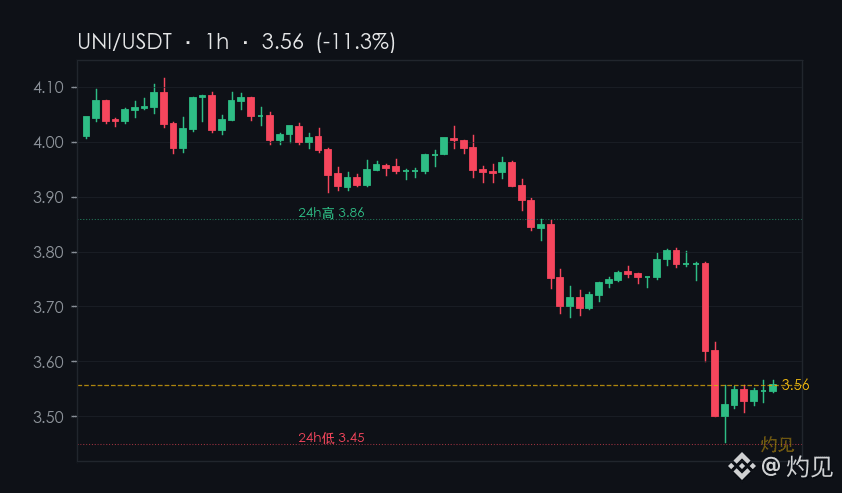
$UNI 24-hour trading volume reached 8.38 million units, yet the price still fell 7.66% against the trend.
Current price is around $3.56
24-hour high $3.86, low $3.45. Trading volume reached 8.38 million units
But the price didn’t rise in sync—on the contrary, it moved lower.
From multi-timeframe performance, UNI’s decline over the past 7 days is 13.4%
The 30-day drop is 2.9%. This suggests a short-term downtrend has already formed
But in the long run, UNI’s decline isn’t especially severe.
In the current market, the trading volume of major coins such as $BTC , $ETH , and SOL is all higher than UNI
indicating differences in where capital attention is focused.
UNI’s sharp drop, however, has not been supported by any clear positive or negative catalyst. This raises the question
What is the market actually trading? Is capital testing the market’s resilience, or setting up for something?
Does this divergence mean UNI is entering a new phase? Or is it just a short-term fluctuation?
—
Not investment advice. Please make your own judgment and bear your own risk.
📌 Hot Spot Tracking · Episode 274 · #加密热点 #灼见观察 $UNI
Current price is around $3.56
24-hour high $3.86, low $3.45. Trading volume reached 8.38 million units
But the price didn’t rise in sync—on the contrary, it moved lower.
From multi-timeframe performance, UNI’s decline over the past 7 days is 13.4%
The 30-day drop is 2.9%. This suggests a short-term downtrend has already formed
But in the long run, UNI’s decline isn’t especially severe.
In the current market, the trading volume of major coins such as $BTC , $ETH , and SOL is all higher than UNI
indicating differences in where capital attention is focused.
UNI’s sharp drop, however, has not been supported by any clear positive or negative catalyst. This raises the question
What is the market actually trading? Is capital testing the market’s resilience, or setting up for something?
Does this divergence mean UNI is entering a new phase? Or is it just a short-term fluctuation?
—
Not investment advice. Please make your own judgment and bear your own risk.
📌 Hot Spot Tracking · Episode 274 · #加密热点 #灼见观察 $UNI
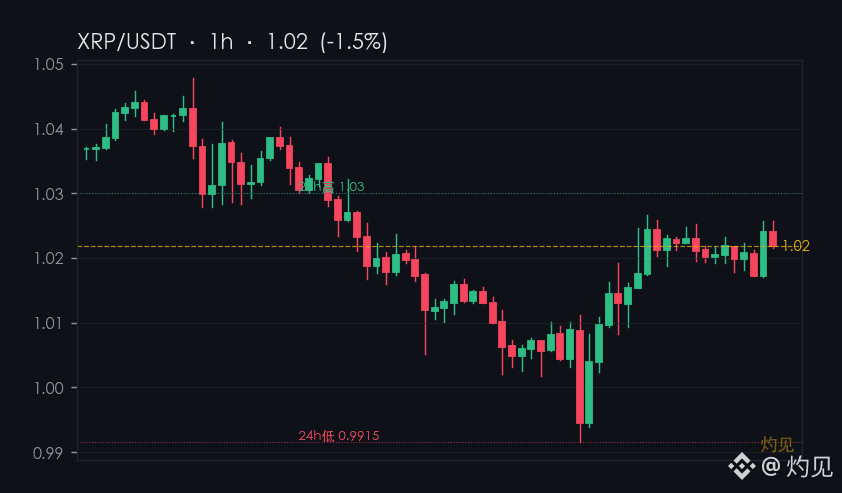
$XRP Current price is $1.02 on the frontline.
XRP’s 24-hour gain is 1.98%, with 24-hour trading volume of $0.08B, holding steady in fifth place in the market.
However, its price has fallen by 3.9% over 7 days and by 4.2% over 30 days.
Funding rate is an important indicator for measuring the strength of the long-versus-short battle. It shows whether longs are willing to pay a premium to hold positions. If the funding rate is elevated
it means longs are concentrating their entry, and the market structure may become fragile.
Although XRP’s current price is rising,
its medium- to long-term trend shows signs of weakness. This mismatch between short-term momentum and the longer-term trend is worth paying attention to.
Watch point: XRP’s 30-day change is ↓4.2%. If the price cannot hold above the $1.03 level within the next 24 hours,
this difference may worsen further and even become a signal that market sentiment is turning.
I tend to believe that these signs of longs concentrating their entry
may set the stage for a future pullback.
—
Not investment advice. Please make your own decisions and bear the risks yourself.
📌 Leverage Thermometer · Episode 144 · #资金费率 #灼见观察 $XRP
XRP’s 24-hour gain is 1.98%, with 24-hour trading volume of $0.08B, holding steady in fifth place in the market.
However, its price has fallen by 3.9% over 7 days and by 4.2% over 30 days.
Funding rate is an important indicator for measuring the strength of the long-versus-short battle. It shows whether longs are willing to pay a premium to hold positions. If the funding rate is elevated
it means longs are concentrating their entry, and the market structure may become fragile.
Although XRP’s current price is rising,
its medium- to long-term trend shows signs of weakness. This mismatch between short-term momentum and the longer-term trend is worth paying attention to.
Watch point: XRP’s 30-day change is ↓4.2%. If the price cannot hold above the $1.03 level within the next 24 hours,
this difference may worsen further and even become a signal that market sentiment is turning.
I tend to believe that these signs of longs concentrating their entry
may set the stage for a future pullback.
—
Not investment advice. Please make your own decisions and bear the risks yourself.
📌 Leverage Thermometer · Episode 144 · #资金费率 #灼见观察 $XRP
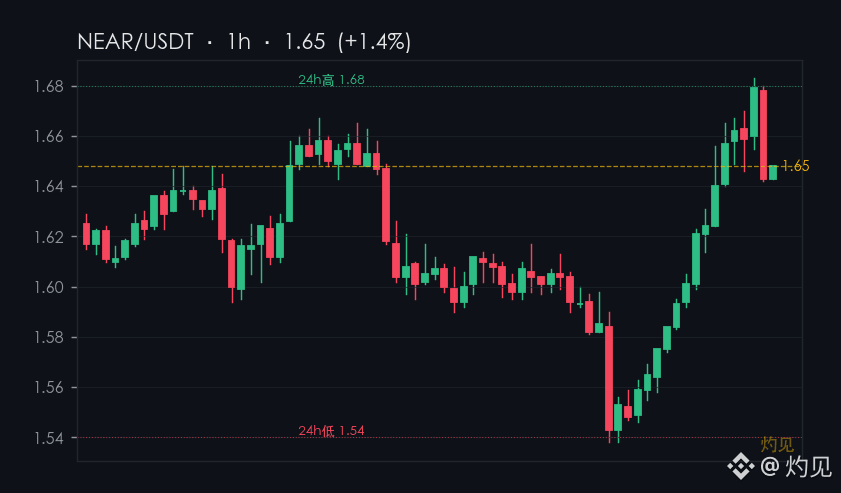
$NEAR rose against the trend today, but the 30-day drop is clearly notable. This contrast is something I need to call out separately.
At the current price around $1.65, the 24-hour increase is about 2.8%. Trading volume reached 13.51 million NEAR, which is a relatively rare surge in recent times.
For this upswing, is it only a localized repair by short-term capital, rather than a trend reversal?
Judging from the 30-day decline, NEAR’s on-chain value-capture mechanism appears to have lost effectiveness. Over the past month, the price kept trending downward, and the capital flows within the ecosystem have not been able to effectively support the coin price.
This suggests that the project team or investors within the ecosystem have not yet formed sufficient consensus and backing.
The high-volume rally in the past 24 hours may reflect a partial recovery in on-chain TVL. It could be that some institutions or large holders have re-entered after short-term adjustments, or that market sentiment about NEAR’s future development has warmed up.
But whether this kind of recovery can last still needs to be observed in the coming days.
The 7-day decline is still as high as 3.2%. This figure indicates that although there has been a short-term rebound, the downside pressure over the medium to long term has not eased.
This may mean the market remains cautious about NEAR’s mid-term prospects.
When the short-term rebound and the rhythm of the medium-term trend don’t align—has NEAR’s support level shifted? Is capital performing a localized repair, or is the project team intervening through methods such as token buybacks?
This number is one I need to call out separately: NEAR’s 30-day drawdown reveals that on-chain value capture has failed. The high-volume rise over the past 24 hours may only be a localized repair; the continued selling over 7 days indicates the medium-term trend still hasn’t reversed.
Is the market already ready to enter NEAR’s next cycle? Or is this rally only a brief pause in breathing?
—
Not investment advice. Please make independent judgments and assume all risks.
📌 Hot Topic Tracking · Episode 273 · #加密热点 #灼见观察 $NEAR
At the current price around $1.65, the 24-hour increase is about 2.8%. Trading volume reached 13.51 million NEAR, which is a relatively rare surge in recent times.
For this upswing, is it only a localized repair by short-term capital, rather than a trend reversal?
Judging from the 30-day decline, NEAR’s on-chain value-capture mechanism appears to have lost effectiveness. Over the past month, the price kept trending downward, and the capital flows within the ecosystem have not been able to effectively support the coin price.
This suggests that the project team or investors within the ecosystem have not yet formed sufficient consensus and backing.
The high-volume rally in the past 24 hours may reflect a partial recovery in on-chain TVL. It could be that some institutions or large holders have re-entered after short-term adjustments, or that market sentiment about NEAR’s future development has warmed up.
But whether this kind of recovery can last still needs to be observed in the coming days.
The 7-day decline is still as high as 3.2%. This figure indicates that although there has been a short-term rebound, the downside pressure over the medium to long term has not eased.
This may mean the market remains cautious about NEAR’s mid-term prospects.
When the short-term rebound and the rhythm of the medium-term trend don’t align—has NEAR’s support level shifted? Is capital performing a localized repair, or is the project team intervening through methods such as token buybacks?
This number is one I need to call out separately: NEAR’s 30-day drawdown reveals that on-chain value capture has failed. The high-volume rise over the past 24 hours may only be a localized repair; the continued selling over 7 days indicates the medium-term trend still hasn’t reversed.
Is the market already ready to enter NEAR’s next cycle? Or is this rally only a brief pause in breathing?
—
Not investment advice. Please make independent judgments and assume all risks.
📌 Hot Topic Tracking · Episode 273 · #加密热点 #灼见观察 $NEAR
“Binance Futures Will Launch Multiple USDⓈ-Margined TradFi Perpetual Contracts”
The Binance futures market is ushering in a new class of collateral assets. According to an official announcement,
Binance Futures plans to add multiple USDⓈ-Margined perpetual contracts based on traditional financial assets.
It has also added 10 bStocks trading pairs in the spot market
and introduced these tokenized securities into the futures market’s collateral asset pool. This series of moves
marks another adjustment by Binance to the liquidity structure in its futures market.
The addition of a new collateral asset class means the futures market’s margin pool will become more diversified. The inclusion of traditional financial assets
may not only attract some investors who previously did not participate in the crypto market but are familiar with traditional financial products,
but could also, to a certain extent, improve capital utilization efficiency and liquidity depth in the futures market. From a mechanism perspective,
the diversity of collateral assets helps maintain the stability of the market leverage ratio when price volatility increases.
From the standpoint of impact analysis, this change may produce two effects. On the one hand,
because the liquidity and price volatility of the newly added collateral assets differ from those of crypto assets,
this may affect funding rates in the futures market to some degree.
On the other hand, introducing these assets may also create a certain “pull-through” effect on the spot market,
pushing up trading volumes for bStocks-related trading pairs. However,
at present there is no clear data showing that these changes have already been reflected in market behavior.
How will these newly added collateral assets reshape the liquidity landscape of Binance’s futures market? The answer may need to be observed in the coming weeks,
looking at changes in funding rates, contract trading volumes, and margin utilization rates. But one thing is certain:
this series of actions is driving Binance’s futures market toward a more diversified direction that is closer to traditional financial markets.
—
Not investment advice. Please make your own independent judgment and bear the risks yourself.
📌 Announcement Dispatch · Issue 120 · #速报 #Insight Watch
The Binance futures market is ushering in a new class of collateral assets. According to an official announcement,
Binance Futures plans to add multiple USDⓈ-Margined perpetual contracts based on traditional financial assets.
It has also added 10 bStocks trading pairs in the spot market
and introduced these tokenized securities into the futures market’s collateral asset pool. This series of moves
marks another adjustment by Binance to the liquidity structure in its futures market.
The addition of a new collateral asset class means the futures market’s margin pool will become more diversified. The inclusion of traditional financial assets
may not only attract some investors who previously did not participate in the crypto market but are familiar with traditional financial products,
but could also, to a certain extent, improve capital utilization efficiency and liquidity depth in the futures market. From a mechanism perspective,
the diversity of collateral assets helps maintain the stability of the market leverage ratio when price volatility increases.
From the standpoint of impact analysis, this change may produce two effects. On the one hand,
because the liquidity and price volatility of the newly added collateral assets differ from those of crypto assets,
this may affect funding rates in the futures market to some degree.
On the other hand, introducing these assets may also create a certain “pull-through” effect on the spot market,
pushing up trading volumes for bStocks-related trading pairs. However,
at present there is no clear data showing that these changes have already been reflected in market behavior.
How will these newly added collateral assets reshape the liquidity landscape of Binance’s futures market? The answer may need to be observed in the coming weeks,
looking at changes in funding rates, contract trading volumes, and margin utilization rates. But one thing is certain:
this series of actions is driving Binance’s futures market toward a more diversified direction that is closer to traditional financial markets.
—
Not investment advice. Please make your own independent judgment and bear the risks yourself.
📌 Announcement Dispatch · Issue 120 · #速报 #Insight Watch
The 24-hour flash loan trading volume breaks through
Behind this number lies a collateral-free lending system that is quietly running on-chain.
Flash loans sound like a paradox: without collateral, how can you borrow? But their operating logic is actually much like “credit-based borrowing” in the real world.
Imagine you go to a bank to borrow money without needing collateral, but you must repay it within a short time—for example, within 24 hours. If you repay within the required time, the bank won’t pursue the fact that you didn’t provide collateral. A flash loan works the same way: it allows users to “borrow” a sum of funds on the blockchain, as long as they complete the transactions and repay the principal (plus a small fee) within the same block. Once that’s done, the process is completed legally with no collateral required.
Many people mistakenly think flash loans are “risk-free,” but in reality they rely on the blockchain’s ability to execute smart contracts instantly. If the transaction fails, the system automatically reverts, and all operations are as if they never happened. This mechanism makes flash loans an indispensable tool in the DeFi ecosystem—though it also brings risks. If a borrower makes an operational mistake or if market volatility is extreme, they could be liquidated in an instant.
If you don’t use collateral, how else can you borrow money?
The answer may be hidden in every on-chain transaction that seems insignificant.
For educational and reference purposes only; not investment advice.
📌 Crypto Classroom · Episode 111 · #加密知识 #Burning Insight Observation
Behind this number lies a collateral-free lending system that is quietly running on-chain.
Flash loans sound like a paradox: without collateral, how can you borrow? But their operating logic is actually much like “credit-based borrowing” in the real world.
Imagine you go to a bank to borrow money without needing collateral, but you must repay it within a short time—for example, within 24 hours. If you repay within the required time, the bank won’t pursue the fact that you didn’t provide collateral. A flash loan works the same way: it allows users to “borrow” a sum of funds on the blockchain, as long as they complete the transactions and repay the principal (plus a small fee) within the same block. Once that’s done, the process is completed legally with no collateral required.
Many people mistakenly think flash loans are “risk-free,” but in reality they rely on the blockchain’s ability to execute smart contracts instantly. If the transaction fails, the system automatically reverts, and all operations are as if they never happened. This mechanism makes flash loans an indispensable tool in the DeFi ecosystem—though it also brings risks. If a borrower makes an operational mistake or if market volatility is extreme, they could be liquidated in an instant.
If you don’t use collateral, how else can you borrow money?
The answer may be hidden in every on-chain transaction that seems insignificant.
For educational and reference purposes only; not investment advice.
📌 Crypto Classroom · Episode 111 · #加密知识 #Burning Insight Observation
$ETH is currently holding steady above the $1,890 level.
The decline is only ↓0.46%, while the broader market is falling. Does this relative outperformance—staying strong when the market is down—suggest that ETH holds a special position in investors’ eyes?
Looking across multiple timeframes, ETH’s 7-day return is ↑1.2%, while its 30-day return is even higher at ↑6.6%. Although the short-term gains are not large,
the long-term trend is still rising. This divergence between short-term fluctuations and long-term upside
may indicate that after a short-term adjustment, capital still expects ETH’s long-term prospects.
ETH’s current market cap is about $227.7 billion,
which gives it an important position in the global crypto market. Even though the overall market is down,
ETH’s decline is clearly lower than that of other major coins such as $ADA and $XRP . This relative resilience
may reflect ETH’s higher weighting among institutional funds, making it a “safe harbor” for capital during market volatility.
ETH’s drop is far below the market average—does this mean funds are buying the dip?
Or are they positioning for the next cycle? There is no standard answer to this,
but what is certain is that under the current market conditions,
ETH is still showing strong resilience. Behind this resilience,
perhaps lies a signal that capital is moving amid hidden undercurrents.
—
Not investment advice. Please make independent decisions and bear your own risks.
📌 Hot Topic Tracking · Episode 268 · #加密热点 #灼见观察 $ETH
The decline is only ↓0.46%, while the broader market is falling. Does this relative outperformance—staying strong when the market is down—suggest that ETH holds a special position in investors’ eyes?
Looking across multiple timeframes, ETH’s 7-day return is ↑1.2%, while its 30-day return is even higher at ↑6.6%. Although the short-term gains are not large,
the long-term trend is still rising. This divergence between short-term fluctuations and long-term upside
may indicate that after a short-term adjustment, capital still expects ETH’s long-term prospects.
ETH’s current market cap is about $227.7 billion,
which gives it an important position in the global crypto market. Even though the overall market is down,
ETH’s decline is clearly lower than that of other major coins such as $ADA and $XRP . This relative resilience
may reflect ETH’s higher weighting among institutional funds, making it a “safe harbor” for capital during market volatility.
ETH’s drop is far below the market average—does this mean funds are buying the dip?
Or are they positioning for the next cycle? There is no standard answer to this,
but what is certain is that under the current market conditions,
ETH is still showing strong resilience. Behind this resilience,
perhaps lies a signal that capital is moving amid hidden undercurrents.
—
Not investment advice. Please make independent decisions and bear your own risks.
📌 Hot Topic Tracking · Episode 268 · #加密热点 #灼见观察 $ETH
Log in to explore more content