#termmax
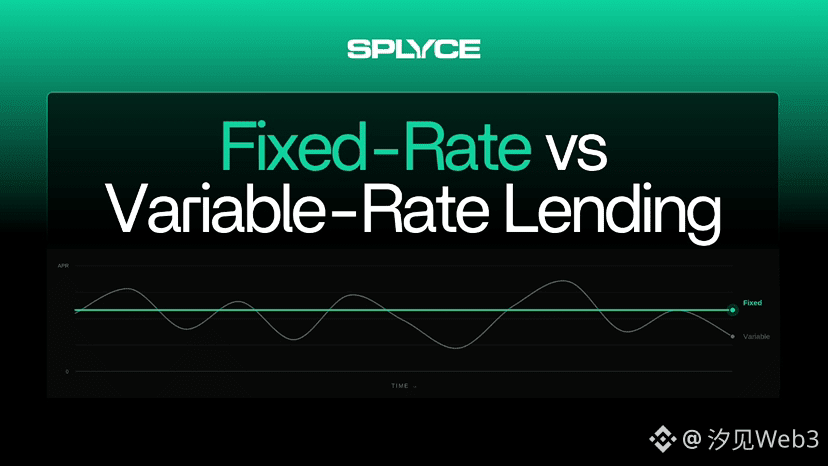
Many DeFi lending products are quoting rates in real time: when capital utilization changes, APR changes accordingly. Borrowers see 5% today, but it might become 9% tomorrow. Lenders think they’re getting stable returns, but when the market moves, the yield and the funding cost are recalculated.
When I looked at @TermMax , I realized the part worth watching isn’t as simple as “turning a floating-rate into a fixed-rate.” What it really does is put a loan into a clearly defined time framework: what asset you borrow, what collateral you post, and when it matures—these three things must be determined together. The official documentation defines them as Debt Token, Collateral Token, and Maturity Date. In other words, TermMax doesn’t only ask “what is the interest rate,” it also asks “how long is this money borrowed for.”
This change directly affects how borrowers and lenders express their positions. #TermMax uses an FT—Fixed-Rate Token—to represent the right to redeem 1 Debt Token at maturity. It’s somewhat like a zero-coupon bond: it trades at a discount before maturity and is redeemed at par at maturity. The official docs give an example: if 1 ETH is worth $1,000 and the market MLTV is 0.8, the maximum is 800 FT. The borrower sells the FT for $0.80 each, receiving $640 in liquidity up front; after one year, the debt is still calculated as 800 USDC. This is a mechanism demonstration rather than a current market quote, but it makes the time value very intuitive: borrowers receive cash now, while lenders wait for the future face value.
That’s why I’m more inclined to think of TermMax as a “term-based claims market,” not just a lending pool with a fixed APR. Interest rates are just the outcome—the thing actually written into the chain is the timing coordinate of the cash flows. This makes borrowing costs easier to calculate, but the risk doesn’t disappear: collateral prices, oracle data, market liquidity, and liquidation execution will still determine whether the assets can be recovered smoothly at the end.
Fixed-rate interest reduces uncertainty, not risk itself. This is also what I think makes TermMax worth continued attention: whether it can truly connect fixed maturities, tradable debt claims, and liquidation mechanisms into a complete market.
Many DeFi lending products are quoting rates in real time: when capital utilization changes, APR changes accordingly. Borrowers see 5% today, but it might become 9% tomorrow. Lenders think they’re getting stable returns, but when the market moves, the yield and the funding cost are recalculated.
When I looked at @TermMax , I realized the part worth watching isn’t as simple as “turning a floating-rate into a fixed-rate.” What it really does is put a loan into a clearly defined time framework: what asset you borrow, what collateral you post, and when it matures—these three things must be determined together. The official documentation defines them as Debt Token, Collateral Token, and Maturity Date. In other words, TermMax doesn’t only ask “what is the interest rate,” it also asks “how long is this money borrowed for.”
This change directly affects how borrowers and lenders express their positions. #TermMax uses an FT—Fixed-Rate Token—to represent the right to redeem 1 Debt Token at maturity. It’s somewhat like a zero-coupon bond: it trades at a discount before maturity and is redeemed at par at maturity. The official docs give an example: if 1 ETH is worth $1,000 and the market MLTV is 0.8, the maximum is 800 FT. The borrower sells the FT for $0.80 each, receiving $640 in liquidity up front; after one year, the debt is still calculated as 800 USDC. This is a mechanism demonstration rather than a current market quote, but it makes the time value very intuitive: borrowers receive cash now, while lenders wait for the future face value.
That’s why I’m more inclined to think of TermMax as a “term-based claims market,” not just a lending pool with a fixed APR. Interest rates are just the outcome—the thing actually written into the chain is the timing coordinate of the cash flows. This makes borrowing costs easier to calculate, but the risk doesn’t disappear: collateral prices, oracle data, market liquidity, and liquidation execution will still determine whether the assets can be recovered smoothly at the end.
Fixed-rate interest reduces uncertainty, not risk itself. This is also what I think makes TermMax worth continued attention: whether it can truly connect fixed maturities, tradable debt claims, and liquidation mechanisms into a complete market.