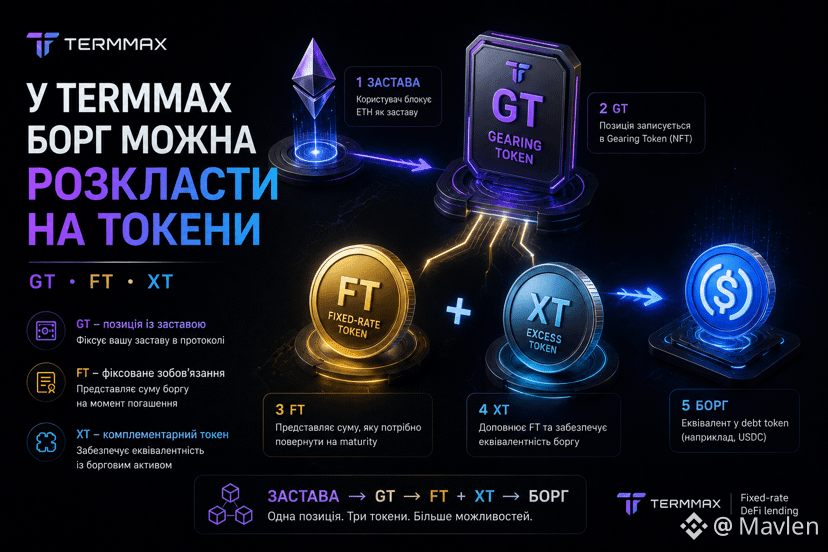
Imagine, in TermMax debt is not just a number in a position.
Here it can literally be broken down into individual tokens. When a user locks ETH as collateral, the position is recorded in GT (Gearing Token). Next, FT (Fixed-rate Tokens) are created — they represent the amount that needs to be repaid at maturity. And XT helps separate the principal portion of the debt from the fixed income.
As a result, you get an interesting construct:
collateral → GT → FT + XT → debt
And the most interesting part: FT can be traded separately. In other words, TermMax effectively turns a lending position into a set of on-chain assets with different functions.
That’s exactly how DeFi mechanisms make it resemble not just a lending protocol, but a builder of financial positions.
@TermMax #TermMax