I think bringing institutions into crypto is convincing enough for them to accept digital assets. But the more I observe, the more I see that the problem is deeper—not a lack of capital, but friction between traditional finance and blockchain.
It seems many projects make crypto easier to use, while the real issue lies in access control, privacy, disclosure, and settlement. It sounds convincing, but if those requirements are handled outside the system, the abstraction layer only hides the complexity.
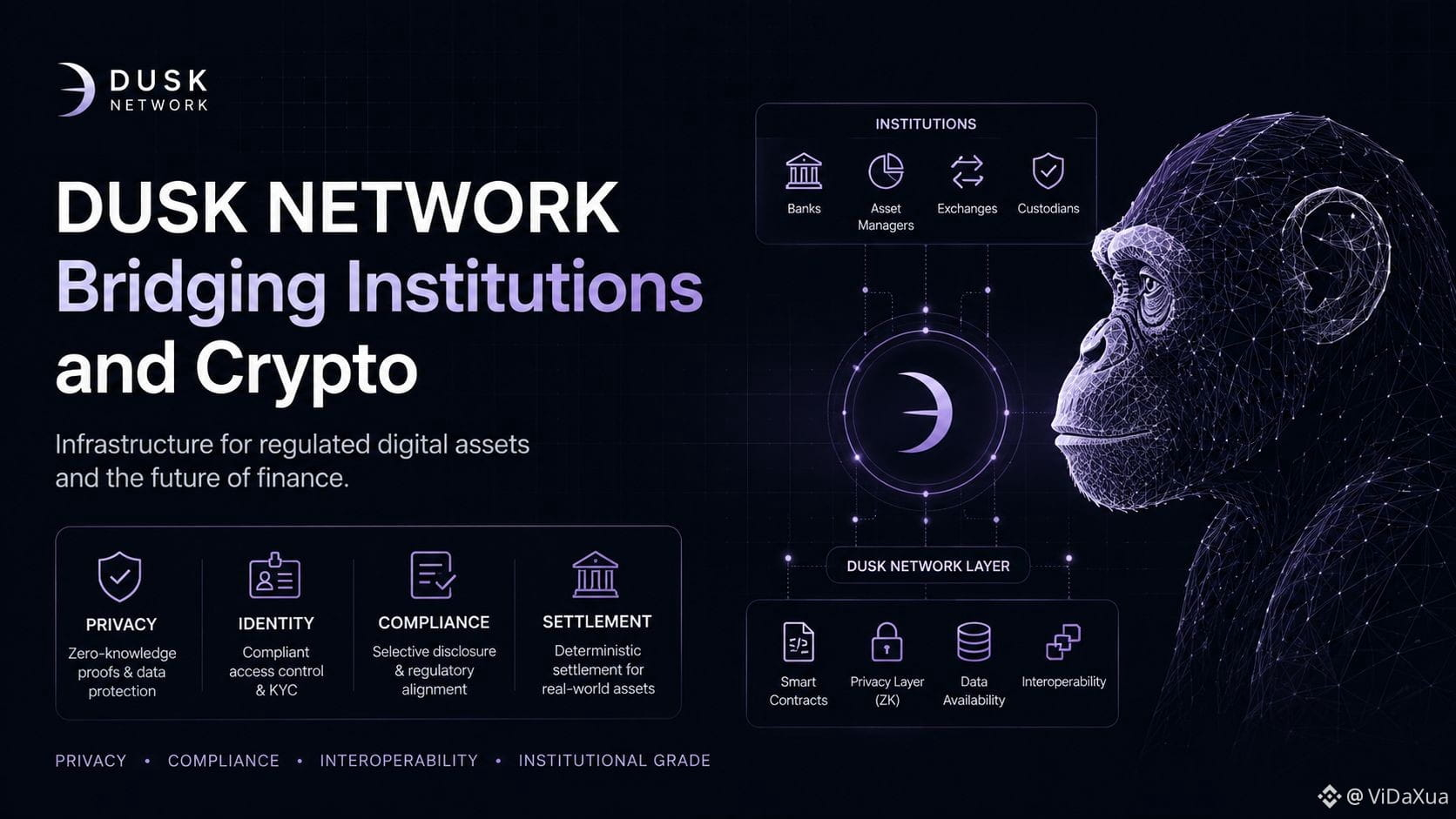
That’s why I’ve been paying attention to Dusk Network. The project designs infrastructure for regulated digital assets, combining identity, selective disclosure, privacy, and deterministic settlement. What’s interesting isn’t the features but the mental model—embedding market rules into system design.
However, that’s only accurate if institutions need an environment like this. I’m still skeptical about incentives and behavior—how big will the need be when signals of adoption are easily overwhelmed by noise?
I’m gradually coming to understand that the challenge isn’t to bring institutions into crypto, but to make crypto fit the way they operate. Can Dusk do that? I’m still watching.
#dusk $DUSK @Dusk $BTC