While checking documentation tied to Dusk Trade, I noticed language referencing MTF status, which I initially skimmed past assuming it was just standard marketing terminology every platform slaps on to sound credible.
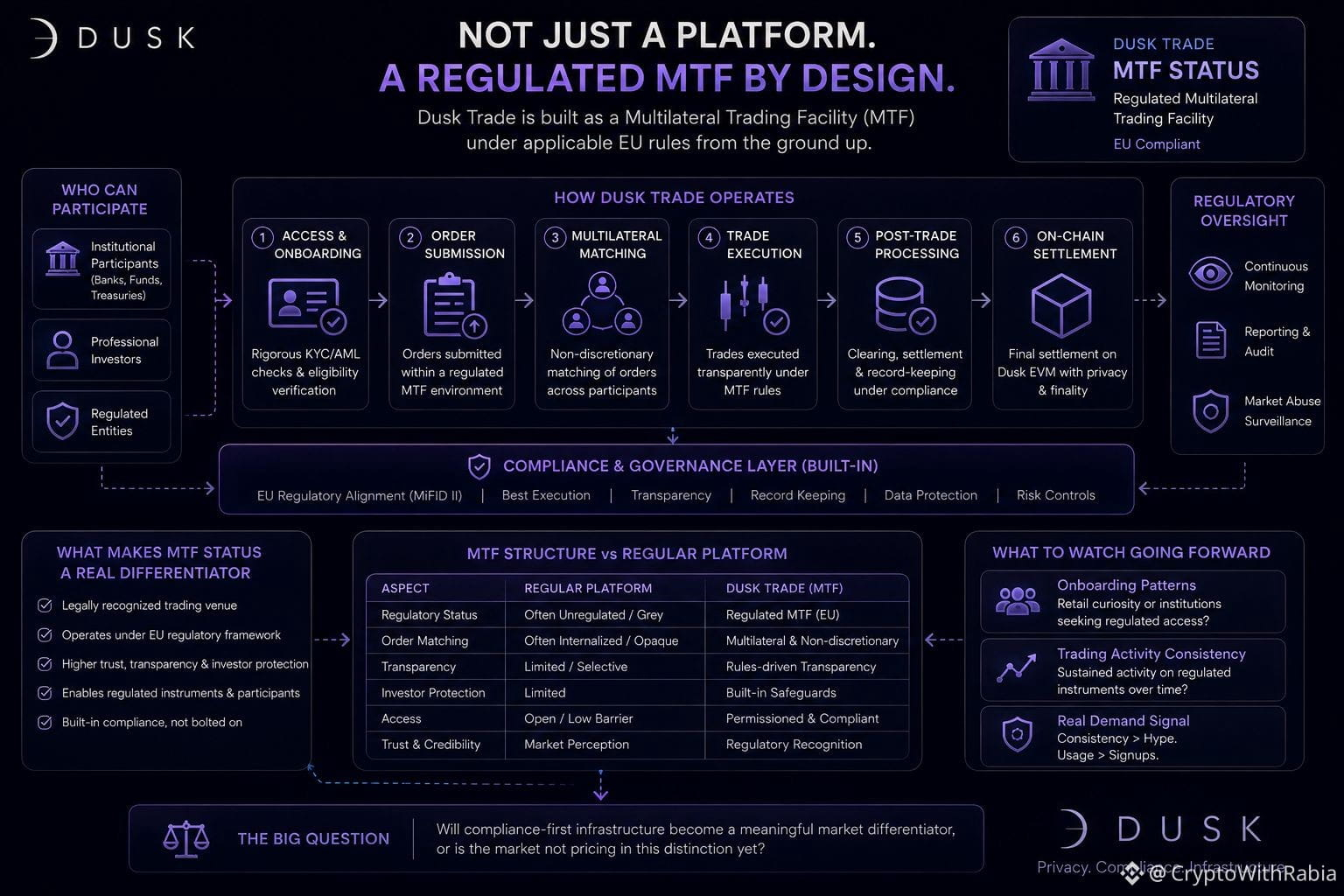
Looking closer, I realized this wasn't a loose claim at all. Dusk Trade is structured to operate as a regulated multilateral trading facility under applicable EU rules, meaning the compliance framework isn't sitting on top of the platform as an afterthought, it's part of how the infrastructure itself is built to function from the start.
That distinction changed how I was framing things in my head. I had been treating regulatory compliance and platform legitimacy as roughly interchangeable ideas, but they aren't. Plenty of platforms claim legitimacy through branding or partnerships without ever holding the specific regulatory status that actually permits certain activities. Being structured as an MTF is a narrower, more concrete claim, and conflating the two obscures what's actually being built versus what's simply being implied.
What I still can't fully assess is how this regulatory structure interacts with actual user experience and onboarding friction. Regulated platforms typically trade some accessibility for compliance requirements, and I don't yet know how that balance plays out here in practice, or whether it changes who realistically ends up using the platform early on.
Going forward I want to watch onboarding patterns closely, specifically whether user growth comes from retail curiosity or from entities that actually require regulated access points to participate. I'll also track whether trading activity on regulated instruments stays steady over time, since consistency there would say more about genuine demand than initial signups ever could.
I'm left sitting with a question about whether compliance-first infrastructure ends up being a meaningful differentiator in practice, or whether the market simply hasn't priced in that distinction yet.
@Dusk #dusk $DUSK
Looking closer, I realized this wasn't a loose claim at all. Dusk Trade is structured to operate as a regulated multilateral trading facility under applicable EU rules, meaning the compliance framework isn't sitting on top of the platform as an afterthought, it's part of how the infrastructure itself is built to function from the start.
That distinction changed how I was framing things in my head. I had been treating regulatory compliance and platform legitimacy as roughly interchangeable ideas, but they aren't. Plenty of platforms claim legitimacy through branding or partnerships without ever holding the specific regulatory status that actually permits certain activities. Being structured as an MTF is a narrower, more concrete claim, and conflating the two obscures what's actually being built versus what's simply being implied.
What I still can't fully assess is how this regulatory structure interacts with actual user experience and onboarding friction. Regulated platforms typically trade some accessibility for compliance requirements, and I don't yet know how that balance plays out here in practice, or whether it changes who realistically ends up using the platform early on.
Going forward I want to watch onboarding patterns closely, specifically whether user growth comes from retail curiosity or from entities that actually require regulated access points to participate. I'll also track whether trading activity on regulated instruments stays steady over time, since consistency there would say more about genuine demand than initial signups ever could.
I'm left sitting with a question about whether compliance-first infrastructure ends up being a meaningful differentiator in practice, or whether the market simply hasn't priced in that distinction yet.
@Dusk #dusk $DUSK