



Investing is not a sprint, but a marathon where endurance matters more than speed. When we talk about a planning horizon of 'months and years', we shift from gambling to strategic capital management.
Here is an expanded view on how to build positions that stand the test of time.


1. Psychology: From a trader to an owner
The biggest mistake beginners make is trying to guess the price movement “for tomorrow.” Working for years requires a paradigm shift:
• A trader looks for a price discrepancy.
• The investor looks for a stake in a business or asset that creates value.
❗️If you’re willing to hold an asset for years, you should be indifferent to market fluctuations of 10–15% during the month. Your goal is fundamental value.❗️
2. Entry strategy: DCA (Dollar-Cost Averaging)
For positions intended for the long term, the ideal entry is not buying “all-in” in a single day, but Dollar Cost Averagin.

3. Asset Allocation
Working for years requires diversification so that one unsuccessful case doesn’t wipe out the entire portfolio.
Aggressive allocation (Growth)
Stocks of technology companies, cryptocurrencies (BTC/ETH), venture investments.
• Expectations: High returns in 3–5 years.
• Risk: High volatility.
Conservative allocation (Value & Income)
Bonds (Ukrainian government bonds), real estate, dividend aristocrats (Coca-Cola, P&G).
• Expectations: A steady stream of cash flow and protection against inflation.
• Risk: Low liquidity or slow growth.

4. The math of compound interest
This is what you work for for years. Albert Einstein called compound interest the “eighth wonder of the world.” The formula looks like this:
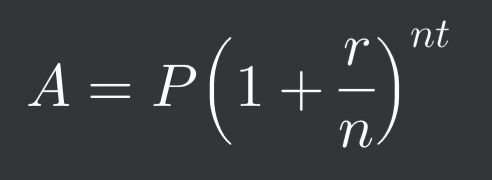
Where:
• A is the final amount;
• P is the initial deposit;
• r is the annual interest rate;
• n is the number of accruals per year;
• t is the number of years.
The essence is simple: Time (t) has an exponential effect. The longer you’re in the game, the faster your capital grows through reinvesting profits.

5. Risks and rebalancing
A long-term position is not “buy and forget.” It’s “buy and monitor.”
1. Rebalancing: If, over the year, stocks have grown and now make up 90% of the portfolio instead of the planned 60%, you need to sell part and buy bonds. This forces you to lock in profits at the highs and buy cheaply at the lows.
2. Fundamental changes: If you invested in a company and its technology has become outdated or leadership has changed to ineffective — you should close the position, even if the plan was “for 10 years.”
⚠️ Conclusion
Working for months and years is turning capital into a tool for freedom. The main enemies here are not the market, but your own patience and emotions.
Trading strategies: Your navigator in the world of financial markets