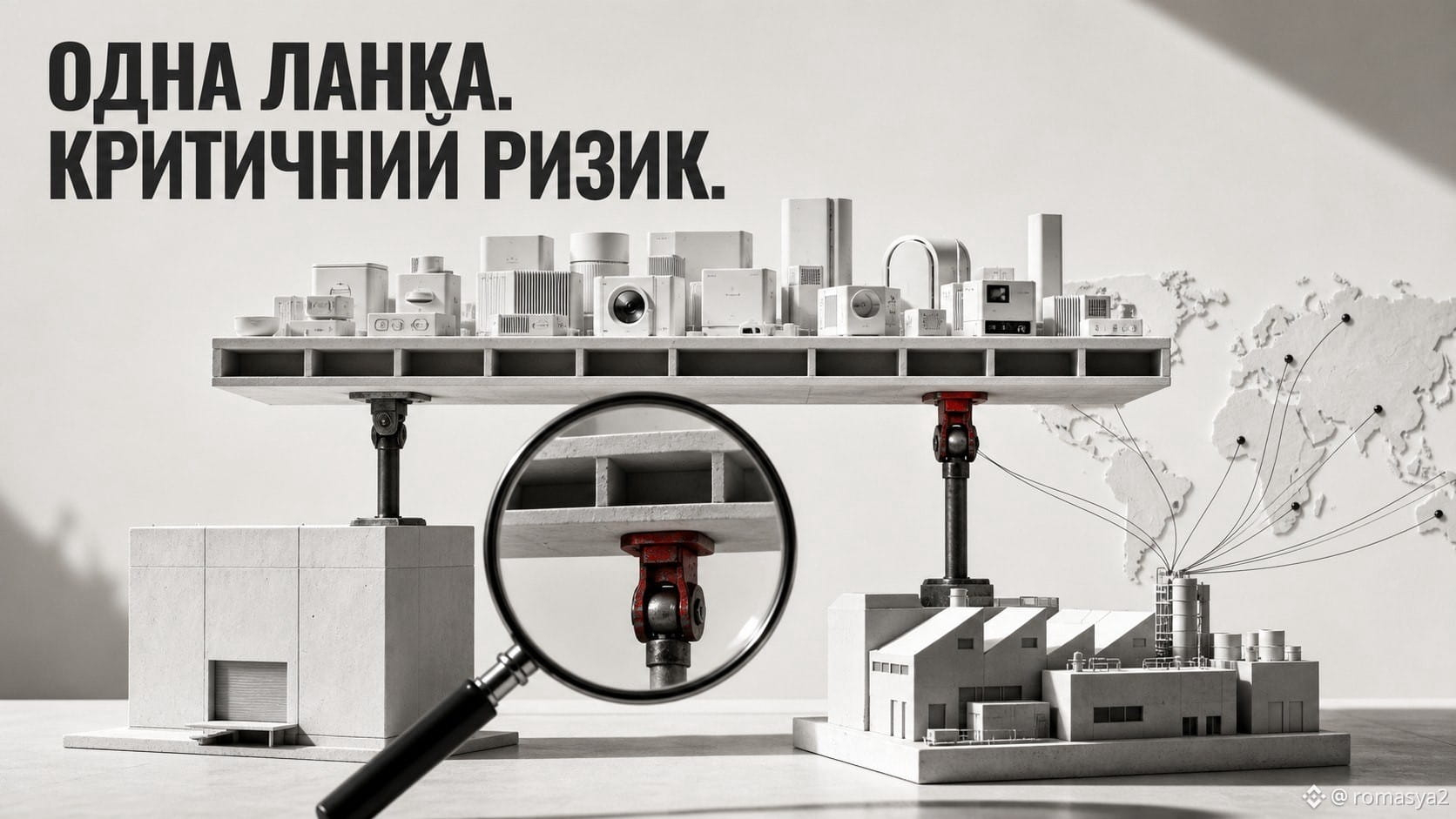
A wide product line does not necessarily mean a diversified business.
A company may sell dozens of products but still depend on a single large customer, a critical manufacturing partner, or one sole component supplier.
For semiconductor stocks like $NVDAB, $AMDB, or $AMATB, I draw a dependency map:
Key customers → Company → Manufacturing partners and suppliers.
Then I open the 10-K and look for three different types of concentration:
1. Revenue share from major customers.
2. Dependence on a particular manufacturer or technological process.
3. Geographic concentration of supply.
It’s important not to guess names when the company only writes “Customer A.” Such a document demonstrates concentration but does not give you the right to independently identify the counterparty.
My takeaway: sometimes the most important number isn’t hidden in the income statement, but in the Risk Factors or the notes.
Which dependency do you check first—customer or production?
@BinanceCIS #bStocksCIS
A company may sell dozens of products but still depend on a single large customer, a critical manufacturing partner, or one sole component supplier.
For semiconductor stocks like $NVDAB, $AMDB, or $AMATB, I draw a dependency map:
Key customers → Company → Manufacturing partners and suppliers.
Then I open the 10-K and look for three different types of concentration:
1. Revenue share from major customers.
2. Dependence on a particular manufacturer or technological process.
3. Geographic concentration of supply.
It’s important not to guess names when the company only writes “Customer A.” Such a document demonstrates concentration but does not give you the right to independently identify the counterparty.
My takeaway: sometimes the most important number isn’t hidden in the income statement, but in the Risk Factors or the notes.
Which dependency do you check first—customer or production?
@BinanceCIS #bStocksCIS