#dusk $PORTAL #Dusk $CYS $DUSK @Dusk
i keep thinking the weird part of Phoenix is not even that it can keep a DUSK transfer confidential.
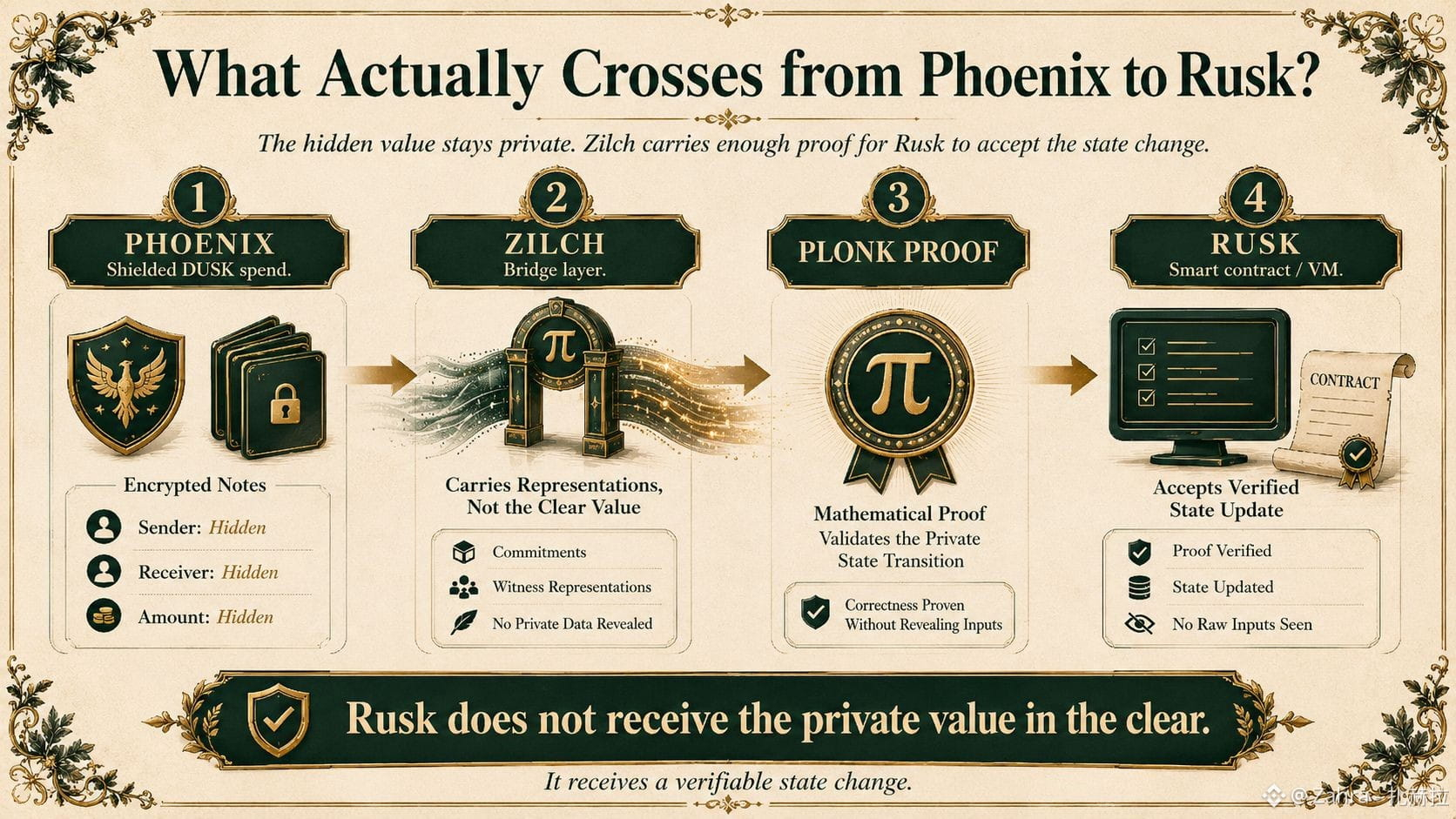
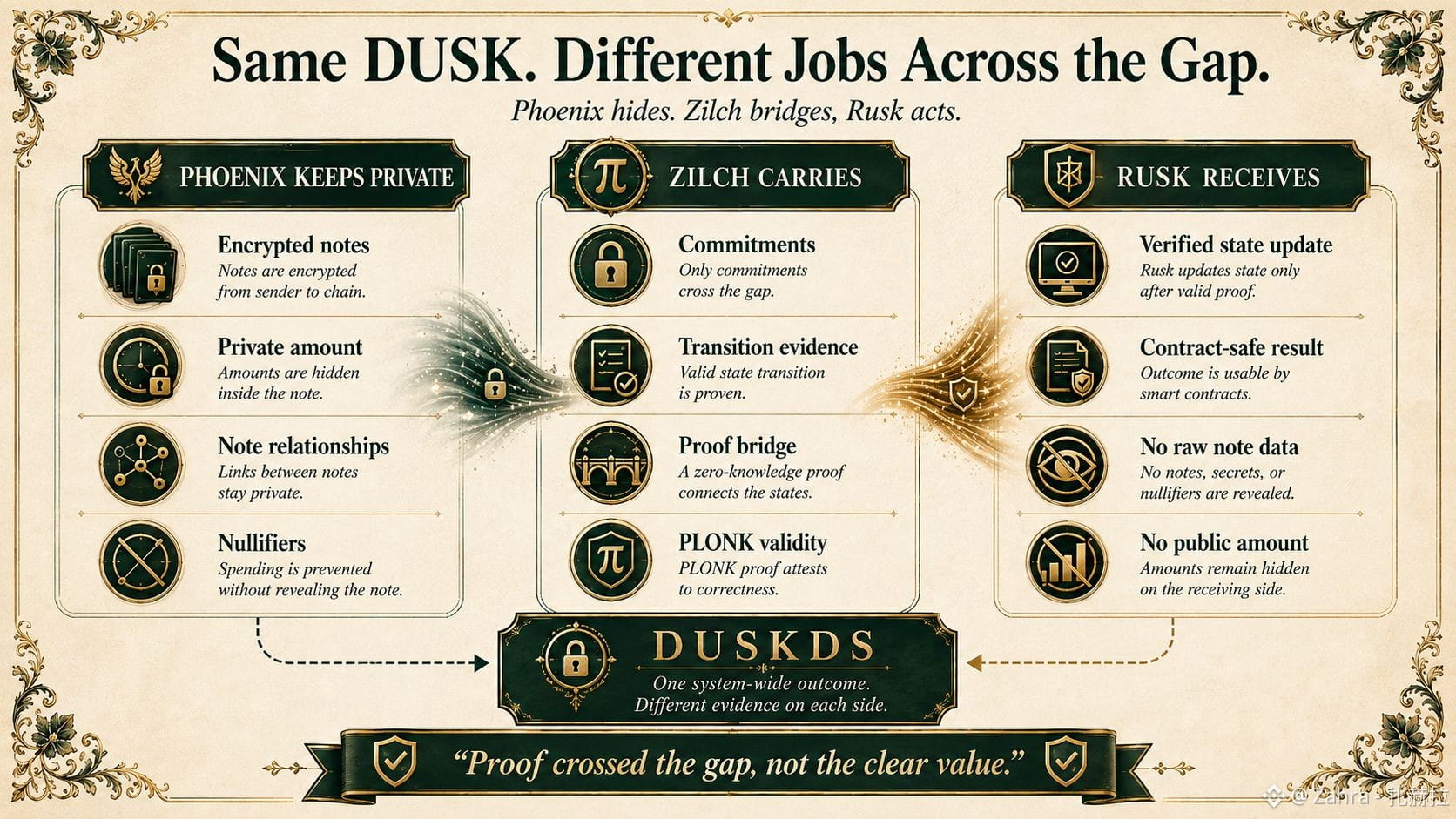
it’s what happens when that hidden value has to stop being just a private transfer and actually touch something inside Dusk Rusk. because Phoenix can already hide the spender, receiver, amount... fine. but a Dusk Rusk VM contract doesn’t just need “privacy.” it needs something it can actually act on without the whole private side suddenly spilling open.
and that’s where Dusk Zilch starts feeling less like some bridge word and more like the awkward middle.
Dusk Phoenix already did the hiding part. Rusk still somehow needs enough to accept that something changed.
so what is Dusk Zilch actually carrying across that gap? not the private value in the clear... because then Phoenix privacy kinda collapses right there.
so wait... what crossed? the DUSK itself? the hidden transaction? or is Rusk basically getting enough proof to accept a private state change without receiving the private thing itself?
that’s the part i keep circling.
because if Dusk Rusk isn’t seeing those private inputs, why should it trust the change at all? that’s where the PLONK proof starts mattering, not as another privacy layer but as the thing saying yeah, this private state transition actually checks out.
and idk that makes Phoenix feel different to me.
hiding the DUSK transfer wasn’t the end of the job.
the second Dusk Phoenix value has to change something inside Rusk, somebody still has to cross that gap without turning the hidden value into public contract data.
and apparently Dusk Zilch lives right in that awkward middle.
i keep thinking the weird part of Phoenix is not even that it can keep a DUSK transfer confidential.
it’s what happens when that hidden value has to stop being just a private transfer and actually touch something inside Dusk Rusk. because Phoenix can already hide the spender, receiver, amount... fine. but a Dusk Rusk VM contract doesn’t just need “privacy.” it needs something it can actually act on without the whole private side suddenly spilling open.
and that’s where Dusk Zilch starts feeling less like some bridge word and more like the awkward middle.
Dusk Phoenix already did the hiding part. Rusk still somehow needs enough to accept that something changed.
so what is Dusk Zilch actually carrying across that gap? not the private value in the clear... because then Phoenix privacy kinda collapses right there.
so wait... what crossed? the DUSK itself? the hidden transaction? or is Rusk basically getting enough proof to accept a private state change without receiving the private thing itself?
that’s the part i keep circling.
because if Dusk Rusk isn’t seeing those private inputs, why should it trust the change at all? that’s where the PLONK proof starts mattering, not as another privacy layer but as the thing saying yeah, this private state transition actually checks out.
and idk that makes Phoenix feel different to me.
hiding the DUSK transfer wasn’t the end of the job.
the second Dusk Phoenix value has to change something inside Rusk, somebody still has to cross that gap without turning the hidden value into public contract data.
and apparently Dusk Zilch lives right in that awkward middle.