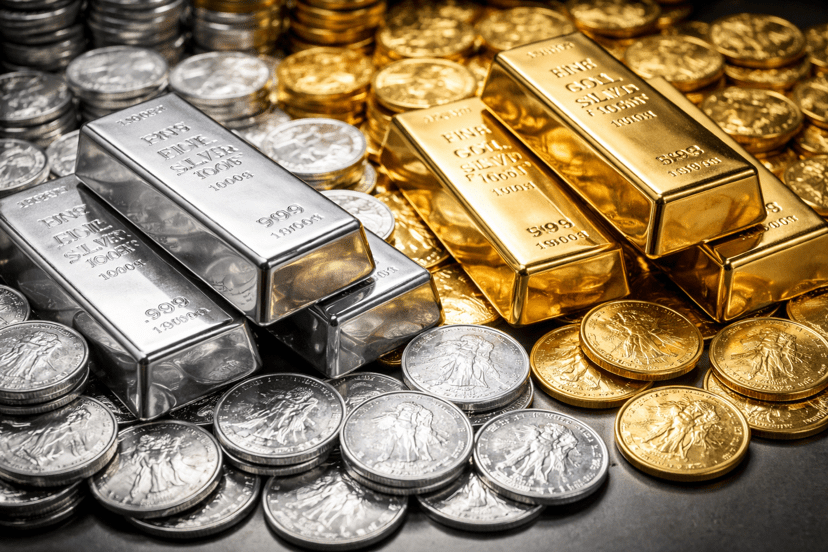
Entering January 2026, the global financial market witnessed a historic moment. Silver prices not only broke decades of silence but also surged violently, breaking through the $100/ounce barrier in just one month, with an increase of 50%.
This is not only a collective carnival of precious metals, but also a milestone in the transformation of silver from a safe-haven asset to a strategically scarce resource.
1. Violent rebound: Why did silver turn the tables in early 2026?
For a long time, silver has been seen as the shadow of gold, with its trends usually lagging behind gold. However, in 2026, this logic underwent a profound reversal.
1. Extreme repair of the gold-silver ratio
In 2025, gold took the lead on the path to $5000, while silver performed relatively moderately, causing the gold-silver ratio to soar to historical extremes around 110. From a financial logic perspective, this indicates that silver is severely undervalued.
When gold stabilizes at high levels and safe-haven funds seek undervalued assets, silver, as the most perfect cheap substitute for gold, sees its long-pent-up demand for a rebound erupt like a volcano. Currently, the gold-silver ratio has quickly rebounded to around 50, with silver completing its value return with twice the elasticity of gold.
2. The short squeeze effect in financial markets
Due to silver's market capacity being only one-tenth that of gold, a small inflow of funds can lead to dramatic price fluctuations. As physical demand causes exchange inventories to become critical, a large number of short silver derivative contracts faced a short squeeze at the $100 mark. This forced buying for hedging provides tremendous momentum for silver's rebound.
II. Logical qualitative change: From a safe-haven asset to the strategic blood of the AI era
If we say that the rebound is the driving force, then the structural imbalance of supply and demand is the foundation for silver's surge. Silver is transforming from a traditional ornament and investment asset into a necessary material for high-tech industries.
1. The heart of AI computing power and power systems
2026 is the year of a full explosion in AI computing infrastructure. Silver, with the highest electrical conductivity in nature, has become an irreplaceable material in AI data centers, supercomputing chips, and advanced packaging.
High-frequency communication demand: The trial commercialization of 6G technology and the interconnection of computing centers have increased the demand for high-purity silver paste by 40% compared to traditional communication.
Energy security: The global construction of microgrids and ultra-high voltage systems has consumed vast amounts of silver as contact points and conductive components.
2. Five consecutive years of inventory overdraft
Global silver mining has been in a structural deficit for five consecutive years. By early 2026, global silver inventories fell to their lowest level in a decade. Additionally, major supplying countries like China tightened export controls on strategic metals in January, causing an instant shortage in the international market.
III. Geopolitics: The revaluation of safe-haven assets under the shadow of tariffs
The international situation at the beginning of 2026 poured the last drop of gasoline on this surge.
The Greenland incident and dollar volatility: The Trump administration's tough diplomatic stance on Greenland triggered a credit rift in the US-EU alliance. Investors' anxiety about the traditional currency system has prompted a massive diversion of funds into silver, seeking more cost-effective asset protection while gold prices are high.
Trade barriers: With the escalation of global trade protectionism, silver, the mother of the electronics industry, has been included in the strategic reserve lists of multiple countries, further locking in market liquidity through this official hoarding behavior.
IV. Deep warning: Potential reefs behind prosperity
Although the rebound momentum is strong, investors still need to stay alert and pay attention to the risks of being too high.
1. Technical substitution effect: When silver prices remain above $100, the photovoltaic and battery industries will push ahead with de-silvering technologies, such as electroplated copper, regardless of cost.
2. Liquidity shift: Once the Federal Reserve tightens monetary policy in the first quarter of 2026 due to changes in economic data, or if a phase agreement is unexpectedly reached in geopolitical situations, the overcrowded silver trading may trigger a cascading correction.
3. Technical overbought: After a month of unilateral violent rise, silver is now in a severely overbought range, and the repair of the gold-silver ratio has basically been completed in the short term, indicating a need for market adjustment.
The surge in silver in 2026 is the result of three resonant forces: undervalued rebound, AI industrial demand, and geopolitical safe-haven. It has bid farewell to the era of purely following gold and is redefining the landscape of the precious metals market with its new identity as a strategic material.#白银