In my early days, I also believed in the idea of relying on upper-layer solutions to patch privacy. Later, I watched public chains keep stacking layers; the structure became more and more bloated, and gaps and compatibility issues started to surface. That’s when I slowly understood that after-the-fact fixes can’t truly cure the root problem.
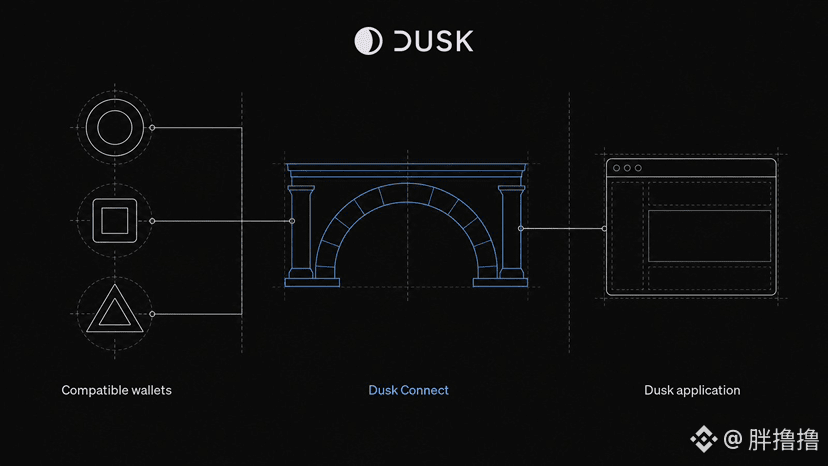
Recently, I read the Dusk whitepaper in detail, and in @Dusk they specifically discuss the difference between integration and assembly—explaining clearly why they write privacy directly into the protocol layer. From the very beginning, Dusk designs “default invisibility” as a hard constraint in their blueprint, spanning everything from consensus rules and transaction formats to the contract execution environment. Privacy, compliance, and performance are treated as the same integrated whole and designed in sync from the start—not covered up temporarily once issues appear. Traditional public chains are like building a skeleton first and then adding partitions: it looks complete, but there are seams everywhere. Dusk, on the other hand, welds privacy into the entire architecture itself, so it runs by that standard right out of the factory. #dusk
Native integration brings a cleaner consistency and a more solid foundation. Privacy truly becomes the load-bearing part rather than an external add-on. But if it’s welded too tightly, in the future, when upgrading the architecture or introducing new verification methods, will it be more troublesome than disassembling and reassembling components? Building from scratch has a high threshold. Cold-starting the ecosystem and everyday user experience are also real challenges. If the process is too complex, it’s basically pointless. $DUSK $BTC
I agree with Dusk’s direction, but I’ll still keep an eye on its room for iteration and its ecosystem progress. Please do your own research—this isn’t advice. Protect your principal first. Look: when privacy is made native, is it really more reliable, or have you welded yourself in place?
Recently, I read the Dusk whitepaper in detail, and in @Dusk they specifically discuss the difference between integration and assembly—explaining clearly why they write privacy directly into the protocol layer. From the very beginning, Dusk designs “default invisibility” as a hard constraint in their blueprint, spanning everything from consensus rules and transaction formats to the contract execution environment. Privacy, compliance, and performance are treated as the same integrated whole and designed in sync from the start—not covered up temporarily once issues appear. Traditional public chains are like building a skeleton first and then adding partitions: it looks complete, but there are seams everywhere. Dusk, on the other hand, welds privacy into the entire architecture itself, so it runs by that standard right out of the factory. #dusk
Native integration brings a cleaner consistency and a more solid foundation. Privacy truly becomes the load-bearing part rather than an external add-on. But if it’s welded too tightly, in the future, when upgrading the architecture or introducing new verification methods, will it be more troublesome than disassembling and reassembling components? Building from scratch has a high threshold. Cold-starting the ecosystem and everyday user experience are also real challenges. If the process is too complex, it’s basically pointless. $DUSK $BTC
I agree with Dusk’s direction, but I’ll still keep an eye on its room for iteration and its ecosystem progress. Please do your own research—this isn’t advice. Protect your principal first. Look: when privacy is made native, is it really more reliable, or have you welded yourself in place?