


After 11 years of trading coins, 80000000000, I have navigated two complete bull and bear cycles.
My core strategy is only six words: hold positions in a bull market, hoard coins in a bear market.
It seems simple, but behind it is a sophisticated system concerning position management, emotional control, and cycle judgment.
Next, I will break down each gear of this system.
In the crypto world, knowledge is money. The following 6 iron rules verified with 80 million, each worth a million.
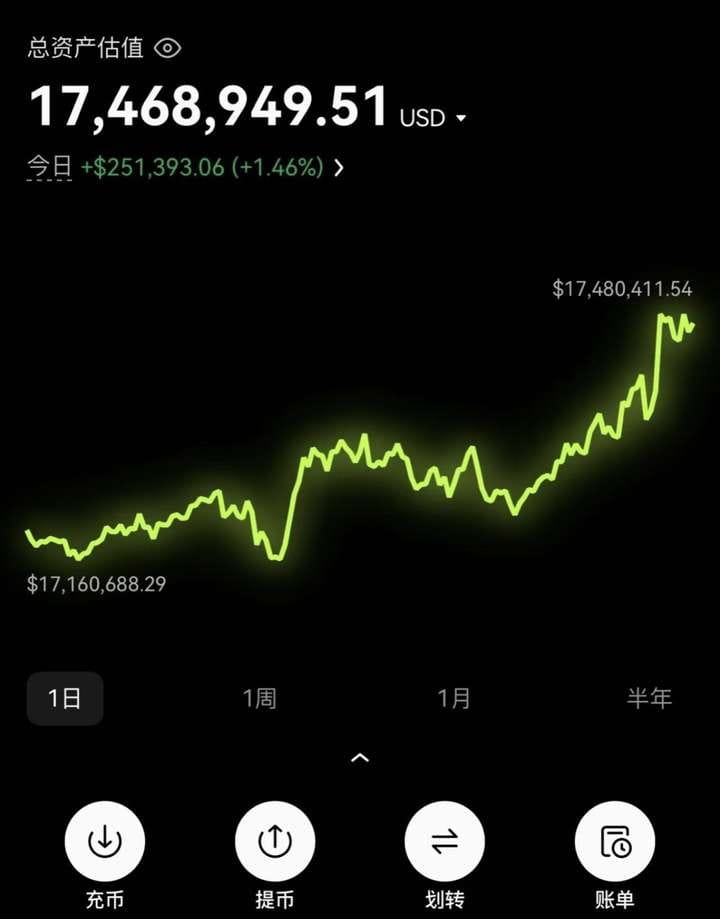
In addition to solid technology, I strictly adhere to the following 8 iron rules!
① For those coins with complex situations that you can't see clearly, never rush in; pick the soft persimmons first, trading coins is the same.
② Do not invest all your money in the same coin at once, even if you are very optimistic about it, and even if it proves to be right later, do not invest all at once. Because the abnormal situation changes rapidly, no one knows what will happen tomorrow.
③ For coins that are not in an upward channel, it is recommended to pay less attention. No matter what happens in the future, do not accompany the main force in building positions. Retail investors do not have time to waste with them.
④ Do not fantasize that you can make money while constantly trading short, entering and exiting every day. Frequent trading may give you a thrill, but it will cause you to lose a lot of money; the only one benefiting is the exchange, and you won't have that high level, nor are you a market maker. Do not buy too many coins, preferably not more than 10; you don't have that much energy to keep an eye on them. It's like wanting to marry five wives; even if you're healthy enough, you can't satisfy them. The story of Wei Xiaobao only happens in novels.
⑤ This coin is very cheap now, it has dropped a lot; this is not a reason for you to buy it, never! It may become even cheaper!
⑥ This coin is very expensive now, it has risen a lot, and it is not a reason for you to refuse to buy or sell; it may rise even higher!
Advice:
One, do not easily discard bullish coins; prioritize bullish coins, do both hotspot and strong coins, suitable for both investment and speculation.
Two, the most important thing for traders is the ability to adapt in the market.
Three, qualitative analysis must be done well. Long-term qualitative analysis, weekly coin selection, monthly assessment, daily tracking.
Four, methods must be followed, observe the market using Bollinger Bands or moving averages that you think are feasible.
Five, ability is taught without calculation, relying entirely on technical skills, repeating successful experiences, and making money a habit; earning consistently is more important than making a big profit.
Many people fail in trading; the reasons are similar — either they trade against the trend or force trades in a market with no clear trend, or they refuse to stop trading when the trend is clearly bad.
A truly high-quality, smooth trend is often easier to judge and provides repeated opportunities; this is the market that can create long-term advantages.
When you see a clear price candle structure and rhythmic pullbacks, it indicates that the supply and demand relationship in the market is logical. In this case, the success rate of trend reversals or continuations is naturally higher, and you will feel more assured.
Conversely, if the market is erratic, jumping up and down, with unclear structure, it is basically a weak trend or chaotic market.#币圈生存法则
In such a market, supply and demand are fundamentally unclear, and trends can change at any time. Trying to make stable profits relying on it will be extremely difficult.
Market structure
Price movements typically go through the following four stages:
✔ Accumulation phase (Accumulation) — Sideways consolidation
✔ Upward trend (Uptrend) — Trend is upward
✔ Distribution phase (Distribution) — Sideways consolidation
✔ Downward trend (Downtrend) — Trend is downward
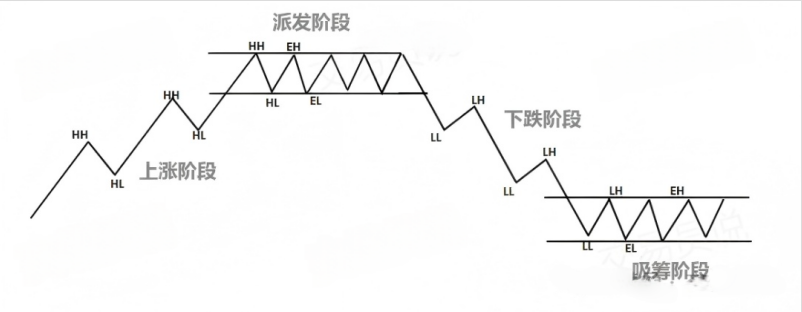
Understanding the stage the market is in is the foundation for conducting trend-following intraday trading. Trading along the 'right stage' will naturally give you a higher success rate; if you trade in the wrong stage, the market can 'educate you' at any time.
Accumulation phase
Smart money (large institutions) accumulates circulating chips in the market through continuous buying, a process known as accumulation. The accumulation phase usually appears after a long downturn, and the overall shape looks like a range-bound market.
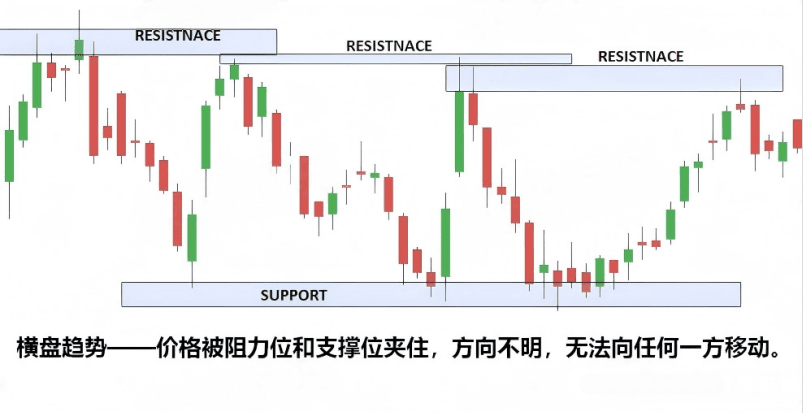
When prices fluctuate repeatedly between support and resistance levels, failing to form a trend in either direction, the market is in a range-bound condition. Prices are 'stuck' between support and resistance, and the direction is unclear. Generally, during the accumulation phase, we will see the following characteristics:
❍ Normal or small-bodied candles
❍ Bullish and bearish candles appear alternately
❍ Low trading volume
❍ Long consolidation period
❍ Prices operate in a relatively tight range
As time goes by, traders will go long at the lower edge of the range and short at the upper edge, with corresponding stop-loss orders gradually piling up above and below the range, laying the groundwork for the subsequent market explosion.
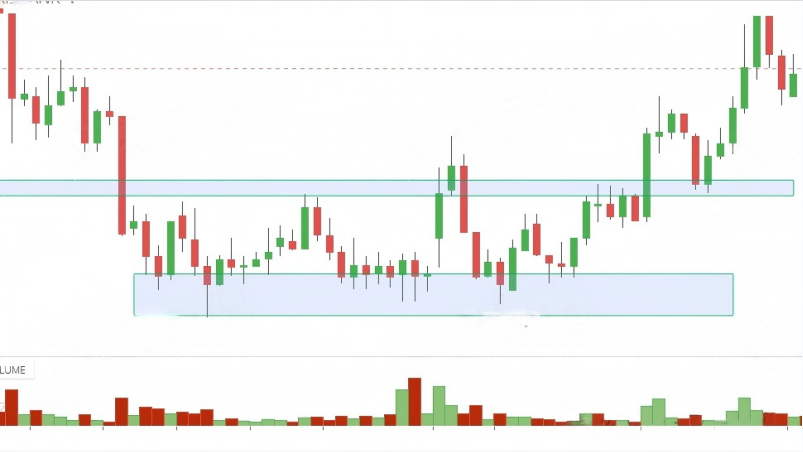
This does not guarantee that the market will reverse from its current position, but it will remind you that the bearish strength is weakening, and the bulls may regain control, pushing the price above the upper high point of the consolidation range.
How to enter during the accumulation phase
There are three common ways to enter during the accumulation phase:
❍ Spring (false breakout) entry (Note: The Spring model describes price movements that are opposite to the subsequent breakout direction. In hindsight, the spring looks like a false breakout, but when it happens, it induces traders to trade in the wrong direction. Institutional traders use the spring to accumulate buy orders and then push the price up.)
❍ Breakout entry
❍ Pullback after breakout (consolidation or backtest) to enter
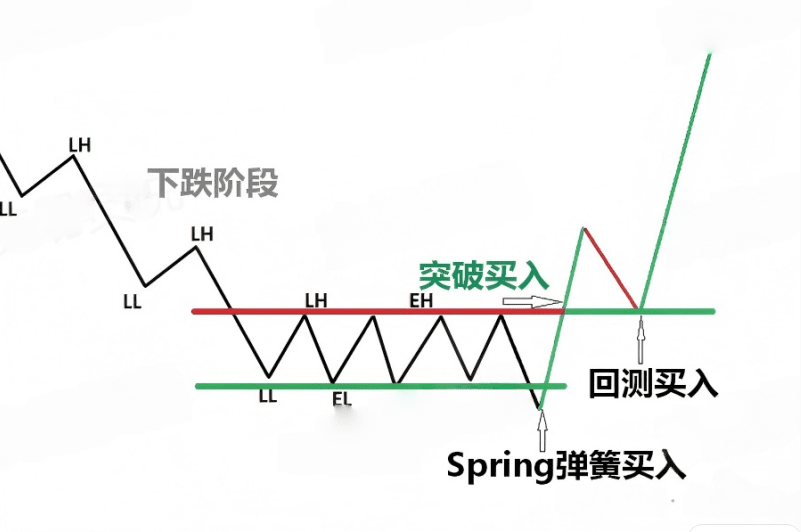
If the low point of this range just happens to touch the support level of a higher time frame, the chances of the market breaking upward greatly increase. For example, if the overall trend of the market is bullish but is temporarily in a downtrend at a lower time frame, this downtrend will stop at the resistance level of the higher time frame.
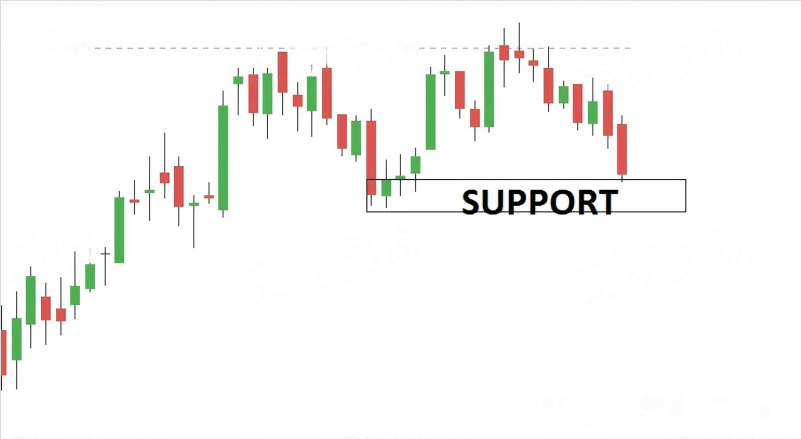
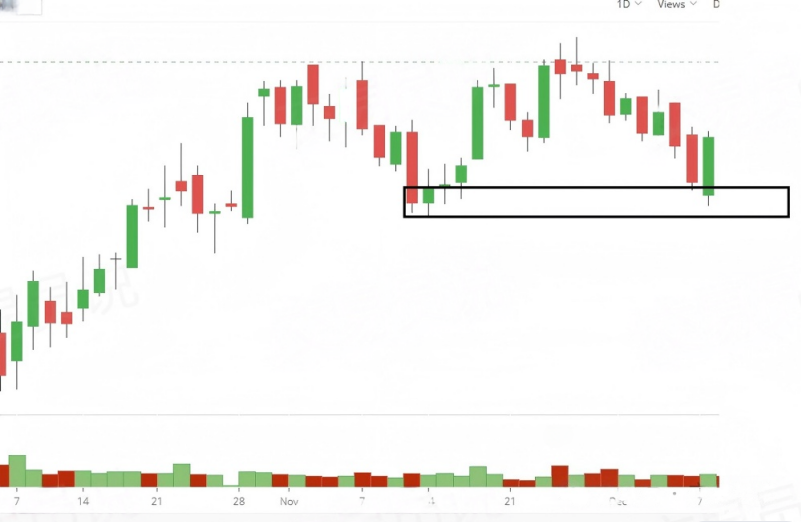
That is to say, you must first wait for the price to fall to the support area on the daily level, and then observe in your own trading cycle for signs of a breakthrough in the accumulation structure.
Upward trend
Smart money is actively driving prices higher. This advancing phase is essentially an upward trend, with prices continuously creating higher highs and higher lows, showing fluctuations in the market.
In a healthy bull market trend, upward waves are usually longer than downward waves, and they form higher highs and higher lows; while in a bear market, the opposite is true.
Price creates higher highs (HH) and higher lows (HL)
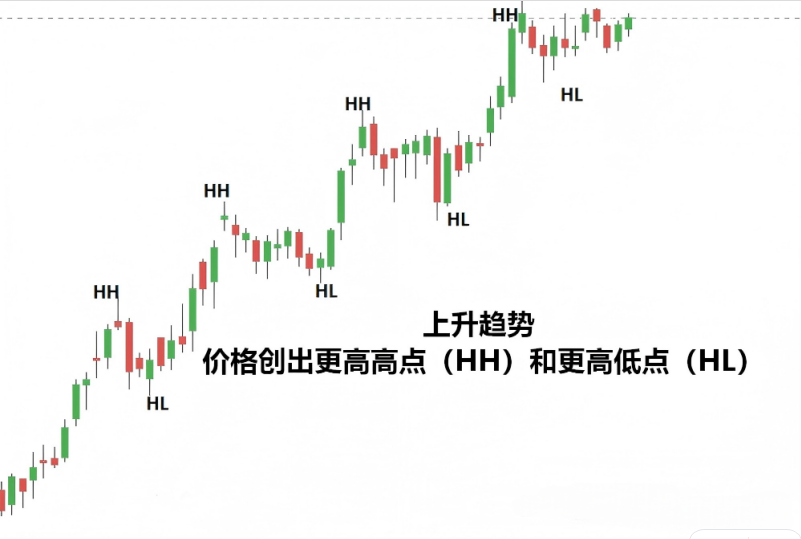
General characteristics of an upward trend:
1. The number of bullish candles is greater than that of bearish candles
2. Bullish candle bodies are larger than bearish candle bodies
3. Trading volume increases during upward movements, and decreases during downward pullbacks
Bullish candles typically close at the upper edge of the range or near the highest price
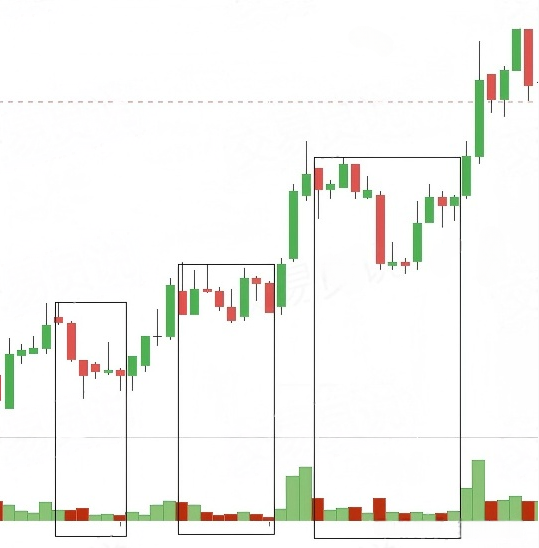
However, it should be noted that an upward phase ultimately also needs to 'rest'. Early entering bulls will begin to take profits, and when the price reaches a relatively 'tempting' position, bears will also try to enter short.
Different types of trends
Trends can generally be divided into three categories:
1. Strong trend
2. Healthy trend
3. Weak trend
Strong upward trend
In a strong upward trend, bulls completely control the market, with minimal selling pressure, typically characterized by the following:
1. The pullback is shallow, mostly consolidating sideways
2. Low trading volume during pullbacks
3. Price hardly retraces below the 20-day exponential moving average
4. Large bullish candles are clearly more than bearish candles
This makes it difficult to enter during pullbacks because the market almost has no retracement and quickly continues to rise. The best way to trade this trend is to wait for a breakout to enter.
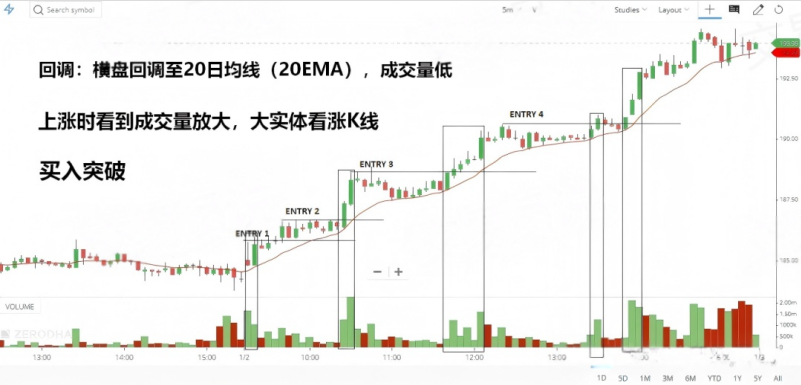
Therefore, the best way to trade a strong upward trend is often to break through in the direction of the trend. If the market doesn't give a pullback? Then don't wait, riding the trend is the way to go.
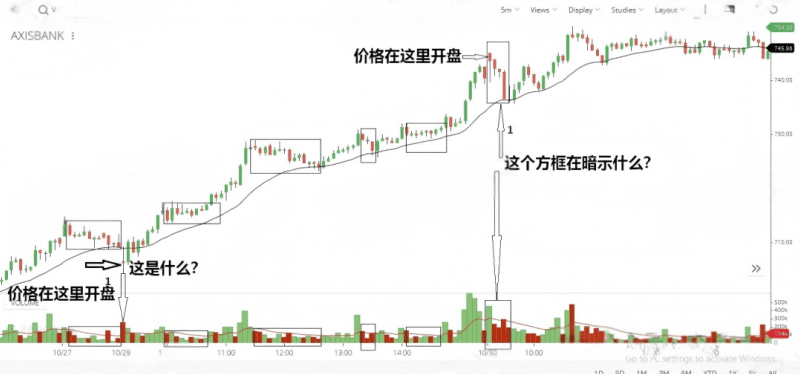
Please make your own judgments and analyses:
Healthy upward trend
In a healthy upward trend, buyers still control the market, but there will be some selling pressure (possibly due to traders taking profits, or some traders attempting to go against the trend).
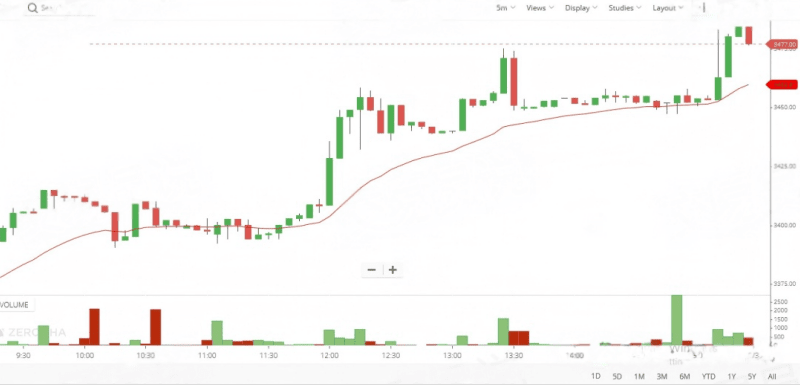
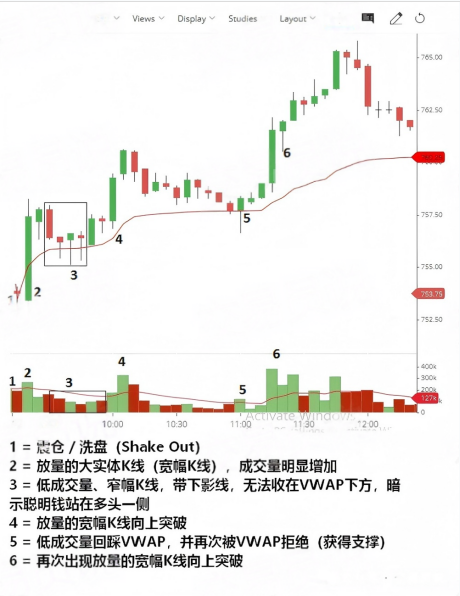
You can expect this trend to have moderate pullbacks, usually pulling back to near the 20-day exponential moving average (20EMA), providing an opportunity to enter in the direction of the trend. Pullbacks are usually accompanied by low trading volume, narrow ranges, or long lower shadow candles.
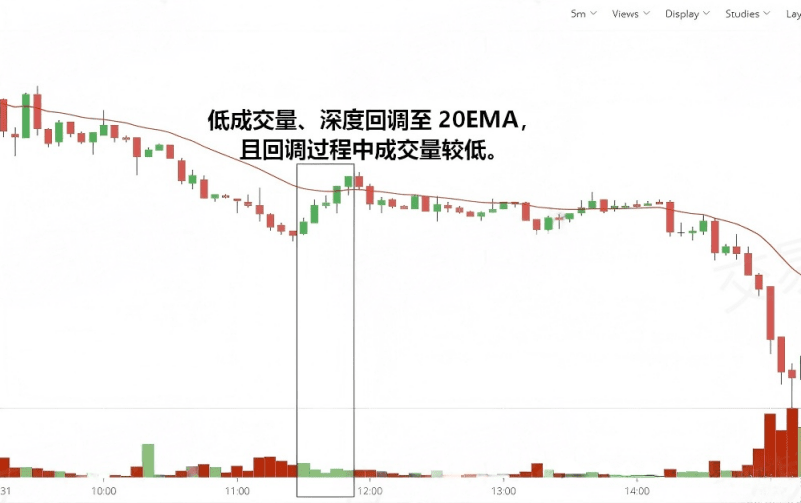
Weak upward trend / Fluctuating trend
In a weak upward trend, the strengths of bulls and bears are almost equal, with bulls slightly in the lead. Typical characteristics include:
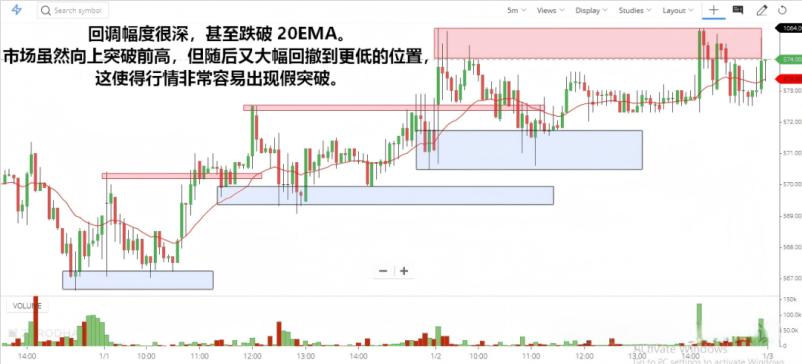
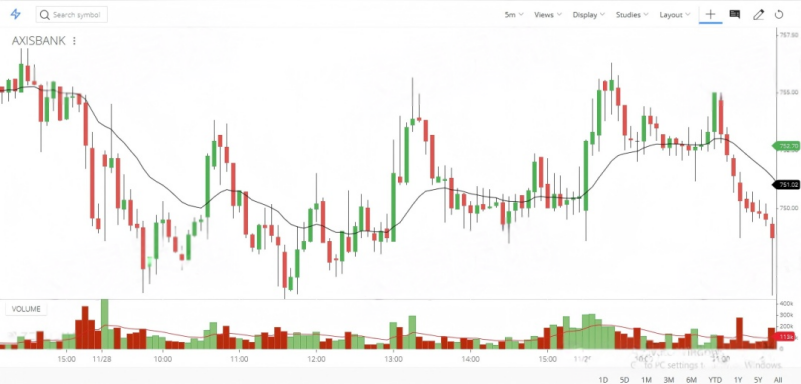
1. Price pullbacks are relatively deep, frequently breaking below the 20EMA.
2. The overall market shows a fluctuating and chaotic trend.
3. After the price breaks above the previous high, it often quickly retreats (false breakouts are common). Pullbacks often directly break through minor demand zones (in an upward trend) or minor supply zones (in a downward trend).
4. The opening prices of most candles are located at 50% or deeper of the previous candle's body.
5. The closing price fails to continue in the direction of the previous candle.
6. The opening and closing of new candles are neither close to the highs nor lows, with obvious upper and lower shadows.
7. Overall showing significant uncertainty.
In this trend, the best trading method is to operate based on support and resistance, rather than blindly chasing the trend.
Distribution phase
During the distribution phase, smart money will take advantage of the high prices formed by the previous surge to sell their chips to those traders or investors who lack information, thus earning profits.
Note that all the logic mentioned earlier about accumulation and upward phases is completely reversed in the distribution and downward phases.
Downward trend
In a downward trend, prices continuously form lower highs (LH) and lower lows (LL).
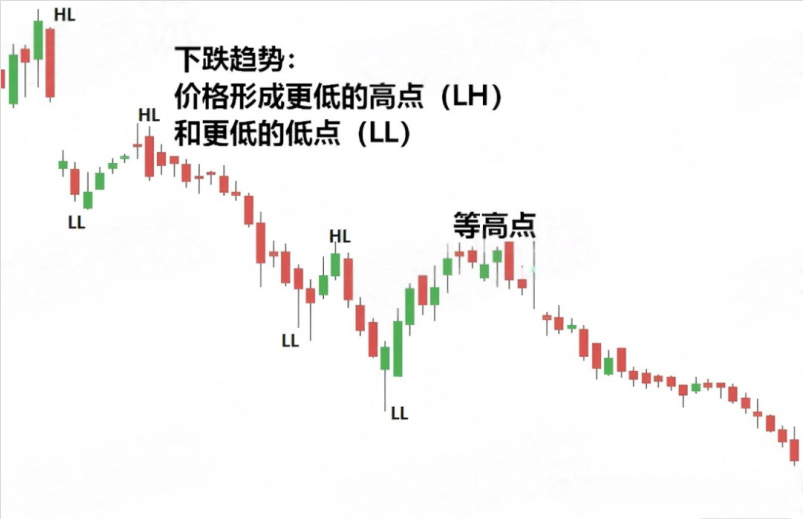
When is a trend considered over?
When a trading asset shows two consecutive lows and two consecutive higher highs within a specific time frame, the upward trend is considered officially over; conversely, when two consecutive higher lows and two consecutive higher highs appear, the downward trend is considered over.
Please remember that intraday trading carries high risks and can quickly lead to capital losses. Before investing real funds, it is essential to practice strategies in a simulated environment and have a thorough understanding of the market. Always stay sensitive to information, continuously learn to adapt to the ever-changing market environment.
This is the trading experience that Yan An shared with everyone today. Many times, opportunities to make money are lost due to your doubts; if you don't dare to try boldly, engage, and understand, how will you know the pros and cons? You only know how to take the next step after you take the first step. A warm cup of tea and a piece of advice; I am both a teacher and a friend you can talk to.
Familiarity is fate; knowing each other is separation. I firmly believe that fate will eventually lead to recognition, and not meeting is destiny. The journey of investment is very long; temporary gains and losses are just the tip of the iceberg. One should know that even the wisest can have miscalculations, and the foolish can have good fortune. Regardless of emotions, time will not stop for you. Pick up the frustration in your heart, stand up again and move forward.
The martial arts secrets have been given to everyone; whether you can become famous in the world depends on yourself.
These methods must be saved; share with friends who find them useful and follow me to learn more about cryptocurrency. After being through the rain, I wish to hold an umbrella for the retail investors! Follow me, and let’s walk together on the cryptocurrency journey!