
新先生
244 Posts

新先生
Report
Block User
🔸耕丹 推特:@xxsheng9🔸全职交易员🔸专注“事件”领域🔸AI量化千场回撤胜率高达70%🔸几万次实战经验 多次实现十油滚到五位数 坚持保住本金为主,再实现稳定翻倍盈利!
14 Following
9.3K+ Followers
3.7K+ Liked
Posts
All
Videos
Live
PINNED
·
--
Guys and sisters who enjoy discussing events—add me as friends and chat together!
On the home page, tap the top-left corner. Then use the scan button at the top-right to add me as a friend! $BTC $ETH
Guys and sisters who enjoy discussing events—add me as friends and chat together!
On the home page, tap the top-left corner. Then use the scan button at the top-right to add me as a friend! $BTC $ETH
On the home page, tap the top-left corner. Then use the scan button at the top-right to add me as a friend! $BTC $ETH

107
17
291
PINNED
·
--
Why do beginners recommend using quant trading?
Do you also often stay up late staring at the charts, watching that same dead range? When you make money you think you’ve got it, and when you hit extreme market conditions you keep adding orders—trading emotionally. In the end, everything goes to zero.
I’ve been trading event contracts for more than a year now. I’ve seen too many people in the end just hope to break even and then give up. The idea of getting back to even fades, they quietly leave the market. Then another new batch of green hands comes in, and the cycle repeats endlessly.
The crypto market is even more terrifying than the 80/20 rule—because event contracts charge a 20% fee. It’s inherently unfair. Out of 10 people, maybe only one is actually making money, and even that person manages to control themselves and place fewer orders.
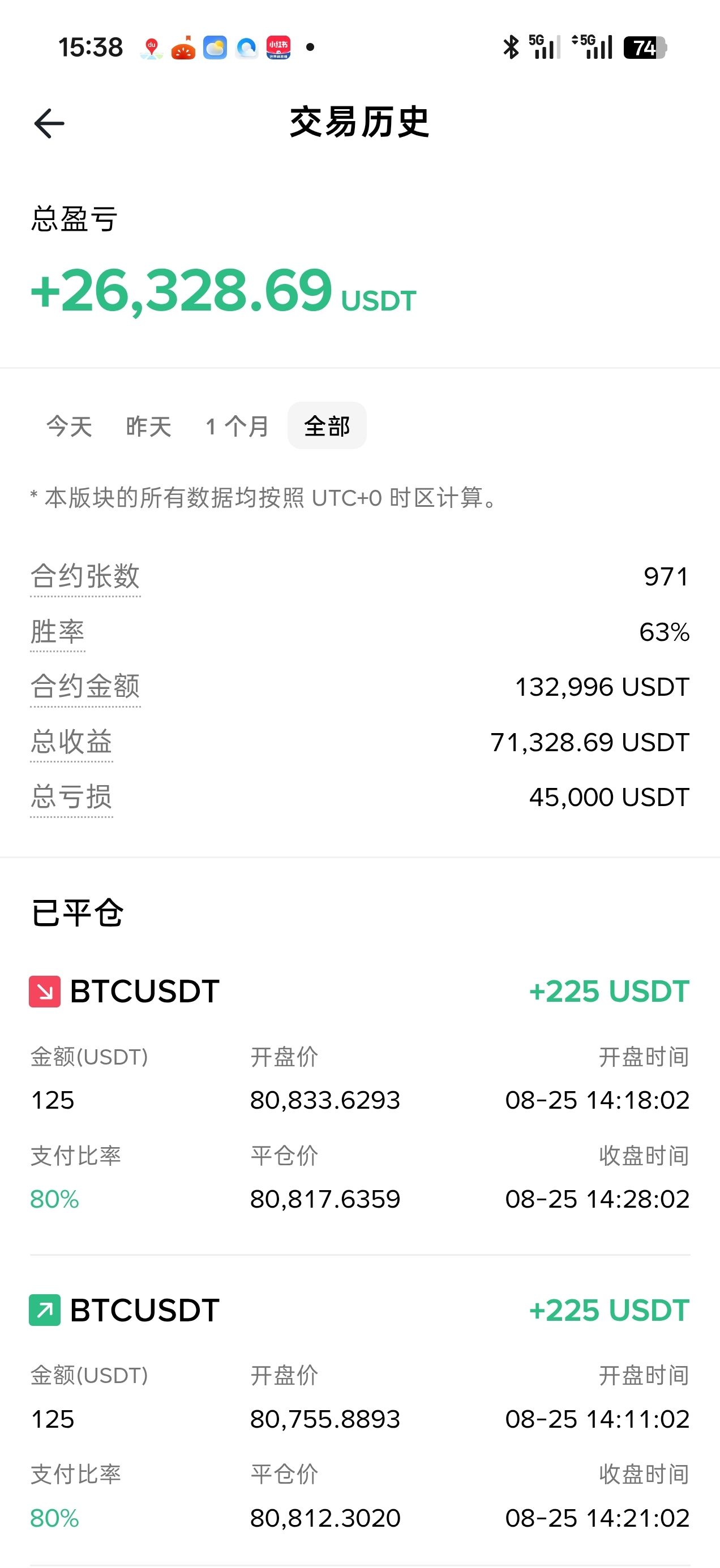
Quant trading, on the other hand, strictly follows the rules: you don’t open a trade unless the price reaches the set level. It runs fully automated 24/7, rejects emotional trading and the habit of averaging down. After long-term operation, the win rate can reach 70%. That’s the charm of #量化 .
In just two months, with this account you can have unrealized profit of 20k u! A win rate of 70%. We don’t care how much you make in a day or two—we care about the long term: extreme market conditions and all kinds of situations combined. Is it profitable? #事件合约
Why do beginners recommend using quant trading?
Do you also often stay up late staring at the charts, watching that same dead range? When you make money you think you’ve got it, and when you hit extreme market conditions you keep adding orders—trading emotionally. In the end, everything goes to zero.
I’ve been trading event contracts for more than a year now. I’ve seen too many people in the end just hope to break even and then give up. The idea of getting back to even fades, they quietly leave the market. Then another new batch of green hands comes in, and the cycle repeats endlessly.
The crypto market is even more terrifying than the 80/20 rule—because event contracts charge a 20% fee. It’s inherently unfair. Out of 10 people, maybe only one is actually making money, and even that person manages to control themselves and place fewer orders.
Quant trading, on the other hand, strictly follows the rules: you don’t open a trade unless the price reaches the set level. It runs fully automated 24/7, rejects emotional trading and the habit of averaging down. After long-term operation, the win rate can reach 70%. That’s the charm of #量化 .
In just two months, with this account you can have unrealized profit of 20k u! A win rate of 70%. We don’t care how much you make in a day or two—we care about the long term: extreme market conditions and all kinds of situations combined. Is it profitable? #事件合约
Do you also often stay up late staring at the charts, watching that same dead range? When you make money you think you’ve got it, and when you hit extreme market conditions you keep adding orders—trading emotionally. In the end, everything goes to zero.
I’ve been trading event contracts for more than a year now. I’ve seen too many people in the end just hope to break even and then give up. The idea of getting back to even fades, they quietly leave the market. Then another new batch of green hands comes in, and the cycle repeats endlessly.
The crypto market is even more terrifying than the 80/20 rule—because event contracts charge a 20% fee. It’s inherently unfair. Out of 10 people, maybe only one is actually making money, and even that person manages to control themselves and place fewer orders.
Quant trading, on the other hand, strictly follows the rules: you don’t open a trade unless the price reaches the set level. It runs fully automated 24/7, rejects emotional trading and the habit of averaging down. After long-term operation, the win rate can reach 70%. That’s the charm of #量化 .
In just two months, with this account you can have unrealized profit of 20k u! A win rate of 70%. We don’t care how much you make in a day or two—we care about the long term: extreme market conditions and all kinds of situations combined. Is it profitable? #事件合约
2.1k
2
106
2.1k
·
--
Many people just start trading event contracts and their first sentence is: “I want to use this to turn things around.”
But after playing for a while, you’ll realize that the more you hold on to a mindset of “making a comeback,” the more likely you are to lose your principal first. #Event Contracts
I’m the same—I started with a small amount of capital, step by step—so I really understand that feeling: with not much principal, you always think, “Let’s go big on a single trade.” Win a few trades early and you get carried away; lose one and you refuse to accept it, then you add more trades, average down, increase positions, chase the direction... and in the end, the profit you made in a day can be吐 back in just a few minutes.
Later, once I truly built my account gradually, I ended up only following three stages.
First stage: learn how to survive
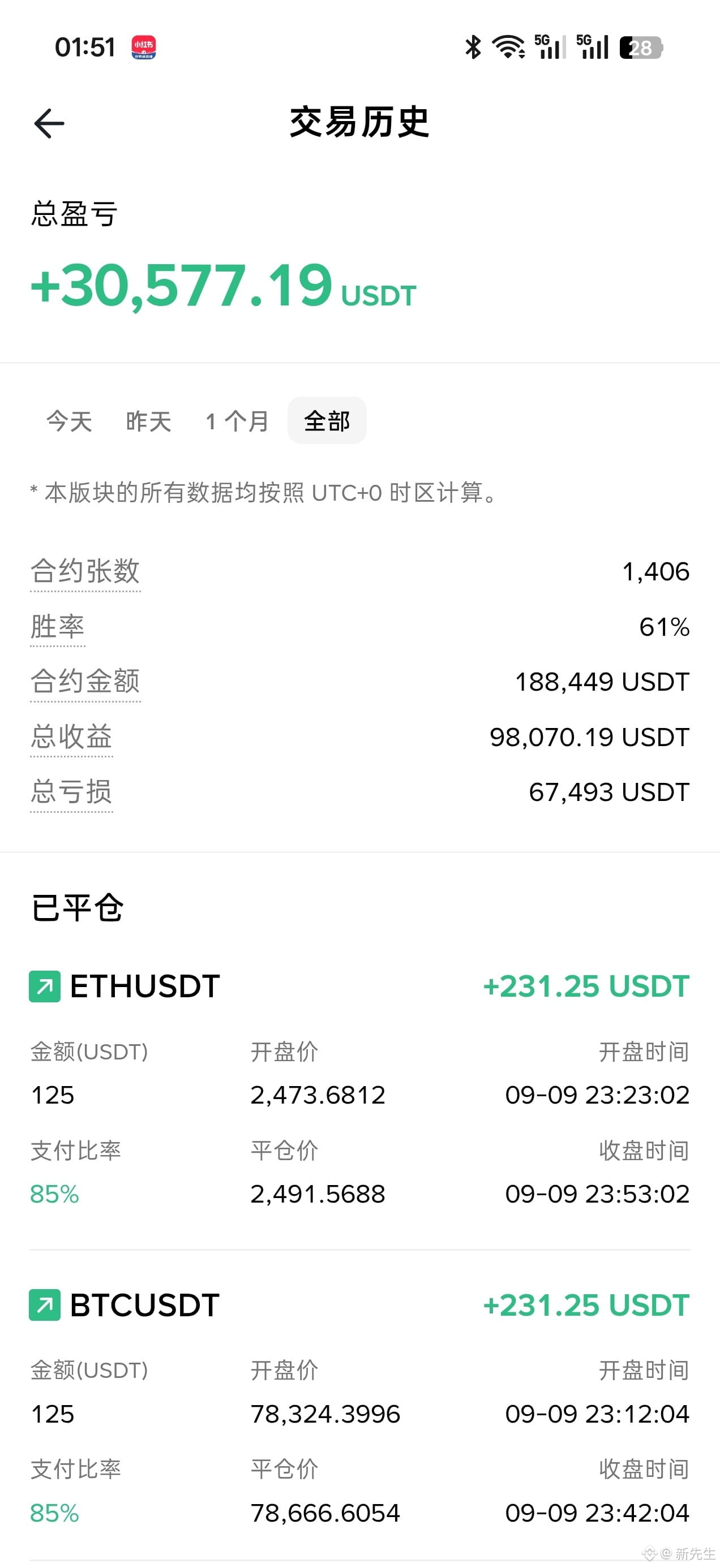
Split the principal and trade with a fixed position size each time. If you’re wrong, admit it—no averaging down, no holding through, and don’t rush into the next trade just to recoup because the last one lost. For small capital, the most important thing isn’t how much you make in a day, but not to “graduate” after one bad move in the market.
Second stage: when you have profit, then gradually scale up
After the account starts growing, it still isn’t about going all-in. You only act when you truly encounter a setup that matches the strategy and the trend is clear. Event contracts aren’t about making more just by placing more trades—many times, doing fewer trades can help you avoid a lot of invalid losses.
Third stage: learn to keep the profits
What I fear most isn’t never having made money—it’s making money and then giving it all back. Once your account reaches a certain stage, lock in some of the profits. Don’t work so hard for a month only to end up zeroing out everything because you lost control in one moment.
After doing this for a long time, you finally understand: the real difficulty with event contracts has never been guessing the direction correctly on any one trade—it’s whether, after a streak of consecutive losses, you can still keep your hands under control.
For small capital, the biggest fear is impulsiveness.
The more you want to “turn things around in one shot,” the easier it is to clear everything in one move.
People who truly build their accounts usually don’t rely on going all-in—they rely on not making a few fatal mistakes.#事件合约 #交易纪律
Many people just start trading event contracts and their first sentence is: “I want to use this to turn things around.”
But after playing for a while, you’ll realize that the more you hold on to a mindset of “making a comeback,” the more likely you are to lose your principal first. #Event Contracts
I’m the same—I started with a small amount of capital, step by step—so I really understand that feeling: with not much principal, you always think, “Let’s go big on a single trade.” Win a few trades early and you get carried away; lose one and you refuse to accept it, then you add more trades, average down, increase positions, chase the direction... and in the end, the profit you made in a day can be吐 back in just a few minutes.
Later, once I truly built my account gradually, I ended up only following three stages.
First stage: learn how to survive
Split the principal and trade with a fixed position size each time. If you’re wrong, admit it—no averaging down, no holding through, and don’t rush into the next trade just to recoup because the last one lost. For small capital, the most important thing isn’t how much you make in a day, but not to “graduate” after one bad move in the market.
Second stage: when you have profit, then gradually scale up
After the account starts growing, it still isn’t about going all-in. You only act when you truly encounter a setup that matches the strategy and the trend is clear. Event contracts aren’t about making more just by placing more trades—many times, doing fewer trades can help you avoid a lot of invalid losses.
Third stage: learn to keep the profits
What I fear most isn’t never having made money—it’s making money and then giving it all back. Once your account reaches a certain stage, lock in some of the profits. Don’t work so hard for a month only to end up zeroing out everything because you lost control in one moment.
After doing this for a long time, you finally understand: the real difficulty with event contracts has never been guessing the direction correctly on any one trade—it’s whether, after a streak of consecutive losses, you can still keep your hands under control.
For small capital, the biggest fear is impulsiveness.
The more you want to “turn things around in one shot,” the easier it is to clear everything in one move.
People who truly build their accounts usually don’t rely on going all-in—they rely on not making a few fatal mistakes.#事件合约 #交易纪律
But after playing for a while, you’ll realize that the more you hold on to a mindset of “making a comeback,” the more likely you are to lose your principal first. #Event Contracts
I’m the same—I started with a small amount of capital, step by step—so I really understand that feeling: with not much principal, you always think, “Let’s go big on a single trade.” Win a few trades early and you get carried away; lose one and you refuse to accept it, then you add more trades, average down, increase positions, chase the direction... and in the end, the profit you made in a day can be吐 back in just a few minutes.
Later, once I truly built my account gradually, I ended up only following three stages.
First stage: learn how to survive
Split the principal and trade with a fixed position size each time. If you’re wrong, admit it—no averaging down, no holding through, and don’t rush into the next trade just to recoup because the last one lost. For small capital, the most important thing isn’t how much you make in a day, but not to “graduate” after one bad move in the market.
Second stage: when you have profit, then gradually scale up
After the account starts growing, it still isn’t about going all-in. You only act when you truly encounter a setup that matches the strategy and the trend is clear. Event contracts aren’t about making more just by placing more trades—many times, doing fewer trades can help you avoid a lot of invalid losses.
Third stage: learn to keep the profits
What I fear most isn’t never having made money—it’s making money and then giving it all back. Once your account reaches a certain stage, lock in some of the profits. Don’t work so hard for a month only to end up zeroing out everything because you lost control in one moment.
After doing this for a long time, you finally understand: the real difficulty with event contracts has never been guessing the direction correctly on any one trade—it’s whether, after a streak of consecutive losses, you can still keep your hands under control.
For small capital, the biggest fear is impulsiveness.
The more you want to “turn things around in one shot,” the easier it is to clear everything in one move.
People who truly build their accounts usually don’t rely on going all-in—they rely on not making a few fatal mistakes.#事件合约 #交易纪律
3
599
·
--
Again, I’m amazed by my strategy.
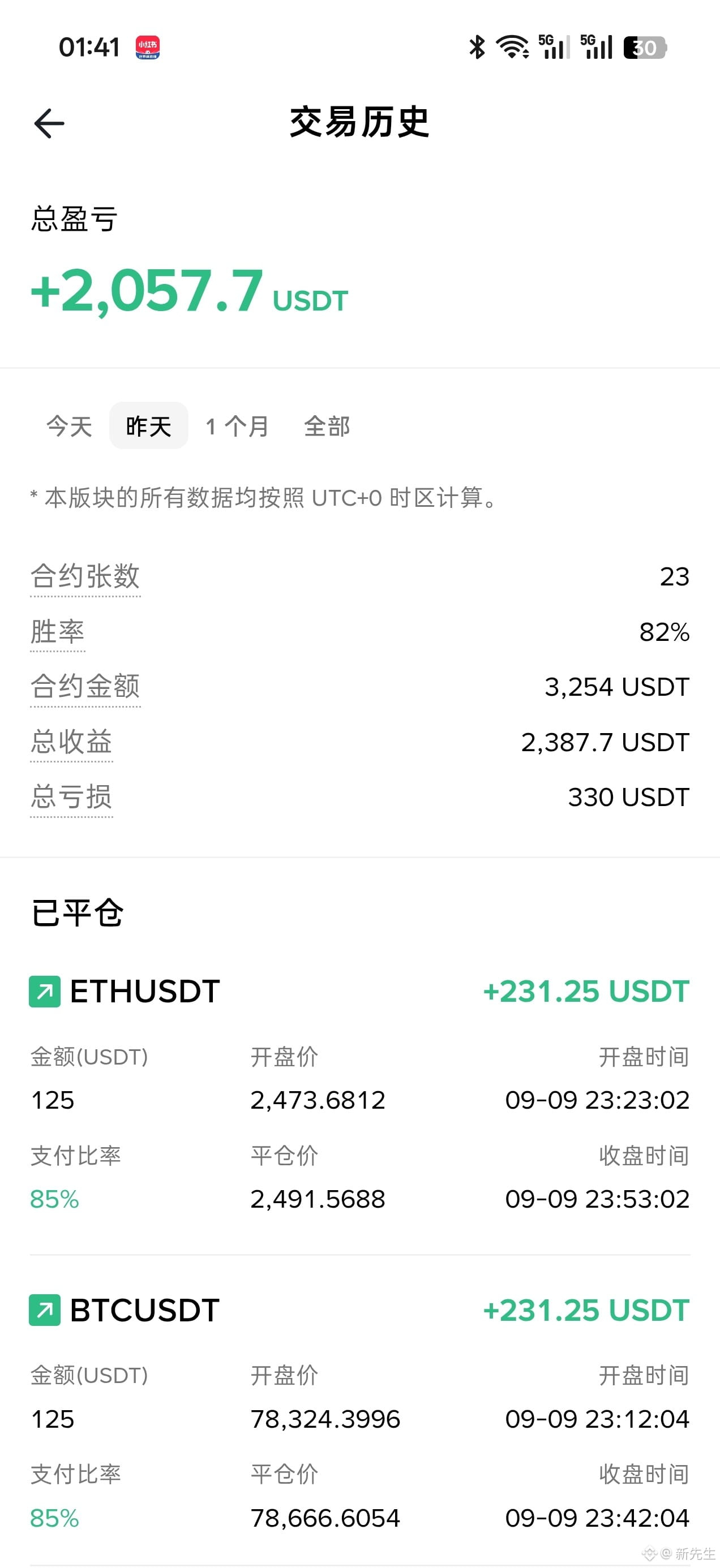
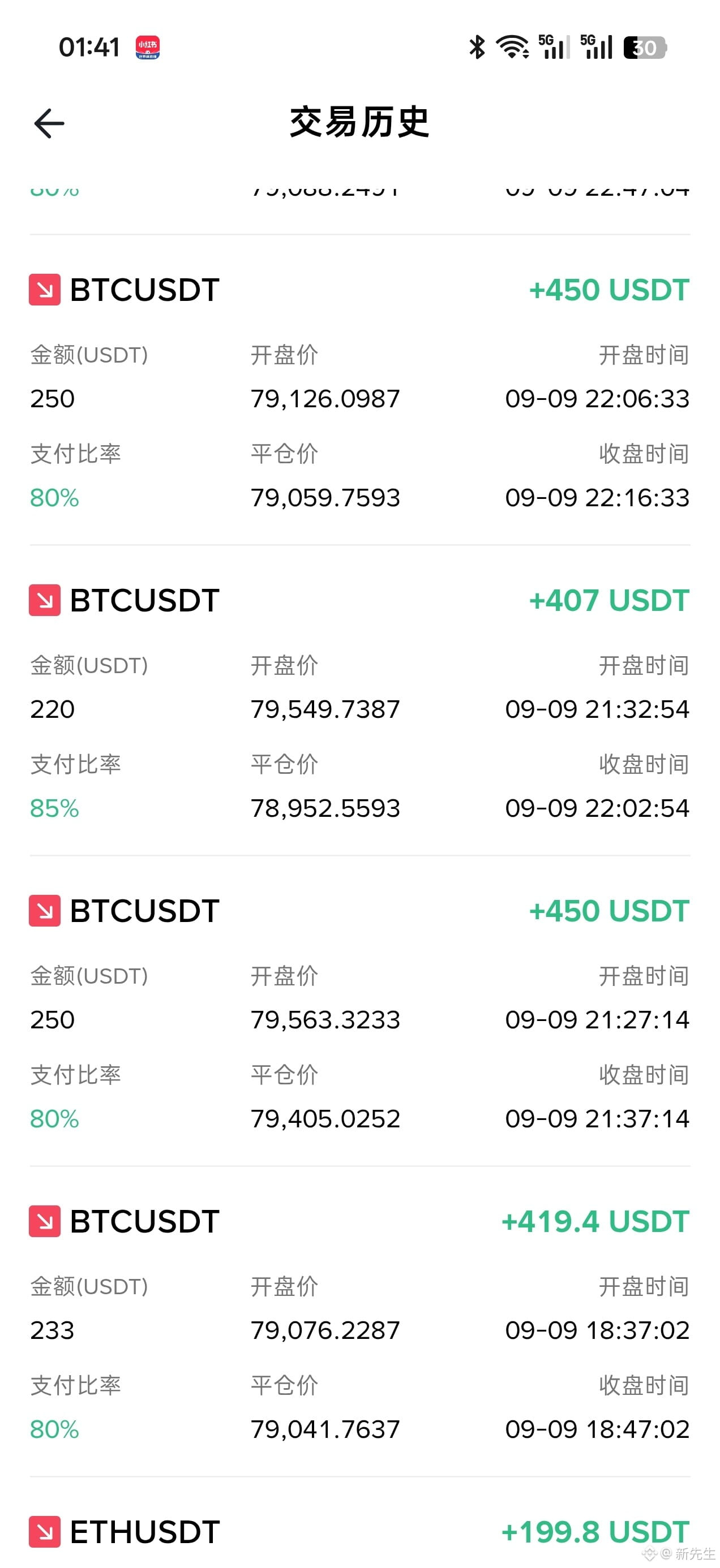
When playing events, the biggest fear is getting stuck in a one-sided move—sudden surges and sudden crashes. These past few days, I’ve nailed it all.
If you can seize the opportunity, you can also make a profit of 2000🔪#事件合约
Again, I’m amazed by my strategy.
When playing events, the biggest fear is getting stuck in a one-sided move—sudden surges and sudden crashes. These past few days, I’ve nailed it all.
If you can seize the opportunity, you can also make a profit of 2000🔪#事件合约
When playing events, the biggest fear is getting stuck in a one-sided move—sudden surges and sudden crashes. These past few days, I’ve nailed it all.
If you can seize the opportunity, you can also make a profit of 2000🔪#事件合约
2
3
850
·
--
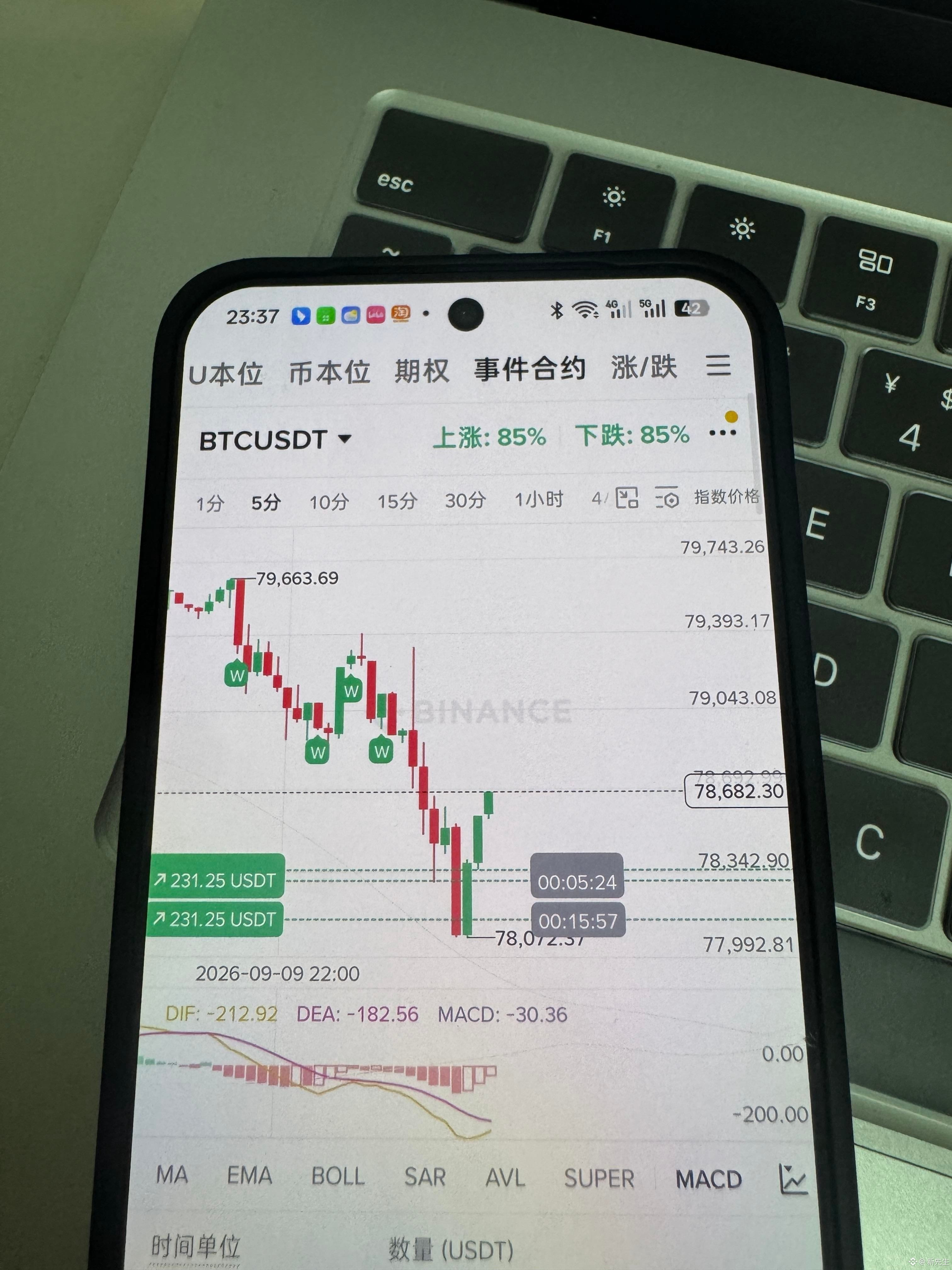
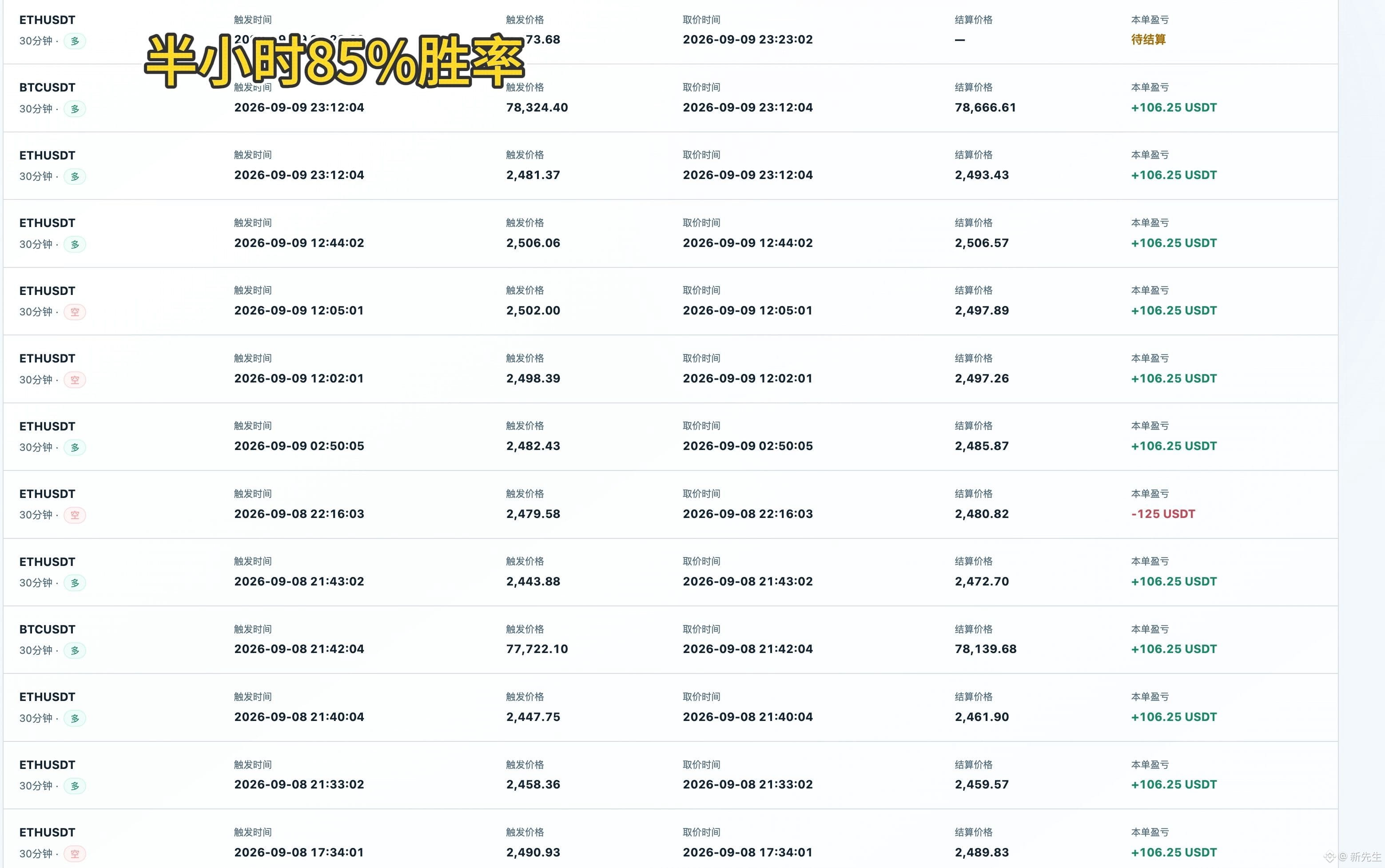
In the past few days, the win rate over a half-hour period has reached a terrifying 85%. Brothers who followed—eat big chunks of meat. Is this the charm of quantification?#事件合约
In the past few days, the win rate over a half-hour period has reached a terrifying 85%. Brothers who followed—eat big chunks of meat. Is this the charm of quantification?#事件合约
2
549
·
--
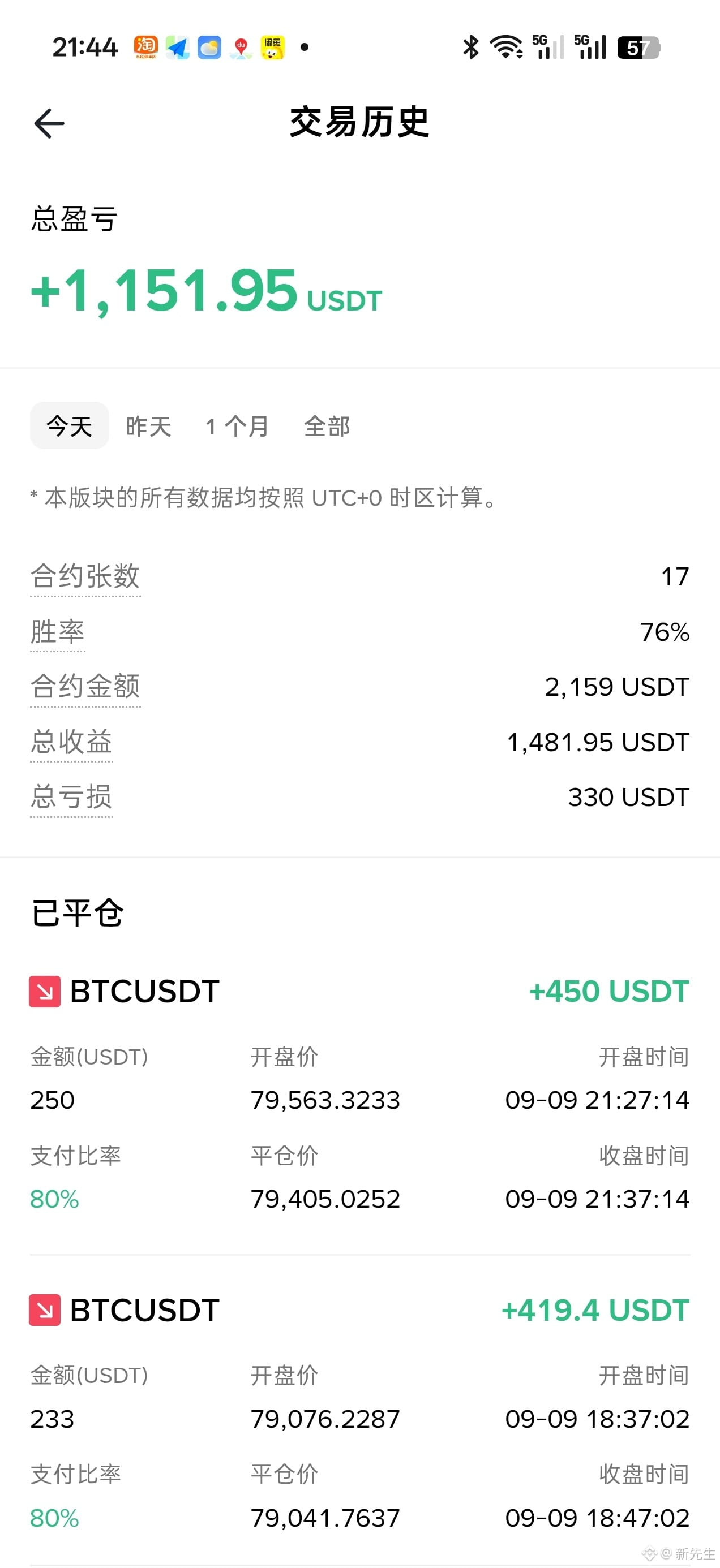
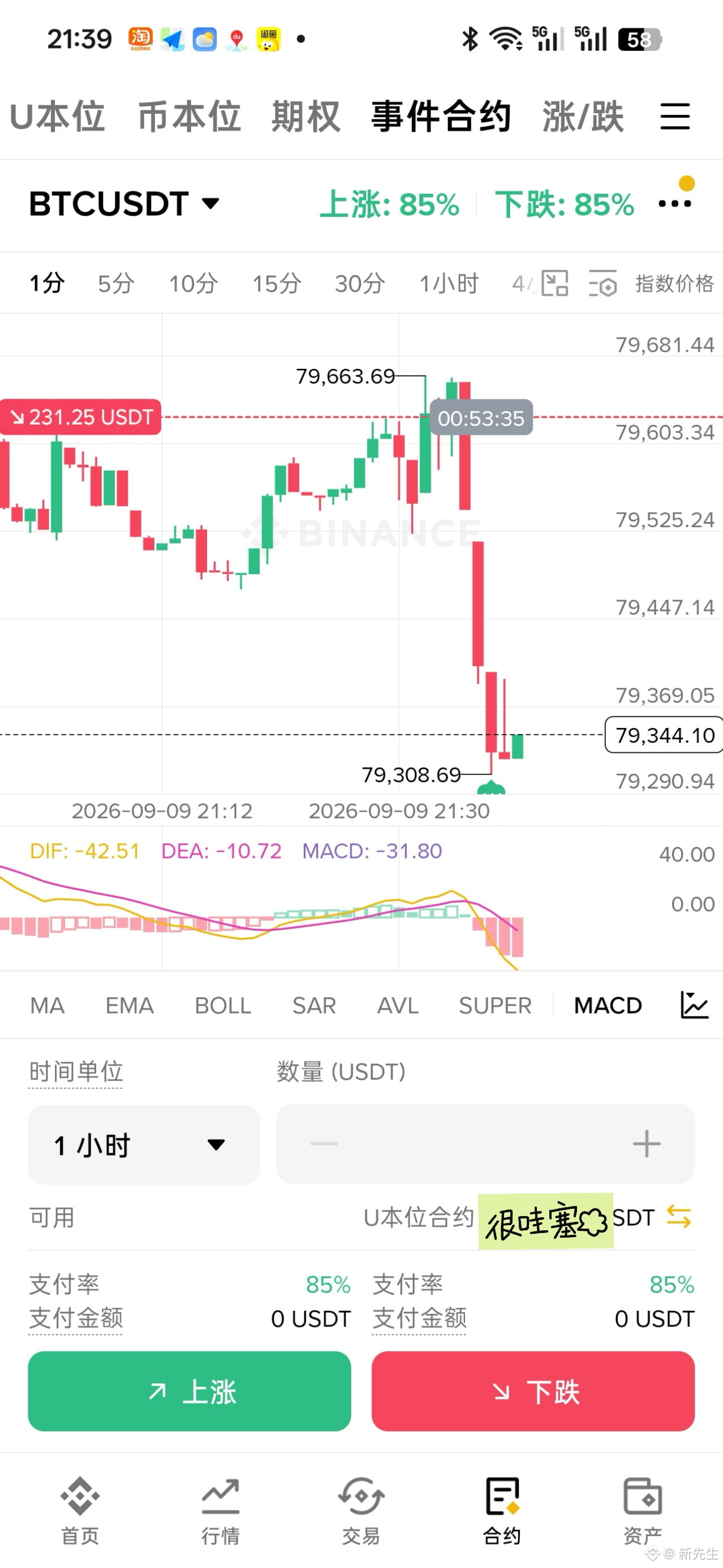
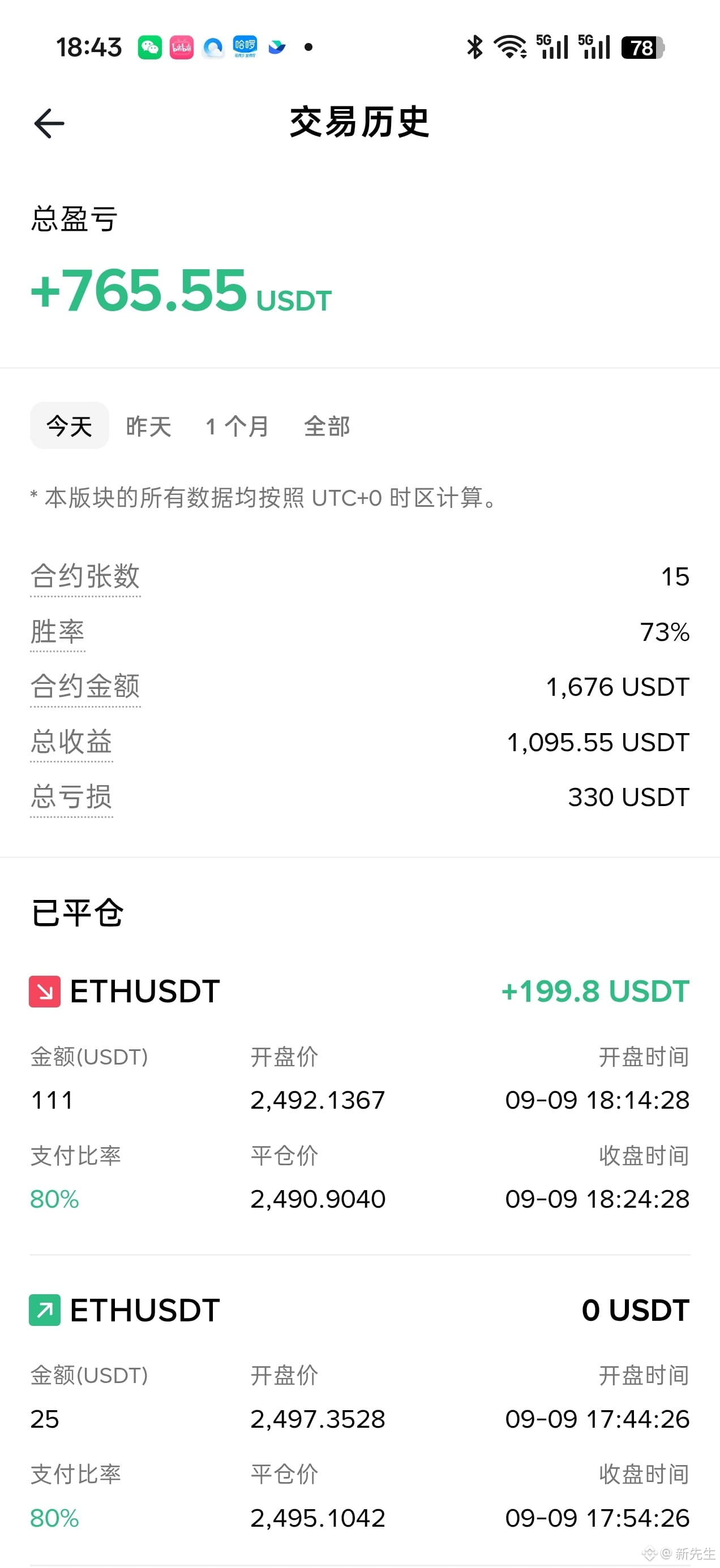
I glanced at it and thought something big was seriously wrong. I called and told Wall Street to smash funding to directly lift the market—profited angrily 1150u #事件合约
I glanced at it and thought something big was seriously wrong. I called and told Wall Street to smash funding to directly lift the market—profited angrily 1150u #事件合约
1
266
·
--
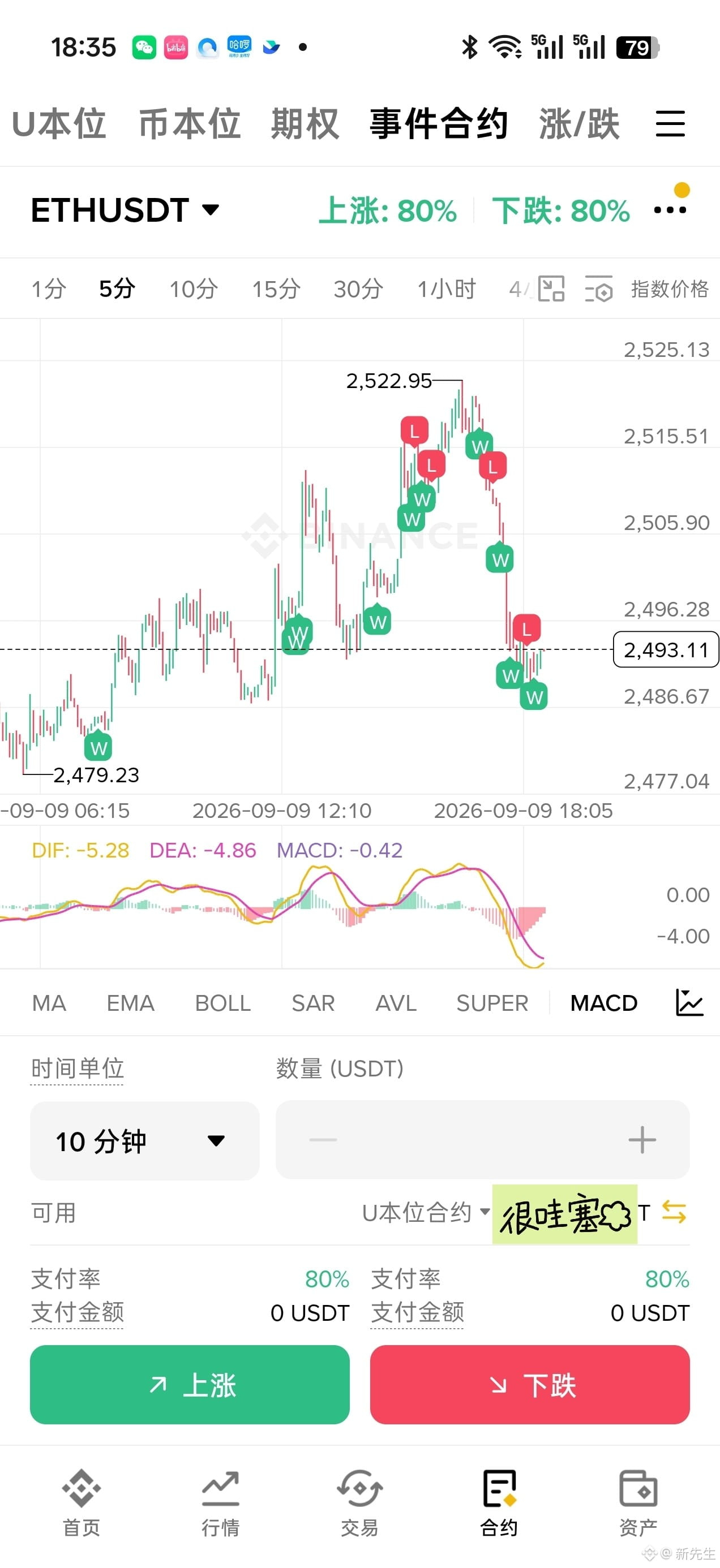
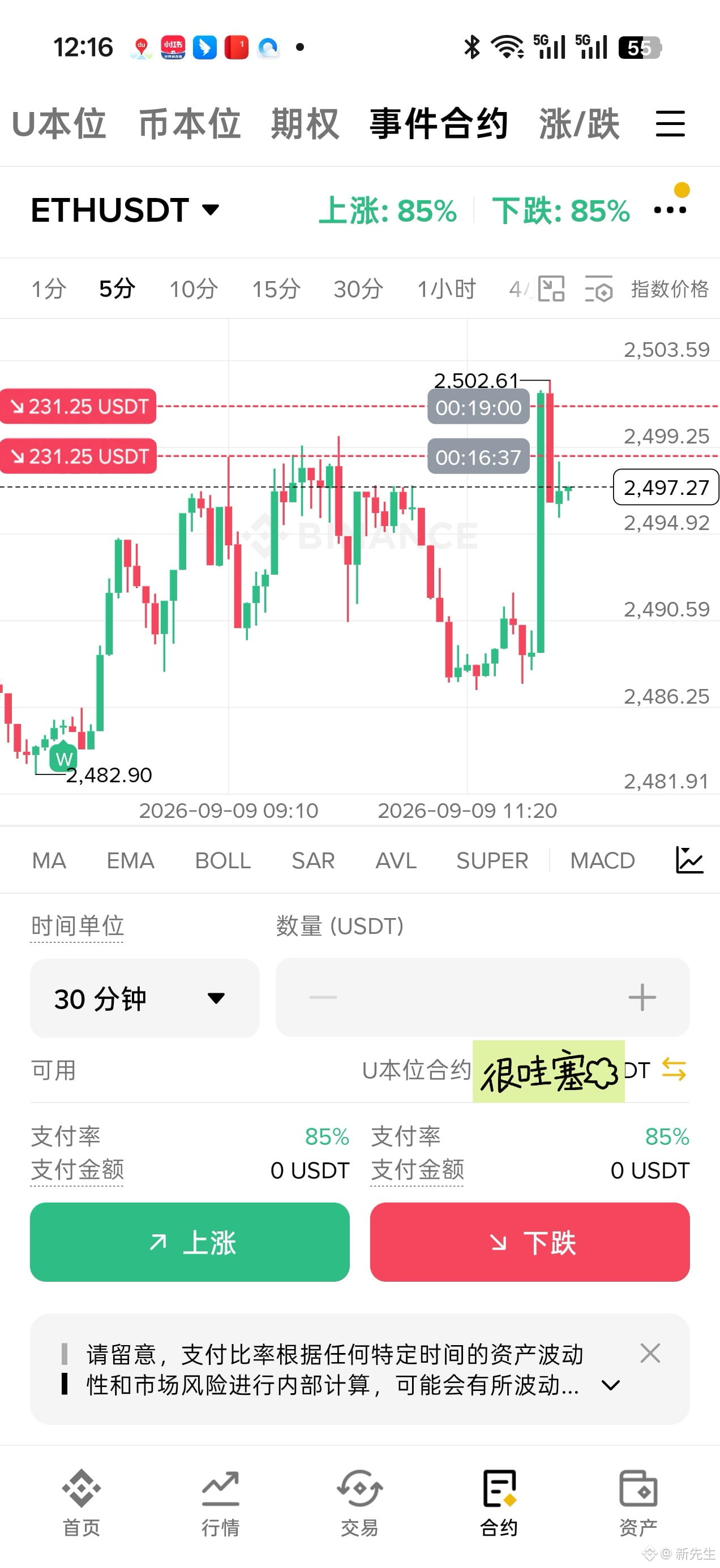
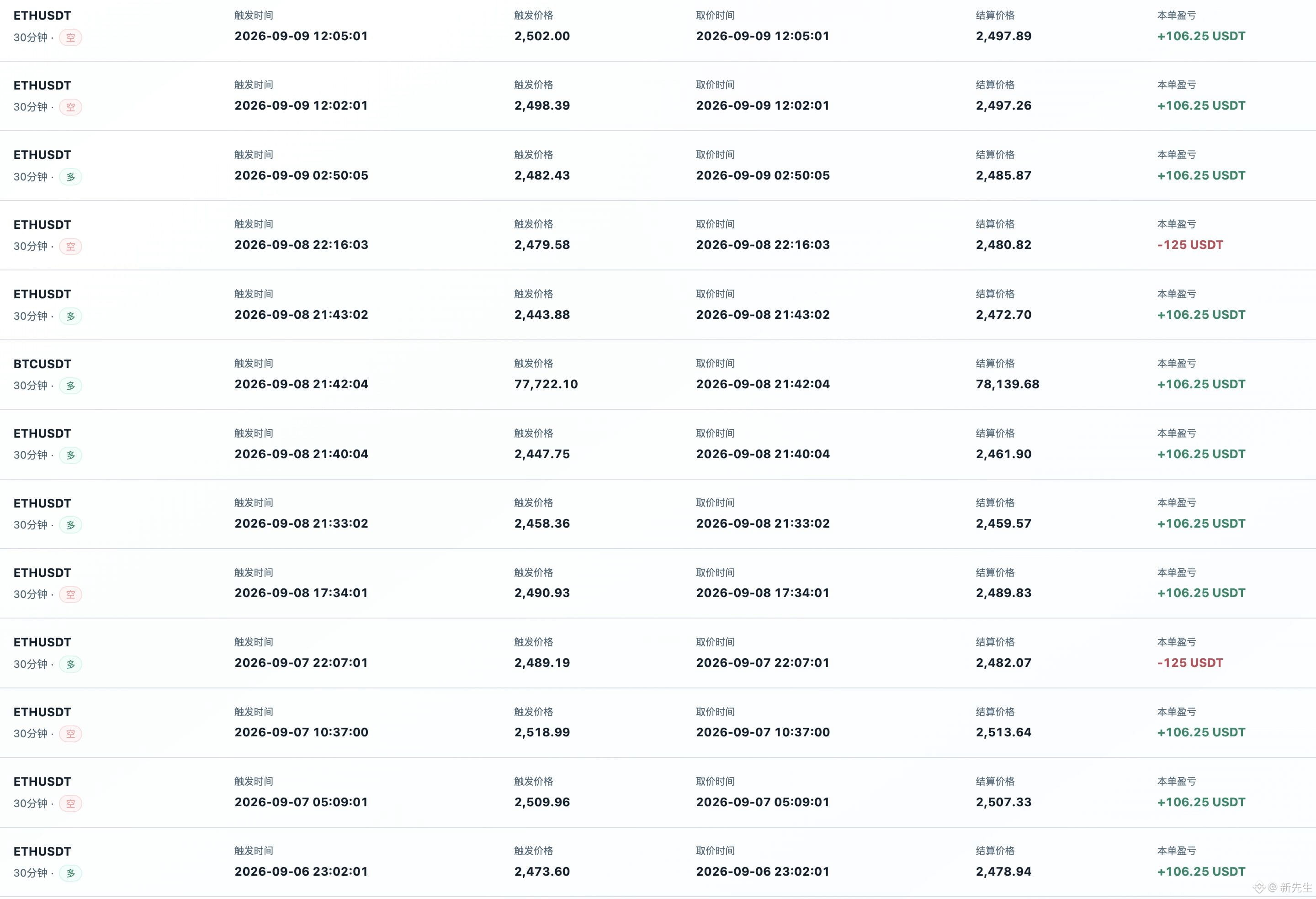
Half-hour precise prediction, right in place waterfall, ate the right stuff #事件合约
Half-hour precise prediction, right in place waterfall, ate the right stuff #事件合约
1
281
·
--
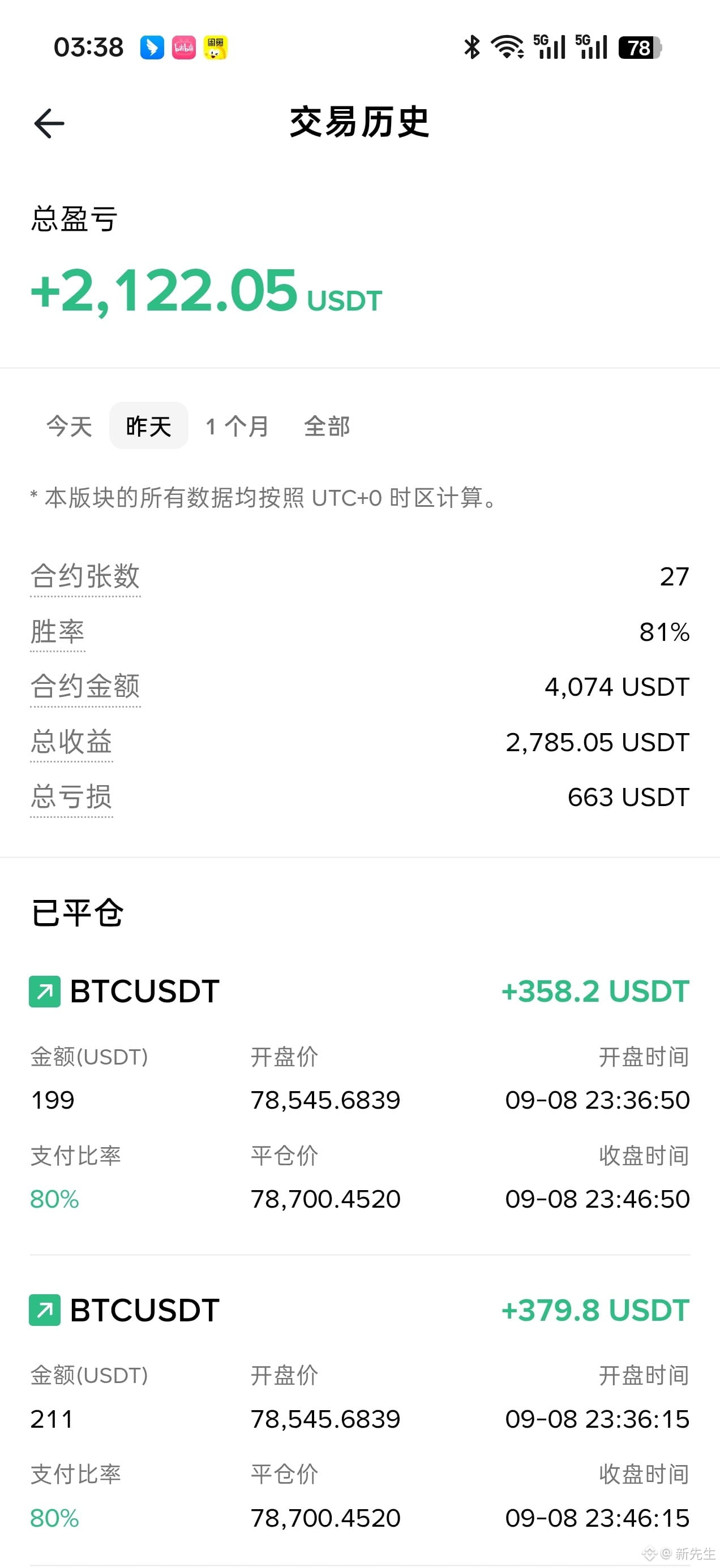
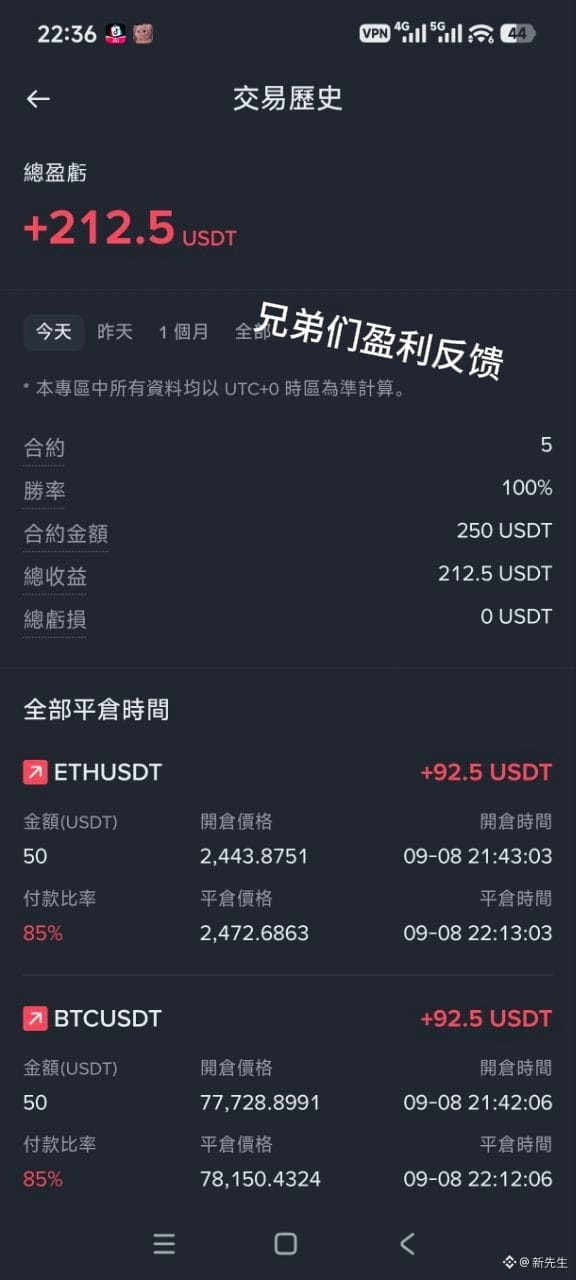
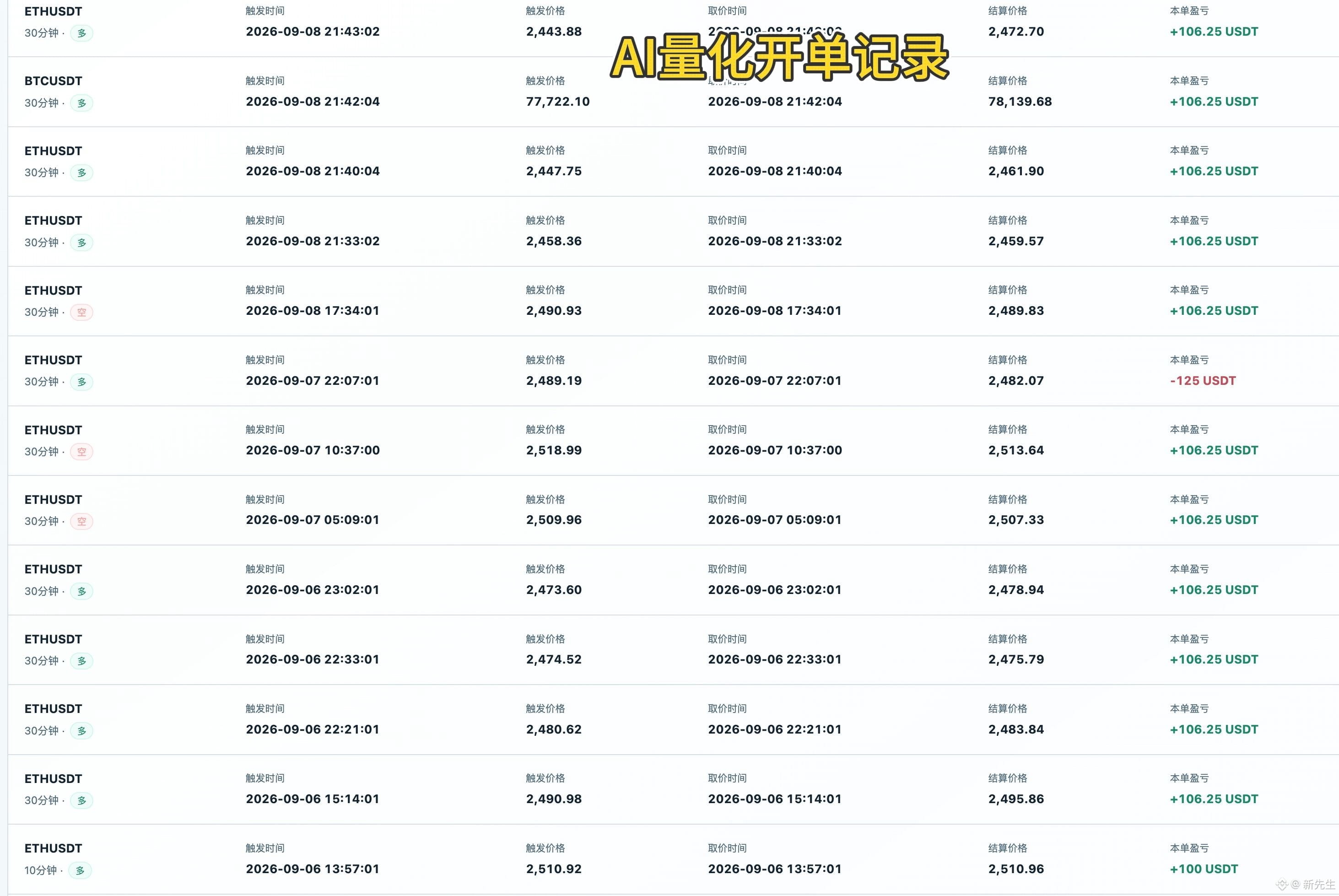
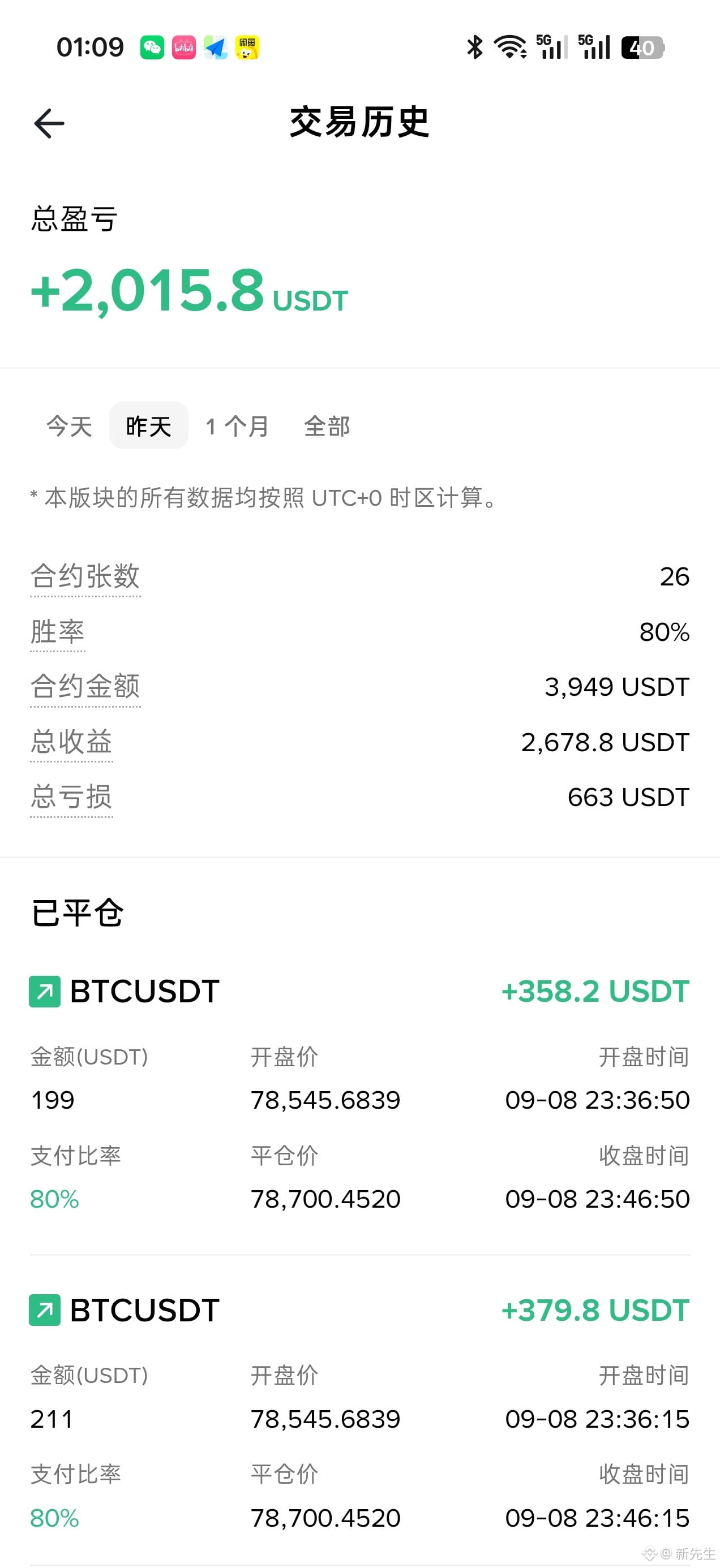
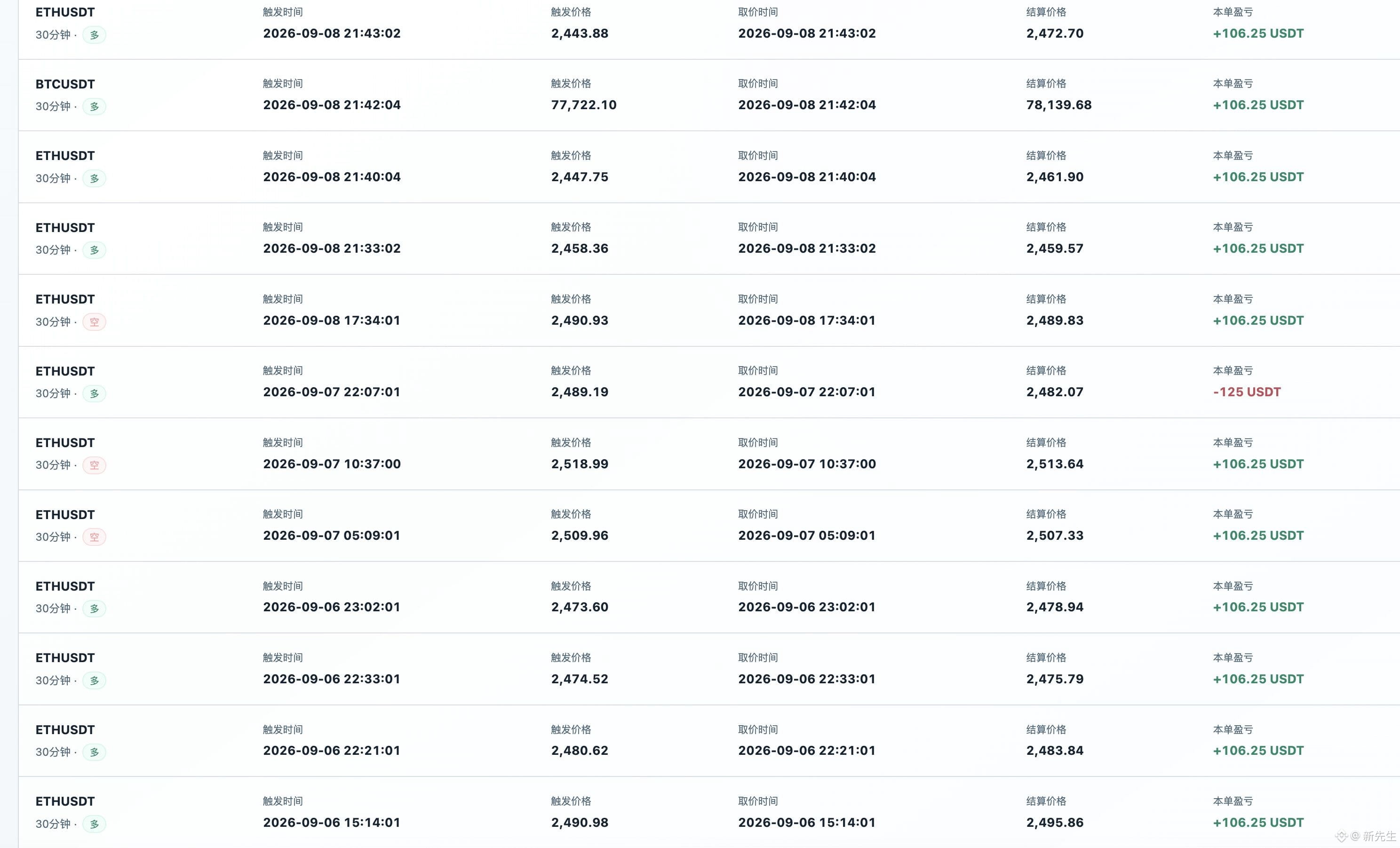
Once again, I’m amazed by my strategy and can’t sleep. The biggest fear in event contracts is a one-sided surge rally—take them all down: #事件合约
Once again, I’m amazed by my strategy and can’t sleep. The biggest fear in event contracts is a one-sided surge rally—take them all down: #事件合约
1
1
1.5k
·
--
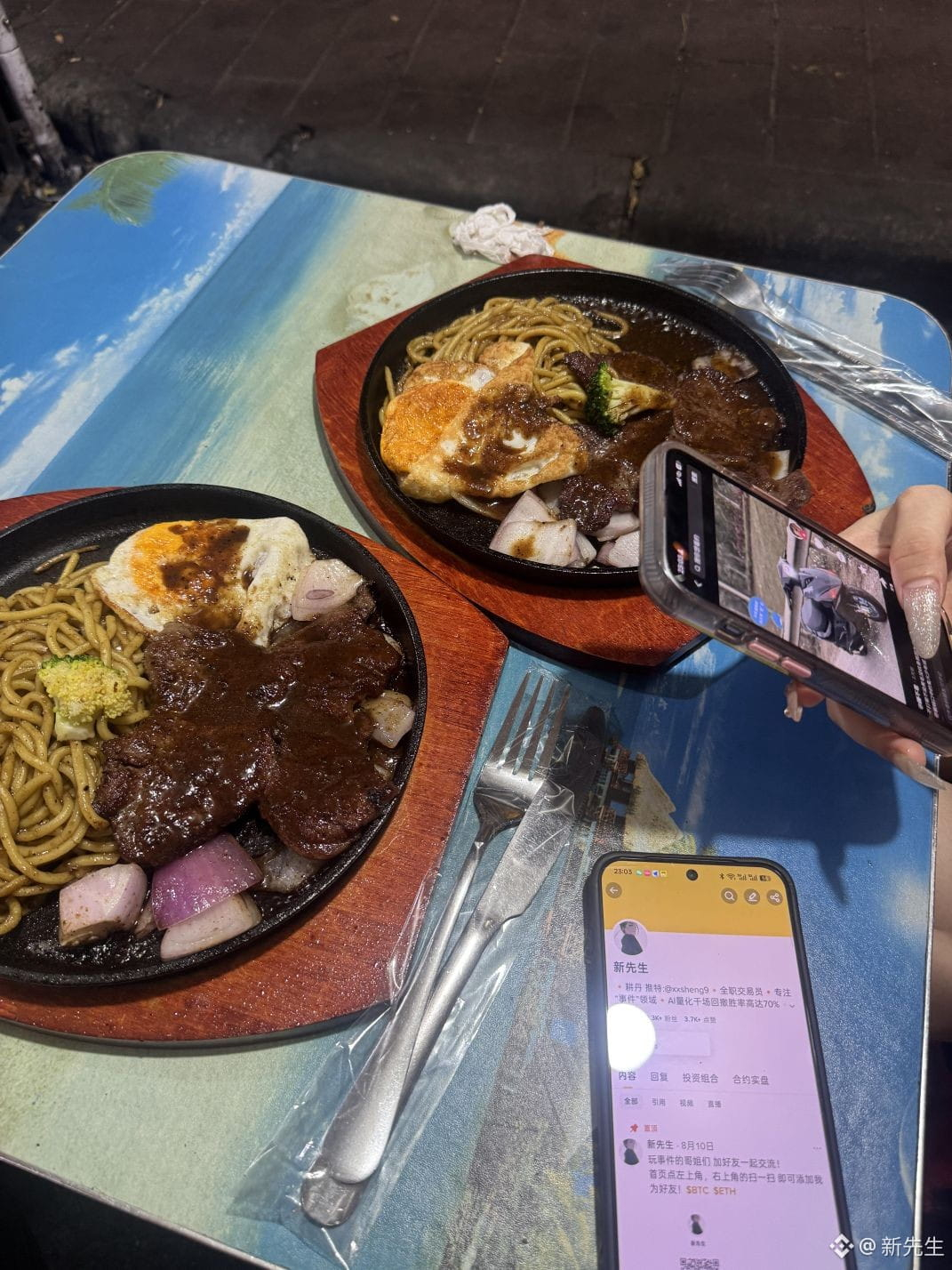
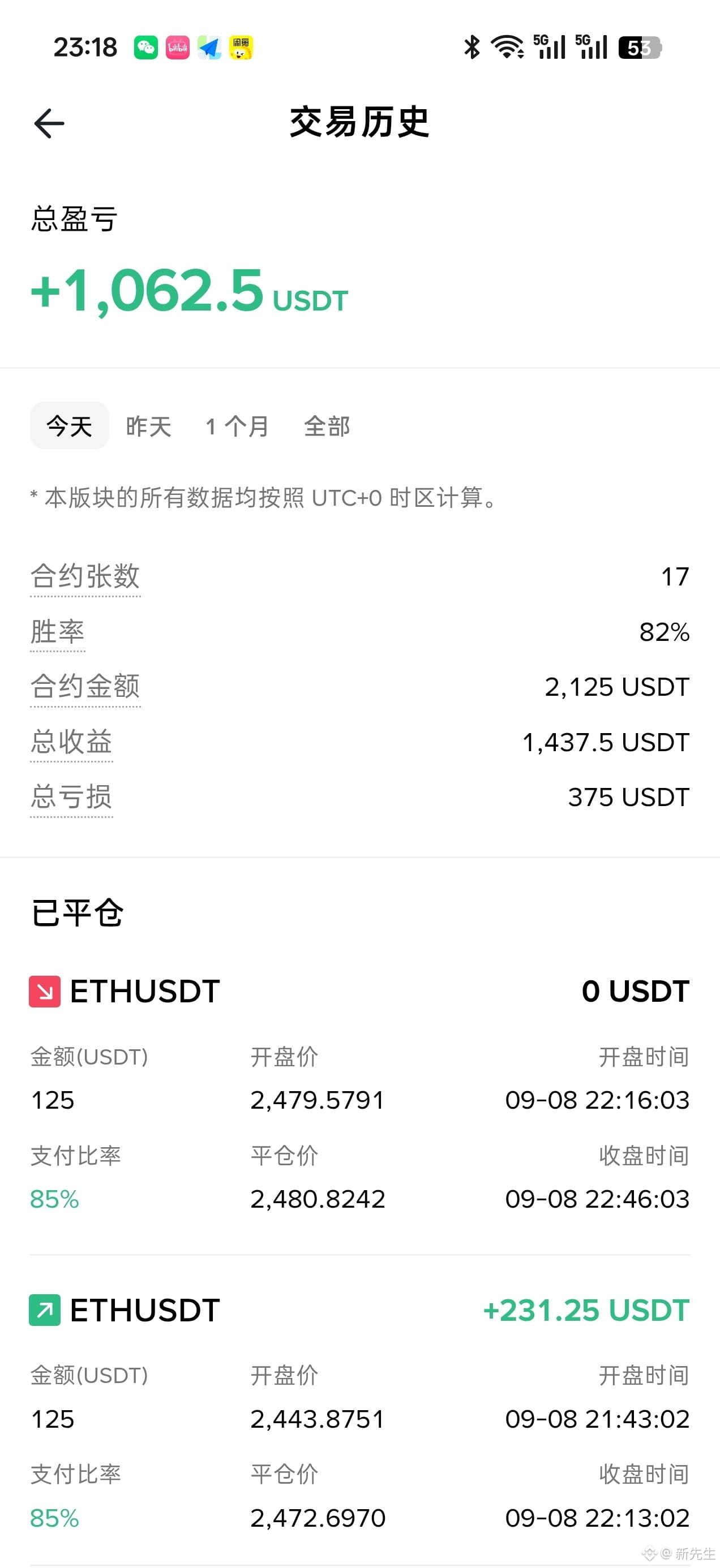
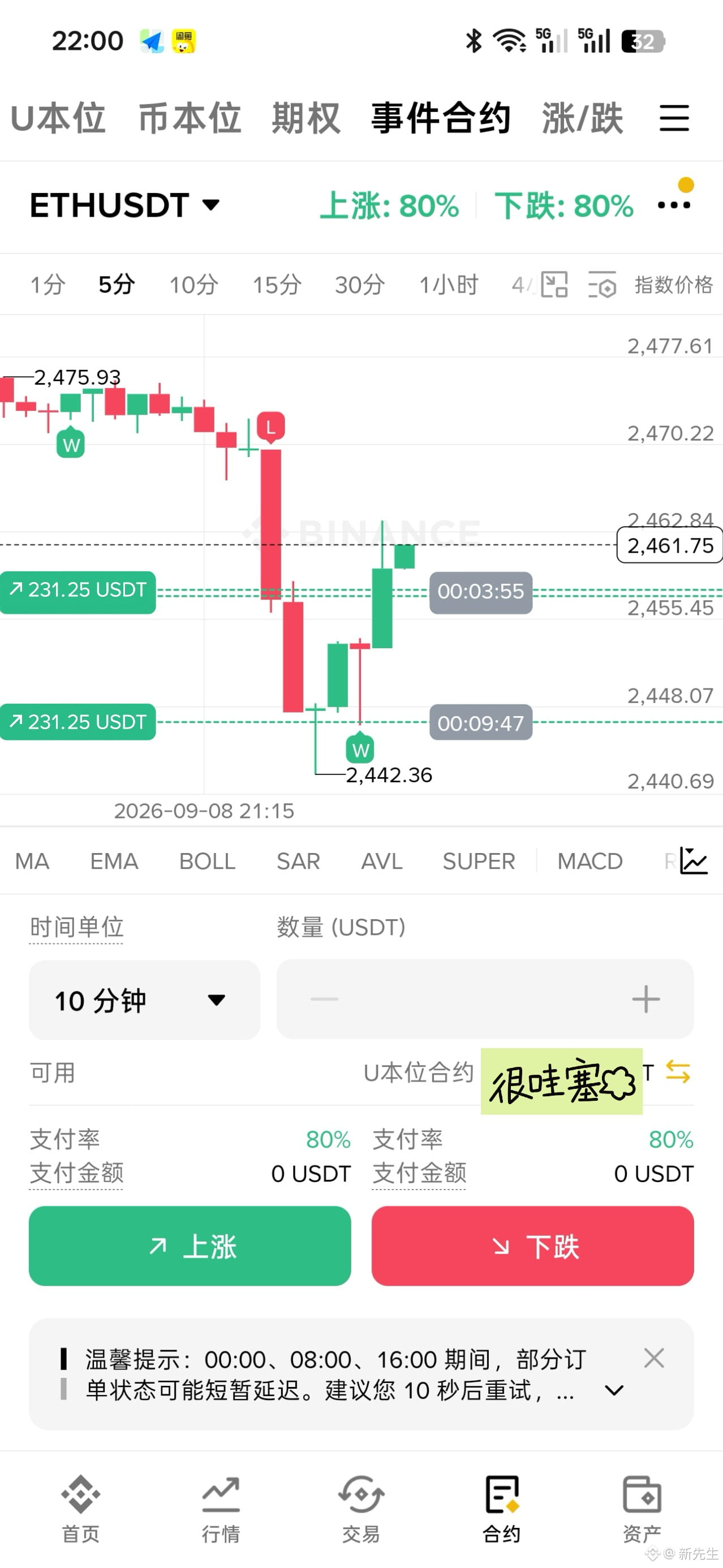
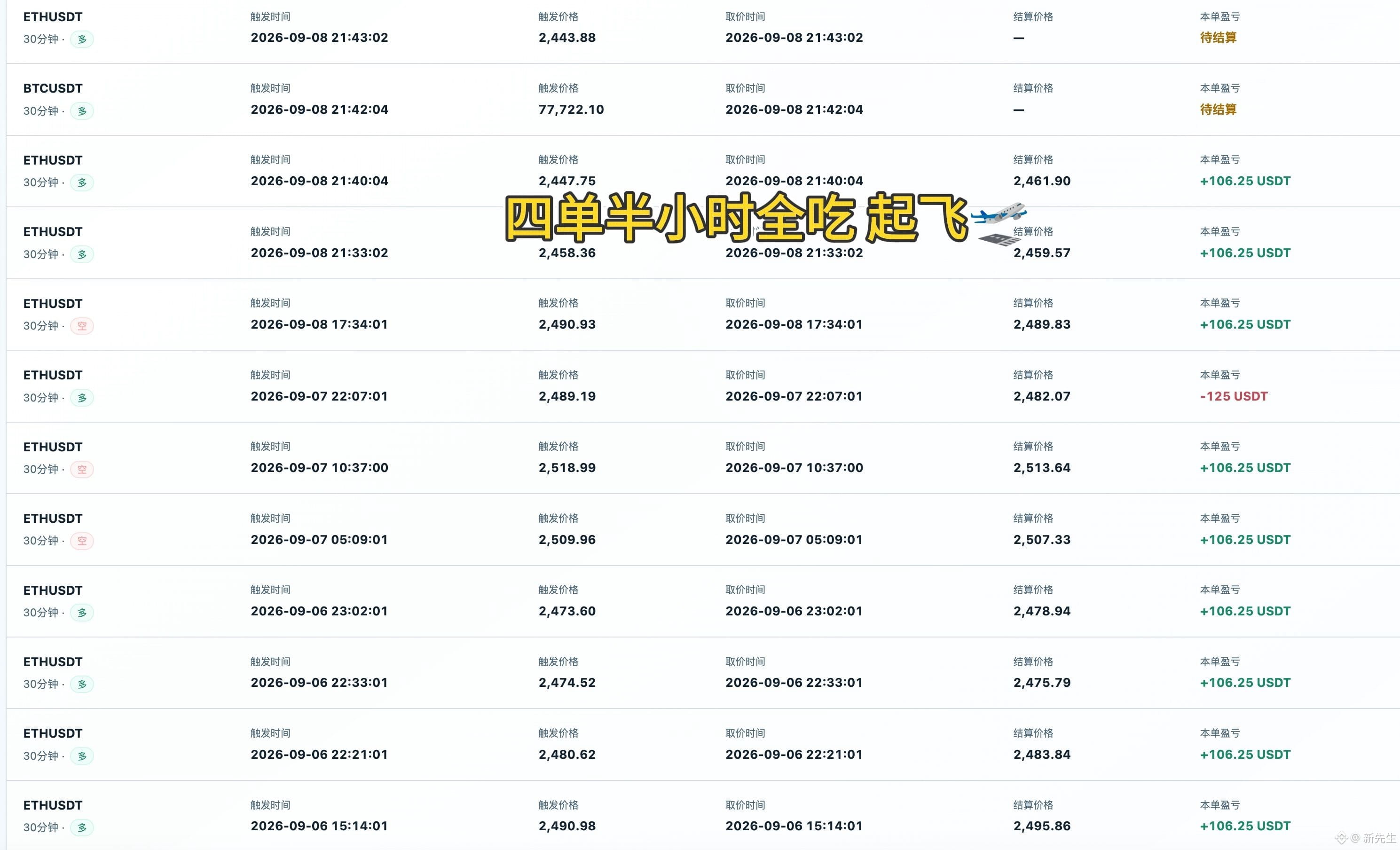
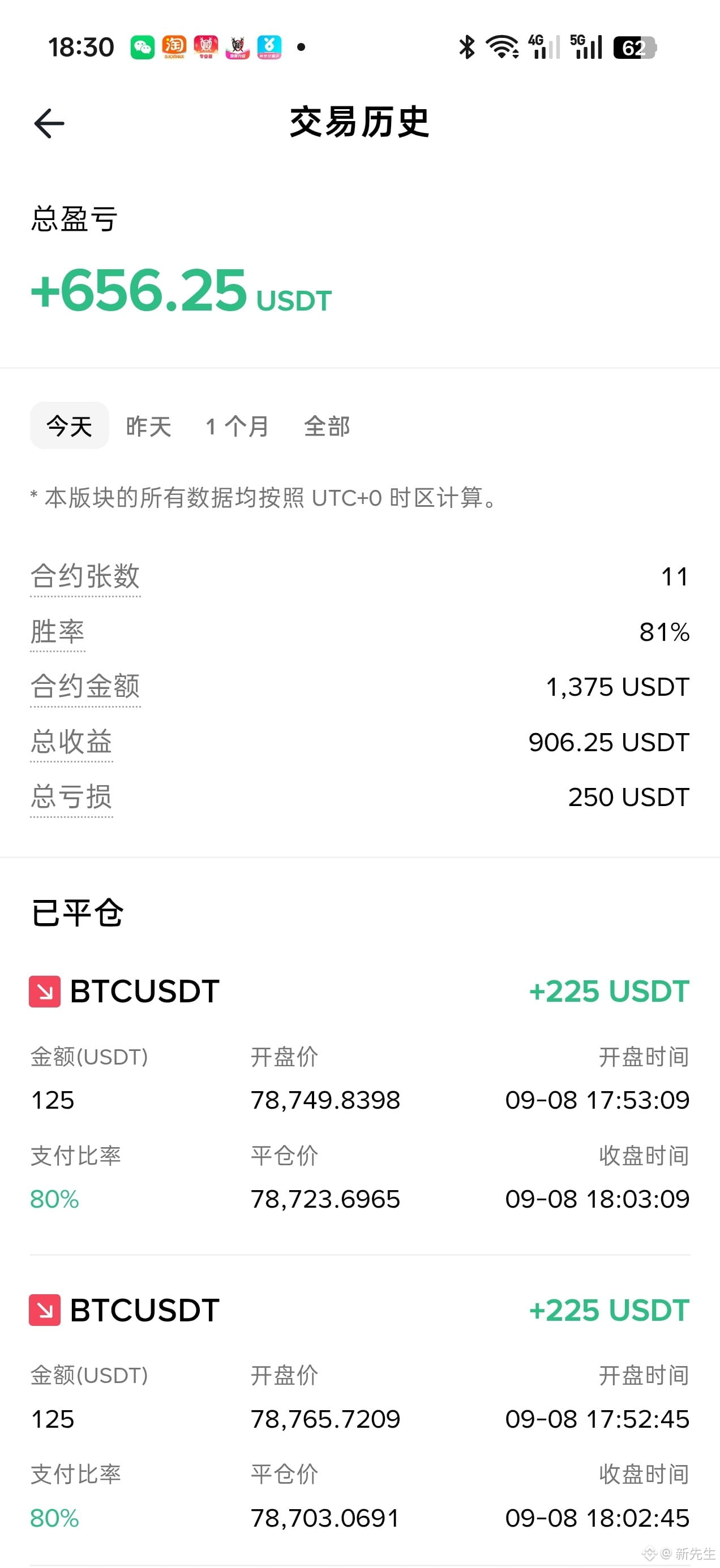
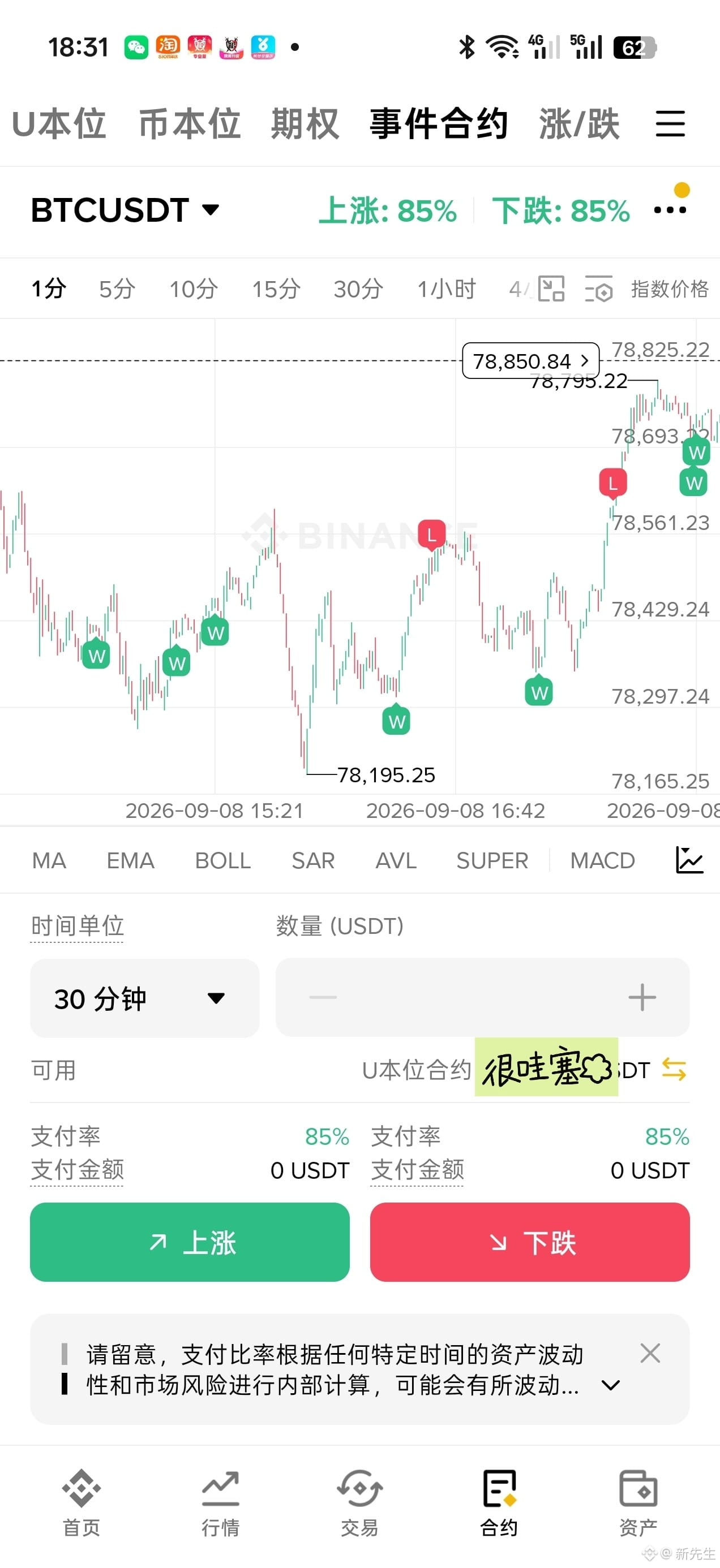
Need to work and no time to monitor the market? Quantify 24 hours of automatic recognition—set trigger levels, then just wait while you feast, so satisfying #事件合约
Need to work and no time to monitor the market? Quantify 24 hours of automatic recognition—set trigger levels, then just wait while you feast, so satisfying #事件合约
1
329
·
--
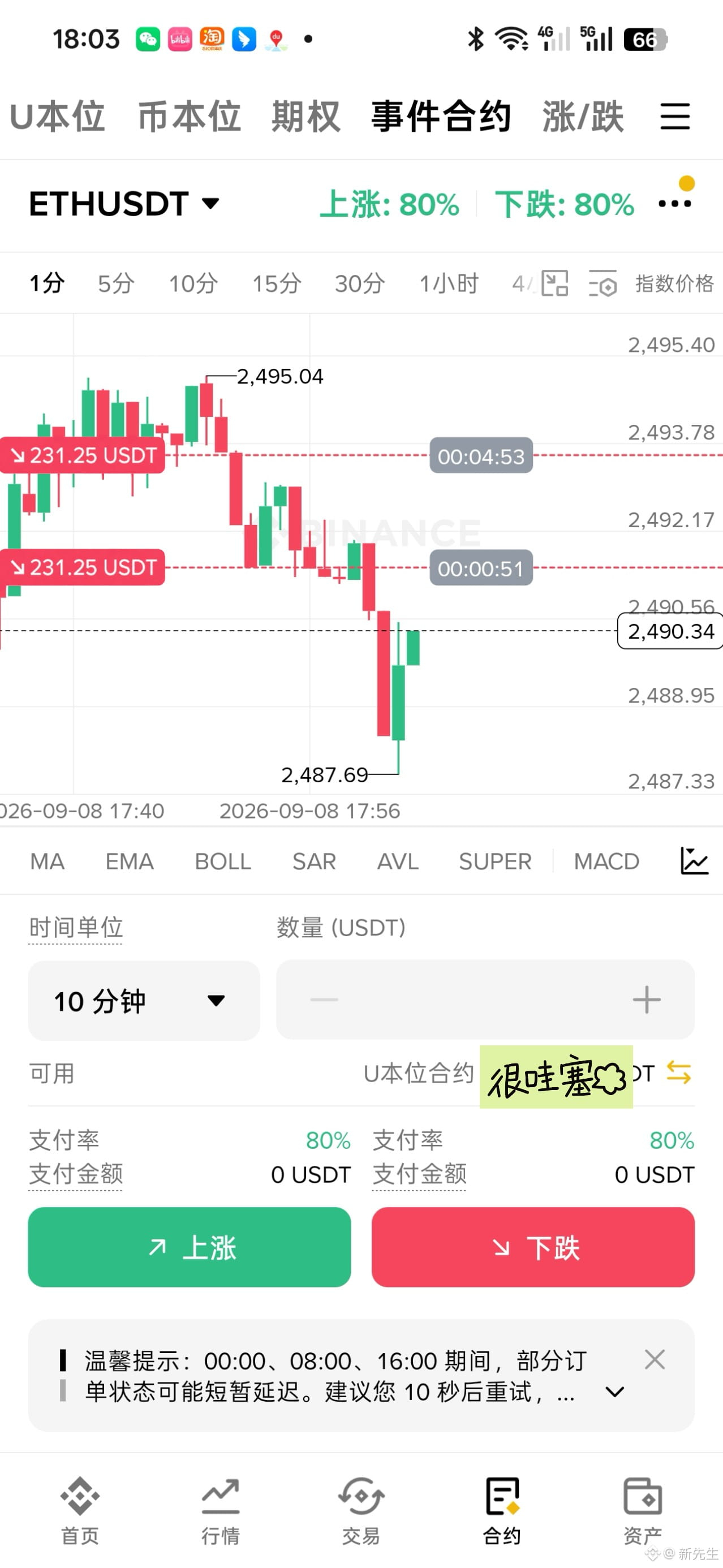
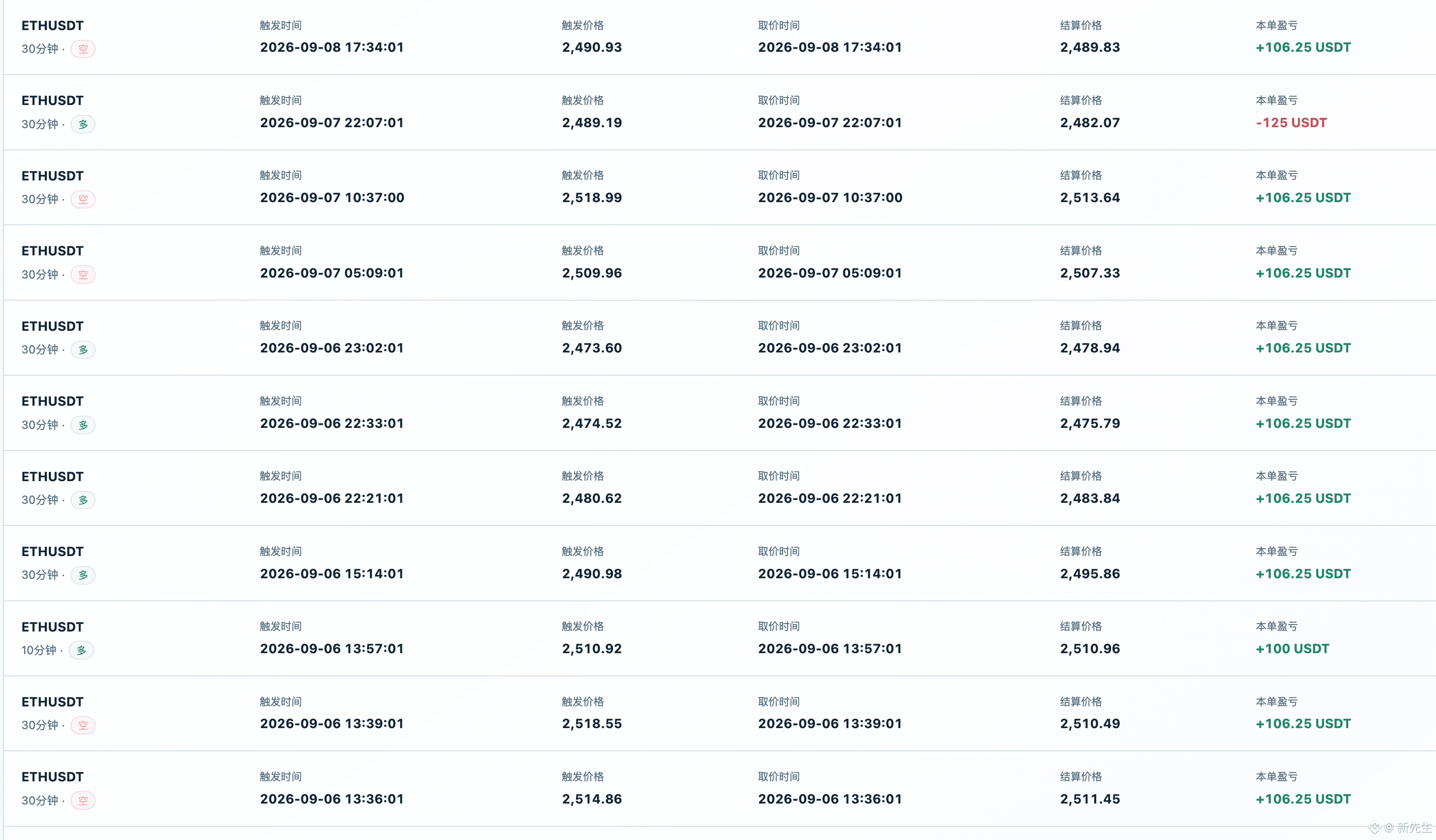
You’ve got the right idea—making a few hundred in a day is enough. Don’t even think about getting rich overnight #事件合约
You’ve got the right idea—making a few hundred in a day is enough. Don’t even think about getting rich overnight #事件合约
2
482
·
--
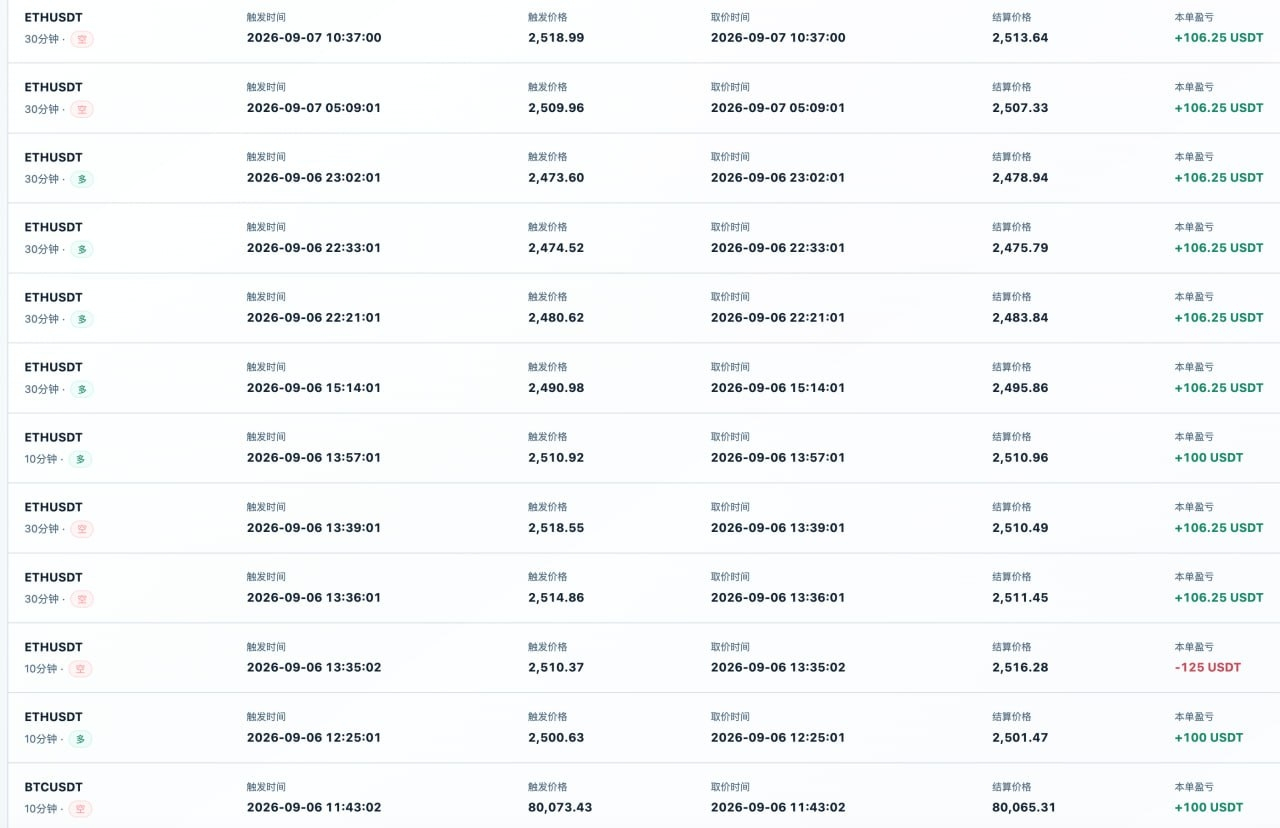
Event contract AI quantitative trading order record sharing, is this win rate amazing? #事件合约
Event contract AI quantitative trading order record sharing, is this win rate amazing? #事件合约
2
225
·
--
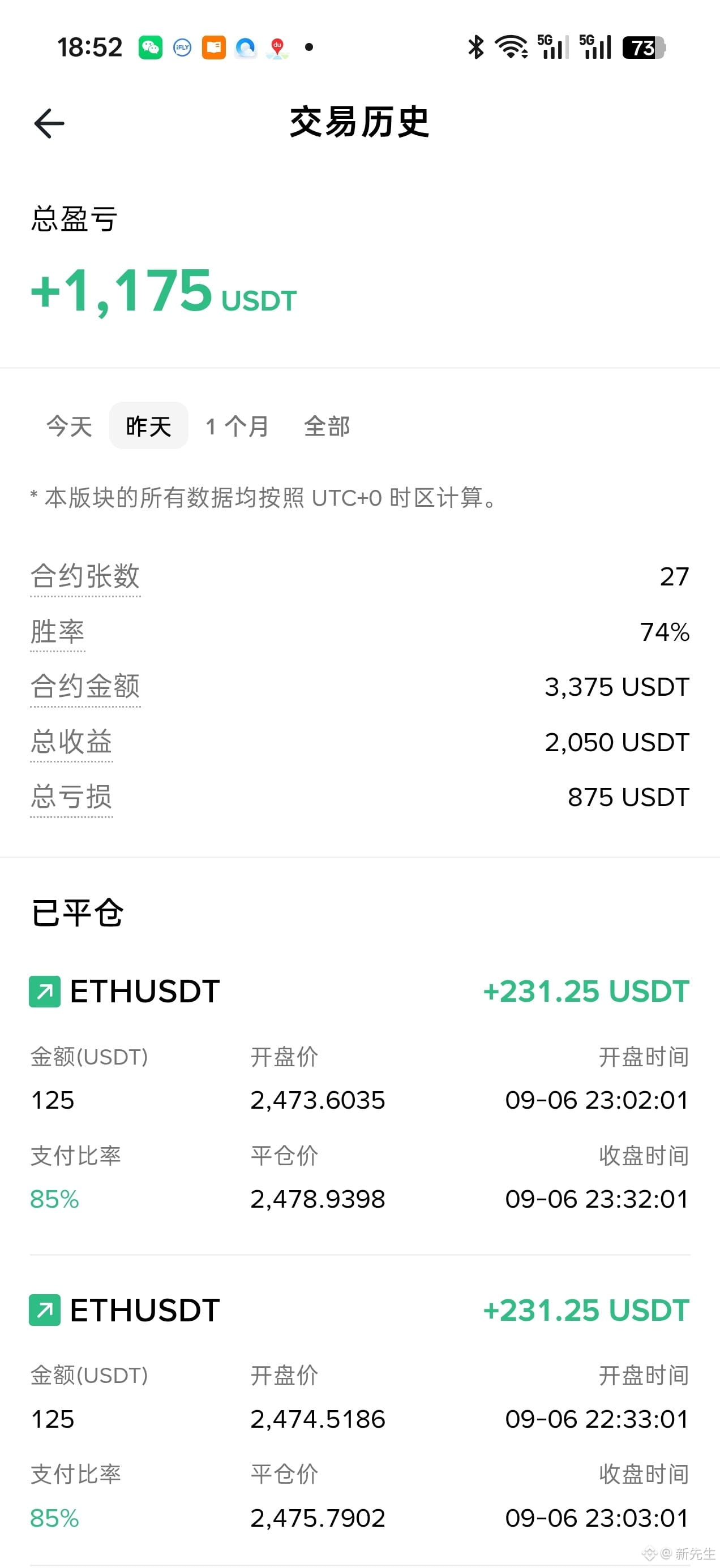
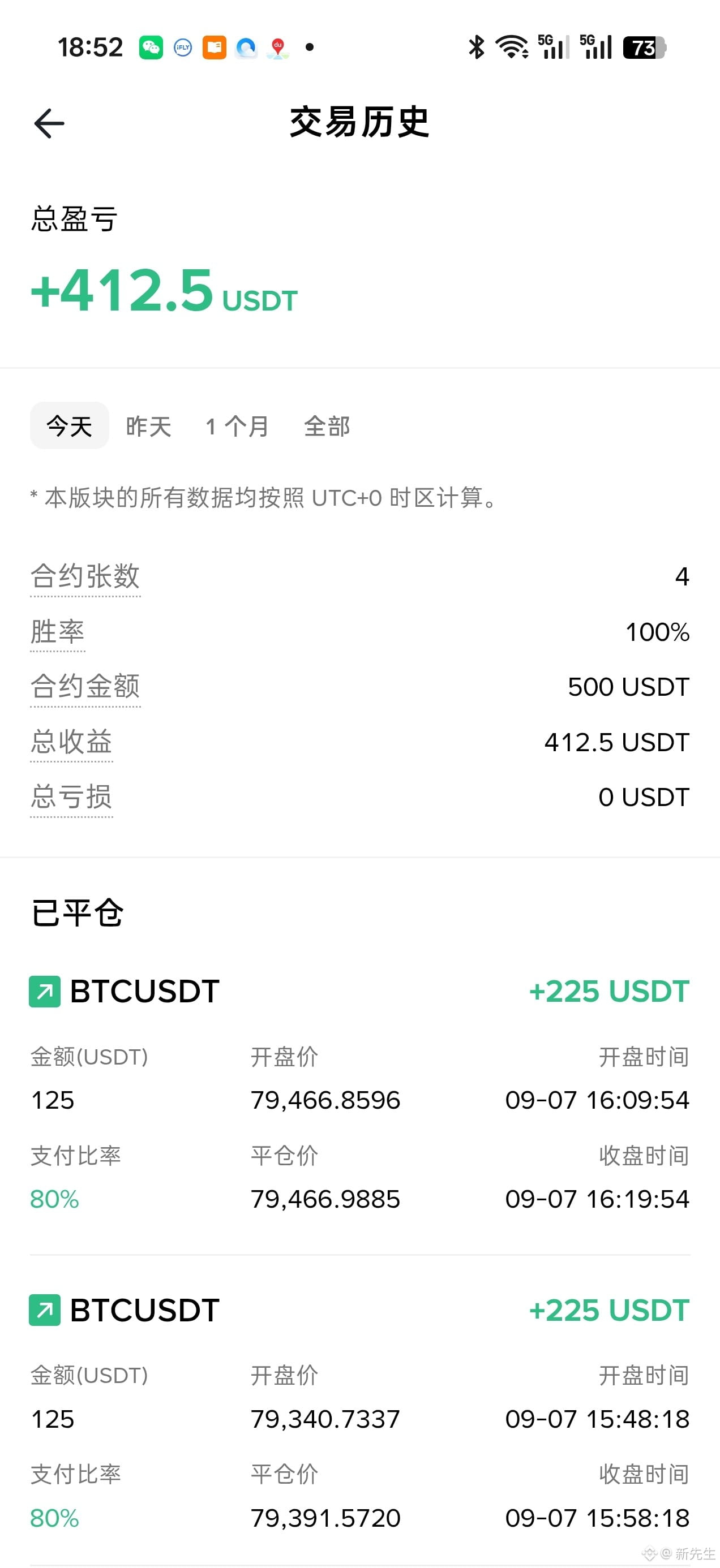
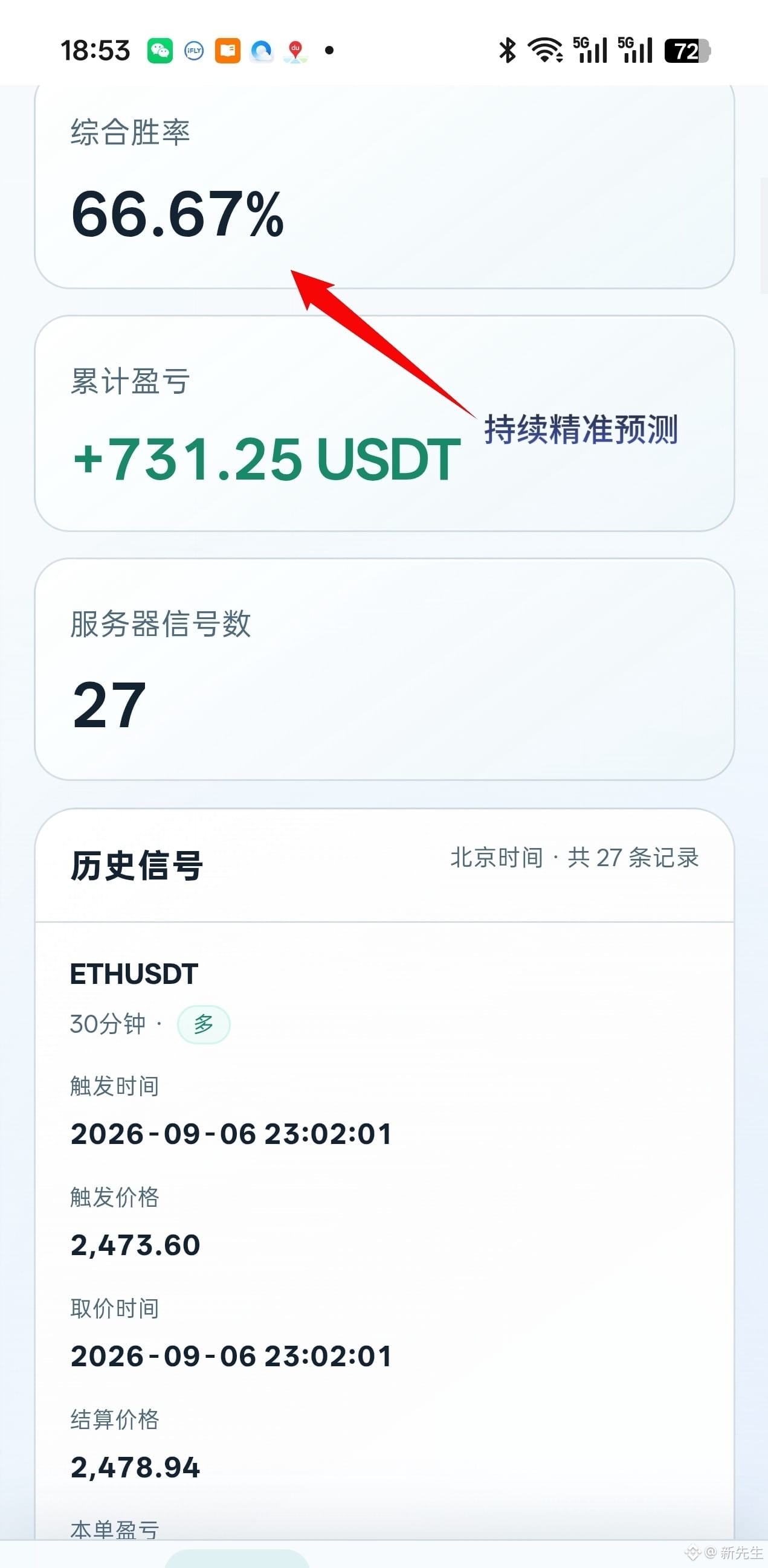
The end of AI is AGI. The end of events is quantification?#事件合约
The end of AI is AGI. The end of events is quantification?#事件合约
1
443
·
--
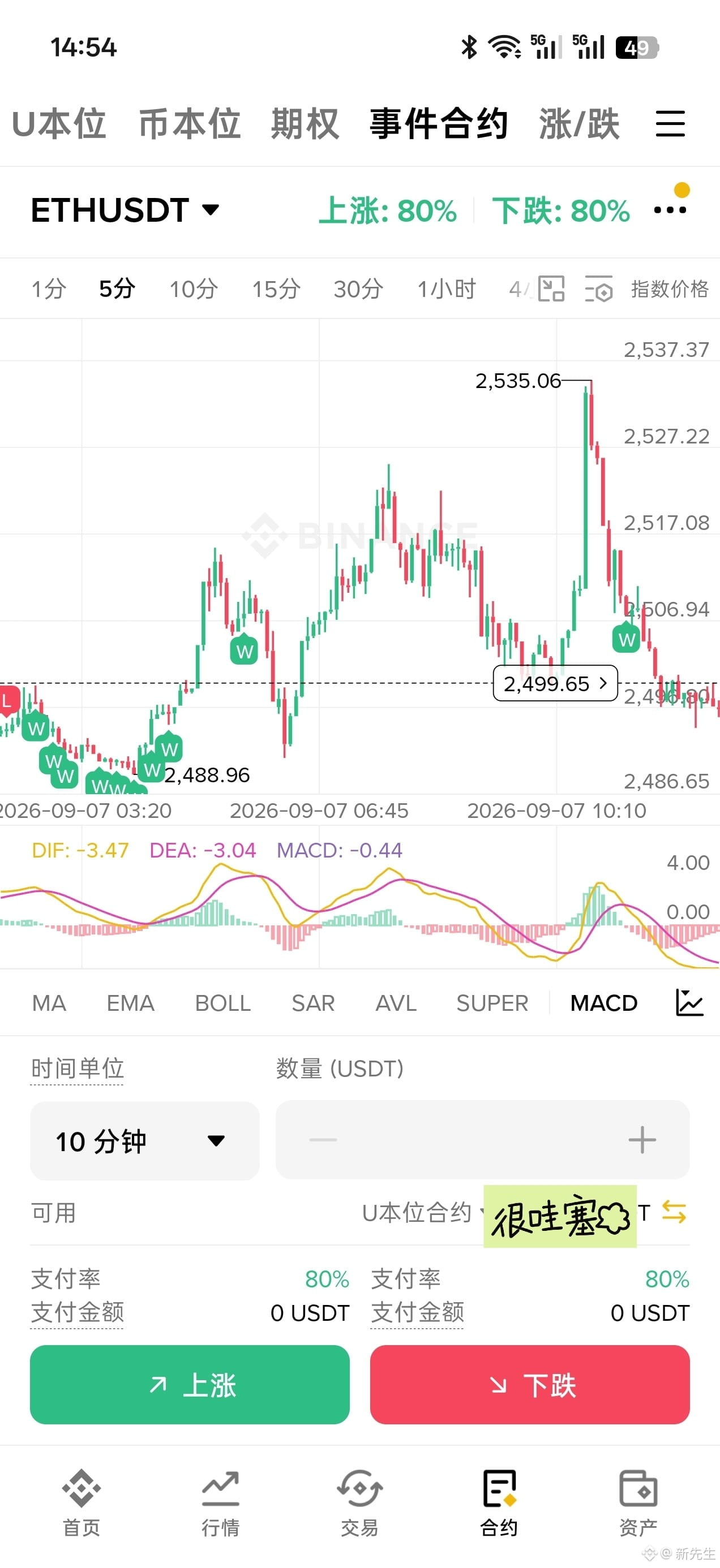
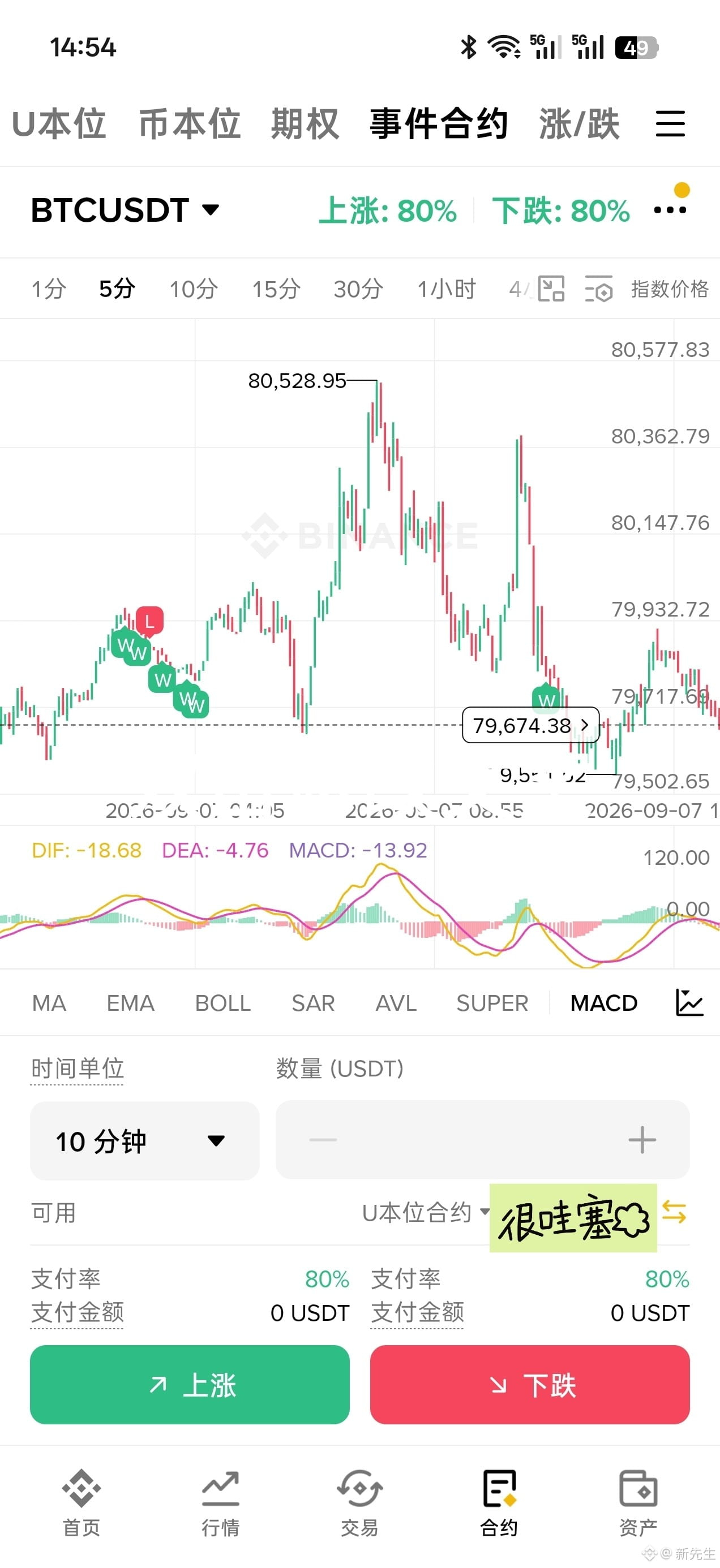
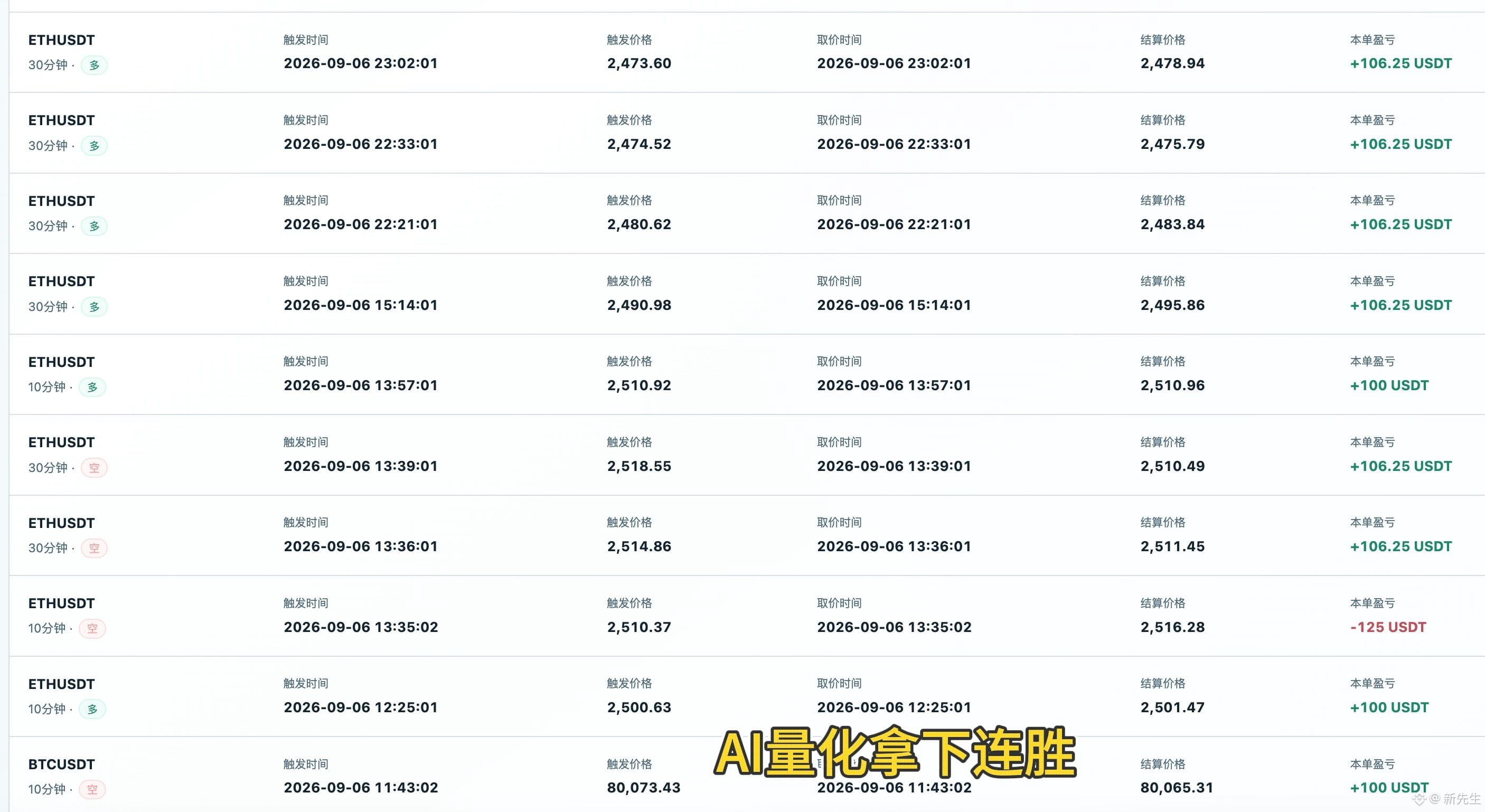
#事件合约 With the growth of AI technology, AI can help us do many things
For example, monitoring the market 24 hours a day, upgrading the original strategy, capturing factors and news sectors, and combining with a 30-minute 85% payout rate, in the long run, even break-even trading can bring pretty good returns
#事件合约 With the growth of AI technology, AI can help us do many things
For example, monitoring the market 24 hours a day, upgrading the original strategy, capturing factors and news sectors, and combining with a 30-minute 85% payout rate, in the long run, even break-even trading can bring pretty good returns
For example, monitoring the market 24 hours a day, upgrading the original strategy, capturing factors and news sectors, and combining with a 30-minute 85% payout rate, in the long run, even break-even trading can bring pretty good returns
1
268
·
--
1
1
279
Log in to explore more content
Join global crypto users on Binance Square
⚡️ Get latest and useful information about crypto.
💬 Trusted by the world’s largest crypto exchange.
👍 Discover real insights from verified creators.
Email / Phone number
Trending Topics
AppleDebutsFoldablePhone
14,913 views
323 Discussing
Apple just dropped the foldable iPhone — and the market is paying attention. This isn't just another product cycle; it's a new product category, a new CEO on stage, and a $1,999 price tag that pushes $AAPL further into ultra-premium territory. Foldables are the narrative, and Apple is now the headline.
#appledebutsfoldablephone #EUExtendsCentralContactPointToCASPs #US10YTreasuryYieldHitsHighestSinceNov2023 #BrentCrudeTops$100 #USTreasuryToBuyBackUpTo$6BLongDatedDebt
KimHotbae
·0 Likes
·1.1k views
EUExtendsCentralContactPointToCASPs
1,882 views
83 Discussing
US10YTreasuryYieldHitsHighestSinceNov2023
17,212 views
306 Discussing