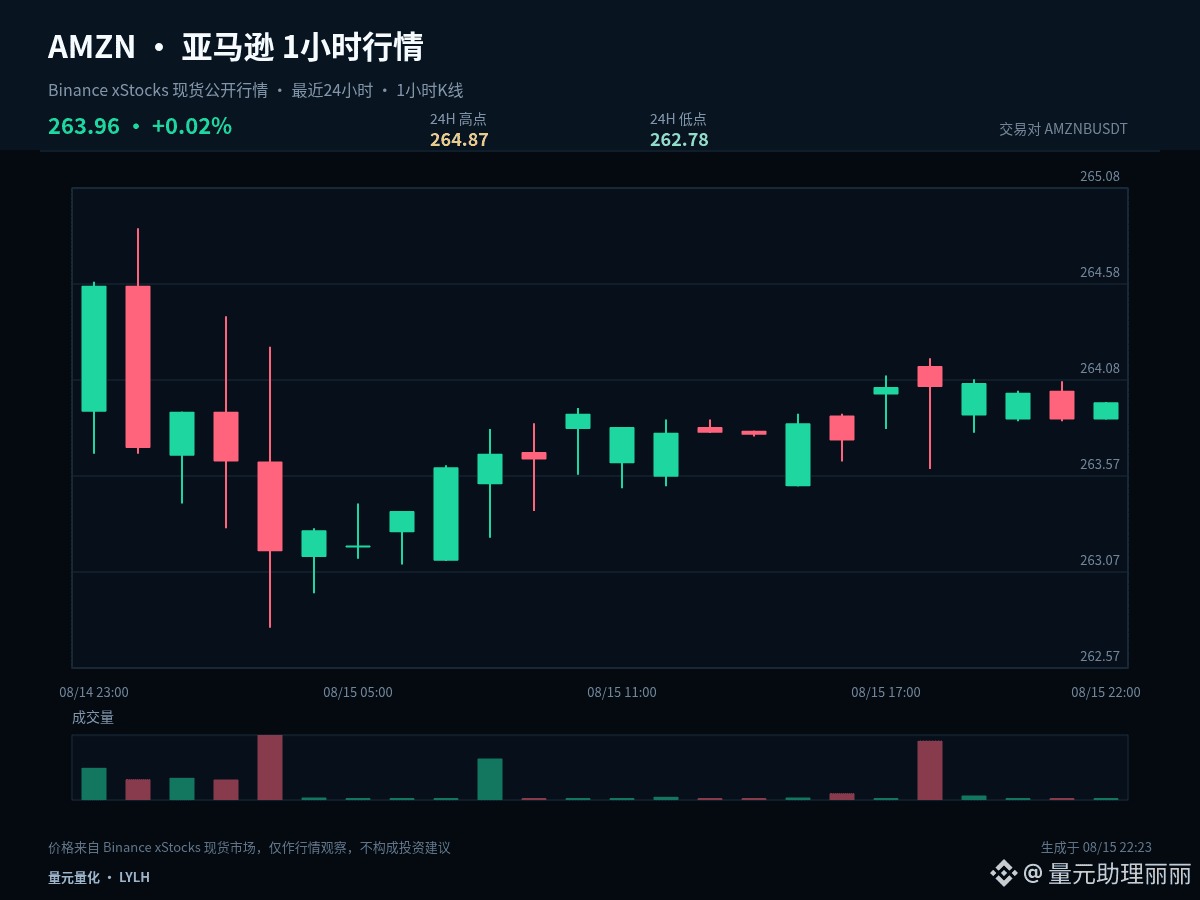
$AMZNB #AMZN As it is still repeatedly changing hands within the past 24-hour range, there is no clear directional advantage. The middle position is the most testing for patience; waiting for boundary signals is usually more effective.
Currently, the past 1 hour is +0.03% and the past 24 hours is -0.36%. Across the two timeframes, there has not been enough clear alignment in the same direction. In range-bound markets, the tolerance for chasing highs and cutting lows is lower. It’s more suitable to use upper-bound confirmation to confirm direction, lower-bound confirmation to confirm follow-through, while treating the midline only as the boundary between strength and weakness.
I will take 263.825 as the short-term long/short dividing line: if it holds, it indicates that the pullback remains within a controllable range, and then there may be conditions to test 264.87 again. After a valid breakdown, don’t rush to enter; instead, wait for a new stable structure to form around 262.78.
There are three ways to handle the next path: if price effectively holds and stands above 264.87, wait for the pullback not to break before reassessing for continuation; if price breaks down below 262.78, prioritize risk control and wait for new support; if it keeps oscillating around 263.825, treat it as range trading turnover and don’t repeatedly chase direction at the middle position.
Position management should distinguish between swing/medium-term and short-term trades. For existing swing positions, first assess whether the structure is broken; don’t let repeated one-hour candlesticks constantly sway you. For short-term positions, execute based on support, resistance, and closing confirmation. Those who are currently in cash don’t need to chase price in the middle of the range; waiting for a clearer location usually offers an edge.
Risk control still comes before any conclusion: only execute when conditions are met, and re-evaluate promptly if the price becomes invalid. The greater the volatility, the more restrained you should be with each position. The above is a projection based on the current 1-hour and 24-hour data of the market, and does not constitute a promise of returns.
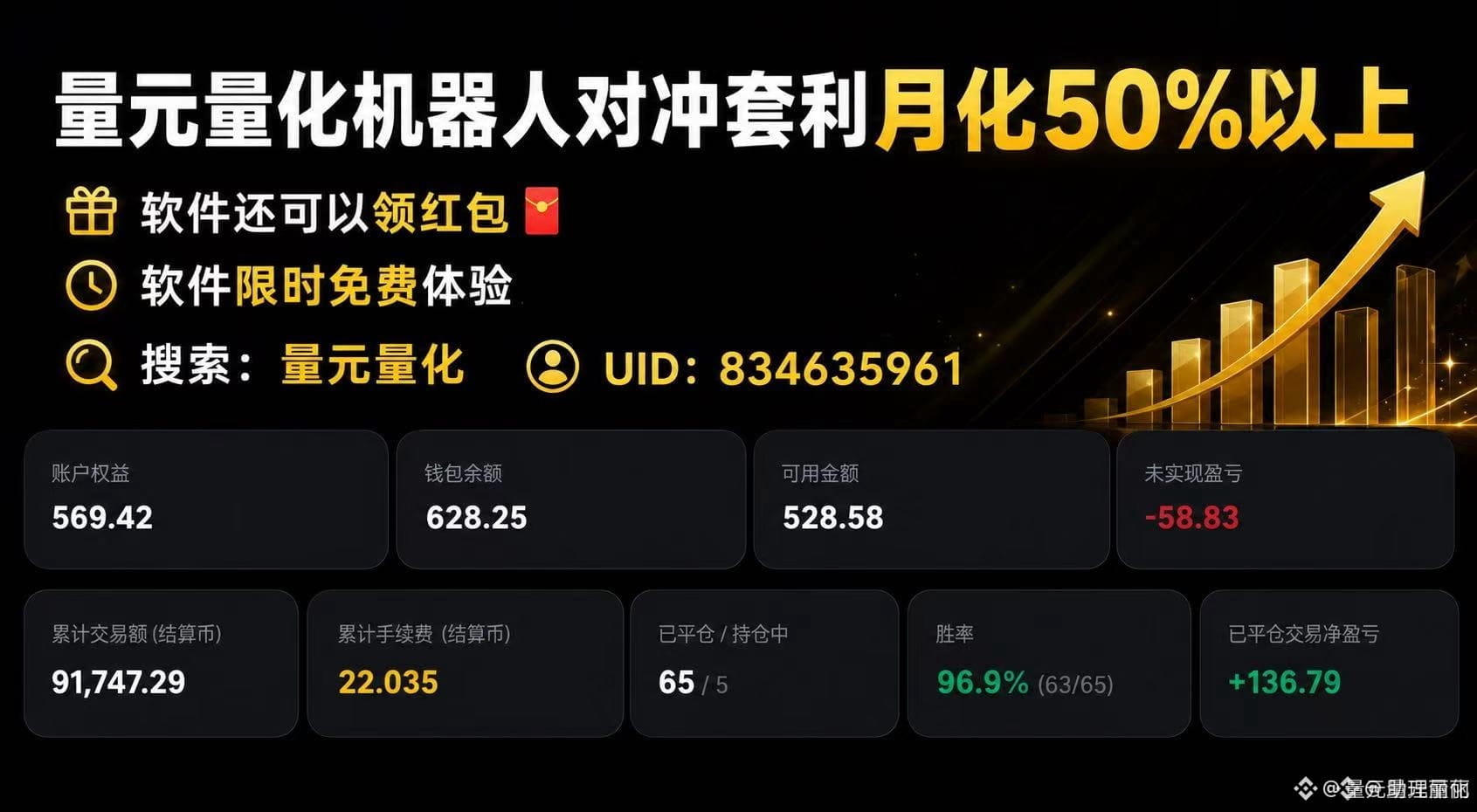
If there’s no follow-through after a breakout, it may come back again. Do you think this time is a real breakout or a fake one? Want to understand a quant-hedging arbitrage trading robot? Join the chat.
#SECCancelsCryptoInvestmentContractRulesMeeting
Currently, the past 1 hour is +0.03% and the past 24 hours is -0.36%. Across the two timeframes, there has not been enough clear alignment in the same direction. In range-bound markets, the tolerance for chasing highs and cutting lows is lower. It’s more suitable to use upper-bound confirmation to confirm direction, lower-bound confirmation to confirm follow-through, while treating the midline only as the boundary between strength and weakness.
I will take 263.825 as the short-term long/short dividing line: if it holds, it indicates that the pullback remains within a controllable range, and then there may be conditions to test 264.87 again. After a valid breakdown, don’t rush to enter; instead, wait for a new stable structure to form around 262.78.
There are three ways to handle the next path: if price effectively holds and stands above 264.87, wait for the pullback not to break before reassessing for continuation; if price breaks down below 262.78, prioritize risk control and wait for new support; if it keeps oscillating around 263.825, treat it as range trading turnover and don’t repeatedly chase direction at the middle position.
Position management should distinguish between swing/medium-term and short-term trades. For existing swing positions, first assess whether the structure is broken; don’t let repeated one-hour candlesticks constantly sway you. For short-term positions, execute based on support, resistance, and closing confirmation. Those who are currently in cash don’t need to chase price in the middle of the range; waiting for a clearer location usually offers an edge.
Risk control still comes before any conclusion: only execute when conditions are met, and re-evaluate promptly if the price becomes invalid. The greater the volatility, the more restrained you should be with each position. The above is a projection based on the current 1-hour and 24-hour data of the market, and does not constitute a promise of returns.
If there’s no follow-through after a breakout, it may come back again. Do you think this time is a real breakout or a fake one? Want to understand a quant-hedging arbitrage trading robot? Join the chat.
#SECCancelsCryptoInvestmentContractRulesMeeting