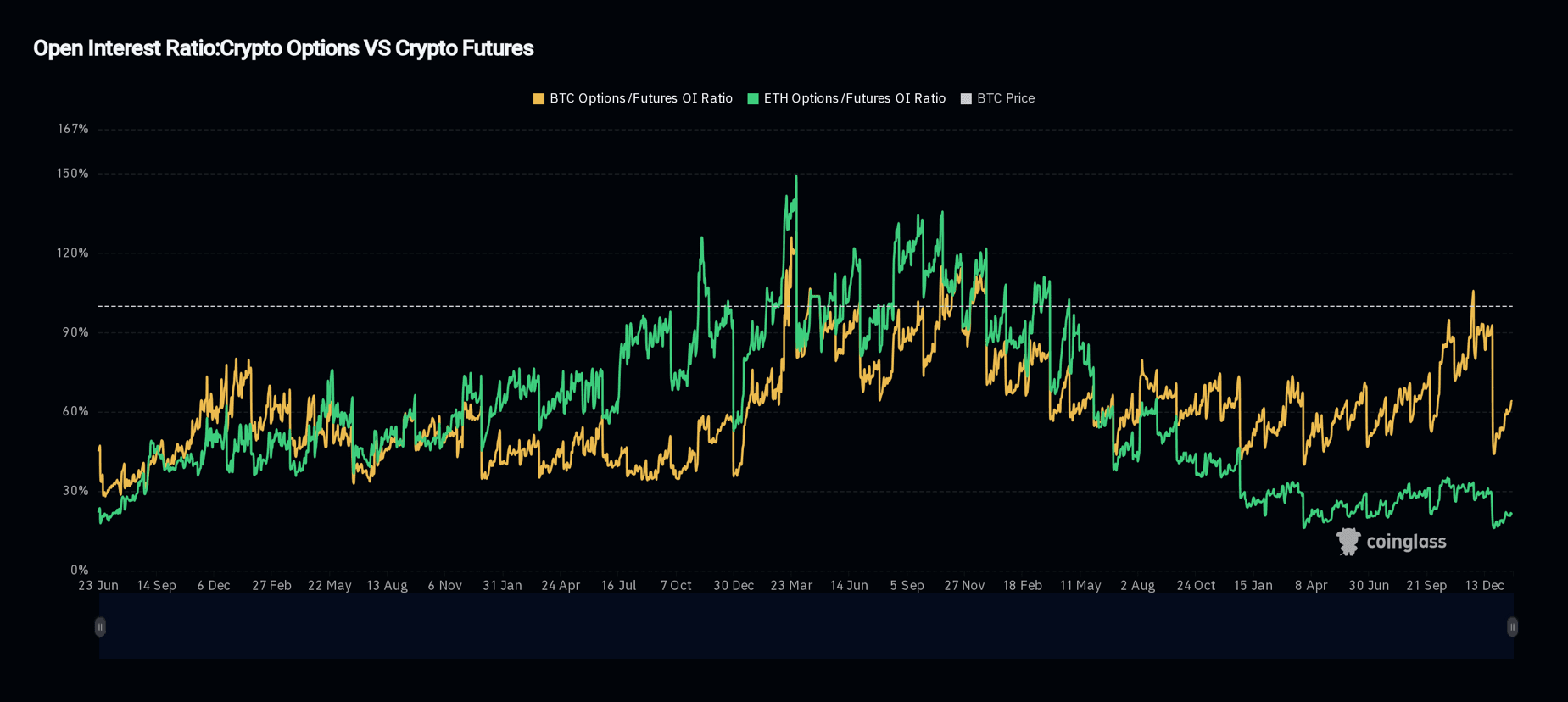
Market volatility seems to be compressed by an invisible hand, and the price range is gradually converging. For many participants, this calm quietly transforms into a false sense of security.
But if you observe deeply—not by staring at the candlestick chart, but by analyzing the options structure—you will find a completely different picture.
What we are witnessing at this moment is not stability supported by confidence, but mechanical stability.
Market stability relies on structure, not belief
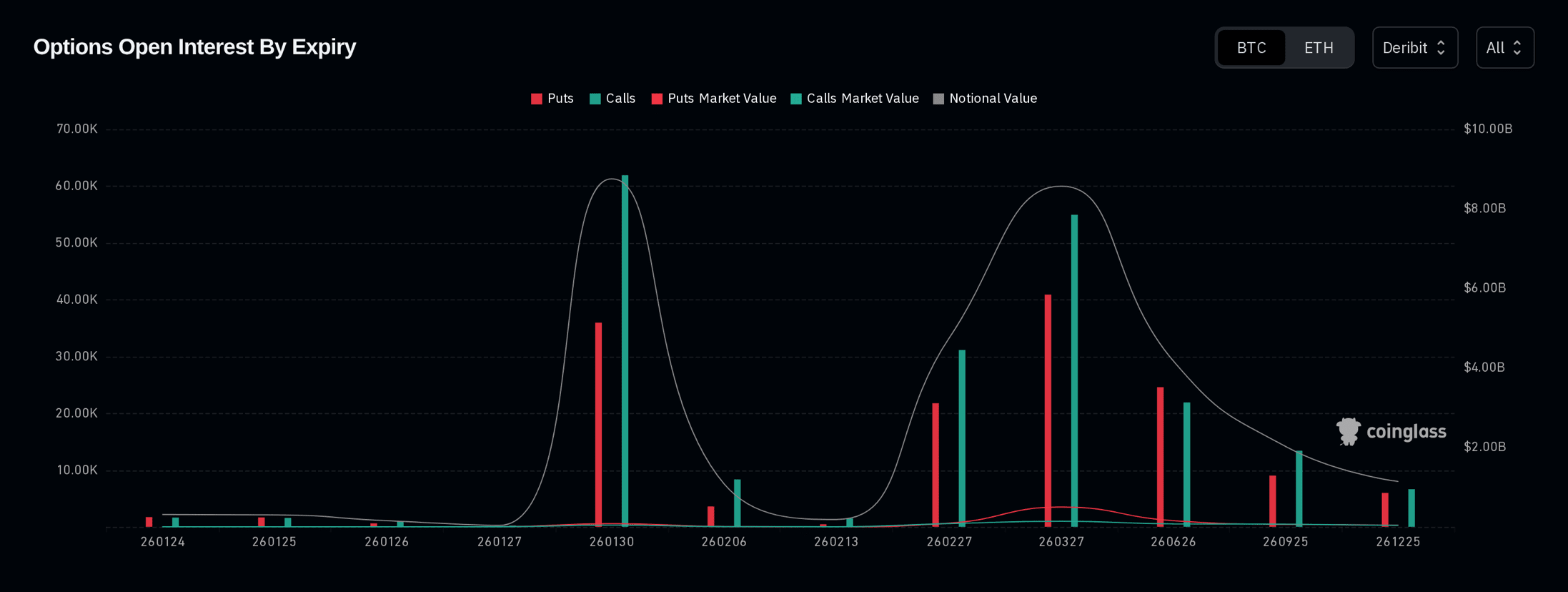
In the options contracts expiring on January 30, the open positions are highly concentrated in two major areas:
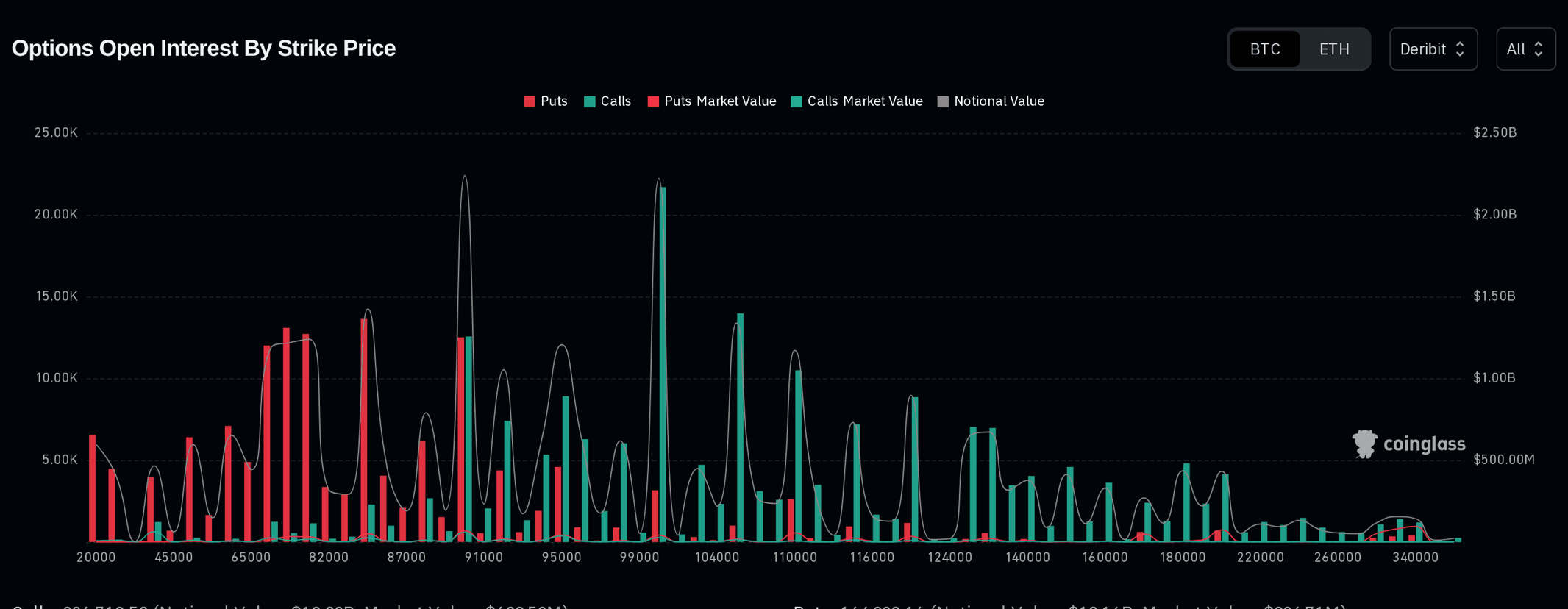
Downside protection: concentrated put options around $85,000;
Upward game: concentrated call options with strike prices between $100,000 and $105,000.
This position distribution often appears in sync with declining realized volatility. But this does not stem from a market consensus on direction; rather, risks are being systematically hedged through derivatives.
When option exposure is so concentrated, prices lose their freedom to fluctuate. Short-term ups and downs will mutually restrain with the flow of hedging funds, forming 'mechanical friction'—encountering resistance when rising and gaining support when falling, ultimately manifesting as a 'sticky market' where prices are heavy when rising and resistant when falling.
Stability is temporary, not the bottom line.
The most common misreading of concentrated option positions is to view them as unbreakable 'support' or 'resistance levels'.
The truth is quite the opposite.
Within relatively concentrated price ranges, the flow of hedging funds can indeed absorb market noise and suppress volatility. But once this range is broken, the same hedging structure may completely reverse its behavioral logic:
If it falls below $85,000, the 'stabilizer' effect of downside protection will fail. The hedging strategy may shift from 'buffering declines' to 'accelerating sell-offs', pushing prices further down;
If it breaks through $100,000 to $105,000, the 'suppressive force' of call options will disappear. Positions originally used to hedge against rising risks will instead become fuel for chasing up, amplifying upward pressure.
In short, the option structure does not prevent volatility, but rather slows it down, accumulates energy, and ultimately releases greater volatility under specific conditions.
Why is the market priced for such risks?
Regardless of how the strike price and expiration date change, one signal remains clear: the cost of downside protection (put option premium) continues to exceed the upside gain (call option premium).
But this does not mean the market is about to crash.
It reflects the asymmetry of risk perception: participants are not betting on direction, but preparing for 'mechanism transition'—when market volatility breaks the threshold, hedging behavior will shift from 'active choice' to 'passive execution', triggering a chain reaction.
Market crashes have never occurred because 'everyone is bearish', but because the imbalance in position structure forces the market to self-correct.
The essence and revelation of this stability
In such structured stable markets, advantages never come from predicting short-term ups and downs. Prices may remain calm longer than expected, volatility may remain low, and everything seems tranquil—until a critical point arrives.$BTC
The real risk is not missing a certain volatility, but rather confusing the boundary between 'stability' and 'forced balance'.
When this balance is broken, it often does not happen quietly. Whether the next transition is a mild adjustment or a violent shock depends on the many variables the market has not yet fully priced.
Conclusion:
Bitcoin is not traded on 'confidence', but operates within a risk management framework.
This distinction may not predict the next move, but it reveals the vulnerabilities beneath a calm surface.
In such a market, understanding the essence of 'stability' is more important than any short-term prediction.
After all, all mechanical balances will eventually face their 'stress test' at some point.
I confirm that the current BTC price is likely cheap, it just needs time to verify.