#dusk $DUSK @Dusk Honestly, I almost scrolled past Dusk Network. "Privacy blockchain for finance" is one of those pitches you've heard so many times it stops registering. Usually it ends with a token chart that never really goes anywhere.
But the XSC contract standard made me stop and actually read instead of skim.
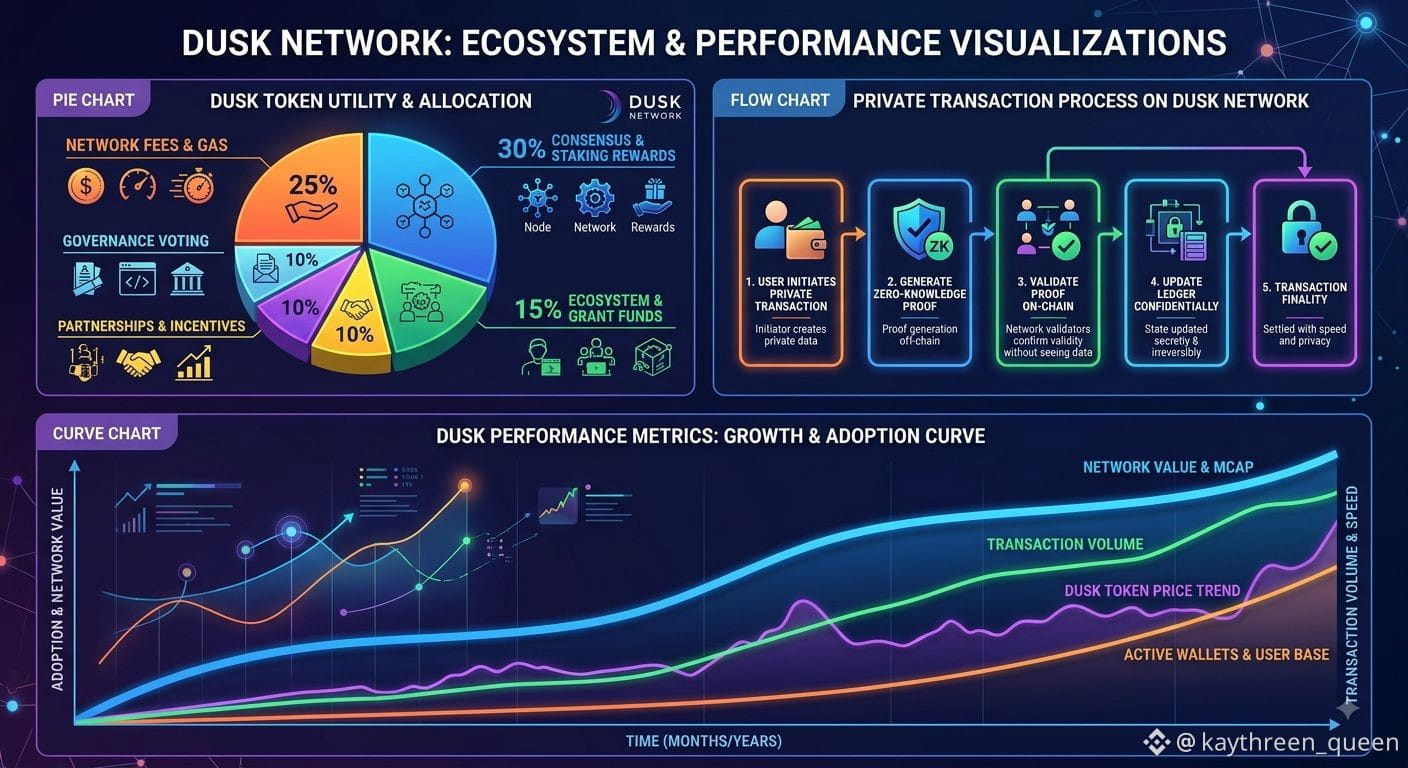
Here's what's different. Most privacy chains make you pick a side. Either everything's hidden, like Monero, or everything's out in the open, like most of DeFi. Dusk is trying to sit in between. XSC contracts use zero-knowledge proofs so certain data stays encrypted while the contract still runs and settles on-chain. Selective disclosure instead of all-or-nothing secrecy.
I'll admit, I'm skeptical this stays as clean in practice as it sounds in the docs. Who actually decides what gets hidden? Who holds the key if a regulator wants it unlocked? That's usually where these systems get messy, not in the cryptography, but in the governance around it.
Here's the scenario that stuck with me. Picture a fund manager in the EU tokenizing a private fund. Investors don't want position sizes visible to competitors, but auditors still need to verify reserves are real. Dusk actually has movement here, licensed security token pilots in the EU, not just a testnet demo. That's more than most "privacy for finance" projects can claim.
What's still missing is volume. I looked for real usage and mostly found partnerships still in progress, not live activity.
So I'm genuinely asking: is this solving a problem institutions actually have, or one crypto assumes they have? Anyone seeing real transaction data here ? $LAB $DOS
But the XSC contract standard made me stop and actually read instead of skim.
Here's what's different. Most privacy chains make you pick a side. Either everything's hidden, like Monero, or everything's out in the open, like most of DeFi. Dusk is trying to sit in between. XSC contracts use zero-knowledge proofs so certain data stays encrypted while the contract still runs and settles on-chain. Selective disclosure instead of all-or-nothing secrecy.
I'll admit, I'm skeptical this stays as clean in practice as it sounds in the docs. Who actually decides what gets hidden? Who holds the key if a regulator wants it unlocked? That's usually where these systems get messy, not in the cryptography, but in the governance around it.
Here's the scenario that stuck with me. Picture a fund manager in the EU tokenizing a private fund. Investors don't want position sizes visible to competitors, but auditors still need to verify reserves are real. Dusk actually has movement here, licensed security token pilots in the EU, not just a testnet demo. That's more than most "privacy for finance" projects can claim.
What's still missing is volume. I looked for real usage and mostly found partnerships still in progress, not live activity.
So I'm genuinely asking: is this solving a problem institutions actually have, or one crypto assumes they have? Anyone seeing real transaction data here ? $LAB $DOS