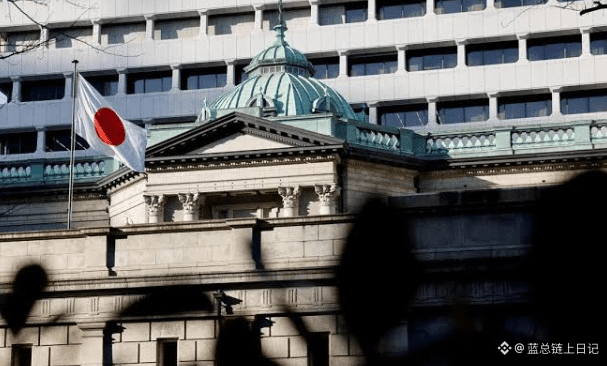
🚨The Bank of Japan may be “accelerating the brake”!
The latest market news shows that the Bank of Japan could raise rates again as early as the September meeting, and the pace of future rate hikes may be faster than it is now.
In simple terms:
In the past, Japan kept interest rates extremely low for a long time, and the market got used to “cheap money.”
But now, Japan is gradually changing its playbook.
Why has it suddenly become more proactive?
Because several pressures are increasing:
📌 The yen remains weak
📌 Import costs are rising
📌 Inflation pressure is still there
The Bank of Japan worries that if it moves too slowly, price pressure could expand further.
What does this mean for global markets?
Japanese funds have long flowed overseas. If Japan’s rates keep rising, some funds may reconsider:
👉 Stay in Japan to earn interest
👉 Reduce overseas investment
👉 Adjust asset allocation
So don’t just look at it as Japan raising rates—it may affect not only the yen, but also global capital flows.👀
My view:
Over the past decade or more, global markets have grown accustomed to the “low interest rate era.”
Now, as monetary policies around the world gradually shift, the biggest change isn’t any single rate hike, but the fact that the capital environment is slowly changing.
In the future, investors need to pay attention not only to asset prices, but also to:
💰 Where does the money come from?
💰 Where is the money going?
Interest rates are the steering wheel of global capital flows.
Japan’s shift may just be another signal amid changes in the global financial environment.🔥
$EDEN $TUT #AKE #CYS #以太坊基金会L1弃用Poseidon哈希 #伊朗要求船只过境霍尔木兹需许可 #韩股KOSPI进入技术性牛市
The latest market news shows that the Bank of Japan could raise rates again as early as the September meeting, and the pace of future rate hikes may be faster than it is now.
In simple terms:
In the past, Japan kept interest rates extremely low for a long time, and the market got used to “cheap money.”
But now, Japan is gradually changing its playbook.
Why has it suddenly become more proactive?
Because several pressures are increasing:
📌 The yen remains weak
📌 Import costs are rising
📌 Inflation pressure is still there
The Bank of Japan worries that if it moves too slowly, price pressure could expand further.
What does this mean for global markets?
Japanese funds have long flowed overseas. If Japan’s rates keep rising, some funds may reconsider:
👉 Stay in Japan to earn interest
👉 Reduce overseas investment
👉 Adjust asset allocation
So don’t just look at it as Japan raising rates—it may affect not only the yen, but also global capital flows.👀
My view:
Over the past decade or more, global markets have grown accustomed to the “low interest rate era.”
Now, as monetary policies around the world gradually shift, the biggest change isn’t any single rate hike, but the fact that the capital environment is slowly changing.
In the future, investors need to pay attention not only to asset prices, but also to:
💰 Where does the money come from?
💰 Where is the money going?
Interest rates are the steering wheel of global capital flows.
Japan’s shift may just be another signal amid changes in the global financial environment.🔥
$EDEN $TUT #AKE #CYS #以太坊基金会L1弃用Poseidon哈希 #伊朗要求船只过境霍尔木兹需许可 #韩股KOSPI进入技术性牛市