


Binance's airdrop was massive, the Dusk project team is really impressive, the top 100 received an average of 4,500 Dusk each, at that time the market price was over $1,100🔥
In the Web3 industry, when most projects face the dilemma of 'high inflation, insufficient utility, and short life cycles,' the 36-year-long token economic model built by Dusk Network becomes the core guarantee for navigating industry cycles. This model focuses on 'scarcity management + diversified utility + long-term incentives' and achieves a positive cycle of 'network security - ecological growth - token appreciation' through a four-year halving issuance cycle, full-scenario token embedding, and sustainable incentive mechanisms. By early 2026, the network's staking rate has exceeded 65%, the open interest in futures has reached $47.94 million, and the 30-day increase has reached 583%, data that confirms the effectiveness of the economic model. Dusk's token economic design provides a highly valuable reference for how Web3 projects can achieve long-term sustainable development.
Scarcity management is the cornerstone of economic models, controlling inflation risks through strict issuance rules. The total supply limit of Dusk is set at 1 billion tokens, with a 36-year issuance cycle that halves every 4 years, releasing only 500 million tokens in circulation over 36 years. The remaining 500 million will be gradually released through buybacks, destruction, and ecological incentives. This long-term issuance model avoids price fluctuations caused by short-term concentrated token sell-offs, while maintaining the scarcity of the tokens through periodic reductions. The current block issuance rate is 19.86 tokens/block, with a clear reward distribution mechanism: 80% goes to block producers, 5% to the verification committee, 5% to the approval committee, and 10% injected into the Dusk Network Development Fund (DNDF). This distribution ratio ensures the earnings of verification nodes, incentivizing them to maintain network security, and provides stable financial support for long-term ecological research and development. Data shows that as of January 2026, the circulating supply of Dusk is approximately 487 million tokens, accounting for only 48.7% of the total supply. As the issuance cycle progresses, the inflation rate will gradually decline, and the scarcity of the tokens will continue to strengthen.
Multi-dimensional utility embedding transforms DUSK from a "governance token" into an "ecological value carrier." The token design of Dusk deeply integrates core ecological elements, forming a closed loop of "use-consume-appreciate": first, gas fee payment, where DUSK is the only payment tool for all on-chain interactions, including RWA asset issuance, institutional DeFi trading, creator NFT minting, etc. As ecological activity increases, the demand for gas fees continues to grow; second, staking participation, where users can stake DUSK through the Hyperstaking mechanism to participate in the Segregated Byzantine Agreement (SBA) consensus, earning both transaction fees and block rewards, currently with a stable staking yield of around 30%, attracting many long-term investors; third, governance rights, where stakers can participate in major ecological decisions, including technical upgrade paths, ecological fund allocation, and regulatory adaptation plans, with staking amounts linked to voting power to ensure fairness in governance; fourth, commercial scenario applications, where institutions need to lock a certain amount of DUSK as collateral for asset tokenization, and the annual fee for zero-trust custody services can be paid with DUSK for discounts, further enhancing the real demand for the tokens. In addition, Dusk's "institutional gas sponsorship service" allows institutions to prepay gas fees for users, reducing the participation threshold for retail users and indirectly increasing the consumption of DUSK, creating a positive cycle of "institutional payment-user participation-ecological activity-increased token demand."
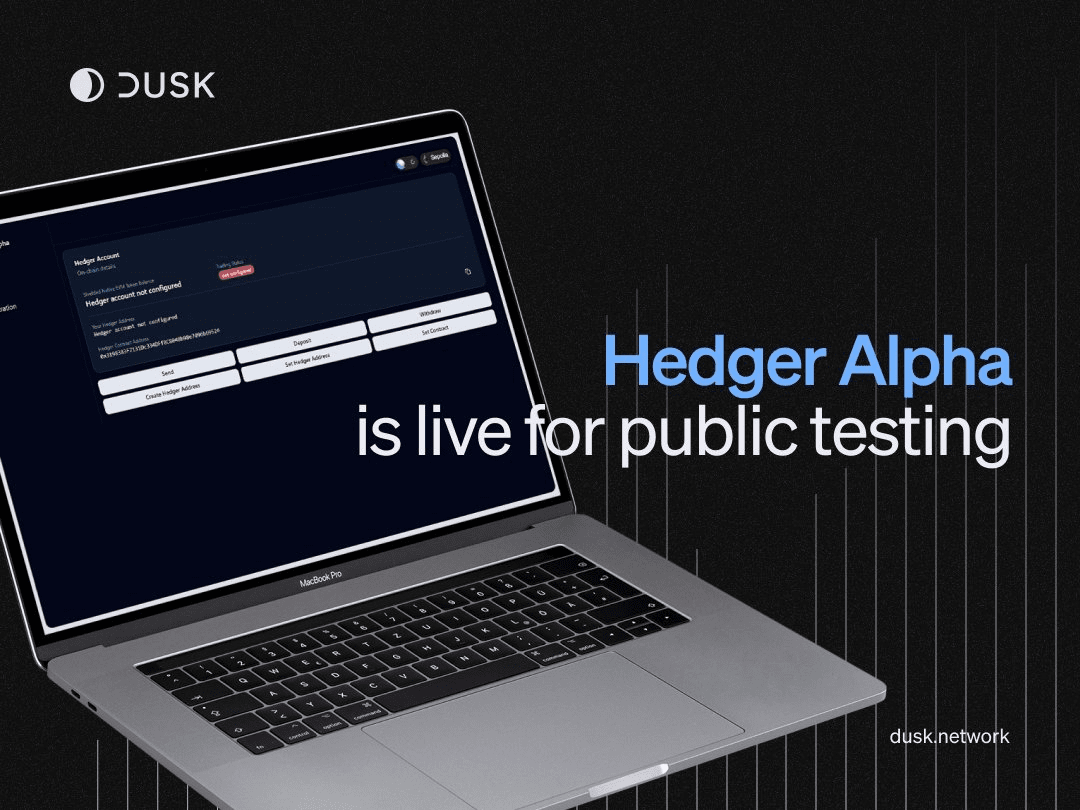
The long-term incentive mechanism and ecological feedback guarantee the sustainability of the economic model. The DNDF development fund serves as the core incentive body, continuously injected with 10% of block rewards, providing stable financial support for ecological research and development, project incubation, and liquidity support. The fund's usage direction is highly focused: in terms of technical research and development, it supports core technological breakthroughs such as dual VM architecture optimization, Hedger engine iteration, and cross-chain protocol upgrades; in terms of ecological incubation, it supports RWA tokenization tools, institutional DeFi applications, and cross-scenario integration projects through a special fund of 15 million DUSK; in terms of liquidity support, it incentivizes market makers to provide deep liquidity on DEX, compressing the bid-ask spread of core assets to within 0.5%, improving the current situation of less than $500,000 in average daily trading volume on DEX. In addition, Dusk's economic model has also introduced a buyback and destruction mechanism, using 50% of commercial revenues from technical service fees, custody annual fees, etc., for DUSK buybacks and destruction, directly enhancing the token's value. Since 2025, over 1 million $DUSK have been repurchased and destroyed, and as commercial revenues grow, the buyback scale will continue to expand.
The improvement of the risk control mechanism allows the economic model to maintain resilience amid market fluctuations. To address the concentration risk of token supply (currently 67.72% of the token supply is concentrated in the top five addresses), Dusk is taking multiple measures to diversify holdings: first, launching liquid staking derivatives to lower the staking threshold for ordinary users and attract more retail participants; second, optimizing institutional collaboration models by replacing one-time large transfers with long-term lock-up agreements to reduce the risk of whale manipulation; third, expanding retail user scenarios through the creator economy and small compliant wealth management applications to attract retail holders of DUSK. To address the uneven distribution of liquidity, in addition to ecological fund incentives, Dusk is actively connecting with leading exchanges. Huobi HTX has already launched the DUSK/USDT perpetual contract, and Binance's open interest has reached $20.54 million, with plans to promote DUSK on more mainstream CEXs to enhance market liquidity. These risk control measures have allowed Dusk's economic model to maintain strong resilience amidst market fluctuations, achieving a Sharpe ratio of 2.42 in 2025, significantly better than the industry average.
Dusk's token economic model constructs a long-term growth engine over 36 years through a fourfold design of "scarcity management + multi-dimensional utility + long-term incentives + risk control." Its core logic is to deeply bind token value with ecological development, making DUSK a "beneficiary" of ecological growth rather than a "sacrifice." As RWA scales take off, institutional DeFi explodes, and the creator economy expands, the real demand for DUSK will continue to grow, further strengthening the positive cycle effect of the economic model. In the trend of the Web3 industry pursuing long-term value, Dusk's token economic model provides valuable experience for sustainable project development and offers investors an asset choice that combines growth and security.#Dusk $DUSK @Dusk