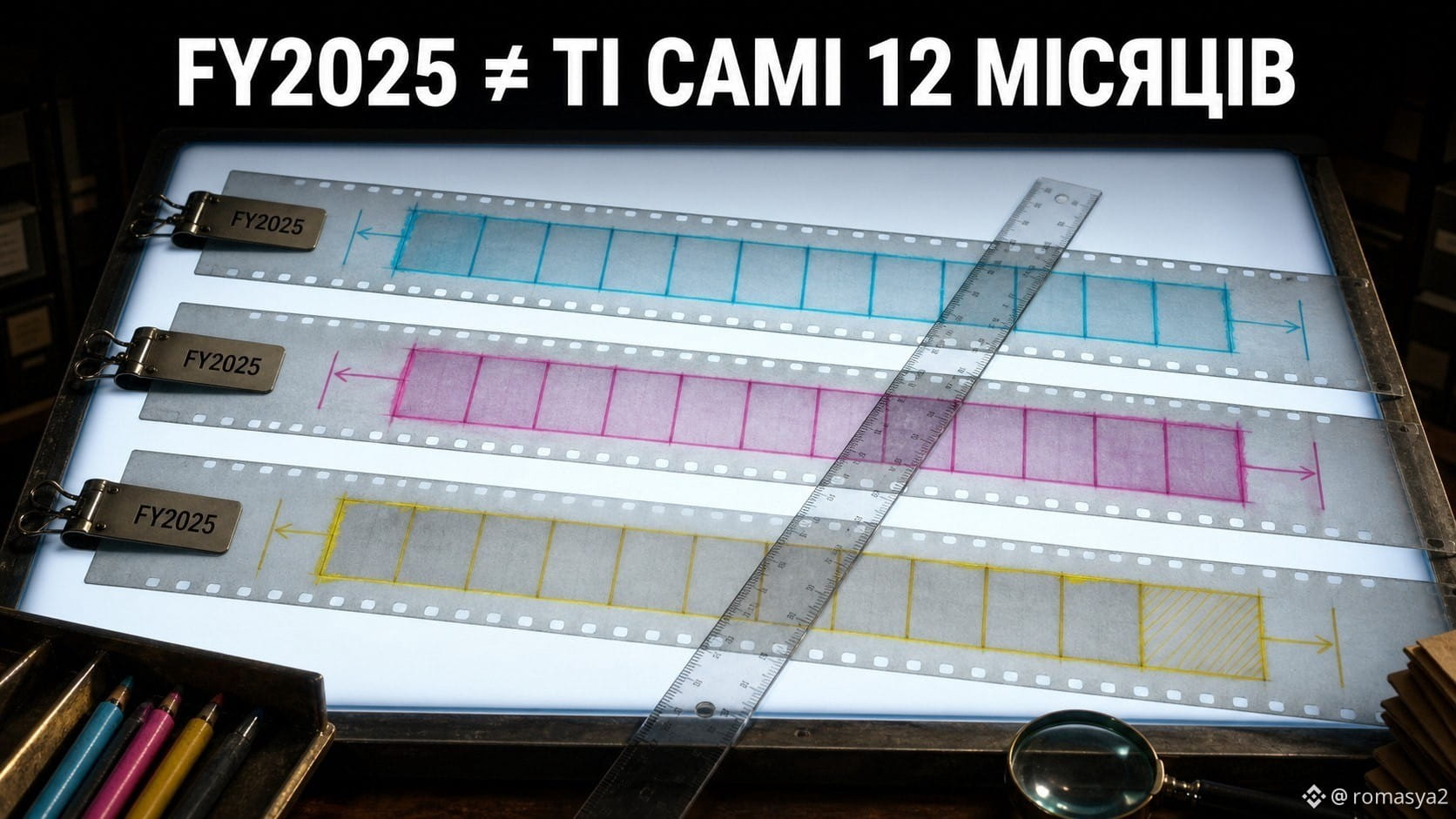
FY2025 in two different reports may mean different 12-month periods.
One company ends its fiscal year in June, another in September, and a third in December. Some businesses use a 52- or 53-week calendar. So the same label «FY2025» does not necessarily make the figures synchronous.
This is especially important when I compare bStocks such as $MSFTB, $AAPLB, $QCOMB, and $GOOGLB. Different macroeconomic conditions, product launches, and seasonal quarters may have fallen within the same «fiscal year».
My algorithm:
1. Find the exact period ended date.
2. Check whether the year has 52 or 53 weeks.
3. Compare the same seasonality, not just the same label.
4. For quarters, verify the number of weeks and the start and end dates.
It’s a simple check, but it helps avoid very convincing yet wrong charts.
When you look at companies, do you check the period end date before comparing?
@BinanceCIS #bStocksCIS
One company ends its fiscal year in June, another in September, and a third in December. Some businesses use a 52- or 53-week calendar. So the same label «FY2025» does not necessarily make the figures synchronous.
This is especially important when I compare bStocks such as $MSFTB, $AAPLB, $QCOMB, and $GOOGLB. Different macroeconomic conditions, product launches, and seasonal quarters may have fallen within the same «fiscal year».
My algorithm:
1. Find the exact period ended date.
2. Check whether the year has 52 or 53 weeks.
3. Compare the same seasonality, not just the same label.
4. For quarters, verify the number of weeks and the start and end dates.
It’s a simple check, but it helps avoid very convincing yet wrong charts.
When you look at companies, do you check the period end date before comparing?
@BinanceCIS #bStocksCIS