I waited three weeks just to get to this Dusk task. The moment I opened its whitepaper, I realized I had been thinking about things far too simplistically. In the community, when people talk about RWA on-chain, the conversation almost always revolves around how assets are carved up into tokens—very few people truly stop and ask one basic question: who is actually qualified to approve what you’re doing. As for the technical side, it has already been more than sufficient for a long time. What has really been bottlenecking the entire track is never settlement speed; it’s whether the compliant entity behind the assets is willing to take responsibility and stand behind it.
The materials from Dusk were the first time I worked through this question clearly. Even if the chain runs fast, if there isn’t a regulated entity recognized by oversight to bear responsibility for the assets behind it, the whole process ultimately just ends up idling. #dusk $DUSK
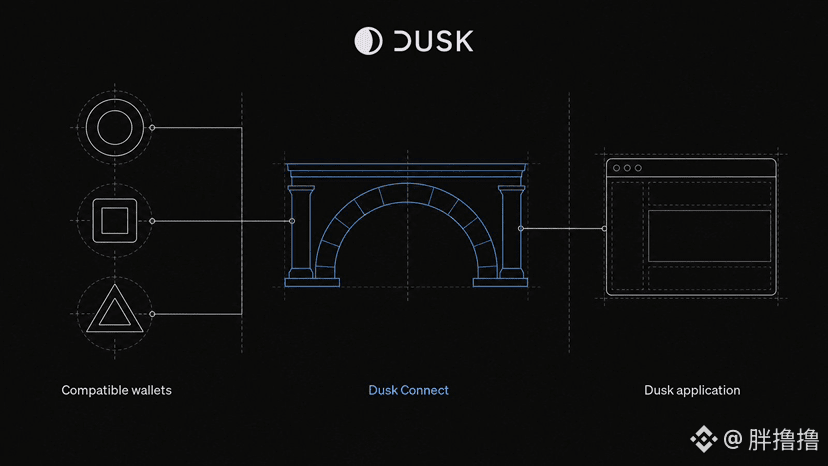
The path Dusk chose isn’t to apply for a whole pile of licenses on its own. Instead, it connects directly with institutions that already hold the relevant qualifications, combining those institutions’ compliance capabilities with the chain’s settlement abilities. Then it uses mature data-alignment services to match offline information with on-chain logic. @Dusk
The benefits of this kind of combination are straightforward: the onboarding cost is clearly lower than applying for licenses from scratch, and the deployment path is much closer to real-world constraints. As I read through Dusk’s materials, my eyes even felt a bit dry. The more I read, the more it felt like it wasn’t trying to invent some brand-new regulatory paradigm—just honestly and pragmatically aligning existing licensing capabilities with on-chain settlement. The idea sounds smart, but I can’t honestly say it can definitely scale.
A license approved in one jurisdiction doesn’t necessarily work seamlessly in another. And progress on cross-border regulatory coordination is never something a technical team can push unilaterally. Right now, I haven’t deployed my main position; I’ve left only a small portion of my base allocation to keep observing Dusk. My main thesis will wait until more licensed counterparties have smoothed out the settlement process.
This one isn’t a balance-sheet kind of clarity yet. It’s not that the project itself has a flaw; it’s that compliance simply can’t be rushed. Cross-regional applicability and deployment cadence are the main risks. Still, Dusk offers a more pragmatic route than a purely technical narrative, and it’s worth watching for a while longer. $BTC
The materials from Dusk were the first time I worked through this question clearly. Even if the chain runs fast, if there isn’t a regulated entity recognized by oversight to bear responsibility for the assets behind it, the whole process ultimately just ends up idling. #dusk $DUSK
The path Dusk chose isn’t to apply for a whole pile of licenses on its own. Instead, it connects directly with institutions that already hold the relevant qualifications, combining those institutions’ compliance capabilities with the chain’s settlement abilities. Then it uses mature data-alignment services to match offline information with on-chain logic. @Dusk
The benefits of this kind of combination are straightforward: the onboarding cost is clearly lower than applying for licenses from scratch, and the deployment path is much closer to real-world constraints. As I read through Dusk’s materials, my eyes even felt a bit dry. The more I read, the more it felt like it wasn’t trying to invent some brand-new regulatory paradigm—just honestly and pragmatically aligning existing licensing capabilities with on-chain settlement. The idea sounds smart, but I can’t honestly say it can definitely scale.
A license approved in one jurisdiction doesn’t necessarily work seamlessly in another. And progress on cross-border regulatory coordination is never something a technical team can push unilaterally. Right now, I haven’t deployed my main position; I’ve left only a small portion of my base allocation to keep observing Dusk. My main thesis will wait until more licensed counterparties have smoothed out the settlement process.
This one isn’t a balance-sheet kind of clarity yet. It’s not that the project itself has a flaw; it’s that compliance simply can’t be rushed. Cross-regional applicability and deployment cadence are the main risks. Still, Dusk offers a more pragmatic route than a purely technical narrative, and it’s worth watching for a while longer. $BTC