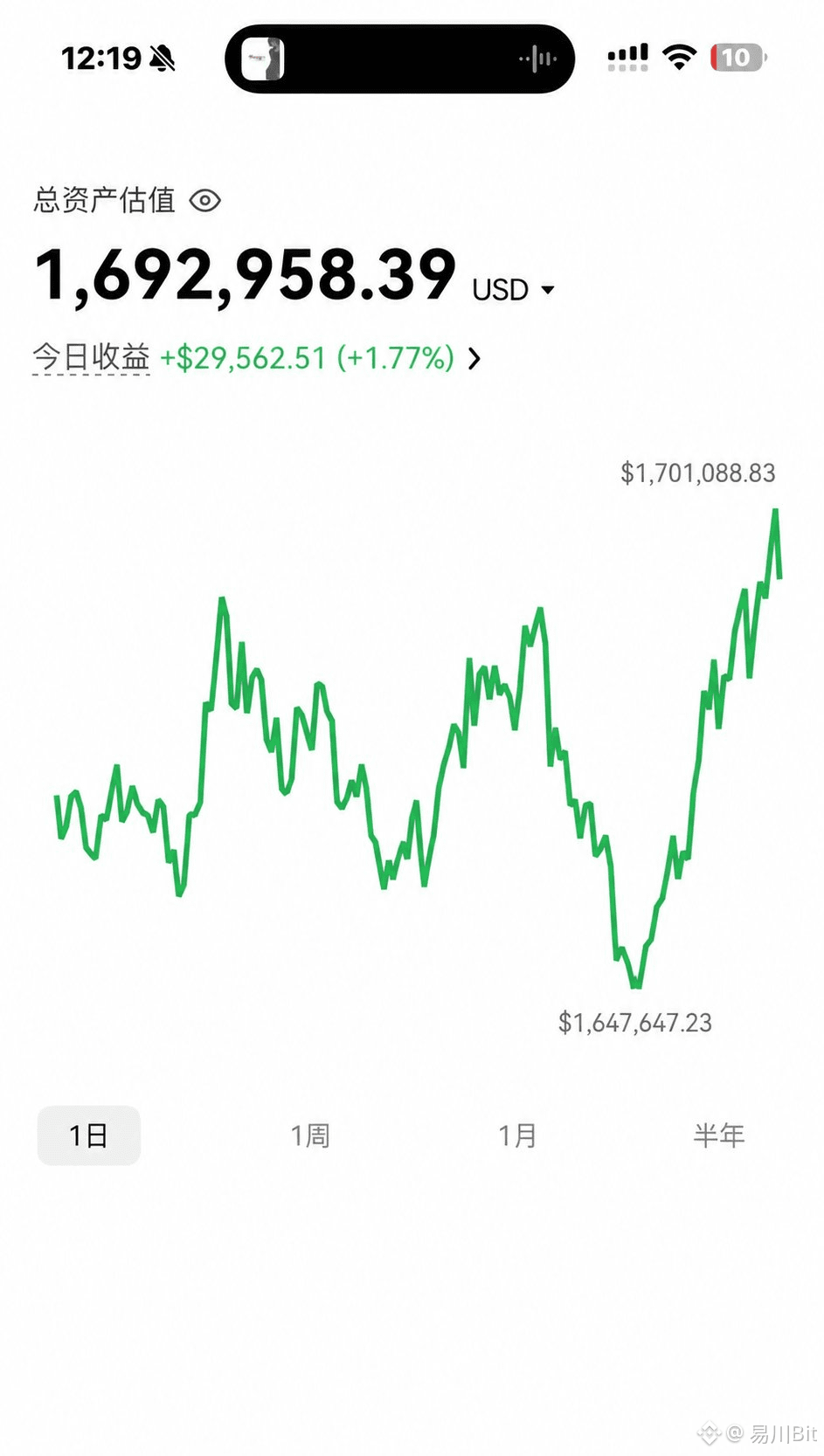
$AKE After ten years of grinding it out in the crypto world, my account has slowly worn from five digits up to eight digits.
It isn’t good luck, and there’s no inside information. I just rely on one “stupid” principle—do the right things only, and endure longer than others.
People keep asking me: why can some always catch the timing, while others can’t even hold through one market cycle? Honestly, it’s not that their technical skills are lacking. It’s that they can’t read what the chart is really doing, and they can’t control the hand of emotion.
$CYS
The following six rules are what I’ve used to survive—earned through more than three thousand nights, traded with real money. No beating around the bush, but they really work:
When price rises fast and falls slow, don’t scare yourself
If the price suddenly spikes up, then drifts back down slowly—eight times out of ten, it’s a shakeout. The funds are quietly transferring beneath the surface. When you panic and sell here, it’s easiest to sell right in the last second before takeoff.
When price falls fast and rises slow, don’t get greedy for crumbs
A big bearish candle crashes down with a loud bang; afterward, it drags a string of small bullish candles and crawls upward. That’s often the tail end of distribution. Don’t just stare at how much it dropped and think, “It’s cheap now, I should pick it up.” You may easily grab the knife falling from midair.
On the high end, watch for shrinking volume—don’t pretend you didn’t notice
The price keeps wobbling at high levels, but the trading volume looks weaker day by day. That isn’t stability—it’s the kind of stuffy heat before a storm. By the time it truly gets dumped, when you want to run, you won’t even be able to squeeze through the door.
$APR
When you see a big green candle at the bottom, don’t get carried away
A real bottom isn’t shouted into existence by a single bullish candle. It’s friction back and forth—worn down until nobody is shouting “buy the dip,” and only then can it truly hold. Let the volume come out in continuous waves with consistency, and then think about, “Should I act now?”
Don’t just stare at the K-line—pay attention to volume too
K-lines can disguise things; volume can’t. Volume is the emotion hidden deepest in the market. Shrinking volume, expanding volume, stacked volume—none of them are as concrete as actual quantity.
Have the courage to hold no position—that’s what a real pro does
Don’t chase highs—that shows discipline. Don’t panic—that shows confidence. The hardest part isn’t buying in; it’s having the peace of mind to sleep with a pillow beside you when you’re sitting with an empty position. Drop the mindset that you “must do a trade.” The market is your tool, not your life-or-death enemy.
It isn’t good luck, and there’s no inside information. I just rely on one “stupid” principle—do the right things only, and endure longer than others.
People keep asking me: why can some always catch the timing, while others can’t even hold through one market cycle? Honestly, it’s not that their technical skills are lacking. It’s that they can’t read what the chart is really doing, and they can’t control the hand of emotion.
$CYS
The following six rules are what I’ve used to survive—earned through more than three thousand nights, traded with real money. No beating around the bush, but they really work:
When price rises fast and falls slow, don’t scare yourself
If the price suddenly spikes up, then drifts back down slowly—eight times out of ten, it’s a shakeout. The funds are quietly transferring beneath the surface. When you panic and sell here, it’s easiest to sell right in the last second before takeoff.
When price falls fast and rises slow, don’t get greedy for crumbs
A big bearish candle crashes down with a loud bang; afterward, it drags a string of small bullish candles and crawls upward. That’s often the tail end of distribution. Don’t just stare at how much it dropped and think, “It’s cheap now, I should pick it up.” You may easily grab the knife falling from midair.
On the high end, watch for shrinking volume—don’t pretend you didn’t notice
The price keeps wobbling at high levels, but the trading volume looks weaker day by day. That isn’t stability—it’s the kind of stuffy heat before a storm. By the time it truly gets dumped, when you want to run, you won’t even be able to squeeze through the door.
$APR
When you see a big green candle at the bottom, don’t get carried away
A real bottom isn’t shouted into existence by a single bullish candle. It’s friction back and forth—worn down until nobody is shouting “buy the dip,” and only then can it truly hold. Let the volume come out in continuous waves with consistency, and then think about, “Should I act now?”
Don’t just stare at the K-line—pay attention to volume too
K-lines can disguise things; volume can’t. Volume is the emotion hidden deepest in the market. Shrinking volume, expanding volume, stacked volume—none of them are as concrete as actual quantity.
Have the courage to hold no position—that’s what a real pro does
Don’t chase highs—that shows discipline. Don’t panic—that shows confidence. The hardest part isn’t buying in; it’s having the peace of mind to sleep with a pillow beside you when you’re sitting with an empty position. Drop the mindset that you “must do a trade.” The market is your tool, not your life-or-death enemy.